Eating alone in Tokyo is not a compromise. The city has booths built for one person, conveyor belts carrying single plates, basement food halls where a bento costs less than a taxi, and a ticket machine at the door that hands you a place of your own.
I compared fourteen Tokyo stops that work for a single guest through four filters: whether the seat itself rules out sharing a table, how one person orders, a realistic price band for one portion, and the hour the kitchen stops taking orders. The table below lines up all fourteen, from a ¥138 hot meal at a konbini to a booked omakase seat in Azabudai.
How I chose and compared these Tokyo solo-dining spots
Four filters: a seat for one, the order path, a price band and posted hours
A place qualified on four counts. The seat first: a single guest has to sit without sharing a table, so booths, counter stools, food-hall counters and takeaway windows count, and a table-only dining room does not. The order path next: one person buys a ticket, orders at the counter or points at a photo menu, with no group booking and no minimum of two plates. Then a price for one portion, set by the venue. Then hours: the opening time, and more useful the last order time, because a solo dinner plan collapses when the kitchen stops taking tickets at nine at night.
Money sat inside the comparison rather than beside it. A foreign card works in one ticket machine and fails in the next, so cash versus IC card and the one-person meal budget came along for the ride. The city column carries a street address for restaurants and key specs for shelf items, because a bento and a basement entrance need different details.
| Place | City or key details | Type | Price from | Main advantage | Main drawback |
|---|---|---|---|---|---|
| Ichiran Shibuya | Shibuya-ku: B1F, 1-22-7 Jinnan, 21 booths | Solo booth | ¥1,180 a bowl | Every seat is its own compartment | Night session closes at 06:00; surcharge 22:00–06:00 |
| Sushiro | Chain-wide, plates on a belt | Conveyor counter | ¥120 a plate | Walk in, take plates one by one | Prices rise with branch tier; evening queue |
| Sushi Zanmai Honten | 4-11-9 Tsukiji, Chuo-ku | Counter seat | from ¥198 a plate | Trades around the clock | Thin room at 03:00 |
| Sushi Saito | Azabudai Hills Market, B1 | Counter seat | from $104 a seat | Booked seat with a tasting menu | Months ahead, no walk-ins |
| Sukiyabashi Jiro | Ginza | Omakase counter | from $580 a seat | The full omakase in one room | Telephone booking only, in Japanese |
| Tempura Kanda Honten | Kanda, Shinjuku | Teishoku set | from ¥1,050 a set | Fixed set with rice and miso refills | Weekday sets, short lunch window |
| Tonkatsu Maisen Aoyama Honten | Aoyama | Tonkatsu set | ¥1,990 a set | Two cuts of pork at one price | Menu hard to find online |
| Afuri Ebisu | 1F, 117 Building, 1-1-7 Ebisu | Ramen counter | from ¥1,290 a bowl | Open until 05:00 the next morning | Cash-leaning counter, late queue |
| Tokyo Station Ramen Street | B1, First Avenue, Yaesu side | Ramen counters | from ¥850 a bowl | Ten kitchens under one roof | Ticket first, small seats, gates shut late |
| FamilyMart | Chain-wide, Tokyo stores | Convenience store takeaway | from ¥138 a hot meal | Hot food in four minutes | Bench seating only; sodium per bowl |
| Toraya Nihonbashi | 1-2-6 Nihonbashi, Chuo-ku | Takeaway sweets | from $2.03 a box | A boxed sweet to carry | Nowhere to sit |
| Azabudai Hills Market | Garden Plaza C, Azabudai | Food-hall counters | from ¥391 a dish | Thirty-three counters under one roof | Each counter keeps own hours |
| Ginza Mitsukoshi | Ginza; food on B2 and B3 | Department-store counter | from ¥150 a bento | Full bento, no queue for a table | B1 is cosmetics only |
| Tsukiji Outer Market | Tsukiji, Chuo-ku | Market stall | from ¥200 an item | Small portions, no booking | Most stalls shut by mid-afternoon |
These are the lowest prices each place lists, and they buy different things: ¥120 is one conveyor plate, ¥138 a konbini hot meal, ¥850 a ramen bowl, ¥1,050 a set, ¥1,990 a cutlet plate, $2.03 a box of wagashi. Dollar figures move with the exchange rate.
What I left out, and where the checks live
Two kinds of place stayed out. Kuromon Market is in Nihonbashi, Osaka, its address being 大阪市中央区日本橋3-4-16, so it is not a stop on a Tokyo itinerary however good the dashi is. And parks: a garden appears here only where food follows it, so Yoyogi Park turns up once, as the walk before lunch in Kanda, and Hama-rikyu once, for the tea houses inside its gates. Meiji Jingu never made it in, because nothing about the shrine changes what you eat.
Food tours are a different product from a meal. They sell a table with other people on it, so they answer a different question, and they sit at the end of the scenario list as a paid experience. Everything worth double-checking before a trip is collected in one block at the end of this article rather than scattered through the sections.
Solo dining in Tokyo: the seating setups that actually work for one
Booth, counter, hall and takeaway: four layouts
Four layouts cover almost everything. A booth puts a partition on three sides, so no neighbour's order becomes yours. A counter seat puts you in front of a kitchen with a short menu and a short wait. A conveyor or hall counter means you pick a plate or order at a stall. A standing or takeaway counter means you pay, take the tray and eat it there.
| Layout | Where it works | The catch |
|---|---|---|
| Solo booth | Ichiran Shibuya | Buy a meal ticket before you sit |
| Counter seat | Sushi Zanmai, Sushi Saito, Maisen | The seat usually belongs to a guest who orders |
| Conveyor or hall counter | Sushiro, Azabudai Hills, depachika floors | The clock starts when you sit down |
| Standing or takeaway | FamilyMart, Toraya, Tsukiji stalls | Narrow benches; eating on the street is not the habit |
What each layout does to a lone guest is easier to feel than to measure. At a booth you hear your own bowl and nobody else's order. At a counter the knife on the board and the call from the kitchen set the pace. At a conveyor you read plates instead of a menu, and the green plate means you have finished. In a konbini it is four minutes of microwave and a bench by the window. Then read the receipt: some restaurants add a foreign-visitor surcharge, and it is easier to spot there than to argue about it later.
What to check before you sit down
Six questions decide whether a stop works for one. Is the seat marked for a single guest, or is it a shared table with a one-person rule? Do counter seats belong only to guests who order? Is the queue numbered or first-come? Is there a last-order time posted at the door? Is there a minimum spend for one diner? Is there a time limit at the peak hour?
At a ramen counter the portion is adjustable without leaving food behind. At Ichiran Shibuya a half-size portion of extra noodles is ¥150, small rice is ¥250, full rice is ¥300 and a full portion of extra noodles, the kaedama, is ¥210. One person with a big bowl and a rice refill is a lot of food, and scaling the order costs less than pushing half a bowl around the table. One habit matters here: eating while walking is poor manners in Japan, so buy the food, find a seat and eat it there.
Tip: order sheets at Ichiran use photos and numbers, so you can point instead of speaking. Write the number down, press the call button, and the bowl arrives in your booth.
Money, cards and paperwork for a visitor eating alone
Start with payment. The ticket machine at Ichiran Shibuya takes yen, Visa, Mastercard, JCB, American Express, Diners Club, IC transit cards such as Suica and PASMO, and QR codes, so you can order without holding cash at all. Smaller counters and market stalls are more often cash-only, and a foreign-issued contactless card fails more than once in a day, so carry ¥1,000 to ¥2,000 in small notes. Tipping is not on any bill in Japan and nobody expects it.
Tax-free shopping has changed shape. From 1 November 2026 you pay the tax-inclusive price and the tax-equivalent comes back later: customs confirms the goods at the departure airport, the refund has to happen within 90 days, every item must still be in your baggage, and anything eaten in Japan cannot be refunded. A boxed wagashi is a purchase; a bowl of ramen is not. The Japan Tourism Agency tax-free page sets out how the refund is handled.
Visas differ by passport and change, so do not assume a 90-day visa-free stay; read the Ministry of Foreign Affairs visa exemption list before you book anything. Allergens deserve a second look too: nine items are mandatory on labelling in Japan, and cashew nut joined the list in April 2026, so the pack on an onigiri or bento carries an allergen line next to the calories, as the Consumer Affairs Agency allergen rules spell out.
Solo sushi counters in Tokyo: conveyor plates, night shifts and booked seats
Sushiro: a conveyor counter where one plate is one order
Sushiro is the cheapest sushi in the city and the easiest to eat alone. Plates ride the belt and you take what you want, from ¥120 a plate; the chain's menu page shows prices rising in tiers, with central Tokyo branches above the entry level. The tier is the number to plan with, and the branch's own menu is the number you pay.
The counter etiquette is easy to pick up. You order plate by plate, and the green plate on the belt means you have finished. Counter seats usually belong to guests who order from the chef, so a solo guest waits for a gap rather than taking a place. Two drawbacks: prices rise with the tier, and in the evening rush one person can wait a long time for a seat, so eat early or take a table.
Sushi Zanmai Honten: the counter that trades around the clock
Sushi Zanmai Honten on 4-11-9 Tsukiji answers the awkward question of what to eat at two in the morning: the branch trades around the clock, so a solo guest can buy two nigiri and a bowl of miso while the district is shut. Order it that way. A few pieces of nigiri and one hot dish rather than a set, because the sets assume a proper lunch and the volume is too much for one person.
Tsukiji Outer Market is minutes away and runs on the same clock, but not the same hours. The stalls keep their own hours and most trade from early morning to mid-afternoon, which makes the market a late-morning stop. The portions are small by design, a skewer, a bowl of soup, one piece of tamagoyaki, so I would eat at the counter and let the market be the first half of the day rather than a set meal.
Sushi Saito and Sukiyabashi Jiro: the seats you have to book
Sushi Saito has twelve counter seats on the B1 floor of Azabudai Hills Market and three seatings, at 12:00, 13:30 and 18:00. There are no walk-ins, and at from $104 a seat the booking opens months ahead. Walk up and you have no plan at all, which wastes a good afternoon. Sukiyabashi Jiro in Ginza works the same way at from $580, with a fixed omakase set menu and about ten seats on the counter.
Jiro takes bookings by telephone on +81-3-3535-3600, the number on the branch's own booking page, and the call is answered in Japanese; guests from outside Japan usually go through the hotel concierge. Confirm the number with your concierge before you travel, because the seat is the whole meal and a booking mistake costs all of it. The honest limits of both: a seat opens by luck, an omakase runs in a fixed order with no swaps, and a guest who arrives late loses the seat and the money.
Ichiran's solo booth in Shibuya: the ticket, the booth and the ¥1,180 bowl
How the order runs: ticket vending machine, partitioned booth, call button
Ichiran Shibuya is built around the single guest. Twenty-one single-person booths sit on the basement floor at 1-22-7 Jinnan, Shibuya-ku, with no table seating and no private rooms, so the question of sharing a table never comes up. You buy a meal ticket from the vending machine at the entrance, take the order sheet to your booth, hand it in with the call button, and eat.
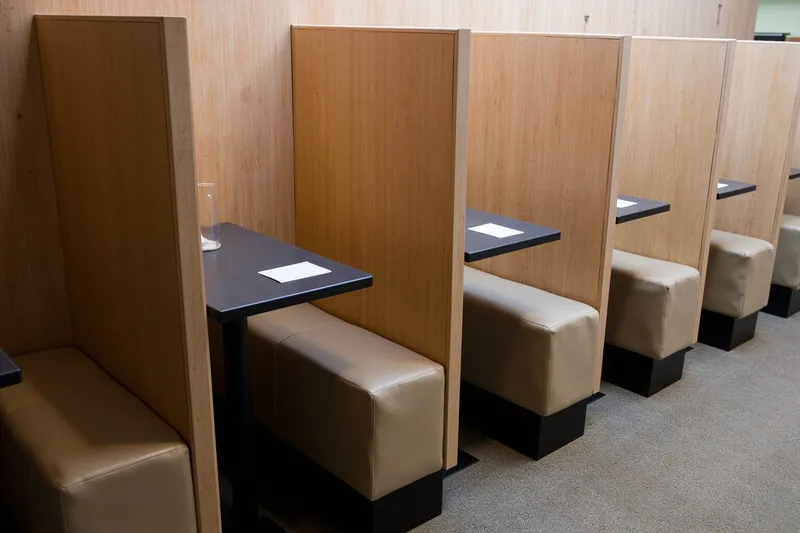
The machine issues a meal ticket, not the numbered kasenki queue ticket you pull at a shokudo, so there is no number to wait for and no chance of being seated with strangers. Payment happens at the same machine, taking yen, major credit cards, IC transit cards and QR codes, as the Ichiran Shibuya branch page sets out. The hours need care: the service day ends at 06:00, with the last order taken before the door shuts, so this is not a shop that trades around the clock. Whether you may photograph is set by the counter, so read the notices on the wall.
What the ¥1,180 buys, and what to add or leave out
The Classic Tonkotsu Ramen at this branch is ¥1,180 on the branch menu. The add-ons let one person keep the bowl where they want it: half-size extra noodles ¥150, small rice ¥250, full rice ¥300, full extra noodles ¥210. Adjusting the order at the machine is cheaper than pushing half a bowl around the table, and it wastes nothing.
Two things to know before you order. A surcharge for foreign visitors applies to orders placed between 22:00 and 06:00, so the same bowl costs more after ten at night, and the line appears on the receipt rather than on the menu board. And the branch menu carries no calorie counts, so read the printed menu at the counter or a konbini label if you are counting, and ask the staff about allergens rather than trusting a general list.
Two other ramen stops that work for one
Afuri Ebisu covers the hours Ichiran does not. The shop is on the first floor of the 117 Building at 1-1-7 Ebisu, Shibuya-ku, a couple of minutes on foot from JR Ebisu, and it opens at 11:00 and closes at 05:00 the next morning, every day. Bowls start at ¥1,290. For anyone finishing a night shift in Shibuya this is the address to keep, and the closing time is the reason to know it exists.
Tokyo Station Ramen Street is the other one, a food court of ten kitchens on B1 of First Avenue on the Yaesu side, outside the JR ticket gates, and the roster moves as contracts change. Bowls start at ¥850, shio and tonkotsu sit under the same roof, and the flow is shokudo-style: buy a ticket, then take a seat. The seats are small, the queue builds late, and the station gates shut late at night, so check the return train before you settle in with a bowl.
Lunch made for one: tempura sets, tonkatsu and depachika floors
Tempura Kanda Honten: the weekday teishoku set
Tempura Kanda Honten is a short walk from the Kanda side of Tokyo Station, and the weekday lunch set is the reason to go. It starts at ¥1,050 and comes with rice, miso, tsukudani and pickles, with rice and the small dishes refilled at the counter; dinner sets start at ¥2,200. Those are the branch's own numbers, and the board at the entrance is the one to trust on the day.
It suits a diner alone for practical reasons. The set lands whole without a long order, the refills mean one set is enough for one person, and the lunch window is short, so the room stays calm. Ordering at the counter on the way in is the normal route, and you are seated when the kitchen is ready rather than when a table turns over.
Tonkatsu Maisen Aoyama Honten: two cuts at one set price
Maisen's Aoyama Honten does two cutlet sets, a 130 g Chami pork loin and a 100 g tenderloin, and both are ¥1,990. The English page on the Maisen site now leads to its brown-rice online shop instead of a restaurant menu, so read the Aoyama Honten menu on the same site for the current prices and cut sizes.
Two cuts at one price makes the choice about texture and queue rather than budget, and the 100 g set is the smaller of the two. For a solo lunch the order is simple: one cutlet, no decisions after the first one, and no sharing required.
Depachika floors: Shinjuku Takashimaya, Ginza Mitsukoshi, Yurakucho Marui, Azabudai Market
Four basement food floors cover the case where you want a proper Japanese meal without a reservation. Shinjuku Takashimaya keeps its food on B1, with 10:30 to 19:30 in the ordinary week and different hours over the New Year, including an early-January closure every year. Ginza Mitsukoshi keeps food on B2 and B3, while B1 is the cosmetics floor with no food counters, which wastes twenty minutes of lift time if you guess wrong. Yurakucho Marui's food hall is ITOCiA Food Avenue on B1F of the adjoining building, with 25 shops and the UNO pachinko hall next door, so the entrance is easy to miss. Azabudai Hills Market is a 33-counter hall in Garden Plaza C, open 10:00 to 20:00, each counter keeping its own hours.
What makes these work alone is the shape of the food. A depachika bento follows the ichiju-sansai pattern (a main dish, rice, miso and pickles) in one box, so it is a full meal for one person with no cooking and no queue for a table. A simple bento starts from ¥150, and a fuller box with a hot dish runs ¥300 to ¥600. You can eat it standing, on a bench, or carry it out of the department store into the street.
Convenience store lunch in Tokyo: hot meals, breakfast and takeaway wagashi
FamilyMart hot meals, and what the label tells you
FamilyMart is the fallback that costs almost nothing and needs no plan. Entry-level hot meals sit around ¥138, the tray goes into the microwave at the end of the counter, and you eat it at the window, on a narrow bench, or standing. The microwave takes a couple of minutes, which is long enough to notice whether you are hungry or just tired.
The nutrition range is the useful part. Most of the chain's ready-to-eat range sits under 500 kcal and FamilyMart puts the average meal at 392 kcal, and both figures move as the range changes. Read the pack anyway: the sodium line per bowl matters as much as the calories when the broth is heavy, and the allergen line sits next to it. Nine allergens are mandatory on labelling in Japan, with cashew nut added in April 2026, so an onigiri or a FamilyMart bento can carry a nut you would never think to ask about.
Breakfast in ten minutes, or a dinner you cook for one
The cheapest reliable breakfast in Tokyo is a wrapped onigiri and a hot coffee from the same counter, eaten in the ten minutes before a train. No booking, no queue, no cooking, and the whole thing costs less than a taxi to the airport.
In the evening the same trip becomes a dinner for one. Ninben's head store, 日本橋本店, is on the first floor of COREDO Muromachi 1, and the company has sold katsuobushi and dashi since 1699; the packs start at about ¥110, which is the figure attached to the packets rather than a plated meal in the café. A pack of dashi with konbini vegetables and a slice of fish is a real dinner in a small kitchen, and closer to what you eat at home than anything on a restaurant list. For a kitchen without a hob, Kappabashi Dougu Street between Ueno and Asakusa is the answer: 800 metres long, more than 170 kitchen shops, each with its own hours.
Takeaway wagashi in Tokyo: Toraya, matcha counters and tea rooms
Toraya Nihonbashi is the company-run wagashi counter at 1-2-6 Nihonbashi, Chuo-ku, three minutes from Nihonbashi Station Exit B9, and a box runs from about $2.03. The mochi and yokan are made to be carried: a box eaten standing at the counter, or carried to a bench by the station, closes a solo lunch without a second course.
For something hot, the matcha counters are the alternative, with two caveats. Ippodo Tea runs the Kyoto Main Store, Shin-Marunouchi and Tokyo Aoyama, and there is no Midtown branch, so a plan built on the Midtown address fails on the day. Nana's Green Tea has eleven branches and none of them in Shibuya, and the nearest is on the 8th floor of LUMINE EST Shinjuku. Camellia Garden runs a hosted ceremony at 歓楓亭 in Showa Kinen Park on the third Sunday of each month, with slots at 11:00 and 13:00, from ¥2,000. Hama-rikyu Gardens does the same job with more space: adult admission is ¥300, with separate rates for children and for visitors 65 and over, and the tea houses inside serve matcha with sweets rather than a full meal.
Picking one: three places, and the checks before you go
By scenario: ten minutes, one hour, one splurge
Where you are and how long you have decides the place.
- Under ¥500 and fast: a FamilyMart hot meal from about ¥138, or one Sushiro plate from ¥120, with nothing to book and nothing to wash up. The Tokyo on a Budget guide covers the rest of the cheap-eats map.
- A proper lunch inside an hour: Tempura Kanda's weekday teishoku set from ¥1,050, or the Maisen cutlet set at ¥1,990.
- The ramen booth: Ichiran Shibuya, where the booth removes the question of sharing a table. Mind the 06:00 close and the surcharge on orders after 22:00.
- A walk before the meal: Yoyogi Park is free and open around the clock, and the walk from there to Kanda is easy on foot.
- A rainy-day fallback: the depachika floors at Takashimaya, Ginza Mitsukoshi or Yurakucho Marui, and the ramen street under the station roof.
- A sweet finish: Toraya Nihonbashi, about $2.03 a box.
- The splurge: Sushi Saito from $104, and Sukiyabashi Jiro from $580 if the budget stretches further.
- A table with other people instead of eating alone: a paid food tour, such as the wasabi-farm visit in Mitake from $123 with Tokyo Wasabi Tour, or a day with a guide through Arigato Travel's culinary experiences. It is a product, not a meal.
Questions I get asked about eating alone in Tokyo
Do I need cash? Not at Ichiran Shibuya, whose ticket machine takes yen, major credit cards, IC transit cards and QR codes. Smaller counters and market stalls are more often cash-only, so carry ¥1,000 to ¥2,000.
Can I sit at a counter without ordering? Counter seats usually belong to guests who order from the chef. Ramen booths and depachika seating are more forgiving.
Is one portion enough? At Ichiran Shibuya you can add half-size extra noodles for ¥150, small rice for ¥250 or full rice for ¥300. Tempura and tonkatsu sets arrive complete.
Is eating alone rude in Tokyo? A single guest at a counter is ordinary. The habits that count are finishing what you ordered, the hara hachi bu habit of stopping at 80%, and not leaving the seat until the meal is done.
Do solo travellers need to book? Only two of these places: Sushi Saito takes no walk-ins, and Sukiyabashi Jiro is booked by telephone on +81-3-3535-3600. Everything else on this list is walk-in.
Three places, and one rule about prices
Three stops cover most ground. Ichiran Shibuya, because the booth takes the awkward part out of eating alone and no table to share. Sushi Saito, the one seat worth booking months ahead when the budget allows and the counter is the point of the trip. FamilyMart, the cheapest hot meal when the appetite is small and the day is long.
One rule travels with all of them: menu prices move. Set menus, conveyor plates and konbini hot meals get re-priced from year to year, so read the branch page or the board at the door and treat every yen figure as a band rather than a fact.
And if you are buying wagashi to take home, remember that a boxed sweet is a purchase and a bowl of ramen is not: the tax-free refund is confirmed by customs at the airport you fly from, within 90 days, with the goods still in your baggage.
Before you travel, check five things
- Prices move with the year: read the branch page or the board at the door for set menus, conveyor plates and konbini hot meals.
- Entry conditions differ by passport and change; read the Ministry of Foreign Affairs visa exemption list before booking anything.
- Look for the foreign-visitor surcharge on the receipt, and remember that at Ichiran Shibuya it applies to orders placed between 22:00 and 06:00.
- The last order matters more than the opening time: the Ichiran Shibuya night session closes at 06:00, and food-hall counters keep their own hours.
- Read the pack for the nine mandatory allergens and for sodium per bowl, since ramen menus do not list calories.