
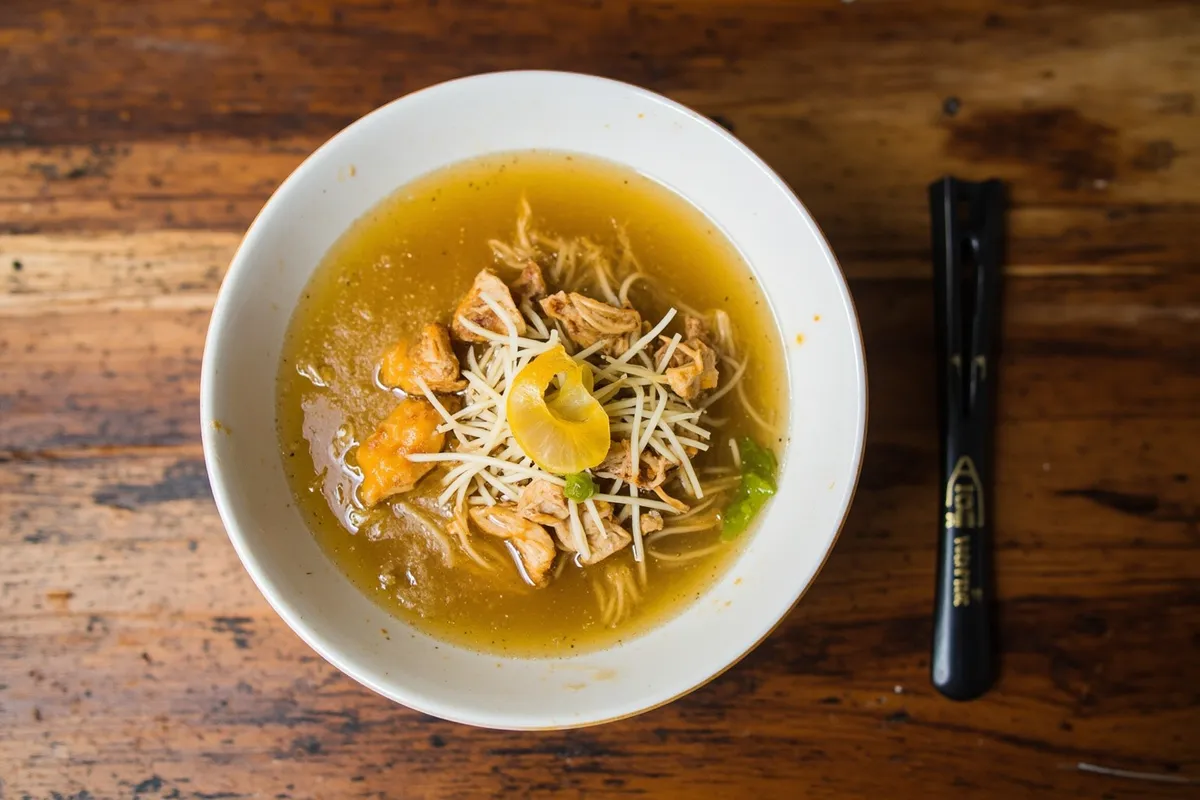
AFURI Ebisu is three minutes from JR Ebisu Station, has eighteen counter seats, serves from 11 a.m. until 5 a.m. the next morning and takes no cash at all. That combination is rare in Tokyo: a bowl of proper yuzu shio ramen ordered on your own, at a counter, with no table to book.
For the lighter end of the menu, the same broth comes with konjac noodles, or in a plant-based version with lotus-root noodles. Here is what I would order, what it costs, and where the afternoon gets awkward.
Afuri Ebisu ramen: yuzu shio at a counter that never closes
The shop, the phone number and where the name comes from
AFURI Ebisu sits on the first floor of the 117 Building, 1-1-7 Ebisu, Shibuya-ku. The phone number is 03-5795-0750. Service starts at 11 a.m. and runs until 5 a.m. the next morning, every day of the year, and when the broth runs out the kitchen closes early, so a 2 a.m. visit is worth a phone call first.
AFURI is fussy about a few things and says so on AFURI's brand page:
- the dashi for each bowl is finished just before it goes out;
- no colourings, no preservatives, no chemical umami seasoning;
- the yuzu juice in the salt sauce is pressed in Kochi Prefecture;
- every ramen on the list starts from a chicken-and-dashi broth.
The name comes from a mountain. AFURI takes it from Mt. Oyama, better known as Mt. Afuri, at the eastern end of the Tanzawa mountains in Kanagawa, and the spring water from that area goes into the soup. The first shop opened in 2001, and the list on AFURI's own shop page now runs to nineteen addresses, from Ebisu and Harajuku to ZUND-BAR in Atsugi.
Before a late trip, ring 03-5795-0750 during the day. The line gets answered, and you will know whether there is still broth at 2 a.m.
Yuzu shio ramen, the bowl the chain is built on
The Yuzu Shio Ramen is the signature, and the Ebisu counter serves it the way the AFURI menu page describes it: a chicken-and-dashi broth seasoned with yuzu through a special salt sauce, very thin whole-wheat noodles, and a set of toppings laid on top.
Each topping has its own job.
- half nitamago, a marinated soft-boiled egg, for weight and salt;
- chashu, seared to order, for the fatty note;
- mizuna, a water spinach herb, for something green;
- menma, bamboo shoots, for sweetness against the salt;
- nori for the smoky layer on top.
The order of the bowl matters when you eat it. Yuzu and salt hit the nose first, the chashu sits underneath, and the thin noodles disappear quickly. I drink half the broth, then eat down through the toppings.
On the word "light": this bowl carries chashu and egg, so it is not a diet plate. What makes it easier than a shoyu ramen is the seasoning, salt and citrus instead of soy. If the portion size matters to you, ask the counter rather than guessing at it.
Then add the aburi chashu on the side: the same pork seared over charcoal slice by slice, with a smoke the simmered chashu in the broth does not have.
Getting to AFURI Ebisu: three minutes from JR Ebisu Station
Address, trains and the last metres
The details, so you are not searching twice:
- AFURI Ebisu, first floor of the 117 Building, 1-1-7 Ebisu, Shibuya-ku, Tokyo
- 11 a.m. to 5 a.m. the next morning, every day
- 03-5795-0750
- eighteen counter seats, no tables, no private rooms
- non-smoking, no car park, fully cashless
The last stretch is the easy part. It is a ground-floor shop on the station side of the neighbourhood, so there is no lift or stairwell to hunt for, and it is 213 metres from the JR Ebisu gates, about three minutes on foot. The whole room is eighteen counter seats. You sit shoulder to shoulder with strangers, there are no private booths, and AFURI has no private-use option, so the counter is not rented out for a party. Children and strollers are welcome, and there is a baby chair if you need one.
JR Ebisu is also a subway station. The Hibiya Line runs south from there through Hiroo to Roppongi and Kamiyacho, which is the easy way in from a hotel on the subway side of the city. Every Tokyo station sells the ride with a Suica or PASMO card, so the train and the last 213 metres work on one card.
Plan the trip around the JR side of the neighbourhood. The walk from the gates is the only part you need to think about.
How far the closest places are
From the door of AFURI Ebisu. The station distance is the one AFURI gives; the other times are my own rough estimates from a map, so read them as walking pace rather than a timetable.
| Where | On foot | By train or bus |
|---|---|---|
| JR Ebisu Station | 3 min (213 m) | – |
| Ebisu Yokocho bar alley | about 4 min | one JR stop to Shibuya |
| Shibuya Crossing | 15–20 min | two JR Yamanote stops |
| Meguro River, Naka-meguro | about 30 min | Hibiya Line one stop |
| Tokyo Tower | about 45 min | Hibiya Line to Kamiyacho, then 10 min on foot |
After midnight the shop is still cooking while the trains thin out. Check the last-service times for your line before you order a 2 a.m. bowl and keep taxi money back for the way home, because the counter stays open until 5 a.m. and the trains do not.
Yuzu shio ramen in Tokyo: the bowl list, the noodles, the sides
Yuzu shio, yuzu shoyu and Yuzu Ratan
Three yuzu bowls share one base. All of them are built on a chicken-and-dashi broth, so what changes between them is the seasoning, not the stock.
| Bowl | Broth | Direction |
|---|---|---|
| Yuzu Shio Ramen | salt sauce with yuzu over the chicken-and-dashi base | The signature: citrus and salt, with half nitamago, chashu, mizuna, menma and nori |
| Yuzu Shoyu Ramen | shoyu broth with dashi and yuzu | AFURI calls it the darker sister of the shio. Deeper soy, softer yuzu |
| Yuzu Ratan Ramen | spicy broth with raw chilli | Chilli depth cut by yuzu acidity, with white negi in place of menma |
For a first lunch I would order the Yuzu Shio, because the yuzu reads cleanest over that salt sauce and it is the bowl the chain is known for. Go for the shoyu if you want soy in the broth and less brightness. The Yuzu Ratan is the hot one: the chilli is the point, and the yuzu is there to cut the heat rather than hide it.
The shio also carries the thinnest noodle of the three, and it goes down fast in a hot broth. I eat it in the order it comes and order it again.
Start with the signature, and switch to Yuzu Ratan only if you actually want chilli.
Tanrei or Maroaji, and the noodle you pick
Two choices go into the bowl before it reaches you: how much chicken oil, and which noodle. AFURI lists both.
| Noodle | What it is | Who orders it |
|---|---|---|
| Gokuboso Men | the default: very thin, a blend of Hokkaido whole-grain wheat and rye | people who want the yuzu and salt to stay in front |
| Temomi Men | wavy, hand-kneaded, more body | people who find the very thin noodle too soft to pick up |
| Konnyaku Men | konjac: low in calories, high in dietary fibre | people limiting sugar or carbs and watching their weight |
On the oil: Tanrei is AFURI's standard, balanced pour of chi-yu, and Maroaji is a slightly richer one. It is a ramen choice, so tsukemen does not come into it.
My pick at the counter is Temomi Men with Tanrei. The very thin default is excellent with a salt tare, but on a first visit I want something with more bite, and the yuzu holds up against the wave.
On konjac, be clear-eyed: low-calorie and high-fibre is AFURI's framing of the noodle, aimed at people limiting sugar or carbs. It is not a measurement of the finished bowl, and the chashu and egg are still in there.
Decide the noodle and the oil level before you join the queue, and say both when you order.
Sides, seasonal bowls and tsukemen
Sides are ordered on their own:
- aburi chashu, seared over charcoal slice by slice;
- kaku-ni chashu;
- nitamago;
- menma;
- seven pieces of Awajishima nori;
- mizuna.
The aburi chashu is the one I would add. It is a different treatment from the chashu in the broth, and the charcoal gives it smoke you do not get from simmering.
Tsukemen comes with the tare in a separate bowl to dip into, and the noodles can be ordered hot or cold. There is a thick konjac version of it too. The seasonal boards rotate through the year, with sakura shrimp shio ramen, chestnut tantanmen, winter miso ramen and paitan ramen appearing as limited items, priced on the same machine as the regular bowls.
Rice is worth a note because AFURI blends it: every bowl of rice on the list, the plain Gohan included, mixes white rice, sticky rice and rolled oats. Even a side of rice is not a plain bowl of white.
Add the aburi chashu, and ask what the seasonal bowl of the day is before you commit to the standard one.
A light ramen lunch in Tokyo: konjac, vegan and cold bowls
Rainbow Vegan Ramen and lotus-root noodles
There are two ways to eat lighter here, and they sit in different places on the menu.
The first is the Rainbow Vegan Ramen: plant-based from broth to tare to toppings, with noodles bound using lotus root starch instead of egg, and vegetables that change with the season. On AFURI's list of shops it is absent from only two addresses, Yokohama Joinus and ZUND-BAR, so the Ebisu counter serves it.
The second is the konjac noodle, which you can ask for inside the regular yuzu bowls: low in calories, high in dietary fibre, and AFURI's own suggestion for anyone limiting sugar or carbs.
What I would not do is rank the two. There is no way to compare them on numbers, so the honest comparison stays at broth style and noodle type. A vegan bowl is not automatically the smallest thing on the counter, and konjac noodles do not turn a bowl with chashu and egg into a light one. If portion size is the reason you are here, Japanese-style weight loss without fad diets is worth reading before you order.
Ask for the vegan bowl or the konjac noodles before the broth goes down, and tell the staff what you are managing.
Cold yuzu shio and the warm-months order
In the warm months AFURI runs a cold Yuzu Shio Ramen: chilled broth arrives with homemade yuzu jelly and grated ginger that dissolve into the soup as you eat it. The same cold logic shows up in tsukemen, where the tare sits in its own bowl and the noodles can be hot or cold.
This is the bowl I order in high summer. Cold dashi, citrus, and no steam in your face at a counter with people either side of you.
In the warm months I look for the cold yuzu shio first and fall back on tsukemen when the board does not have it, because it is a seasonal item rather than a fixture.
Taking AFURI home: the omiyage kit, take-out and delivery
AFURI sells the bowl as a shelf-stable kit on its official online store, and it is the cheapest way to get the yuzu salt ramen at home:
- two servings, ¥1,290;
- three servings, ¥3,580;
- six servings, ¥6,860.
The two-serving pack is the sensible first order. It is a dry kit you make on your own stove, and the instructions are printed on the pack, so read them before you start rather than working it out from the bowl.
Try the two-serving pack before you commit to a bigger one. A dry kit wants more attention than a bowl at the counter, and it earns its place as a weeknight dinner rather than a five-minute job.
Take-out and delivery are both available at the Ebisu branch, which is the practical answer for the offices around Ebisu and Sangenjaya when the lunch window is thirty minutes rather than an hour. If you want a sit-down lunch for a small group instead, where locals eat a light Japanese lunch at Yurakucho Marui is a different kind of room.
Order the two-serving pack for ¥1,290, and read the box before you plan around it.
Ordering at AFURI Ebisu: cashless payment, TableCheck and the walk-in queue
Cashless only: what actually works at the counter
AFURI Ebisu is a fully cashless branch. Cash is not handled at all, and that catches people out more often than you would expect. The shop list marks twelve AFURI addresses as cashless, Ebisu and Harajuku among them, while seven others, ZUND-BAR in Atsugi included, still take notes. The rule is set per branch, not for the whole chain.
What works at the Ebisu counter:
- cards: Visa, Mastercard, JCB, American Express, Diners Club and Discover;
- transit IC cards: Suica, PASMO, ICOCA, Rakuten Edy, QUICPay and others;
- mobile wallets: PayPay, Rakuten Pay, au Pay, d Payment, Merpay, J-coin PAY, Bank Pay, Alipay and WeChat Pay.
If you are a visitor with no Japanese card, a Visa or Mastercard in your phone wallet will do it, and Alipay and WeChat Pay are on the list as well. Bring no cash to Ebisu; if you are driving out to ZUND-BAR in Atsugi instead, cash is the safer bet.
Check that your card or wallet is on that list before you travel, and take nothing else.
TableCheck, walk-ins and the ticket machine
Reservations run through TableCheck, and the link for this branch sits on AFURI's shop list. Tabelog's own booking widget shows no availability here, so if you want a seat at a set time, TableCheck is the route. Without a slot you walk in and take what is free.
How I would do it:
- Open the AFURI Ebisu page on TableCheck and take any slot it offers.
- If it shows nothing, plan to walk in, and go early.
- Expect to sit at the counter among eighteen seats. A ticket system operates at the entrance, and the prices are set there.
- Come at an off-peak hour if the time is fixed for you rather than for the shop.
Late afternoons are calm: a recent reviewer walked in at 5 p.m. on a weekday and found nobody there. Lunch is the busy hour and an eighteen-seat counter fills quickly, so read the cancellation terms on the TableCheck page before you book and turn up outside the lunch rush if your time is fixed.
Book through TableCheck when a slot appears. Otherwise go early and go to the counter; with eighteen seats, arriving early beats arriving prepared.
Lunch is a bowl, not a set
Lunch here is a bowl, not a set. There is no set menu and no lunch course for this branch, and Tabelog places AFURI Ebisu in its Tokyo ramen lunch rankings, which is a nod to the fact that it works for a working lunch rather than a celebration.
On money: average spend at this branch runs ¥1,000–1,999 per person. That is an average across all visits, not the price of a bowl. The bowl prices are set on the ticket machine at the entrance, and a side of aburi chashu or a drink adds to the total. Drinks are not part of a set here, because there is no set.
For a quick work lunch: one bowl plus one side, and you are in and out. Take-out and delivery are available for offices around Ebisu and Sangenjaya, usually the easier option when the window is 30 minutes. Children are welcome and there is a baby chair. If you are counting the yen as carefully as I do, Tokyo on a Budget: cheap eats, market snacks and low-cost drinks gives the wider picture for a cheaper day around Ebisu.
Order one bowl plus one side at the counter, or send the delivery order to the office. Do not wait for a set menu to appear.
What diners say, who it suits, and the verdict
What the reviews actually record
Three recent reviews, with the platform and the season, so you can judge how much weight to put on them.
| Platform | Season | What the review records |
|---|---|---|
| Tabelog | Autumn 2026 | A regular from the early days, who used to come in often right after the shop opened |
| Tabelog | Autumn 2026 | The shop was empty at 5 p.m. on a weekday, so the counter is quiet in the late afternoon |
| Tabelog | Early summer 2026 | The classic yuzu salt ramen ordered together with a bonito-based rice bowl |
The aggregate number is 3.46 out of 5 from 2,552 Tabelog reviews, with the shop listed as a registered corporate member. A mid-range score on that volume says the bowls are steady rather than famous. Nobody queues around the block for it, and nobody is writing manifestos about it either.
The complaints you hear most at counter-only ramen shops are the price of a bowl, the lack of tables and the queue at the door. I would weigh those as things to plan around rather than as recorded findings for this branch.
I would read the branch's Tabelog page before a peak-hour visit and pick a weekday slot outside the lunch rush.
The real downsides, and who should skip it
Every downside here comes down to the way the room is built:
- eighteen counter seats, no tables, no private rooms, and no private-use option, so the counter is not rented out for a party;
- the entrance is on the first floor of a shared building, so a peak-hour queue takes up space in the corridor outside;
- cash is not handled at all, which is awkward if a card reader refuses your card;
- no car park, so a car means finding a space somewhere else first;
- the hours run to 5 a.m., which cuts the other way if you are asleep by midnight;
- no set menu and no lunch course, so a group cannot order one thing and share.
Skip it if you want a private room for a date, if you are a large group, if you are counting on a set with a drink included, if you need to pay in cash, or if you need to park outside the door. For a party of four or six, check the TableCheck page before you try to seat everyone along one counter.
Any of those and you should take the Harajuku branch or a different Ebisu counter rather than force this one.
The verdict, and the other AFURI branches to try
My verdict: worth the three-minute walk for the yuzu shio bowl. Book a TableCheck slot if your lunch window is fixed, walk in early if it is not, take the ¥1,290 two-serving kit home if you want the flavour without the counter. Eighteen seats at a counter means you eat and go, and for that this is an excellent place.
| Branch | Where and when | What differs |
|---|---|---|
| AFURI Harajuku | 1F Grandeforesta, 3-63-1 Sendagaya, 10 a.m. to 11 p.m., fully cashless | The regular AFURI menu, yuzu bowls included, on the Harajuku side of the city |
| AFURI Naka-meguro | Hibiya Line, one stop north of Ebisu, fully cashless | The regular menu again, closer to the Meguro River |
| AFURI Karakurenai, Harajuku (Jingumae) | separate shop in Jingumae | The spicy yakuzen line rather than the yuzu shio |
| AFURI Karakurenai, Shinjuku Subnade | separate shop in Shinjuku | The same spicy line, if Shinjuku is closer to you |
| ZUND-BAR Atsugi | Nanasawa, Atsugi | The original-style counter. Cash is handled here, and the Rainbow Vegan Ramen is not on the menu |
Pick the branch by hours and by cashless status. If the vegan bowl is why you are coming, check it at the branch you choose first. For a different kind of Tokyo food stop, Azabudai Hills and its food district is worth a look.
Five things to sort out before you travel
- Read the cancellation terms on the AFURI Ebisu TableCheck page before you reserve a slot.
- Look at the price screen at the entrance before you pick your bowl; the ramen and side prices are set there.
- Ask how the shop registers a noodle swap and an oil level, so the konjac and Maroaji choices actually land.
- Ask whether the seasonal cold yuzu shio is running before you commit to a hot bowl in the warm months.
- Ask about the portion size if calories matter to you, and check with your bank that a yen charge on a foreign-issued card will go through.