
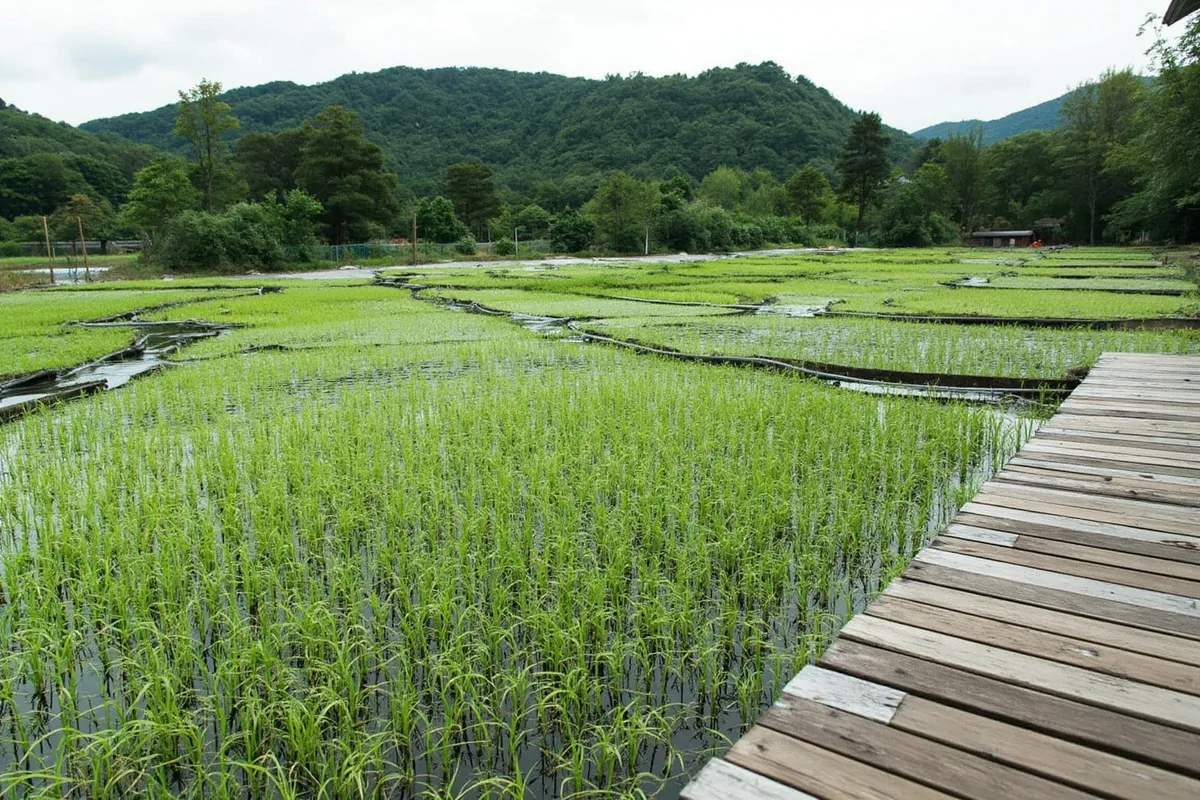
The Tokyo Wasabi Tour is a two-hour private visit to a working wasabi farm in Mitake, about 90 minutes by train from Shinjuku. ¥19,500 per person tax included, roughly US$123, and the rubber boots you wade through the beds in come with it. You walk down to stone terraces, taste root grated fresh next to rice, and see what a plant does that a tube of paste cannot.
Two things before you write to them. TOKYO WASABI runs one product: the farm tour, plus a wasabi food truck and a BBQ area. If it was a Tsukiji market walk or a sushi-making class you came for, this is not it, and section 6 has those with prices. The day itself is rural: boots, a 15-minute path through woodland, a short drive from the meeting point to the fields.
One more thing, because the difference matters more than the price. At my kitchen table, wasabi paste means sharp horseradish. I have cooked with it for years without knowing what I was missing.
Tokyo Wasabi Tour: what the ¥19,500 outing includes
One product, one price, one group a day. There is no second tour and no shared hall, so everything below describes the same two-hour outing.
One private group a day, in English
TOKYO WASABI is a family wasabi farm run by two brothers, and the tour is private: your party walks the beds on its own because only one group is accepted per day. The guide speaks English, and a Japanese-language version of the same outing runs on a separate rate you have to ask for. The walk starts at 8:30 from May to September and at 11:00 from October to April.
The meeting point is by the river, seven minutes on foot from JR Mitake station on the Ome Line. Give a taxi the address as printed: 1-192-4 Mitake, Ome-shi, Tokyo 198-0174.
| Ticket | Private tour, one group per day |
|---|---|
| Length | About 2 hours |
| Start | 8:30 (May–September), 11:00 (October–April) |
| Back | Roughly 2 hours after the start |
| Language | English; Japanese version on request |
| Age | From 7 years |
| Included | Rubber boots for the walk |
| Meeting point | 1-192-4 Mitake, Ome-shi, Tokyo 198-0174, by the river |
| From the station | 7 minutes on foot from JR Mitake |
| Days | Mostly weekdays; weekends on request |
How the two hours run
The shape of the day is simple, and worth knowing before you commit to a train time.
- 10–15 minutes at the meeting point: briefing, boots, questions
- About 15 minutes by car to the farm
- About 15 minutes on foot through woodland to the terraces
- Wasabi tasting at the beds, with rice
- Return to the meeting point or to JR Mitake Station
The fields sit on private land, so you see them only with the guide, and no harvest is promised: whether rhizomes can be taken depends on the season and the state of the beds. Fresh wasabi fades fast, so eat it when it is offered rather than saving it for the train home.
Two brothers and a farm rebuilt by hand
Wasabi has been grown in this valley for a long time. Mitake was a post town on the Nakasendo road, and planting rhizomes in cold stream water goes back to the Edo period. Typhoon Hagibis did the damage in 2019, tearing through the valley and wrecking the terraces. The brothers have been putting the stone back by hand since 2020, and a feature on the farm's wasabi experience appeared in The Japan News (Yomiuri) in 2026.
Getting to the Mitake meeting point
Ninety minutes from Shinjuku is not a hop. It is half a day of the trip before the tour even starts, so plan for a full day out.
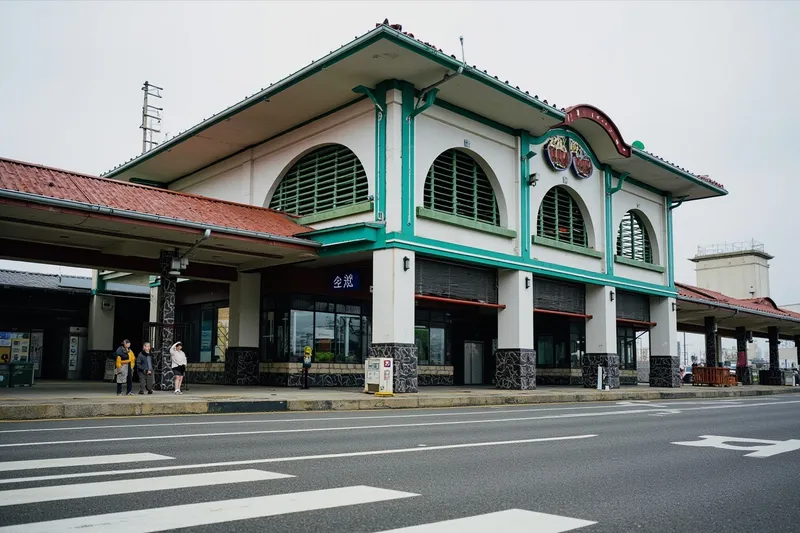
By train from Shinjuku
Take the JR Chūō Line west from Shinjuku and change to the JR Ome Line at Tachikawa. At Ome you change again onto the train toward Okutama and ride to Mitake, the end of the run. The whole thing takes about 90 minutes, and Suica or Pasmo cards work at every station on the route. Arriving from the south or west of the city, ride the JR Yamanote Line to Shinjuku first.
| Leg | Line | Change |
|---|---|---|
| Shinjuku → Tachikawa | JR Chūō Line westbound | – |
| Tachikawa → Ome | JR Ome Line | Tachikawa |
| Ome → Mitake | JR Ome Line toward Okutama | Ome |
| Mitake → meeting point | 7 min on foot | – |
Do the sum before you book. An 8:30 start means leaving Shinjuku around 6:30, an 11:00 start means around 9:00, and you are back at about 10:30 or 13:00. That is close to five hours door to door, plus roughly ¥1,000–1,150 each way for the fare. The line runs mostly local trains, so check the last one home in JR East's timetable app.
By car on the Ken-O Expressway
By car it is about 40 minutes from the Ome or Hinode interchanges on the Ken-O Expressway (C4), which is tolled. The farm has a single shared parking spot, so a second car should go to the Mitake Enchi lot, roughly 5–10 minutes further on. I would bring one car rather than plan a shuttle; the visit is two hours and the group stays together.
What is within reach
Nothing is open for a coffee at the meeting point itself, so on an 8:30 start eat in Mitake-juku first.
| Landmark | From the meeting point |
|---|---|
| JR Mitake Station | 7 min on foot |
| Riverbank at the meeting point | 1–2 min on foot |
| Okutama Station | about 6 min by local train |
| JR Hino | about 30–35 min by train |
| JR Ome | about 25 min by train |
| Mitake-juku shopping street | about 10 min on foot |
| Shinjuku | about 90 min by train |
| Central Tokyo | about 2 h by train |
Times shift with the timetable and gaps between local services are wide, so check the app the morning you go.
Real wasabi on the farm: the rhizome, the terraces and the paste
Half of what you pay for is a view of plants. The other half is an explanation of why the plant behaves nothing like the paste you squeeze from a tube.
Rhizome, paste and the mustard oil
Japanese wasabi is Eutrema japonicum, and the part you eat is the rhizome, a knobbly root you grate. Grating breaks the cells, and the reaction that follows makes allyl isothiocyanate, the mustard oil behind both the bite and the punch up the nose. You grate rather than slice for that reason, on a fine ceramic oroshigane.
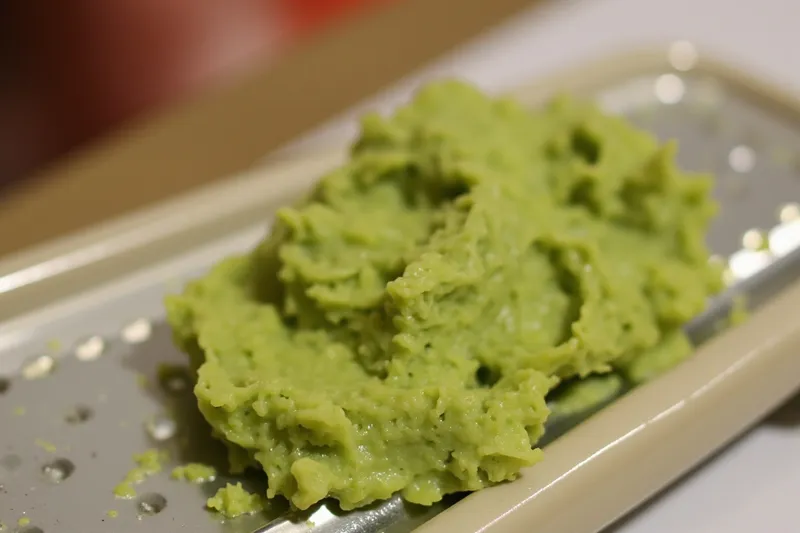
The paste in a tube is horseradish with starch, and heat kills the same compounds, which is why a restaurant can keep fresh wasabi in ice water all evening while a tube sits in a warm kitchen for months. At my table, paste means sharp horseradish; here you can taste root and paste side by side.
Stone terraces and cold running water
The beds are stepped stone terraces with stream water running across them in a thin film. Wasabi wants cool running water, shade and gravel, and it is slow: a rhizome takes years to grow to a size worth cutting, and the crown is replanted after each harvest. The land is private, so the walk happens with the guide and only with the guide. The terraces you see now are the ones the family put back after the 2019 typhoon.
Eating it in the first five minutes
The tasting is part of the two hours, and it is best done straight away at the beds with the rice they bring out. The operator running the other Okutama wasabi tour describes fresh wasabi as sharpest in the first three to five minutes after grating and at its best within half an hour, so if a mound of root appears, eat it then. The family also runs a wasabi food truck and a BBQ area; the questions worth settling by email are collected at the end of this article.
Boots, a woodland path and no lunch
This is a rural outing with physical conditions attached: boots, socks, a damp path and no meal on the programme.
Boots, socks and the woodland path
The farm hands out rubber boots and asks you to wear your own socks under them, so socks are not optional. Wet socks on a 15-minute woodland path is a bad way to start a morning. Boots are in the price, so there is nothing to buy, but check that everyone can pull one on over what they are wearing. The recommended minimum age is 7.
- Socks, worn under the boots
- Closed shoes for the walk around the village
- Spare socks or dry clothes if anyone will get wet
- Insect repellent for mosquitoes and ticks in the warm months
- A bottle of water
No queue, no shared group
Because only one group is accepted per day, nobody else is on the beds. There is no coach dropping off forty people and no table of strangers to share a knife with. The guide sets the pace, the car makes one run out and one run back, and if your group is small the walk is slow. Most departures are on weekdays, and weekend dates have to be requested, which, for me, is the point: a weekday slot is the version of this visit you can actually get.
Guest feedback for Okutama wasabi tours tends to describe a quiet forest, a knowledgeable guide and clear instructions before the day. Section 6.3 says who those reviews belong to.
No meal, and allergy notes
There is no meal in the programme. The ticket covers a private guide, the boot rental, transfers between the meeting point and the farm, and the tasting. Travel from Tokyo and food for the rest of the day are yours to arrange.
If anyone in the group has a food allergy, write before you book. Operators running farm tastings in this area warn that they cannot guarantee allergy arrangements, so treat the tasting as uncontrolled.
Not in the price:
- The train or drive to and from Tokyo
- Food and drink for the day
- Anything bought at the food truck or the BBQ area
- Any class beyond the tasting
Prices, inclusions and cancellations
One base price and one surcharge, and nothing sold at the farm counter. The yen figure is the one that counts; the dollar amounts are for planning.
¥19,500, plus ¥5,000 at busy times
A weekday tour is ¥19,500 per person tax included, roughly US$123 at the 2026 reference rate from the European Central Bank, and the yen price on the operator's tour page is what you pay. Weekends and public holidays add ¥5,000 per person, so about ¥24,500 or US$155 in total. The surcharge also covers Golden Week at the end of April, Obon in mid-August, and the New Year break from 30 December 2026 to 4 January 2027. The price is per person and the tour is private, so two guests pay about ¥39,000 (US$247) and four about ¥78,000 (US$494).
| When | Price per person | In dollars |
|---|---|---|
| Weekdays | ¥19,500 | ≈US$123 |
| Weekends, public holidays, Golden Week, Obon, 30 Dec 2026 – 4 Jan 2027 | +¥5,000 (¥24,500 total) | ≈US$155 |
The cancellation ladder and the weather call
Cancellations run down a ladder, and timing decides the damage.
| When you cancel | Fee |
|---|---|
| 6 or more days before | 30% |
| 1 day before | 50% |
| On the day | 100% |
| Operator cancels or moves the tour for weather | nothing |
The weather call belongs to the operator, made on the basis of the forecast the day before; if they cancel or reschedule, no fee is charged. That free escape only works in their hands, though. Cancel yourself a day ahead because the forecast looks bad and the 50% still applies, so wait for their decision before you write.
Booking, and the dates already blocked
Two ways in: the booking form on the tour page, or an email to info@tokyowasabi.com. Replies from info@tokyowasabi.com or tokyowasabi0428@gmail.com often land in the spam folder, so check Spam and Junk before assuming nobody answered.
Only one group goes out per day, so dates fill up and some are already blocked:
- November 2026: 2–3, 5–7, 10, 14, 16, 20–23 and 29
- December 2026: 6–10, 12–13, 16 and 19–20
- January 2027: 11
That is a list of blocked dates, not a timetable. Other dates can be taken as well, and the list moves as bookings come in, so read the tour page again before you fix a plan.
Market walks and sushi classes: what to book instead
The title promises a market walk and a sushi-making class. This operator has neither: their English site lists three things, the farm tour, a wasabi food truck and a BBQ area. If the market or the class is why you are here, book it elsewhere. Here is what the alternatives cost.
The operator's actual line-up
The family's other two businesses are the natural companions to the tour, and combined with the farm visit they turn a two-hour walk into a full rural day. Worth settling in the same email: where the food truck stands at the weekend, what it charges, and whether the BBQ area takes visitors without a tour.
Around Okutama there is a second layer to untangle, since tourism portals describe a weekend wasabi food truck near Okutama Station and a combined wasabi and soba-making programme. Check who runs those before you assume it is this family: the operator's own site lists only the three businesses above. The pages to read are the Tokyo Mokunavi activities page and the Gourmet Tokyo article on Okutama.
Sushi classes and the Toyosu market tour
Three ways to spend a similar amount of money on a different day:
| Option | Price | What you get |
|---|---|---|
| TOKYO WASABI farm tour | ≈US$123 | Two hours on a working wasabi farm with a private guide |
| Sushi lesson in a 100-year-old sushi bar | US$55.24 | One-to-one shaping and seasoning at the counter |
| Onigiri shaping class | US$64.99 | Building rice balls by hand |
| Toyosu market tour with your own chef | US$305.46 | Market stop plus a private chef session |
The gap comes down to what is in the box. The cheapest buys an hour with a sushi teacher at a bar counter; the most expensive buys a chef and a market stop for a group. The farm tour sits between them and buys something else again: boots, a forest path and a plant you cannot buy in a shop.
On a Tsukiji market tour: the wholesale market moved to Toyosu years ago, and what is left at Tsukiji is mostly retail and restaurants around the old site. If a listing says Tsukiji, look at the meeting point and check the Toyosu Market site for the current layout. If you end up at the old market, what to eat at Tsukiji Outer Market is worth reading first, and for cheap sushi without a queue, Sushi Zanmai Honten does the job.
The other Okutama wasabi tour from Kawai
There is another wasabi tour in the same valley, run by an Australian farmer called David, starting at Kawai Station in Okutama instead of Mitake. It is a different company on a different platform, and the meeting point, the length of the day and the cancellation rules are not the same.
| Kawai tour (David) | TOKYO WASABI, Mitake | |
|---|---|---|
| Meeting point | Kawai Station, Okutama | 1-192-4 Mitake, by the river |
| Length as sold | 2.5 h on byFood, 3–4 h on Activity Japan | about 2 h |
| Price | US$58.49 per guest | ¥19,500 ≈ US$123 |
| Group | up to 5, or 1–9 on Activity Japan | one group per day |
| Minimum age | from 0 | 7 |
| Weather | runs in any weather | operator's call the day before |
| Cancellation | free 2 days ahead, or full refund 7 days ahead | 30% / 50% / 100% |
| Cut-off | 23:59, four days ahead | ask the operator |
| Days | not Monday or Tuesday | weekdays, weekends on request |
The Kawai version is cheaper and more flexible: solo travellers and small children are welcome, it runs whatever the weather does, and it costs less than half. One note from its listing: no lunch is included and there are no shops or restaurants around Kawai Station, so eat before you go. A June 2026 guest put the journey from Tokyo at 1 hour 45 minutes by local train, a useful check on your own planning.
| Platform | Season | Praised | Criticised |
|---|---|---|---|
| byFood | June and October 2026 | knowledgeable, generous guide; real wasabi flavour; quiet forest setting; clear instructions before the day | nothing reported |
| byFood | November 2026 | same guide and forest setting | two of 109 ratings below five stars, both four stars, with no review text visible on the page |
Those reviews belong to the Kawai tour, not to this operator's outing, and the Kawai listing's overall rating is 4.9 from 109 reviews with more than 400 bookings. For the Mitake trip, read the Google Maps, Tripadvisor and GetYourGuide listings yourself, and weigh the structural facts: one group a day, weekday departures, nobody else in the beds.
Who should book it, and who should skip it
Short version: a small, well-run farm visit that pays off if you care about the plant, and the wrong booking if you want a market or a class.
Book it if
- You want to see real wasabi and understand why the paste in your tube behaves differently. That comparison is the point of the two hours.
- You would rather have the beds to yourselves: one group a day, no shared coach, no queue.
- Your group is comfortable in boots on a woodland path, and includes children aged 7 or over.
- You can give the day its five hours, including 90 minutes of train travel each way.
- You can plan a weekday and write in English; weekends and the Japanese version need a request.
Skip it if
- What you want is a market walk or a sushi-making class. Those are in section 6.
- You have less than about five hours for the whole trip.
- You expect to harvest wasabi and take it home. The harvest is not promised.
- You have a food allergy and cannot work around an uncontrolled tasting.
- Wet socks and a forest path would spoil the day.
- You need a specific weekend date without a request, or the Japanese-language price sorted out without writing first.
Booking recap and quick answers
Address: 1-192-4 Mitake, Ome-shi, Tokyo 198-0174, by the river, seven minutes on foot from JR Mitake Station. Book with the form on the tour page or by email to info@tokyowasabi.com, and check your spam folder if the reply goes missing.
- How do I book? The form on the tour page or an email to info@tokyowasabi.com. Replies from that address often land in spam, so check Spam and Junk.
- How long is the whole day? About two hours on the farm plus roughly 90 minutes each way by train from Shinjuku, so close to five hours door to door. Starts are 8:30 from May to September and 11:00 from October to April.
- Can I go on a weekend, and is there a surcharge? Weekend departures need a request, and ¥5,000 per person is added on weekends, public holidays, over Golden Week, Obon and the New Year break from 30 December 2026 to 4 January 2027.
- What should I wear, and can I bring children? Socks and closed shoes, with farm-provided rubber boots for a 15-minute woodland path. The recommended minimum age is 7.
- What happens if it rains? The operator decides on the day before, based on the forecast: the tour is cancelled or moved and no fee is charged. If you cancel yourself a day ahead, 50% is kept.
- Is there food on site? The wasabi tasting is part of the programme, but no meal is included. The family also runs a wasabi food truck and a BBQ area, so ask where and when they open.
Before you book, settle these five things:
- The last train home from Mitake, against a finish around 10:30 or 13:00; the JR East app is the quickest check.
- Whether the root gets grated for you at the tasting, and which variety of wasabi the farm grows.
- Whether a wheelchair or stroller can manage the meeting point and the 15-minute path.
- How you pay on the farm, card or cash, plus the food truck's weekend spot and prices.
- The Japanese-language tour price, and whether the per-person price changes for a group of six or more.
For anyone who wants the plant rather than the paste, and who can spare a weekday and five hours, this is the version of wasabi worth the train ride. If your trip is built around a market, a class or a city food crawl, you are buying the wrong thing and should spend your money on one of the options in section 6 instead. The real constraint is arithmetic rather than taste: one group a day, blocked dates through November and December, and 90 minutes of travel each way. It rewards planning more than spontaneity.