
Twenty-one seats, every one of them a single booth with a bamboo curtain, in a basement off the Shibuya scramble. That is Ichiran Shibuya: a tonkotsu ramen shop with no tables, no reservations and a ticket vending machine where a host would be. It trades around the clock, the bowl has been on the menu since 1960, and it costs ¥1,180 before you add anything. Is a one-person basement counter worth a wait nobody can size up for you in advance, and what should you order once you are sitting in it?
Ichiran Shibuya: 21 solo booths under the Shibuya scramble
Address, entrance and three minutes from the station
The address is worth saving in Japanese, because the entrance is downstairs and a map app will handle the rest: 1-22-7 Jinnan, Shibuya-ku, Tokyo 150-0041, Iwamoto Building, B1F. The map pin sits at 35.6611273, 139.7010453. From the Hachiko Exit of JR Shibuya Station it is three minutes on foot, and the same three minutes from Tokyo Metro Shibuya Station. From the Metro side you cross the scramble crossing, walk along Inokashi-dori beside the 109-2 building towards Harajuku, and the stairs down are next to Shibuya Marui JAM.
There is no car park at this branch, so plan on the train or on foot. Tabelog measures the shop at 236 metres from the station, which matches those three minutes.
| On foot from | Time |
|---|---|
| JR Shibuya Station, Hachiko Exit | 3 min |
| Tokyo Metro Shibuya Station | 3 min |
| Shibuya scramble crossing | 3 min back the way you came |
How the solo dining booth works
Every seat is the same piece of furniture: a solo dining booth with partitions on the sides and a bamboo curtain at the front. Ichiran calls the idea the ramen focus system, and the branch has 21 of these Taste Concentration Counter seats. There is no table seating and no private dining room, so two people who come together end up in two booths with a wall between them.
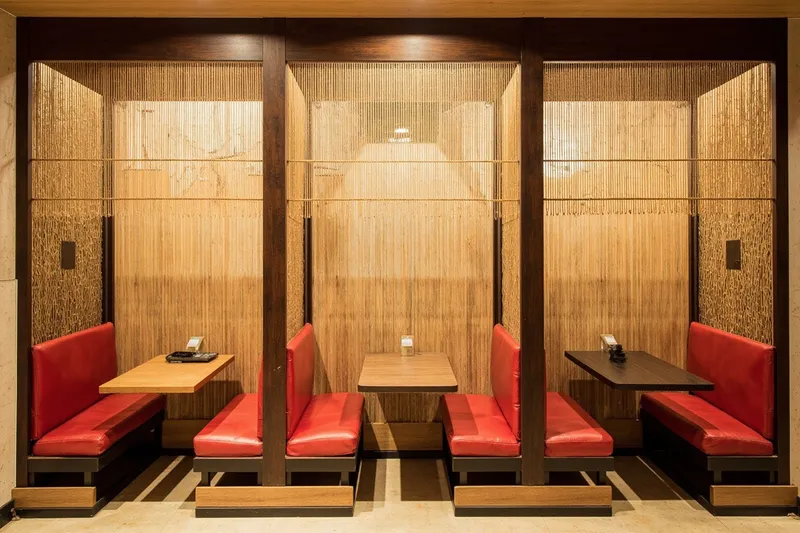
The partition exists for the company's own reason. Ichiran says a bowl takes about ten minutes of eating in silence, and a walled-off seat lets you take those ten minutes without a stranger across the table watching your face.
- A bamboo curtain across the front, so the aisle is out of sight while you eat.
- A kae-dama button beside the curtain, used for refills.
- A paper order form where you mark seven things, plus the ticket you printed at the machine.
- Partitions between neighbouring booths, the reason the room feels like eating alone.
A 24-hour ramen shop whose last order moves
The schedule says 24 hours, and that is the plan on an ordinary night. The rest moves: the last order time and the closing time shift with how busy the shop is, and you can be turned away before the last order of the night. Depending on staffing, the branch may also cap the number of guests, change its hours or close outright. One closure is already scheduled, on Thursday 26 November from 07:30 to 08:30.
The phone number is 050-1808-2546, and it is often not answered when the shop is busy. For a 03:00 plan, ring it the day before rather than while standing on the street.
How to order Ichiran ramen at the Shibuya branch
Step one, the ticket vending machine
There is no host, no clipboard and no reservation system. You order walk-in at a ticket vending machine: pick the bowl on the panel, pay, and take the printed ticket. Seating depends entirely on the queue in front of that machine.
The payment list is unusually generous for a Japanese ticket machine. It takes cash, which matters if you have no card at all. It takes credit cards (Visa, Mastercard, JCB, American Express, Diners Club), transit IC cards such as Suica, QUICPay, Rakuten Edy and iD, and mobile or QR payments including PayPay, Alipay and WeChat Pay. The Shibuya branch page lists all of these in one place, and it is worth reading before you travel.
Decide the dish before you reach the panel. The order form later on is where the real choices are, and that one comes in English, Korean and Chinese.
Step two, the seven-dimension order form
Your bowl arrives with a paper form, and on it you mark seven things. Ichiran calls it the seven-dimension order form.
- Noodle texture, from firm to soft. Worth thinking about, since a refill can change it.
- Dashi, the strength of the soup base.
- Richness, how heavy the pork-bone broth feels.
- Chashu, how many slices of pork.
- Scallion, how much green onion.
- Spice, the level of red pepper.
- Garlic, how much garlic.
The forms come in English, Korean and Chinese, so you can order without reading Japanese. The sheet is not a suggestion; it is the recipe for that bowl.
Timing matters. The sheet arrives with the bowl, and the broth is poured once your marks have been read. Ichiran's own unbreakable rule is that the noodles go in within 30 seconds of the soup being poured.
Fill the seven marks in and hand the sheet over before the soup comes. Once the broth is down, the clock is running and the 30 seconds belong to the kitchen.
Step three, kae-dama and the 30-second rule
Refills run through the curtain. Put the kae-dama plate on the button beside the bamboo curtain, and a recorded "charamela" melody plays; a member of staff comes to take the order. Nothing else in the meal requires you to speak to anyone, which is rather the point of the room.
Two things about the refill are worth knowing. You can pick a different noodle texture from your first bowl, so a firm-then-soft comparison is possible in one sitting. And a half portion exists, which I would use before committing to the full one.
Behind it all sits a checked standard: Ichiran says any batch of broth that fails its density, flavour and scent checks is remade from scratch. Ichiran's page on the order system has the 30-second rule and the refill button in more detail.
What to order at Ichiran Shibuya, and what it costs
The Classic Tonkotsu Ramen and the toppings that change it
The Classic Tonkotsu Ramen costs ¥1,180, and it is the bowl the company has served since it was founded in 1960 (Ichiran Shibuya menu). That covers the tonkotsu broth, the noodles, and the chashu and scallion you mark on the form. Everything else is an extra, and the topping list is where a first visit gets decided.
Extra chashu, four slices, ¥290. Extra green onion ¥160, wood ear mushrooms ¥160, extra garlic, two cloves, ¥160. Soft-boiled salted egg ¥160, nori seaweed, four sheets, ¥160. The secret red spice, 11 to 20 times normal heat, is ¥140, and "Oscaran's acidity" is ¥160, which Ichiran recommends. The red sauce behind that heat is made at the company's Ichiran no Mori facility in Itoshima, Fukuoka, and the company says four people know the recipe.
Prices move, so check the live menu on the day you eat.
Extra noodles and rice
| Extra | Price |
|---|---|
| Kae-dama, full portion of extra noodles | ¥210 |
| Kae-dama, half portion | ¥150 |
| Plain rice | ¥300 |
| Small rice | ¥250 |
Tonkotsu is richer than it looks when it lands: the broth has a weight to it. The sensible order is the half kae-dama first, at ¥150, and the full one only if you are still hungry when the plate comes back.
Plain rice is the odd one out. ¥300 for a bowl of rice next to a ¥150 noodle refill is a steep price for a side dish, and the small portion at ¥250 barely helps. A topping changes the bowl; rice just sits next to it. I would skip both and spend the money on a topping instead.
Drinks, dessert and what a full meal costs
The drinks and extras list is short: medium draft beer ¥650, cola ¥200, orange juice ¥200, matcha almond tofu ¥450, and the "fat-dissolving beauty tea" ¥280. The tofu is the one worth having. It is a proper dessert with a green tea bitterness that cuts through a heavy bowl.
A worked example: ¥1,180 bowl, ¥160 egg, ¥650 beer comes to ¥1,990, right at the top of the ¥1,000–¥1,999 per person that Tabelog lists as the typical spend here. Skip the beer and the same bowl lands at ¥1,490.
Two things to know before ordering. Every order placed between 22:00 and 06:00 carries a late-night surcharge, so a 02:00 bowl costs more than a 14:00 one. And the menu does include a Kids Ramen, with children's tableware, though the range is deliberately narrow: tonkotsu ramen, its toppings, rice and drinks, and Ichiran says it does not diversify beyond tonkotsu.
The queue, the noise and how a solo booth actually feels
How long you wait and why you can be turned away
Nobody can size up the wait for this branch in advance. There is no reservation system, no booking app and no advance estimate of the queue, so the only honest measure is what you see when you get to the machine. You may walk down to B1F, look at the line and walk away again.
Two things can stop you getting a bowl even when the door is open. The last order time moves with how busy the shop is, and you can be turned away before it. And when staffing is thin the branch may cap the number of guests or change its hours on the day.
If the machine says sold out, there is no online queue and no booking to fall back on, so ask there. What happens to a ticket you have already paid for depends on the person standing next to you. My note on skipping the queue at Sushi Zanmai Honten covers the same thinking for a different counter.
Ten minutes alone: noise, privacy and the house rules
What the isolation looks like in practice: one diner per booth, 21 booths in the room, no table seating and no private dining rooms. The room is non-smoking, and there is no private use and no parking here either. Staff work the booths from the curtain side, so the corridor is the thing you see least and hear most.
The trade is simple. You get ten minutes of nobody watching you eat, and you give up table conversation, group dining and any chance of sharing a pot. With 21 seats in one basement room you hear the staff calls, the machines and the queue whether you want to or not: the partition screens the aisle, not the room.
For one person alone it is a good deal; for two who wanted to talk across a bowl of ramen, it is the wrong room entirely.
Ramen in Shibuya for tourists: first-timer traps
Three traps catch people on a first visit, and none of them is the queue.
- There is nothing to book. A plan built around a reservation does not exist here, so build the visit around a ticket and a wait.
- Bring a card or cash. The machine takes cash, credit cards, transit IC cards and PayPay-type mobile payments, so nobody is stuck. Decide the dish before you reach the panel: the order form, rather than the screen, is where the choices are.
- Check allergens before you travel. Ichiran keeps allergy information for its ramen, and the branch links it straight from the menu list, so read it at home rather than at the counter.
One more thing catches Shibuya visitors in general: the crossing itself is the loudest part of the walk. Three minutes from the Hachiko Exit sounds short on a map, and it is short, but you cross the busiest intersection in the district to do it.
What the ratings and recent reviews actually say
Score, typical spend and who comes
Tabelog currently lists Ichiran Shibuya at 3.20 points from 650 reviews, with a typical spend of ¥1,000–¥1,999 per person. That is not a hype score, and I would not read it as one: a place with 650 reviews and a 3.2 average is one most people rate well and a solid minority rate bluntly. The spend band brackets a bowl plus toppings comfortably, so the rating and the prices agree.
The same listing marks the branch as good for solo dining and for family dining, with a kids menu and allergy information available, and puts it 236 metres from the station. It also shows no reservations available, which matches the ticket machine.
The three latest entries and what they do not prove
The three most recent review entries for the branch are dated October 2026 from a regular of more than twenty years, February 2026 from someone chasing a late-night tonkotsu craving, and January 2026 from a visit with two school-age children. That is a fair description of the room: long-time regulars, single diners at midnight, families with kids in tow.
Three entries are a thin sample, and I would not let them stand in for a verdict on the bowl. The things readers usually reach for, the broth's checked standard, the privacy of the partition, a recipe unchanged since 1960, the 24-hour window, are Ichiran's own claims from its official material, and it is better to hold them as the company's promises than as a crowd verdict.
Where the format works against you
Three limits come with the design, and none of them is fixed by arriving earlier.
- It does not work for a group. Twenty-one counter seats, no table seating, no private rooms: a party of four is four tickets, four booths and four conversations nobody can hold together.
- The wait has no size. Walk-in ticket machine, no reservations, no advance estimate, so you find out by standing there.
- You can arrive and not get in. The last order moves, and staffing can cap guests or change the day's hours.
There is also the plain physical fact that the entrance is downstairs at B1F, so the walk down is part of the wait rather than part of your evening.
Who should eat here, and who should skip it
Good fits: solo diners, ramen purists, night owls
- One person who wants to eat alone. The partition and the curtain do that job properly, and a bowl in silence takes about ten minutes.
- Someone who wants the classic bowl done to a standard. Ichiran says failed batches of broth get remade from scratch, which is a better promise than a hot bowl from a busy kitchen.
- A night owl at 02:00 who wants a hot bowl within three minutes of the station, with the caveat that the last order moves and the shop can cap guests.
- Anyone who wants one bowl and no ceremony: order, eat, go back upstairs.
The same rules apply at 02:00 as at noon, so the queue you meet is a queue like any other.
Poor fits: big groups, young children, pork-free diners
Groups of three or more: friends each buy their own ticket and end up in separate booths, so the conversation happens outside over the noodle soup rather than during it. There is no table seating and no private dining room to move to, so this is a hard limit rather than an inconvenience.
Families: a kids menu and children's tableware do exist, and Tabelog lists the branch as suitable for family dining. But a family of three means three bowls in three separate booths, plus a queue with a child in it. Whether a child can share a booth with an adult is worth asking at the counter, since the format is built around one person per seat.
Pork-free diners: Ichiran does run a 100% Pork-Free Ramen, and it is a separate line with one branch, Namba Midosuji in Osaka (the chain's pork-free page). It is not on the Shibuya menu, so do not walk in expecting it.
If the queue is not worth it
- Try another branch. Ichiran has several shops in central Tokyo, and each has its own queue, its own booth count and its own last order time. The machine outside each shop is the real answer.
- Come back at another hour. The branch is open around the clock and the last order moves, so 04:00 is a different evening from 13:00. Walking away and returning two hours later is normal here, not a failure.
- Eat somewhere else in the area. If you came for Shibuya ramen rather than for this chain specifically, the choice nearby is wide, and the honest way to pick is by queue length rather than by name.
For a different bowl entirely, Afuri Ebisu and a lighter yuzu shio ramen covers the lighter end of the range, and Sukiyabashi Jiro and how to get a seat is about small counters and long queues. Both are their own trips, in Ebisu and Ginza rather than Shibuya.
The verdict: who should queue for a bowl, and who should not
What to order on your first visit
One order, and it is the same every time: the Classic Tonkotsu Ramen at ¥1,180 (the Shibuya menu), one ¥160 topping, and a half kae-dama at ¥150 if the bowl looks as heavy as it arrives.
For the topping I would take the soft-boiled salted egg at ¥160, because it softens the broth instead of adding to it. The wood ear mushrooms at ¥160 are the better pick if you want texture, and the extra chashu at ¥290 is the generous option for a big appetite, though it is the priciest thing on the list.
Leave the secret red spice alone on a first visit. It is 11 to 20 times normal heat and a paid gamble on a bowl you may be too busy with to enjoy. If you are feeling experimental, spend the refill on a different noodle texture instead of on more spice.
Scorecard and the decision rule
Here is how I would sum it up, including the part that is not in your favour.
| Point | My read |
|---|---|
| Food | The strongest part of it: a checked broth, and the bowl the company has poured since 1960. |
| Price | ¥1,180 for the bowl, inside the ¥1,000–¥1,999 typical spend. Toppings run ¥140–¥290. |
| Wait | The weak point. No advance estimate, no reservations, and a real chance of being turned away or capped. |
| Comfort | Excellent alone, useless for a group. Non-smoking throughout. |
| Access | Three minutes from Hachiko Exit. No car park. |
| Hours | Open around the clock, but the last order moves and staffing can cap guests or close the branch. |
My rule: go solo, go off-peak, and buy the ticket only when the line at the machine is short. Turn up at 01:00 assuming the door is open and you may still leave without a bowl.
What to check before you go
- Every order between 22:00 and 06:00 carries a late-night surcharge: read the amount on the machine screen before you pay.
- Thursday 26 November, 07:30 to 08:30, the branch is closed for a scheduled slot. Pick another hour that morning.
- Read the allergy information for the ramen before you travel, and say so at the counter if a reaction would be serious.
- If the machine shows sold out, ask there whether a ticket can be returned or reissued.
- For a 03:00 plan, ring 050-1808-2546 the day before. It is often not answered when the shop is busy.