
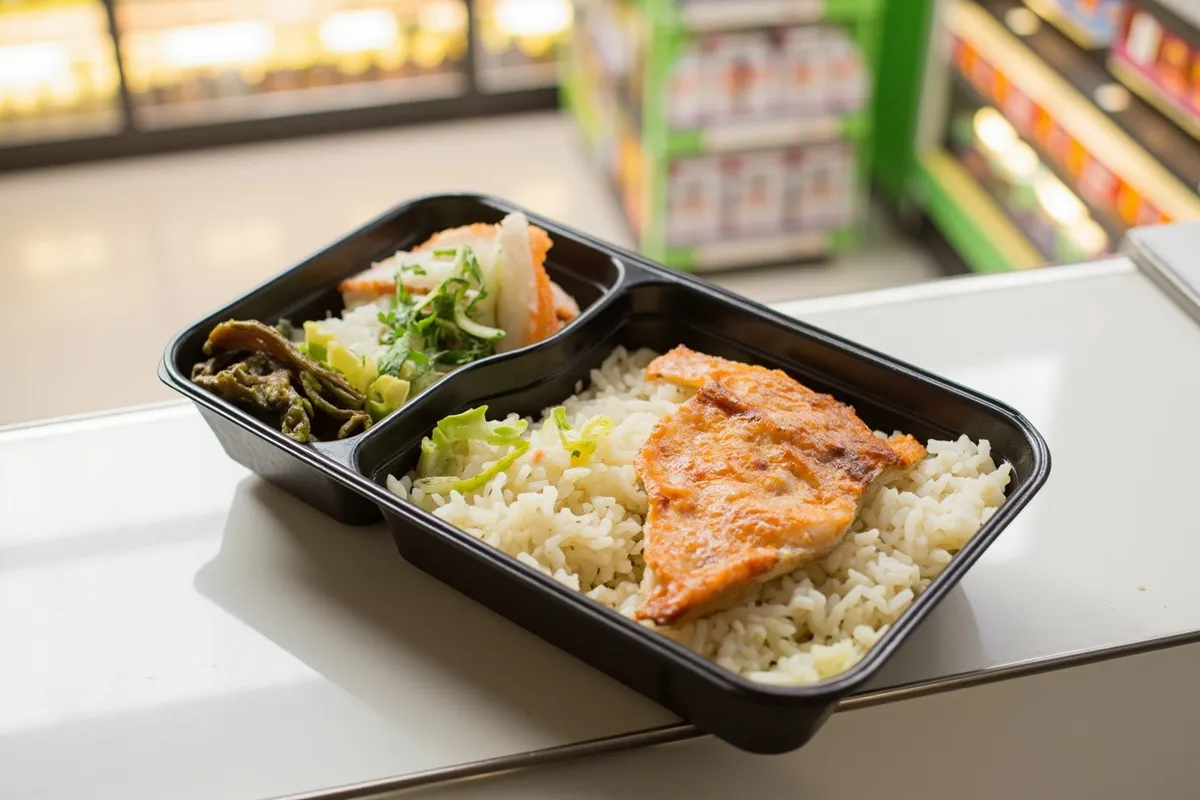
It is 08:10 on a weekday, the konbini is round the corner, and the hot case is full of bento boxes. In front of you: a chicken-katsu box at 751 kcal, or a plain rice ball for ¥138 before tax. Neither needs a plan and neither needs a pan, and the number that decides it is printed on the pack. A konbini bento under 500 kcal is simply something you pick up and read.
Hara hachi bu, eating to about 80% full, is the habit that keeps surfacing in Okinawan longevity writing. I wanted to know something narrow: can a Japanese convenience store meal be a real meal inside that rule, or is “under 500 kcal” just a number people like repeating? The answer depends on which box you grab, and the pack tells you before you pay.
FamilyMart konbini: the chain, the shops, how you get in
The chain's own site and the store finder
FamilyMart marked its 45th anniversary in 2026, so this is a chain with a long memory rather than a flash-in-the-pan format. Everything for a konbini meal sits on the company's own site, starting with the FamilyMart store locator: type an area, get branches, and each branch tells you its hours, whether there is an ATM and whether you can sit down.
For the food itself, FamilyMart keeps one page with allergen data, nutrition values and ingredient origins for its own products. The chain also warns about phishing mails, fake social accounts and copycat websites, so I pay through its site and its own app and nowhere else.
Hours, parking and the walk from the station
Hours, parking and seating belong to the branch, not to the chain, so I look them up instead of assuming. On small city streets parking is the exception, and larger or roadside sites tend to have a few spaces. The walk from a station exit is usually a couple of minutes, though the shop you want is sometimes a street away from the exit you came out of.
What changes the meal is what the branch stocks. Many FamilyMart items carry area tags such as 【関東の一部】 or 【長野県・山梨県】, so a dish that looks like a standard in a nutrition app may not be in the shop on your street.
- Opening hours of the branch you will walk into
- Parking and whether there is seating
- ATM sign and breakfast counter
- Area tags on the dishes you plan to buy
Paying: cash, FamiPay, delivery and pre-order
Payment is quick and the arithmetic is simple: food carries 8% consumption tax, and the chain's own list shows both numbers for rice balls, ¥138 before tax and ¥149 with it. FamiPay is the chain's app and pays points on purchases, with a coupon on the first download. Famima Online is its delivery store, so konbini staples can reach your door without a shop visit, and the pre-order bento service lets you reserve a made-to-order box for a time you pick.
What I plan around is the confirmed floor: a rice ball from ¥138 before tax, and onigiri-and-side sets at ¥417 and ¥554 before tax. Everything else on the shelf is an extra decision I do not have to make before nine in the morning.
Reading the kcal label on Japanese packs
What every pack has to tell you
Japan's food labelling rules make energy, protein, fat, carbohydrate and salt-equivalent compulsory on packaged food, so nothing about a konbini bento is guesswork: the box in your hand prints its own calorie number. The revised Food Labeling Standard took effect on 1 April 2020 and extended nutrition and allergen labelling to food sold in containers, which is why a bento bought today always carries one. The Consumer Affairs Agency's labelling rules set that requirement.
One habit worth forming: the number covers the whole package, rice, sauce and the little salad cup included. Because a chain can revise a recipe, the pack is the freshest source, and a figure in an app may be a season old.
Where the numbers come from
Two databases do most of the comparing. tabecal's FamilyMart file covers 445 items, built only from nutrition data FamilyMart publishes itself. Split that file and the trap shows: 286 meals, 51 sides, 44 salads, 20 soups, 33 drinks, 9 condiments and 1 dessert. The median across all 445 items is 259 kcal, but that figure includes drinks, and the smallest are 3 kcal while the heaviest is a 600 g tomato-and-garlic pasta at 958 kcal.
So an “under 500 kcal” konbini list mixes boxes, salads and coffee, and the median of one database is not the median of a bento. tabenavi's under-500 kcal page for FamilyMart shows 20 hand-picked menus, drawn from a search over more than 30 chains and 6,000-plus items. Different scope, different categories, different lists.
| Category in the 445-item file | Items |
|---|---|
| Meals | 286 |
| Sides | 51 |
| Salads | 44 |
| Soups | 20 |
| Drinks | 33 |
| Condiments | 9 |
| Desserts | 1 |
| All items | 445 |
Where 500 kcal sits on a Japanese day
The Japanese Dietary Reference Intakes put adult energy at 2,750 kcal a day for men and 2,050 for women. Over three meals that is roughly 920 kcal and 680 kcal per meal for a 30 to 49 year-old with moderate activity, so a 500 kcal konbini meal is about 54% of a man's meal slot, calculated from those figures. The line is a real limit rather than an arbitrary one.
Salt matters just as much: the reference for adult men is 7.5 g a day, and 23% of FamilyMart items carry 3.75 g or more in a single item. Across the Japanese konbini sector 84% of meals come in under 500 kcal, against 59% of the meals you get eating out of the shop. FamilyMart's own figure is 215 of 286 meals under 500 kcal, which is 75% of that meals category and a different measure from the chain-wide 84%.
| Day split | Men, 2,750 kcal a day | Women, 2,050 kcal a day |
|---|---|---|
| Breakfast at 500 kcal | 500 | 500 |
| Lunch at 500 kcal | 500 | 500 |
| What is left for dinner | 1,750 | 1,050 |
| Reference share per meal | 920 | 680 |
A konbini breakfast in one stop
The ¥138 floor: plain onigiri and omusubi
Plain rice balls are the cheapest honest meal in the building. FamilyMart's onigiri and omusubi price list starts at ¥138 before tax for 塩おむすび, and because food carries 8% consumption tax the chain publishes the tax-inclusive figure too. Add a side dish and you are at ¥417 for an onigiri set and ¥554 for the larger one, before tax. I would not spend more than that on breakfast before nine.
Calorie-wise the same shelf runs light, as the second table shows. Prices and calories come from different lists, so for one particular ball you read the pack rather than a table like these.
| Onigiri and sets | Before tax | With tax |
|---|---|---|
| 塩おむすび | ¥138 | ¥149 |
| 三陸産わかめおむすび | ¥147 | ¥158 |
| 直巻 和風ツナマヨネーズ | ¥162 | ¥174 |
| 手巻 辛子明太子 | ¥218 | ¥235 |
| おむすびおかずセット | ¥417 | not listed |
| おむすびとおかずセット | ¥554 | not listed |
| Other rice balls | kcal |
|---|---|
| もち麦・スーパー大麦入り 鮭野沢菜 | 163 |
| もち麦 ごまわかめ | 171 |
| 牛焼肉マヨネーズおむすび | 210 |
| サンドおむすび ソース焼そば&玉子焼き | 340 |
Protein and vegetables, light
The easiest upgrade to a rice ball is FamilyMart's grilled chicken skewers: the thigh on salt 炭火焼きとりもも塩 is 83 kcal with 8.1 g protein, 5 g fat and 1.6 g carbohydrate, and the tare-glazed version is 77 kcal. That puts it among the lowest-calorie protein add-ons in the store, and the fair comparison is with the salads and soups on the same under-500 list, all of them between 40 and 88 kcal.
Protein has to be assembled in pieces here: 8 g from a skewer, 6 g from a small salad, and you are building the 20 g a proper meal wants, one small item at a time.
| Add-on | kcal | Protein |
|---|---|---|
| トマトとわかめのサラダ | 40 | not listed |
| フレッシュ野菜サラダ | 40 | not listed |
| オクラのネバネバサラダ | 58 | 2.9 g |
| サラダチキンのサラダ | 60 | 9.4 g |
| 韓国冷麺風しらたき | 61 | not listed |
| ゆず香る!旨塩スープ | 71 | 6.2 g |
| 1/3日分の野菜サラダ | 72 | 6.7 g |
| 蒸し鶏と塩昆布のやみつきキャベツ | 76 | 5.7 g |
| 炭火焼きとりももタレ | 77 | 7.7 g |
| 炭火焼きとりもも塩 | 83 | 8.1 g |
| シーチキン&たまごのサラダ | 88 | 6.1 g |
The one-stop breakfast
Breakfast at a konbini works because everything is in one place and nothing needs cooking. My order takes four steps: rice ball, skewer, one salad, then read the pack on the way to the till. A cold soba bowl 石臼挽きそば粉の冷しとろろそば is 328 kcal with 15.9 g protein and 1.9 g fat and eats like a small lunch, so a Japanese breakfast from a konbini can be a proper one.
On offers: FamilyMart ran a breakfast-combination campaign, 朝ファミマのコンビ割, in autumn 2026, and morning deals like that come back, so check the current period on the campaign page. What I skip at eight in the morning is the fried case, where the sweet-and-sour chicken bento 甘辛鶏から揚げ海苔弁当 alone is 849 kcal. Bought on impulse at the till, that is the one that breaks your day. The home-cooked version of the same meal is in my Japanese breakfast guide.
Konbini bentos under 500 kcal: what fits
The lightest full meals
The lightest full meal in the FamilyMart file is the futomaki hand-rolled sushi with shiso and natto 手巻寿司 青しそ納豆 at 174 kcal. Read that carefully: it is the lightest full meal in the database's own categories, while a single rice ball runs lower still, at 163 kcal.
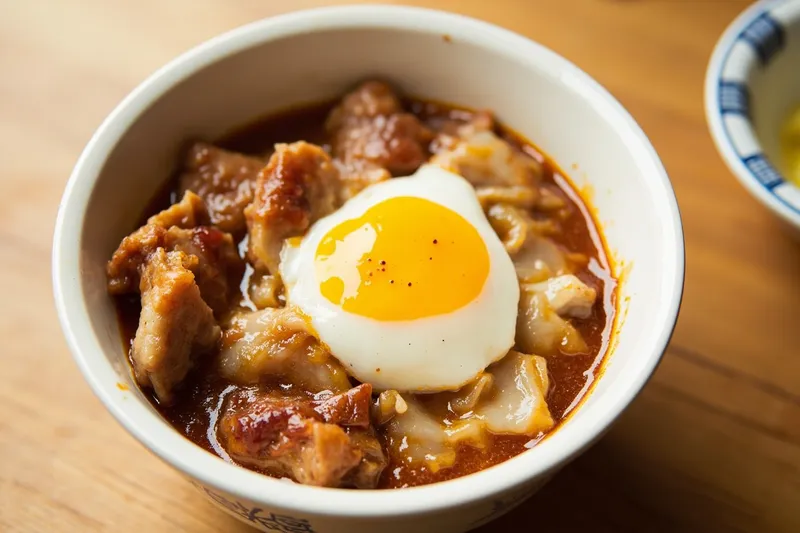
The chicken soboro bento 鶏のうまみ!鶏そぼろ弁当 is the one I would grab in a hurry: 361 kcal, 10.8 g protein and only 1.2 g salt, the best salt figure of any box I looked at. Comparing an onigiri with a bento comes down to cash and protein. On satiety, calorie density works in your favour here: a 328 kcal cold soba bowl with 15.9 g protein sits very differently from 328 kcal of anything fried.
The protein leaders under 500 kcal
Under 500 kcal you can still get plenty of protein, which is what most people assume low calorie Japanese convenience store meals cannot do. The salad chicken roll たんぱく質が摂れる!サラダチキンロール is 310 kcal with 23 g protein and 2.3 g salt, and the chicken breast club sandwich 国産鶏むね肉と厚切りトマトゆで玉子のクラブハウスサンド is 231 kcal with 12.5 g protein and 1.8 g salt. The oyakodon bento お出汁染み込む ふんわり玉子の親子丼 sits just under the line at 466 kcal with 17 g protein and 13 g fat, and the mapo tofu rice bowl 醤の旨味がきいた麻婆豆腐ごはん is 491 kcal with 16.7 g protein, the closest of the lot to the ceiling.
Further up the list, one bento carries 30.6 g of protein, and 24 FamilyMart items clear 20 g while staying under 600 kcal.
Count protein grams per meal before you shop the shelf, not after. Twenty grams is the number worth aiming for, and a konbini can get you there under 500 kcal, but it takes two items rather than one.
| FamilyMart meals under 500 kcal | kcal | Protein | Fat | Salt |
|---|---|---|---|---|
| 手巻寿司 青しそ納豆 | 174 | not listed | not listed | not listed |
| 国産鶏むね肉と厚切りトマトゆで玉子のクラブハウスサンド | 231 | 12.5 g | not listed | 1.8 g |
| たんぱく質が摂れる!サラダチキンロール | 310 | 23 g | not listed | 2.3 g |
| 石臼挽きそば粉の冷しとろろそば | 328 | 15.9 g | 1.9 g | 2.5 g |
| 鶏のうまみ!鶏そぼろ弁当 | 361 | 10.8 g | not listed | 1.2 g |
| お出汁染み込む ふんわり玉子の親子丼 | 466 | 17 g | 13 g | 2.5 g |
| 醤の旨味がきいた麻婆豆腐ごはん | 491 | 16.7 g | not listed | not listed |
Where the 500 kcal line breaks
The line breaks in the fried department, and it breaks early. The chicken-katsu bento おろし柚子ぽん酢で食べる!チキンカツ弁当 is 751 kcal with 24 g protein and 28.8 g fat, about 27% of the 2,750 kcal daily reference for men in one box. The sweet-and-sour fried chicken bento 甘辛鶏から揚げ海苔弁当 runs to 849 kcal, and the large pork yakisoba 大盛 豚肉とねぎの塩焼そば is 651 kcal, with its salt in the table further down.
None of this makes fried konbini food bad. It makes the number the point: a 500 kcal rule is a rule you can keep, and a chicken-katsu box breaks it before you reach the till. The heaviest item in the file is the 600 g tomato-and-garlic pasta at 958 kcal, a reminder that Japanese convenience store food covers both ends of the range.
Hara hachi bu: eating to 80% full
What hara hachi bu says, and what it cannot prove
Hara hachi bu 腹八分目 is a Confucian-influenced teaching to stop eating at about 80% full. The reason it appears in longevity writing is the Okinawa Centenarian Study: Okinawan centenarians kept a body mass index between 18 and 22 and practised hara hachi bu as part of a low-calorie, low-glycemic-load diet with daily physical activity. Its dietary analysis estimated pre-war Okinawan adults ate roughly 11 to 20% fewer calories than the Japanese national average.
That gap is observational. No trial has isolated the 80% rule from the rest of what those people did, so the fair reading is that hara hachi bu was one part of a package, not a switch somebody tested alone. My notes on the Okinawa diet cover the rest of the pattern.
Why 80% works for konbini food
Here is the arithmetic that made me comfortable with the idea in a convenience store. The reference meal slot for a 30 to 49 year-old man with moderate activity is about 920 kcal, and eating to 80% of that leaves roughly 735 kcal. A konbini meal under 500 kcal is about 54% of the slot, so it already sits below the line hara hachi bu implies, with room for a side dish on top.
Two numbers back the habit: the average FamilyMart meal, excluding sides, drinks and desserts, is 392 kcal, and across the Japanese konbini sector 84% of meals come in under 500 kcal against 59% of restaurant meals. In a shop built around single-serve food the lighter choice is the default, and the label does work a portion guess cannot. My notes on hara hachi bu cover the rest.
Building an 80%-full plate
My rule is to build the meal in the order staple, protein, vegetable. The example I would build: the futomaki hand-rolled sushi 手巻寿司 青しそ納豆 at 174 kcal as the staple, the grilled chicken thigh skewer 炭火焼きとりもも塩 at 83 kcal for 8.1 g of protein, and a tomato and wakame salad at 40 kcal. 297 kcal in total, decent protein, and cheaper than the fried box you did not buy.
The Japanese frame around it is worth borrowing loosely. The washoku habit, and the ichiju-sansai rule of one soup and three vegetable dishes, describe a table where my grandmother's rice, a little fish or tofu and three small vegetable bowls were set down in the middle and shared. The konbini counter gets the count of items right: rice, a soup at 71 kcal, one salad and a skewer gets you close for under 400 kcal.
Salt, allergens, regional menus and the traps
Sodium, sugar and allergens
Sodium is the hidden price of the cheapest boxes. 23% of FamilyMart items carry 3.75 g of salt or more in one item, and the daily reference for adult men is 7.5 g, so a single bowl can use most of a day's allowance. The large pork yakisoba reaches 6.8 g, about 90% of it, while the good end of the shelf is much better: the chicken soboro bento 1.2 g, the club sandwich 1.8 g, the salad chicken roll 2.3 g.
Allergens are on the pack and in the chain's own allergen data, because labelling rules make that information mandatory for packaged food. My rule at the counter: read the allergen line for anything with fish, egg, wheat, soy or dairy before you commit, and ask at the register if cross-contact matters, because the hot case is shared. For carbohydrate counts, read the 炭水化物 line on the pack; the skewer's 1.6 g is the only figure I would quote. If salt is your main worry, the low-sodium Japanese meal plan handles the kitchen side.
| Salt per meal | Salt |
|---|---|
| 鶏のうまみ!鶏そぼろ弁当 | 1.2 g |
| 国産鶏むね肉と厚切りトマトゆで玉子のクラブハウスサンド | 1.8 g |
| たんぱく質が摂れる!サラダチキンロール | 2.3 g |
| 石臼挽きそば粉の冷しとろろそば | 2.5 g |
| お出汁染み込む ふんわり玉子の親子丼 | 2.5 g |
| 大盛 豚肉とねぎの塩焼そば | 6.8 g |
| Reference for adult men, a whole day | 7.5 g |
Regional menus and recipes that change
Availability is the first trap. Many FamilyMart products carry area tags such as 【関東の一部】 or 【長野県・山梨県】, so the mapo tofu rice bowl or a seasonal dessert can be in a nutrition list and absent from your branch. The second is drift: when a chain revises a recipe the published values change, so last season's number may not be this season's.
Third, prices are live per category on the chain's own product pages, food carries 8% consumption tax, and regions price differently.
- Check the area tag before you build a habit around a dish
- Assume a seasonal item can be gone by mid-afternoon
- Read the current price on the chain's product page, not a third-party list
- Re-read the pack, because recipes and values move
Queues, space, stock and card friction
Between noon and one the bento shelf gets a queue, and the microwave queue with it. By mid-afternoon the popular boxes are thin, and in the small branches there is nowhere to sit beyond a couple of stools. The hot cases push heat into a shop you are standing in, which in a warm month is part of why people grab something cold and take it back to the desk.
Stock-outs are the other friction, and app or card payments smooth most of the rest. Worth remembering that what lands on an “under 500 kcal” list is not only food: the file behind those numbers mixes 286 meals with sides, salads, soups and 33 drinks, and the smallest items in it are coffees at 3 and 4 kcal. Check that your item is a meal before you count it as one.
Who this suits, and who should skip it
Good fit, poor fit
It suits anyone who wants a fast, cheap breakfast with a printed number and no cooking. It suits anyone trying to keep protein high and calories low: the salad chicken roll gives 23 g at 310 kcal, the club sandwich 12.5 g at 231 kcal, and one bento in the file carries 30.6 g. And it suits anyone who likes eating to 80% full and wants a painless way to stay under a limit.
It does not suit readers on salt-restricted diets, since 23% of items carry 3.75 g or more and the big yakisoba bowl is the worst offender. It does not suit people counting carbohydrates who need per-item figures rather than a habit of reading labels. And it does not suit anyone who needs a hot cooked breakfast: the shelf is mostly cold and the hot items are mostly fried. If that is your situation, talk to your doctor before making it a habit; I wrote about who should ask a doctor first.
What I would take away
What works: the number is on the pack, the light options are the ones that repeat on the shelf, and breakfast from ¥138 before tax (¥149 with tax) is possible without planning. What does not: fried boxes are the default, salt adds up in the cheap bowls, area tags mean your branch may not stock what you planned, and recipe changes make older lists stale. For a hot family breakfast cooked at a table, a konbini is not the place.
Before you rely on a specific shop, item or price:
- Check the branch in the store locator for opening hours, parking, seating and the ATM
- Ask at the register whether your basket qualifies for tax-free shopping, because take-away prepared food and eating in are treated differently
- Check the campaign page for the current breakfast offers, since the periods change
- Read the kcal, salt and 炭水化物 lines on the pack before you commit to it
Tomorrow morning, I would take the 174 kcal hand-rolled sushi, add the 83 kcal skewer and a 40 kcal salad, and read the pack on the way out. That is my whole plan.
Questions I get asked about konbini food
Is 500 kcal enough for a full meal?
For a 30 to 49 year-old man with moderate activity, the Japanese reference works out at about 920 kcal per meal, so 500 kcal is around 54% of the slot. Add a skewer and a salad and you are close to a real breakfast.
Are konbini meals lighter than restaurant meals?
Across Japanese convenience store chains, 84% of meals come in under 500 kcal, against 59% of the meals you get eating out of the shop.
Why do two nutrition sites list different items?
They count different things. tabecal's FamilyMart file covers 445 items split into meals, sides, salads, soups, drinks and condiments, while tabenavi's under-500 kcal page for FamilyMart shows 20 hand-picked menus. Different scope, different categories.
Can I trust the numbers, and how do I check my own item?
FamilyMart publishes allergen, nutrition and ingredient-origin data for its own food, and every pack carries energy, protein, fat, carbohydrate and salt-equivalent. Recipes change and menus are regional, so the pack in your hand is the final word.
What is the cheapest real breakfast?
A plain rice ball at ¥138 before tax, ¥149 with tax. Onigiri-and-side sets start at ¥417 before tax.
Is there tax-free shopping at FamilyMart?
I would not plan a budget around it. Ask at the register, because the treatment of take-away prepared food and of eating in differs, and the staff will tell you what your basket qualifies for.