
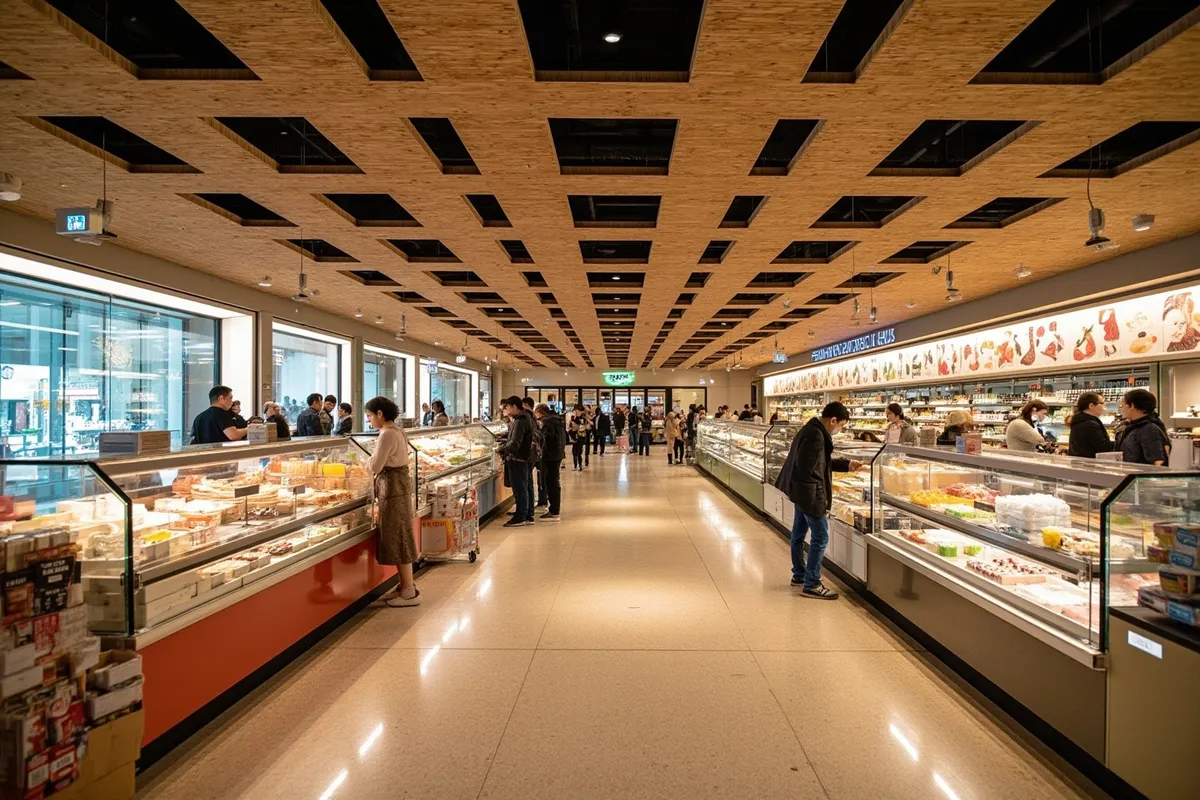
Ginza Mitsukoshi depachika sits two floors below the Ginza 4-chome crossing, a minute from the ticket gate, and it sells the whole Japanese pantry in one run: miso, shoyu, mirin, kombu, tofu, tsukemono, rice and a bento for the way home. I would rather do it here than carry four shops' worth of plastic bags. The address is 4-6-16 Ginza, Chuo City.
Two basement levels hold the food, B2 and B3, while B1 is the cosmetics floor, so give yourself time to find the right level before you start shopping. The one eat-in counter I would point you to, Tsukiji Sushiiwa, sits in the New Building on B2, serving 10:00 to 20:00 with last orders at 19:30. Shelf prices move with stock and season, so treat the figures below as bands. If cheap staples or a fast souvenir run is the plan, skip this and use an ordinary supermarket.
Ginza Mitsukoshi depachika: address, floors and the one-minute walk
Address, entrance and the one-minute walk from Ginza 4-chome
The store is at 4-6-16 Ginza, Chuo City, and the shortest documented route is a one-minute walk from the Ginza 4-chome intersection ticket gate. Ginza Station itself is served by the Ginza, Marunouchi and Hibiya lines, so you can arrive from almost any direction and still reach the crossing on foot. Address, hours, payment methods and facilities sit on the GO TOKYO listing for Ginza Mitsukoshi.
Higashi-Ginza Station is the second way in, through the underground passage toward Ginza Station. I would use it in bad weather and in summer heat, because you stay underground the whole way. The crossing itself is open air and carries heavy foot traffic on a Saturday.
- Come up from the 4-chome gate and cross to the Mitsukoshi frontage.
- Take the lift or escalator down; the food levels are B2 and B3.
- Read the floor map at the entrance and pick your level.
- Do the basement first and the upper floors after.
| Route from the station | What to expect |
|---|---|
| Ginza 4-chome intersection ticket gate | One minute on foot |
| Higashi-Ginza Station | Underground passage toward Ginza; a few extra minutes |
| Other Ginza-line exits at the crossing | Extra minutes, depending on the exit |
| Ginza Six and Chuo-dori | On the way in, but a detour if you stop |
Which floors hold what: B2 and B3 for food, B1 for cosmetics
Two basement levels carry the food. B2 and B3 are the depachika floors of this department store basement food hall, and B1 is the cosmetics floor with no food counters at all, which catches out anyone who walks in expecting the food one level down. The layout is set out in the Tokyo depachika planning guide.
What a depachika is helps more than floor numbers. Think of it as a food market under one roof rather than a supermarket aisle: prepared meals, bakery counters, sweets, groceries and drinks, with stock running from good domestic brands to imported food and high-end wine and spirits. You can buy ingredients for dinner and a boxed lunch for the train in the same ten minutes.
| Level | What you will find |
|---|---|
| B1 | Cosmetics floor. No food counters. |
| B2 | Food level, including the New Building eat-in counter, Tsukiji Sushiiwa |
| B3 | Second food level; which counters sit here changes, so read the floor map |
| Ground floors | General retail. Food content depends on the building. |
| 9F | Terrace garden, where you can eat a bento bought downstairs |
One building gets named in connection with the basement, the New Building, home to the eat-in counter. Which entrance leads to which level is a question for the map by the lift, so read it before you commit to a route.
Parking, strollers and step-free access
On-site facilities cover the basics: restrooms, dining areas, smoking areas, parking and WiFi. On access, the store lists automatic doors, a wheelchair ramp, elevators, a wheelchair-accessible lift, loans of wheelchairs and strollers, a breast-feeding room, diaper-changing facilities, baby chairs and ostomate restrooms. That matters more than usual here, because the food is two levels down and the lift is the only sensible route.
Parking exists, but I would not build a trip around the car. The crossing is one of the busiest in the city, the surrounding streets are best left to pedestrians, and the fee and the number of spaces are things the facilities desk can tell you. Take the train and shop on foot.
Opening hours, the 19:30 last order and when the basement is calm
Hours, last order and the counters that sell out early
Regular shopping hours are 10:00 to 20:00, though hours vary by floor, store and facility, and closing days are irregular. Some days the store is shut and the pattern shifts, so a plan built around one specific date can fall apart. The counter with published times, Tsukiji Sushiiwa in the New Building on B2, serves from 10:00 to 20:00 and takes last orders at 19:30.
| Area | Opens | Closes | Last order | Watch out for |
|---|---|---|---|---|
| B2 and B3 food floors | 10:00 | 20:00 | – | Counters stop early when stock runs out |
| Tsukiji Sushiiwa, New Building B2 | 10:00 | 20:00 | 19:30 | The queue builds before the last order |
That second row is the one to plan around. Counters across the basement stop serving before the 20:00 close when the day's ingredients go, and the popular prepared-food counters get picked over by early evening. Go near opening for the full choice, or accept that a 19:00 bento is a gamble.
Crowds, samples and the etiquette of the basement floor
The JNTO depachika guide gives the advice that saves the most time: come outside lunch and dinner hours and the basement is yours. The same guide points out that free samples are part of the walk rather than a bonus, so take a piece when it is offered. My own preference is mid-morning, just after opening: samples are fresh, the counters are full and nothing is queueing yet.
Two rules keep the floor pleasant. The store asks visitors not to photograph the counters or displays, so keep the phone in your pocket. And at the eat-in counter, do not stand deciding while a queue forms behind you; order, or step aside and come back.
Expect a low, constant noise: extraction fans, tannoy announcements, trolleys over hard floors, warm bread and steamed rice drifting from the deli counters. The basement also has no general seating, so a queue means standing, and a bento you bought yourself has no table to wait at.
What to buy in the Ginza Mitsukoshi depachika: a shopping list for Japanese staples
The pantry shelf: miso, shoyu, mirin, kombu and dried goods
Think of a depachika as a food market under one roof rather than a supermarket aisle: prepared meals, bakery counters, sweets, groceries and drinks, and you buy what the counters happen to carry today. Write your Japanese staples shopping list before the lift, or you will come up with three bento and no miso. The list is short and forgiving: miso, natto, kombu and wakame, tofu, green tea, shoyu and mirin, rice and tsukemono.
| Item | What to look for | Indicative band |
|---|---|---|
| Miso | Tubs and sachets; red for soup, white for dressings | ¥250–600 |
| Natto | Small stacks with the sauce sachets inside | ¥150–300 |
| Kombu and wakame | Dry packs for dashi and salad | ¥200–500 |
| Tofu | Block, from the fresh or chilled counter | ¥150–250 |
| Green tea | Tins and sachet boxes | ¥400–1,500 |
| Shoyu and mirin | Bottles for cooking and for marinades | ¥400–1,200 |
| Rice | 5 kg bags, the washoku staple | ¥700–1,500 |
| Tsukemono | Tubs of salt-fermented vegetables | ¥300–700 |
Bands, not shelf prices: read the tag in front of you, because prices move with stock and season. Any of these is cheaper in an ordinary supermarket, and what you pay extra for here is the range of brands, the packaging and the fact that it is all in one building. The miso and natto guide is worth reading before you pick a tub, since red and white pastes are not interchangeable in every dish.
Fresh, chilled and refrigerated: vegetables, tofu, pickles and rice
Fresh ingredients sit on the same basement levels as the prepared-food counters, so one sweep covers the fridge side of the list: packaged tofu and soy milk, natto stacks, tubs of tsukemono and salted vegetables, eggs, seasonal vegetables and rice in bags. I would pick these up last, because every extra half hour at room temperature is a risk taken for nothing. Fruit and vegetables follow the domestic season, so the same shelf looks different in summer than in winter.
Newcomers trip over two things. Loose deli items are priced per piece, per pack or by weight, so read the unit on the tag and ask for the total before you leave the counter. And payment happens where you buy, rather than at one checkout at the end, so expect to stop several times (see 5.1).
Then the cold chain. Buy perishable food near the end of the day, ask how it should be kept, and follow the storage and use-by instructions on the pack. Chilled goods bought at opening are a problem by dinner unless you planned for them, and frozen items need an insulated bag for the way home.
Bakery, wagashi and gift boxes to take home
The bakery and sweets counters are the reason many people come down here at all, and GO TOKYO picks out the baked goods and sweets as among the basement's strongest offerings. I would agree about the bread: buy a loaf and eat it on the way to the train rather than saving it for later.
Seasonal gift boxes and tastings are a normal part of a counter walk, so expect to be handed a piece of whatever has just come out of the oven. On the gift side, look for omiyage assortments, tea tins, nori sets, and kitchen tools and knives, which sit on the food floors rather than in the department store upstairs. If a knife is on your list, the Kappabashi Dougu Street guide is worth reading first, because the choice there is wider and prices are easier to compare.
Two practical notes. Cream and fruit pastries and boxed wagashi follow the same storage rules as fresh food, so they should not sit in a warm bag until the end of the day. And anything you plan to take to the tax refund desk needs its receipt kept with it (see 5.2).
Eating in the depachika: Tsukiji Sushiiwa and bento takeaway
Tsukiji Sushiiwa, the eat-in counter in the New Building
Tsukiji Sushiiwa is the one eat-in counter I can point you to with confidence. It sits in the New Building's B2, serves 10:00 to 20:00 and takes last orders at 19:30, and it can stop serving early when the day's fish runs out. If sushi is the plan, be there well before the last order.
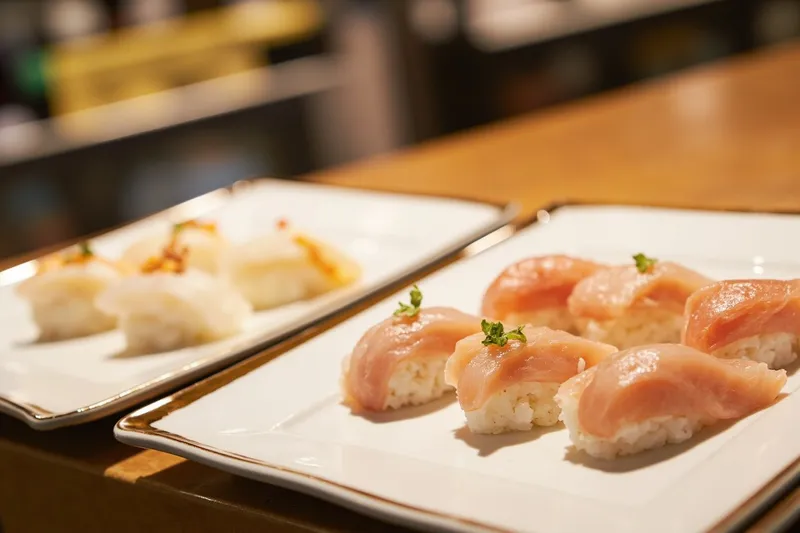
Know what you are walking into. The service is at a counter, and the basement has no general seating where you can take a bento and sit down. Assume you will eat standing at the counter, and leave room in the day for a queue: it is the only predictable wait in the building.
The menu and prices live on the board at the counter, and a counter changes what it serves with the day's catch, so read it when you get there instead of expecting a fixed list. Eating there is also the easiest way to try this basement at its best.
| Option | Where | Hours | Caveat |
|---|---|---|---|
| Eat-in counter | New Building, B2 | 10:00–20:00, last order 19:30 | The queue is the wait; it can stop early |
| Bento takeaway | Prepared-food counters on B2 and B3 | Food floor hours | No waiting, but no table to sit at |
| Bento in the terrace garden | 9F | During store hours | Ask on the day whether visitors without a purchase can go up |
Bento to go, and the order that keeps it fresh
The takeaway version is the standard depachika lunch, and the JNTO guide is blunt about it: pick a prepared bento and buy it to go. GO TOKYO describes a bento presented so carefully that you are told to carry it up to the ninth-floor terrace garden and eat it there, which is the best twenty minutes of a wet afternoon in Ginza.
Order matters more than people expect. Do the pantry and the gift boxes first, because they are shelf-stable and will not soften in a warm bag. Take the prepared food and the bento next. Pick up chilled and frozen items last, so they spend the least time out of a fridge. If you are eating in, go to the counter either before the chilled picks or well after them, keeping the 19:30 last order in mind.
Two small things: ask for a bag if the bento has liquid or sashimi in it, and keep the receipt until you have finished with the store, because the storage instructions on the pack are easier to check against the till slip.
Prices, payment and getting the tax refund
What a basket costs, and how the pricing works
Expect to spend somewhere around ¥5,000–15,000 for a basket of ten to fifteen items: a bento at roughly ¥900–2,500, a wagashi or bakery item at ¥300–800 a piece, and pantry staples between ¥150 and ¥1,500 depending on the item. These are indicative bands. The tag in front of you decides, and stock and season move the numbers.
| Line in the basket | Indicative band | Unit to check on the tag |
|---|---|---|
| Pantry staple | ¥150–1,500 | Per piece, per pack or by weight |
| Bento | ¥900–2,500 | Per box |
| Wagashi or bakery item | ¥300–800 | Per piece |
| Basket of 10–15 items | ¥5,000–15,000 | The sum of the above |
The mechanics matter as much as the total. Loose deli items are priced per piece, per pack or by weight, so read the unit on the tag and ask for the total before you leave the counter. Payment happens at the counter where you buy, so keep a card or cash ready each time. And size the day: a first browse takes 30 to 45 minutes, longer when food shopping is the main reason you came.
Paying, the duty-free store and the tax refund counter
The store takes cash and cards: Visa, JCB, Mastercard, American Express, UnionPay and Alipay. Keep some yen with you anyway; it saves an awkward moment at a small counter with its own terminal.
Two desks share the tax-free work, and the split matters. A dedicated duty-free store handles eligible goods in its own space, while the tax refund counter deals with purchases you have already paid for. Which basement items fall under which one is worth asking before you buy rather than after. The store runs its own tourist information centre and a language concierge, with signs and help in Japanese, English, Mandarin, Cantonese and Korean.
If you are tax-free shopping: buy, keep the goods and the receipt together, then go to the refund desk with your passport. The tourist information centre will point you to the right counter.
Practical notes for a first depachika visit
Walk in, no tickets, and what actually goes wrong
Nothing here is booked. There is no ticket, no timed entry and no reservation for the eat-in counter; you arrive, take the lift down and shop. Convenient, and it also means the usual guardrails are missing.
What actually goes wrong is unglamorous. The store closes on irregular days, so a plan built around one date can collapse. A counter can run out of its main ingredient by mid-afternoon and stop serving, and when that happens there is no waitlist to join. The practical fallback is another counter on the same floor selling something close to what you wanted.
My rule for a first visit: decide which level to start on (B2 for the eat-in counter, B3 for the pantry sweep), decide eat-in or takeaway before you reach the lift, and give the basement 30 to 45 minutes (see 5.1). Add a queue margin if you plan to eat in.
Bags, family and a wet-weather Ginza route
Depachikas are usually attached to a train station, which makes them the obvious wet-weather stop, and the JNTO guide says as much. This one is a minute from the 4-chome gate on the Ginza, Marunouchi and Hibiya lines. The order I would follow: pantry and gift boxes first, then an eat-in counter lunch, then up to the ninth-floor terrace garden with a bento, and out through whichever line suits your evening.
Bring the right bag. The store's own shopping bags cost money, a full basket gets heavy on a long underground walk, and a wheeled bag earns its keep. There is no bag-storage or locker arrangement to rely on, so ask at the tourist information centre if you are buying in bulk.
With family, the store is better equipped than most: wheelchairs and strollers can be borrowed, and there are baby chairs, diaper-changing facilities and a breast-feeding room. That takes the sting out of a basement-level lunch.
A route that fits about ninety minutes:
- 4-chome gate, then down to the basement lifts
- B2 and B3 sweep for the pantry, 30 to 45 minutes
- Tsukiji Sushiiwa on B2 for lunch, before the 19:30 last order
- Ninth-floor terrace garden with the bento
- Out via the Ginza, Marunouchi or Hibiya lines
Who should go, and who should skip it
Strong for a full pantry run, weaker for cheap impulse buys
Go for it if you want a full pantry run in one place, with miso, shoyu, mirin, kombu, tofu, natto, rice and pickles under one roof, and you would rather carry two good bags than push a trolley around four shops. It suits a family, with stroller and wheelchair loans, a breast-feeding room and diaper-changing facilities. It suits anyone combining shopping with a meal at the counter, and travellers who want tax-free handled on site.
Skip it if you want cheap staples: a neighbourhood supermarket is where the price is, and the department store's edge is the range of brands and the packaging. Skip it if you have less than 45 minutes, since 30 to 45 is a first browse before anything else. Skip it if you are hauling heavy bags with no plan for chilled food. And skip it if what you want is cheap street food, which is a different trip altogether.
The honest minuses: queues at the eat-in counter and the popular counters; two basement levels with more than one lift between them; counters that stop when the stock goes; mixed price units and no single checkout; no photography of the displays (see 2.2); irregular closing days; and prices readable only on the shelf. Add wet weather and a busy crossing, and I would treat this as a deliberate half-day rather than a spare half hour.
How it compares, and the decision rule
| Store | Food floors | Standout | Best for |
|---|---|---|---|
| Ginza Mitsukoshi | B2 and B3 | Tsukiji Sushiiwa eat-in counter in the New Building, ninth-floor terrace garden | A full pantry run plus a counter meal in one building |
| Isetan Shinjuku | Main Building B1 | A Jean-Paul Hévin café and shop | A chocolate-led stop next to JR Shinjuku |
| Daimaru Tokyo | B1 plus a food section on 1F | Right at the Yaesu North ticket gate, outside the paid area | Buying on the way to a shinkansen or the Narita Express |
| Shibuya Tokyu Foodshow | Shibuchika B1 and Mark City B1, sweets on Mark City 1F | Open until 21:00; SHIBUYA STAND is a designated eating space | A later opening and somewhere to sit |
| Matsuya Ginza | Depachika bento range | Kaiseki, unagi, tempura, sushi, hors-d'oeuvres and sandwich bento | A named prepared bento without the department store crowds |
| Nihonbashi Mitsukoshi | Basement food hall | Kayuan, curated high-end sweets from brands nationwide | Gift-grade sweets |
Two side notes. Isetan's Hévin café, and the fact that Shibuya Tokyu Foodshow is a separate operation from Foodshow Edge in Scramble Square, are extras rather than core parts of the comparison. The 15:00–16:00 quiet window and the after-20:00 markdowns you may read about belong to Tokyu's Shibuya timetable; they do not apply in Ginza. The Shinjuku Takashimaya food hall is the other Shinjuku basement worth a look.
The rule I would give a friend: if you want two basement levels and an eat-in counter meal in the same building, Ginza Mitsukoshi is the one, and the ninth floor gives you somewhere to take the bento afterwards. If you want a single B1 and a chocolate counter next to a major station, that is Isetan Shinjuku. If you are catching a train and want to buy on the way, Daimaru Tokyo's food floor sits right at the gate. If you want the latest opening and a place to sit with your food, that is Shibuya Tokyu Foodshow.
Five things to sort out before you go
- The day's hours and closing days, since closing days are irregular.
- Shelf prices and the price unit on the tag: per piece, per pack or by weight.
- Your passport for the tax refund counter, plus which basement goods qualify and how long it takes.
- Parking terms, bag storage and card acceptance at the smaller counters, at the facilities desk.
- Whether the ninth-floor terrace garden is open to visitors who have not bought anything.