
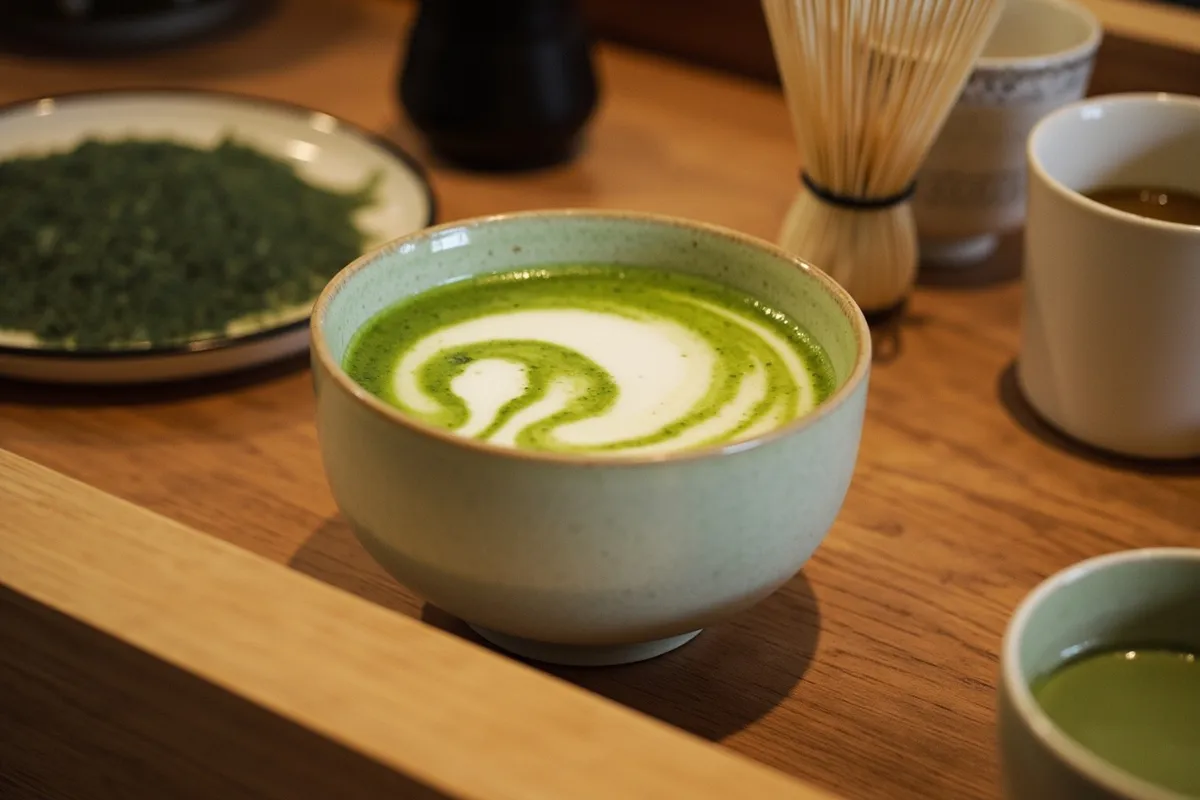
If you search a matcha cafe Tokyo map and get a wall of frothed milk drinks, the search is measuring the wrong thing. The cheapest matcha in the city costs ¥138, in a chilled bottle from a convenience store fridge. The bowl I would rather have costs ¥1,620, whisked to a thick foam at a basement counter two minutes from Tokyo Station.
What follows is a working list rather than a ranking: eight places where you can drink green tea, one street where you buy the tools, one park to sit in between them, and two counters for lunch. The east side runs Marunouchi, Nihonbashi, Kanda and Tsukiji; the west side gathers around Azabudai, Meiji Jingu, Yoyogi and Shinjuku. I kept four filters: you can drink or buy green tea in one visit, the price is clear in yen, the place sells more than one style of tea, and the next stop is one metro hop or a short walk away.
Where to drink matcha in Tokyo: cafés, tea counters and quiet tea rooms
The eleven stops side by side
Here is the whole trail on one page. The price column is the cheapest green tea sold at that stop, and two of the stops sell no tea at all.
| Place | City and area | Type | Price from | Main advantage | Main drawback |
|---|---|---|---|---|---|
| Ippodo Tea Tokyo Midtown | Tokyo, Marunouchi | Japanese tea shop | – | the counter format: matcha in two strengths, usucha and koicha | not on Ippodo's shop list, and out of my route |
| Ippodo Shin-Marunouchi Store | Tokyo, Marunouchi (Chiyoda-ku) | Japanese tea shop | ¥756 | two strengths of matcha plus leaf teas on one menu, cards accepted | a small counter, and Sundays and holidays stop orders an hour earlier |
| Nana's Green Tea | Tokyo, Shinjuku (8F, LUMINE EST) | Matcha and green tea café | ¥550 | seasonal drinks, with calorie and allergy details for every item | prices move with the season, and branches open and close |
| Ninben | Tokyo, Nihonbashi (Chiyoda-ku) | Historic tea and coffee house | ¥110 | a house selling katsuobushi and dashi since 1699, with tea at the counter | matcha is the side act; come for the dashi |
| Tsukiji Outer Market | Tokyo, Tsukiji (Chuo-ku) | Food market | ¥200 | tea stalls and dashi counters a couple of minutes apart | trade bands shift through the morning |
| Azabudai Hills Market | Tokyo, Minato | Shopping and food complex | ¥391 | a 33-counter food hall near Meiji Jingu, easy for a group | each counter sets its own hours and prices |
| Meiji Jingu | Tokyo, Shibuya | Shrine with inner garden | ¥500 admission, tea on top | a whisked bowl in a walled garden after the forest path | the Inner Garden and the museum are separate tickets |
| Shinjuku Gyo-en National Garden | Tokyo, Shinjuku | Public garden | ¥500 admission, tea on top | the calmest of these stops on a weekday morning, my judgement | the tea house keeps its own days and hours |
| Kappabashi Dougu Street | Tokyo, Taito (Ueno to Asakusa) | Kitchenware shopping street | no tea here; a chasen from ¥1,500 | chawan, chasen, chasaku and a kyusu at street prices | no tea here, and shops set their own rest days |
| FamilyMart | Tokyo, chain nationwide | Convenience store | ¥138 | the cheapest matcha here, with calories and sugar on the pack | bottled, no strength to choose, nowhere to sit |
| Yoyogi Park | Tokyo, Shibuya | City park | no tea here; grounds free | free grounds open around the clock, the base between stops | busy at weekends, and it sells no tea |
Three rows are not drinking stops: Kappabashi is where you buy a whisk and a bowl, Yoyogi is grass and shade, FamilyMart is a fridge. Of the rest, the Midtown counter is the one I would not travel to until it appears on Ippodo's own list.
Usucha, koicha, sencha, gyokuro and hojicha: what changes in the cup
Matcha is a powder you whisk. Everything else on the tea shelves of Tokyo is leaf, and the two categories do not behave the same way. Sencha and matcha in Tokyo shops sit next to each other on the same counter, and one is not a softer version of the other. The matcha carries the whole leaf, so it tastes greener and hits harder.
- Usucha, the thin whisked bowl, the everyday one. Ippodo's Shin-Marunouchi counter serves it as the default, and the Meiji Jingu ceremony pours the same style.
- Koicha, the thick formal strength, whisked to a foam that holds a brush stroke. Ippodo serves it as the second option at the same counter.
- Sencha, steamed leaf brewed in a pot. The taste of the plant itself, and the one to order when you want to compare leaf against powder.
- Gyokuro, leaf shaded before it is picked, then brewed slowly and cool. The expensive end of the leaf shelf.
- Hojicha, roasted, low in astringency, the easiest tea to drink through a whole afternoon, and the base of Nana's hojicha latte.
Roasted house blends are a category of their own: ichicha, with stems and twigs in the leaf, and genmaicha, where roasted rice gives a nutty note. Those belong to family-run tea houses rather than to a matcha menu.
Order usucha for a first bowl, koicha if you want the thick whisked one, sencha if you want the leaf flavour, and hojicha if you want the roasted note and less bitterness.
What a matcha costs in Tokyo, and what moves the price
Here is the money side of it, in yen, in bands:
- Bottled matcha from a convenience store: ¥138.
- A matcha latte drunk over a counter at Nana's: from ¥550.
- Take-out tea at Ippodo's Shin-Marunouchi counter: ¥756 for hojicha, ¥864 for sencha, ¥972 for usucha, gyokuro and the hojicha latte, ¥1,080 for a matcha latte.
- The thick bowl, koicha: ¥1,620.
- A tin to take home: the tea market moves these, so treat the shelf tag as the price and the weight printed on the tin as the way to compare.
A bowl is roughly 2 g of powder whisked with about 70 ml of water, so a 40 g tin covers around twenty bowls. That number matters more than the tin price when you decide whether to buy powder or to keep paying for cups.
What actually moves a price at the Ippodo counter: soy milk is ¥108 more per cup, and a small sweet with the tea is ¥307. The take-out menu is set at the lower take-away tax rate, and the same order at the counter goes on 10% for food and drink served on the premises, so a couple of percent more leaves your wallet. The only milk add-on I can point to is soy, so ask if you need oat.
Budget in yen and convert on the day: the Bank of Japan posts the daily JPY to dollar and JPY to euro rates. I do not fix a rate here, because a number printed in an article is stale by the time you read it.
How I compared the eleven stops
What I looked at at every counter
Five things, in the same order at every place, so the comparison means something:
- What is actually in the cup: powder whisked in front of you, leaf brewed in a pot, or a bottle from a fridge.
- What that cup costs, and whether the number is for take-out or for the table.
- How it is served: a standing counter and a paper cup, or a bowl at a table with a sweet beside it.
- What it does to your afternoon: whether you can sit down, whether it comes with food, whether you are heading home afterwards.
- How you pay: cash, card, transport e-money.
Two things I left out on purpose. Branded matcha kits for home whisking and delivery apps are a different subject. So is kaiseki paired with green tea: I did not find a venue that does it, so I am not going to invent one. The pairing I can vouch for is sweets with tea, and you will find it in the places themselves.
Prices and branches move at several of these stops. Seasonal drinks change at Nana's, the chain opens and closes shops, and record leaf prices have pushed tin prices around for two years. Read the numbers as a budget, not a promise.
Cash, cards, closed days and how long you may stay
Payment is the part that catches people out. At Ippodo's Shin-Marunouchi counter you can pay cash, by credit card, with a transport e-money card, or by phone. Most other counters set their own rules, so carry yen for the market stalls and the small shops; a card that worked at one counter tells you nothing about the next one.
Closed days are also individual. Ippodo's regular holiday is 1 January, and the counter runs 11:00 to 21:00 with the last order at 20:00; on Sundays and holidays it closes at 20:00 and stops taking orders at 19:00. One-off closures happen on top of that, so a shop you saw open last week can be shut on the day you arrive. Nana's moves branches around: Ueno Marui and Tokyo Dome have both closed, and new counters keep appearing.
How long you may stay is simpler than it sounds. Two of these stops are paid gardens, and the ticket buys you the right to sit there for hours. The counters and the market stalls are standing places: you drink standing, you leave.
Comparing the matcha latte in Tokyo: Nana's, Ippodo and a ¥138 bottle
Nana's Green Tea: seasonal drinks and the Shinjuku counter
Nana's is the modern half of this trail. The Shinjuku counter sits on the 8th floor of the LUMINE EST department store, and the ritual is quick: you order, you wait, and the matcha arrives blended with milk and sugar in a plastic cup, hot or iced. It is the opposite of a bowl you sit down and finish.
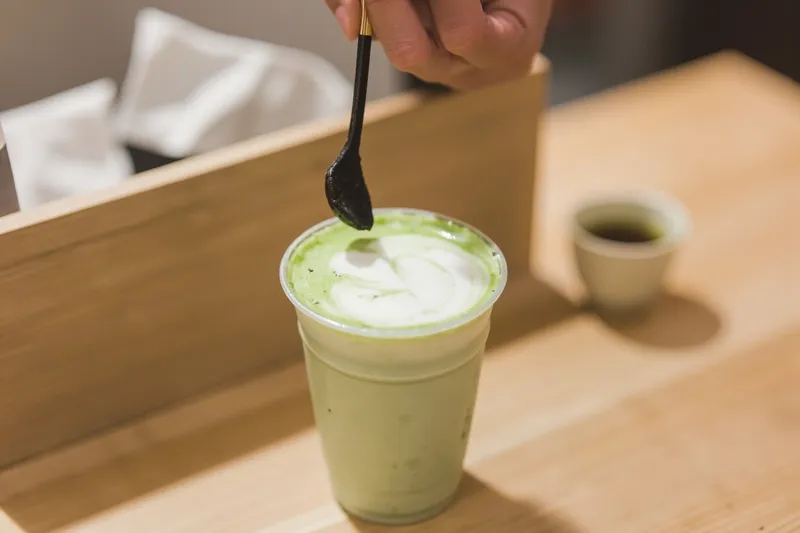
What the chain is good at is the seasonal menu. The chestnut and shiratama latte appears in the cold months, the hojicha latte is there year round, and the matcha Mont Blanc parfait comes in a full size and a mini for people who want a small ending rather than a whole one. Those drinks get re-priced when the season turns, so the shelf price is the one that counts on the day.
Sweetness is the difference to keep in mind. Nana's is a café latte, sweetened, and it is not the same drink as the unsweetened bowls at Ippodo. The chain does put calorie and allergy information for its drinks in one place, which is more than most cafés in the city manage.
Branches move. Ueno Marui and Tokyo Dome have both closed and the chain has been opening others, so the counter you planned for may not be the one in front of you. The Shinjuku floor is the reliable one.
What I would order: the seasonal chestnut and shiratama latte if you are there in the cold months, the hojicha latte if you want the roasted note and less bitterness, the matcha Mont Blanc parfait if dessert is the point, and the mini if you are watching the portion.
Ippodo: two strengths and the price of a bowl
Ippodo is the other half, and it is a different kind of business: a tea counter rather than a café. The Shin-Marunouchi store is on the basement floor of the Shin-Marunouchi building, 1-5-1 Marunouchi, Chiyoda-ku, a couple of minutes from JR Tokyo Station's Marunouchi North Exit. The take-out menu there runs from hojicha at ¥756 up to the thick koicha at ¥1,620.
The full take-out list at that counter: matcha latte ¥1,080, usucha ¥972, koicha ¥1,620, sencha ¥864, gyokuro ¥972, hojicha ¥756, hojicha latte ¥972. Add soy milk for ¥108, or a small sweet for ¥307. These are the take-out prices listed at the counter, and the same list sits on Ippodo's Shin-Marunouchi store page.
Two strengths, and they are the point: usucha is the thinner everyday bowl, koicha the thick formal one, both unsweetened. If you want matcha to taste like tea rather than like a drink, this is where you drink it.
Opening and paying: 11:00 to 21:00 with the last order at 20:00, and on Sundays and holidays 11:00 to 20:00 with the last order at 19:00. The regular holiday is 1 January. Cash, credit card, transport e-money cards and phone payment are all accepted. One-off closures do happen on top of that.
FamilyMart and the ¥138 bottle
The third way to drink matcha in this city is the cheapest and the least interesting. A chilled bottle of matcha latte from a FamilyMart fridge costs ¥138, and the label carries the calories and the sugar, which no café will hand you before you order.
As a weekday breakfast it works because it needs nothing: grab the bottle and an onigiri, eat it in ten minutes on the way to work. Most of the chain's ready meals sit under 500 kcal, and the bottle fits that habit better than a pastry would. If you want a slower version of the same idea, a Japanese breakfast at home is the one to copy.
On caffeine, matcha is not the gentle option. The powder carries the whole leaf, so a bowl is roughly as strong as a small coffee and it stays with you longer than brewed tea does; the bottle is a smaller dose of the same idea. Two or three in a day is plenty, and on this trail one good cup usually does the job.
Green tea shops in Tokyo: sencha, gyokuro and hojicha to take home
Ippodo's three shops, and the one that keeps changing
Ippodo is a Kyoto house with three shops, and the locator names all of them: the Kyoto Main Store with the Kaboku Tearoom, the Shin-Marunouchi Store by Tokyo Station, and the Tokyo Aoyama Store with a tearoom of its own. The Midtown counter that turns up in a lot of guides is not on that list, so I would not build a morning around it; Ippodo's store locator is where the current three sit.
The prices have moved twice. A revision to matcha and other teas took effect in 2025 against a background of record leaf prices, and a second round of price and package changes was announced for autumn 2026. The tea market is the reason, not the shops.
Two practical things about tins. First, do the per-gram maths from the weight printed on the can; 40 g and 100 g tins sit next to each other and the numbers do not compare until you divide them. Second, I am not going to tell you what is in stock, because that changes daily and yesterday's shelf is not your shelf.
Nana's retail shelf: the 40 g tin, the canned latte and the Mont Blanc
Nana's sells tea to take home as well as to drink. The shelf carries the 40 g tin of 'Shihō no Kaori' matcha, a canned matcha latte for the fridge, and the matcha Mont Blanc in a full size and a mini. It is a retail shelf rather than a wholesale counter, and the prices move with the season like the drinks do.
Pack against café, in one line: a matcha latte to go at Ippodo is ¥1,080, and a 40 g tin at roughly 2 g a bowl makes about twenty bowls, so the tin wins on price if you will actually drink them. If the tin ends up in a cupboard, the café wins every time.
What I would take home is the tin, not the canned latte. The canned one is for a desk or a train; the tin is for the mornings when you want a bowl you whisked yourself. The equipment for that is a separate stop, on a kitchenware street in Taito.
Kappabashi Dougu Street: your own chawan, chasen and chasaku
Kappabashi Dougu Street runs about 800 metres between Ueno and Asakusa in Taito City, with more than 170 shops selling kitchenware. It is the one stop on this trail where the tea is not in the cup but in your shopping bag.
- Chasen, the split bamboo whisk that does the frothing for a usucha bowl. The tines go soft after a few months, so this is the first thing to replace.
- Chasaku, the bamboo scoop for lifting the powder. A heaped scoop is roughly a gram, so it also tells you your portion size.
- Chawan, the bowl. Get one wide enough for koicha, and remember it doubles as the cup you pour a guest.
- Kyusu, a small iron teapot for brewing sencha at home, if you plan to move from powder to leaf.
A chasen starts around ¥1,500. Chawan and chasaku prices move with the material and the kiln, from plain store-bought ones to pieces you would put on a shelf. Go mid-week: each shop sets its own opening days, and the street map does not tell you which ones rest.
My rule for a shopping street like this: buy the whisk and the scoop, and skip the rest until you have used them for a month. The bowl can wait, because you will change your mind about the bowl.
Historic tea houses and market counters in Tokyo
Ninben: a dashi house with tea at the counter
The historic tea house in Tokyo that most people walk past is Ninben, and it has sold katsuobushi and dashi out of Nihonbashi since 1699. The head store sits inside the COREDO Muromachi complex in Nihonbashi, with the Dashiba counter alongside it, and the basement smells of smoked bonito whether you buy a tin or not. The tea is old; the business underneath it is dashi, and it is very good at that.
What to order at the counter:
- Dashi, served with bonito flakes and a bowl of rice. This is the reason to come.
- A tin of katsuobushi to take home, if you cook Japanese food and know how to use the flakes.
- A one-soup-one-rice bowl, the ichiju-sansai pattern: rice with soup poured over it, served at the Dashiba counter.
- The limited dashi amazake that the Dashiba counter pours as part of the COREDO Muromachi sweets project, when it is running.
Matcha is thinner on the ground here than at the counters above, so I would come for the dashi, drink the tea that comes with it and buy a tin of flakes. If the matcha is the point, the tea shops are a short metro ride away.
Tsukiji Outer Market: the tea stalls and the visitor band
The market runs in three bands: 06:00 to 09:00 for professional buyers, 09:00 to 14:00 for visitors, and flexible hours after that. Aim for the middle band. The early hours are the trade doing its work, and the late hours are a scatter of counters with their own timetables.
How to read a tea stall: sencha tins stacked by grade, roasted leaf, blended teas in paper bags, and a kettle brewing a small cup for you to drink standing. A stall price is a take-away price. There is no table, no second price and no time to sit, so drink it there and walk on with the tin.
The market is small enough to cross in twenty minutes and long enough to make you buy things you did not plan. Go in for tea and you will come out with a tin of something roasted and a bag of dashi.
Eating between the stops: Tempura Kanda Honten and Tonkatsu Maisen Aoyama
Green tea on an empty stomach is a mistake, so the route has two lunches in it.
| Place | City and area | Type | Price from | Main advantage | Main drawback |
|---|---|---|---|---|---|
| Tempura Kanda Honten | Tokyo, Kanda (Chiyoda-ku) | Tempura restaurant | ¥1,050 | weekday lunch sets with unlimited rice, miso, tsukudani and pickles | dinner sets cost more and the counter is short |
| Tonkatsu Maisen Aoyama Honten | Tokyo, Aoyama (Minato-ku) | Tonkatsu pork cutlet restaurant | ¥1,990 | a 130 g Chami pork loin set and a 100 g tenderloin set at the same price, so the bigger plate costs no more | two sets priced identically is unusual enough to look twice |
Portion note: the tempura set brings unlimited rice and pickles, which suits a slow table, while the cutlet sets are weighed meat, 130 g of loin on the plate. Set against the habit of stopping at eight-tenths full, I would leave the extra rice and keep the cutlet.
Order matters for the route: Kanda sits between Nihonbashi and Kappabashi, so it belongs to the eastern half, while Maisen is in Aoyama and fits the western one with Azabudai. Both are set lunches, both are quicker than they look, and both leave room for a bowl of tea afterwards.
Quiet corners: Meiji Jingu's inner garden, Shinjuku Gyo-en and Azabudai Hills
Meiji Jingu's Inner Garden: matcha after the forest path
The shrine grounds, the torii gates and the forest paths cost nothing, and the Inner Garden is a separate ticket at ¥500 for an adult. The museum is another ¥500. People mix these up, and it matters, because the free part of the shrine is the walk and the paid part is the tea.
The tea is a chanoyu service, and it is the formal way to drink matcha: a chasen whisk, a chawan, a sweet beside the bowl, the tsuyu-mizu poured from the chawan, and the temizu purification at the entrance with the little paper for your hands. Nothing in it is sweetened, which is why it tastes nothing like the café latte you had an hour earlier.
One thing to sort out before you go: the ceremony is a small, fixed service, and whether it runs in English or only in Japanese is the question to put to the shrine on Meiji Jingu's own site or at the counter when you arrive. A Japanese-speaking guest is easier to seat than an English-speaking one, in my experience of small Japanese tea services.
Shinjuku Gyo-en: a tea room with timed entry
Admission is ¥500 for an adult, ¥400 each for a group of 30 or more, ¥250 for visitors aged 65 and over and for students aged 16 and over, and free for children 15 and under. The group rate needs the headcount, so a big group pays less per head than a couple.
The tea house is separate from the garden ticket and keeps its own days and hours, which is the detail that trips people up: you can pay ¥500 for the garden and find the tea room closed. Last entry also cuts the afternoon short. Shinjuku Gyo-en's official page has the day's times and the tea house's schedule.
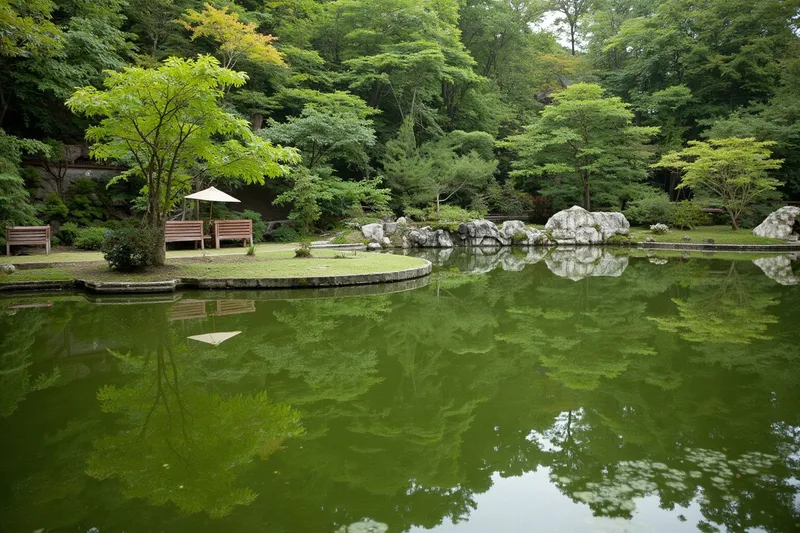
On a weekday morning this is the calmest stop of the eleven, in my judgement rather than by measurement: a timed-entry garden, wide paths, water and trees, and a tea house at the end of it. On a Saturday it is a different place entirely, and I would not send anyone looking for quiet.
Yoyogi Park for the break, Azabudai Hills when the rain comes in
Yoyogi Park has free grounds, open around the clock, and no tea of its own. It is a rest stop and a picnic base: somewhere to sit between two trains with a bun from a convenience store and to let the legs work after a long morning on foot. On a weekend it is one of the busiest parks in the city, so it is not on my list of quiet corners.
Azabudai Hills Market is the opposite plan: 33 counters in the Garden Plaza C building, the hall open from 10:00 to 20:00, and each counter keeping its own hours inside that window. Tea is among the counters, though which ones, and when, changes from week to week. It works well for a group, because everyone picks something different and meets at the same table afterwards.
My rule for weather: rain means Azabudai, sun means the Meiji Jingu forest path and the Gyo-en tea house.
Which stop to pick, and how to fit them into a day
The picks, and two half-days that fit on the ground
If you only have time for one thing, take the one that matches your day:
- Ten-minute weekday breakfast: the FamilyMart bottle at ¥138 with a rice ball.
- The least sweet bowl: Ippodo's usucha at ¥972, unsweetened; koicha at ¥1,620 if you want it thick.
- The cheapest matcha drunk over a counter: Nana's, from ¥550, with the sugar that comes with it.
- A seasonal drink worth a short queue: Nana's chestnut and shiratama latte, in the cold months.
- Tea with a meal: Tempura Kanda Honten, lunch sets from ¥1,050.
- A historic house: Ninben, from ¥110, dashi first and tea second.
- The calmest seat: Shinjuku Gyo-en at ¥500 admission, on a weekday morning.
- A rainy-day group: Azabudai Hills Market, counters from ¥391.
- Matcha to take home: a 40 g tin from Nana's or Ippodo, about twenty bowls at 2 g a bowl.
- Your own tools: Kappabashi, a chasen from ¥1,500.
A single day across the whole trail does not work on foot. It is two half-days:
- East: Ippodo Shin-Marunouchi for a bowl, Ninben for dashi and a tin, lunch at Tempura Kanda Honten, Kappabashi for the tools, Tsukiji for the tea stalls.
- West: Azabudai Hills Market for the group, Meiji Jingu's forest path and Inner Garden, Yoyogi Park for the sit-down, Shinjuku Gyo-en for the tea house and the last hour of light.
One transfer joins the halves, so a long day can hold both if you start early and skip the shops you are not buying from. Budget roughly one drink from ¥138 to ¥1,620, a lunch set from ¥1,050 to ¥1,990, a garden admission at ¥500, and tools from ¥1,500 if the street is on the list. It is indicative, and it assumes you do not drink at every stop. For the rest of the day's food, cheap eats and low-cost drinks around Tokyo cover the market snacks in between.
Six straight answers
The questions I get asked most often, answered in one line each:
- The cheapest matcha in Tokyo is the ¥138 bottle in a FamilyMart fridge; over a counter, Nana's from ¥550.
- A café matcha latte is sweetened and served in a cup, a ceremonial bowl is unsweetened and whisked in front of you: the lattes are at Nana's, the bowls at Ippodo and Meiji Jingu.
- Cards work at Ippodo's Shin-Marunouchi, where cash, credit cards, transport e-money IC cards and phone payments are accepted; carry yen for everywhere else.
- Matcha carries the whole leaf, so a bowl is about as strong as a small coffee and lasts longer than brewed tea; two or three in a day is plenty.
- The Meiji Jingu ceremony is a small service, so ask about booking and language; the Shinjuku Gyo-en tea house runs on its own hours.
- I found no kaiseki-and-tea pairing on this trail; the pairing that does work is sweets with tea, such as the matcha Mont Blanc.
Five things to check before you travel:
- Seasonal prices move. Nana's seasonal drinks, tins of matcha and the tools on Kappabashi all change with the tea market, so the price on the shelf is the one that counts on the day.
- Tsukiji's closed days and its 09:00 to 14:00 visitors' band: read the market's notice before you plan a morning, because a holiday closure kills the whole visit.
- The tea house at Shinjuku Gyo-en and the ceremony at Meiji Jingu run on their own hours, separate from the garden or shrine ticket.
- Ippodo's current shop list, its one-off closure notices and the 2025 price revision all sit in the shop's own announcements, and the Midtown address is not on the list yet.
- Cash: only at Ippodo's Shin-Marunouchi can you rely on cards and transport e-money, so carry yen for the stalls and the small shops.