
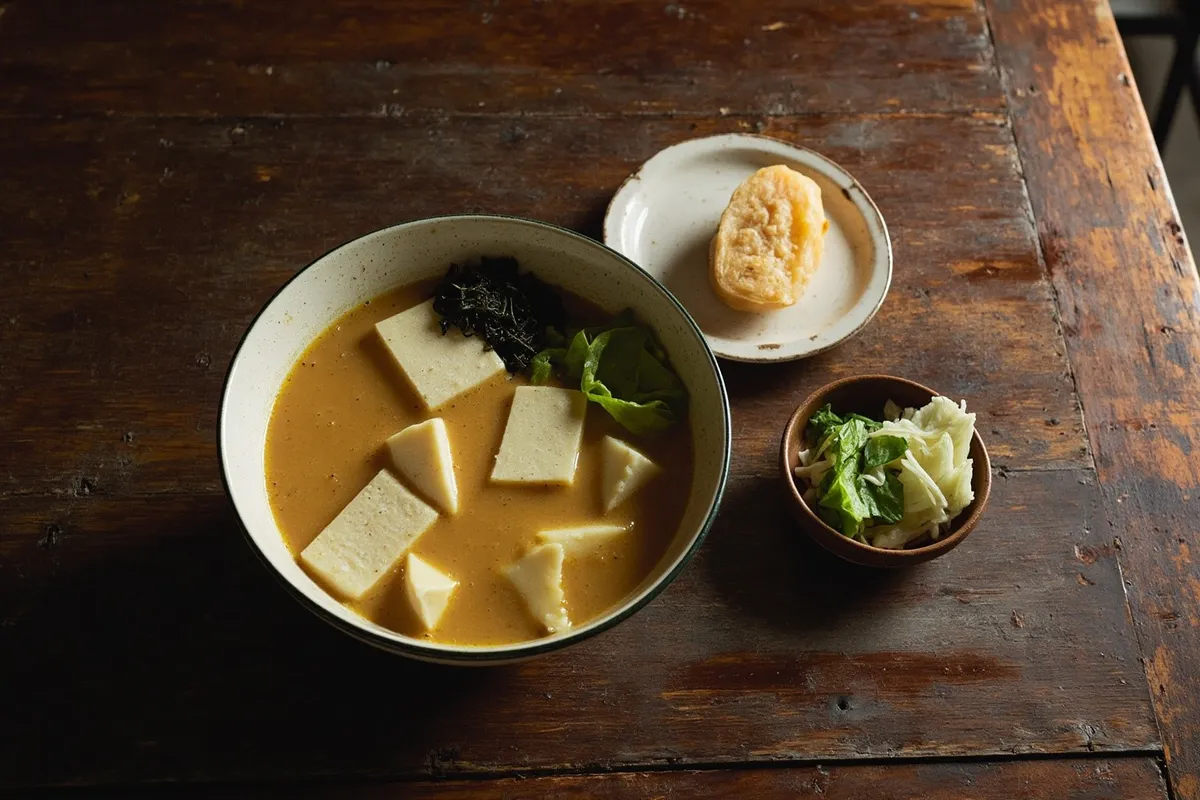
One medium sweet potato gives you 251 calories, 6 g of fibre and a glycaemic index of 34, and in 1949 Okinawan families ate one every day along with 965 g of vegetables and only 15 g of fish. That is the Okinawa diet in one line: a low-fat, vegetable-heavy plate built on sweet potato, soy, seaweed and small portions, rather than the packaged weight-loss programme sold under the same name in English. My grandmother cooked that way in Yokohama, with a bowl of rice in the middle of the table and small dishes shared around it.
Two things to know before you shop. The documented 1949 plate ran on 85% of its calories from carbohydrate and 6% from fat, and on about 1,113 mg of sodium a day; the modern island eats 28% fat and 3,256 mg of sodium. The longevity story has moved on too: the Okinawa Centenarian Study has run since 1975, and in December 2025 it reported a shift towards more dementia and bed-bound centenarians. The food list, the portions and the walking hold up in my kitchen. The packaging does not.
What the Okinawa Diet Actually Is
Two different things carry the name, and they look nothing alike on a plate. Sort them out before you spend money on either.
Two plates: the documented 1949 pattern and the modern island
The Okinawa Centenarian Study has run since 1975, has counted more than 3,000 participants, and is the longest continuously running study of centenarians in the world. Its food records are the part worth cooking from: the 1949 Okinawan diet next to the 1950 Japanese diet, broken down by food group, in the Okinawa diet review in PMC.
| Food group | 1949 Okinawa | Share of calories | 1950 Japan | Share of calories |
|---|---|---|---|---|
| Grains | 192 g | 33% | 481 g | 75% |
| Vegetables | 965 g | 58% | 301 g | 8% |
| Legumes | 71 g | 5% | – | – |
| Fish | 15 g | 1% | 62 g | – |
| Meat | 3 g | – | – | – |
| Eggs | 1 g | – | – | – |
| Dairy | under 1 g | – | – | – |
| Fruit | under 1 g | – | 44 g | – |
| Pickled vegetables | – | – | 35 g | – |
A dash means the record does not cover that group. Read the middle of the table before you get excited about the sweet potato: vegetables were 58% of calories and 965 g a day in Okinawa against 301 g and 8% in Japan a year later, while grains went the other way, 192 g and 33% against 481 g and 75%. Fish was a garnish at 15 g a day and 1% of calories, with under a gram each of dairy and fruit.
The modern island plate is documented only in macros, which matters before anyone quotes the 1949 figures as a target: 58% carbohydrate, 15% protein and 28% fat with 7% saturated, against 85%, 9% and 6% with 2% saturated in the traditional diet. The salt moved too, from about 1,113 mg a day to 3,256 mg.
What one cohort can tell you. The Centenarian Study has followed the same island for half a century and tracks how the centenarians live as well as how many there are. A population that reaches 100 in good health is worth studying. It makes no promises about a shopping list in Manchester.
How the plate is built: ichiju-sansai, washoku and three cooking methods
The basic Japanese meal is ichiju-sansai: rice and soup, one main dish of meat or fish, and one or two side dishes of vegetables, mushrooms and seaweed. Umami does the work fat does elsewhere, which is how a plate stays savoury while animal fat stays low. Japan's agriculture ministry connects that structure to longevity and obesity prevention, and washoku, the traditional food culture, has been on UNESCO's intangible heritage list since December 2013.
- Champuru: everything in one pan, vegetables with tofu or a slice of pork belly, stir-fried fast.
- Nbushi: water-rich vegetables such as daikon, pumpkin and Chinese okra, simmered slowly in their own juice with a little miso.
- Irichi: less watery vegetables, simmered and then stir-fried.
A meal tends to open with miso soup and close with sanpin-cha, jasmine green tea, with awamori now and then after that. Cook this way and the plate gets you to roughly 30 different foods a day, the number Japan's health ministry suggests for covering a wide range of nutrients.
Glossary. Washoku: the traditional Japanese food culture, listed by UNESCO in 2013 for respect for fresh ingredients, balanced nutrition, expression of the seasons and ties to annual events. Ichiju-sansai: rice and soup, one main dish, one or two side dishes. Miso: fermented soybean paste. Dashi: the light stock under the soup, with kombu (also sold as konbu), dried kelp, as the usual home base. Shoyu: soy sauce. Sanpin-cha: jasmine green tea, the drink that ends the meal.
Hara hachi bu: eating to 80% full
腹八分目 (hara hachi bun me, shortened to hara hachi bu) is an Edo-period idiom for stopping at eight tenths of the belly. The useful part is the cue: put the plate down while you would still eat more, and aim for about 80% full. It sounds soft, and the evidence behind it is about as ordinary as evidence gets.
A review of the hara hachi bu evidence from April 2026 found it linked to lower daily calorie intake, less long-term weight gain and a lower average BMI, with men who kept to it choosing more vegetables and fewer grains. My own rule after years of food journals: leave the plate slightly unfinished and stop there. I wrote more about the technique in Hara Hachi Bu: What Eating to 80% Full Actually Does.
Skip the 80% rule if you are an athlete, a child, an older adult, or you are living with illness. Cutting intake is a bad idea in all of those cases, and this research does not apply to you.
Okinawa Diet Foods: What to Buy and What to Skip
The shelves that reproduce the traditional plate are cheap and unremarkable. The packaged shelf next to them is where most readers meet this diet, and it is a different product.
The staples shelf: sweet potato, tofu and miso
The sweet potato is the heart of the pattern and the easiest substitution to make. Bake one instead of boiling rice and you have the traditional staple, with 6 g of fibre and a glycaemic index in the thirties.
| One medium sweet potato | Amount |
|---|---|
| Energy | 251 kcal |
| Carbohydrate | 61 g |
| Fibre | 6 g |
| Protein | 1 g |
| Potassium | 812 mg |
| Vitamin A | 1,643 RE (100% of the daily value) |
| Vitamin C | 34 mg |
| Glycaemic index | 34 ± 2.3 |
| Glycaemic load | 11 |
Glycaemic index varies by variety: purple beni imo sits at 34, the orange Satsuma Imo at 55. One medium sweet potato also carries 61 g of carbohydrate, a little over the 40 g that the Japanese Food Guide Spinning Top counts for one staple serving.
- Firm tofu for stir-fries and champuru, silken tofu for soups.
- White miso for light seasoning, red miso when the bowl needs punch.
- Edamame as a snack from the pod, and natto, a spoonful of steamed fermented soybeans, as a third soy food alongside miso and tofu.
Miso is the salt trap on this shelf. USDA figures put it at 3,728 mg of sodium per 100 g, which works out at roughly 600 mg for a 16 g tablespoon, more than most people expect from a spoonful that tastes savoury rather than salty.
Vegetables, mushrooms and seaweed
Vegetables are the bulk of the pattern, 965 g a day in 1949, and the easiest part to copy. Cut whatever is in season small, cook it fast, eat it with rice. Goya bitter melon is the one that puts newcomers off: it is genuinely bitter, and a slice simmered in miso broth is the traditional way to eat it. Mozuku, the sea grapes of Okinawan waters, is salad material or a partner for tofu; elsewhere it comes salted or dried and works the same way.
Mushrooms and seaweed carry the savoury weight. Shiitake gives depth no stock cube manages, and nori sheets wrap rice, sit under fish or go into the soup. Kombu (konbu), dried kelp, is what most people buy to make dashi at home.
Two caveats. Fish was 15 g a day and 1% of calories in 1949, so the traditional plate was never fish-heavy; the familiar two-portions-a-week rule, one oily and about 140 g a portion, is modern NHS guidance rather than a historic feature. And seaweed iodine varies by product and species, so read the label: nori, kombu and mozuku are not interchangeable, and a claim about a sheet of nori at every meal is marketing, not advice.
The seasoning shelf: shoyu, dashi and the salt ceiling
Miso is where the salt hides and shoyu is the other half. Soy sauce varies by bottle, so read the sodium panel rather than trusting a number you half remember. A reduced-sodium bottle sits on the same shelf and does most of the work.
- Keep the flavour in the vegetables and mushrooms rather than the shaker: champuru and nbushi carry enough seasoning on their own.
- Count a miso tablespoon at roughly 600 mg of sodium before you decide the bowl needs more.
- Finish with sanpin tea or mugicha barley tea, which goes down cold in the warm months, and check the label if awamori is your drink.
The island's own history makes the argument. Okinawans ate about 1,113 mg of sodium a day in 1949, the elders the centenarian study documented were on 3,100 mg, and modern Okinawa sits at 3,256 mg. The salt-heavy pantry is the modern departure, and the low-salt tradition is the part worth keeping.
For scale: NHS guidance for adults is a maximum of 6 g of salt a day, about one level teaspoon, and around three quarters of it comes from packaged and everyday foods rather than the shaker, which is exactly where miso and shoyu sit. The American Heart Association puts the ceiling at 2,300 mg of sodium a day, with an ideal below 1,500 mg for most adults, especially anyone with high blood pressure. The 1949 figure of 1,113 mg already sat under that ideal.
An Okinawan Week of Eating
A week of shopping, a day of plates and what the week costs. If you want an Okinawa diet plan in one screen, this is the section.
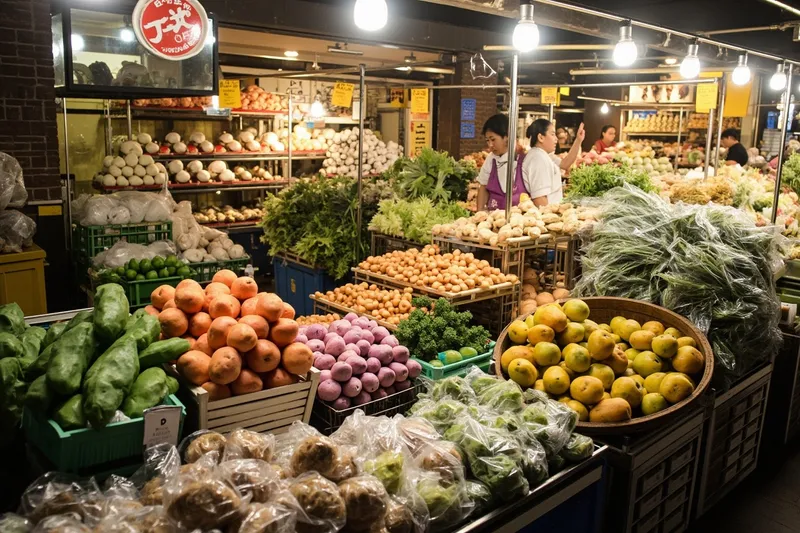
What a week costs
Two price lists below, and they are different animals. The first is modelled estimates per 100 g in four markets; the second is a real shelf list from one chain. I plan the shop with the second and use the first to sense which items are heavy and which are cheap.
| Item | US | UK | Canada | Australia |
|---|---|---|---|---|
| Tofu, per 100 g | $0.30–0.50 | £0.30–0.45 | C$0.42–0.55 | A$0.50–0.65 |
| Short-grain rice, per 100 g | $0.25–0.50 | £0.18–0.30 | C$0.26–0.38 | A$0.30–0.42 |
| Soy sauce, per 100 ml | $0.40–0.80 | £0.42–0.70 | – | – |
Modelled 2026 unit-price estimates, not a shelf-price survey. The spread between chains inside a column does not tell you which chain is cheaper, and the US tofu figure of $0.30 per 100 g sits below what the beans themselves cost. Treat these as indicative and read the shelf labels.
| Item | Size | List price |
|---|---|---|
| Sweet potatoes, organic | 3 lb bag | $4.99 |
| Purple Murasaki sweet potatoes | 3 lb bag | $4.99 |
| Sweet potato | each | $0.99 |
| White miso paste | 5.3 oz | $2.99 |
| Nori seaweed furikake | 1.95 oz | $2.99 |
| Reduced-sodium soy sauce | 17.6 fl oz | $3.99 |
| Shelled edamame | 9 oz | $3.99 |
| Shiitake mushrooms | 4 oz | $3.49 |
| Jasmine rice | 3 lb | $3.99 |
October 2026 list prices from a third-party tracker for a single chain: a snapshot of one shop, not a survey of the market.
The core basket comes to $29.73 at those prices, so call it about $30 for the week, covering sweet potato, miso, soy sauce, seaweed, edamame, shiitake and jasmine rice. Fish, eggs, fresh greens beyond sweet potato, oil and tea are not in that figure.
In the US, retail fresh vegetable prices are forecast up 5.8% for 2026, in a 4.8–6.8% range, while eggs are down 29.3% and beef and veal up 8.7%. A vegetable-led basket sits on the side of the shop that keeps getting more expensive, so sweet potato and tofu do more of the work than steak.
The week itself is easy to plan: two fish meals, one of them oily, two tofu or soy meals, and vegetables with sweet potato on most days.
A day of eating, from a 10-minute breakfast to the evening tea
Here is my own working day, assembled from the documented foods and grams. Nobody recorded a 1949 breakfast, so treat this as a modern practical day rather than a historical menu.
- Breakfast, 10 minutes. A baked sweet potato, one scrambled egg, a small bowl of white miso soup (white miso, kombu, wakame, spring onion) and green tea. The wider pattern is in Japanese Breakfast: What It Is and Why It Helps Weight Loss.
- Lunch at work. Short-grain rice, firm tofu, edamame, cucumber, pickled daikon, a sheet of nori, carrot and a spoon of shoyu.
- Dinner. One-pot champuru (Chinese okra, carrot, onion, shiitake, firm tofu, reduced-sodium shoyu, sesame oil, sesame seeds), miso soup, steamed rice, bitter melon simmered with white miso, jasmine tea. The tea side is in Green Tea and Matcha: Benefits, Research and How to Use Them.
- Top-ups. A banana, cabbage, spinach, mung bean sprouts, ginger, garlic, red pepper, vinegar and a spoonful of natto.
Counted ingredient by ingredient, that day comes to 31 foods, and about 30 a day is the number Japan advises for covering a wide range of nutrients. Two small things finish the day: stop at 80% fullness, which in practice means being honest about the rice portion, and get 150 minutes of moderate activity a week, which for most people is walking.
Portion reference from the Japanese Food Guide Spinning Top: the guide is built around a reference intake of 2,200 ± 200 kcal a day, and one serving (SV) is about 40 g of carbohydrate in a staple dish, about 70 g of the main ingredient in a side dish, about 6 g of protein in a main dish, about 100 mg of calcium for milk or dairy and about 100 g of fruit, with snacks kept near 200 kcal.
Where beginners go wrong
- Buying a packaged “Okinawa diet” product instead of food. The weight-loss version sold in English has never been through rigorous study (see the limits section).
- Dropping protein because the plate looks like vegetables. Tofu, eggs and fish are all in the pattern, and the 1949 diet was 9% protein.
- Reaching for miso three times a day. A 16 g tablespoon is roughly 600 mg of sodium, and the study's own elders were already at 3,100 mg.
- Eating well below 80% fullness. The rule is a ceiling, and going under it is a different problem.
- Copying the food list and ignoring the volume. 965 g of vegetables a day is the real content of the pattern.
The traditional plate also gave you under a gram a day each of fruit, nuts, seeds and dairy, so strict versions leave gaps a modern diet should not have (see the limits section). One habit I would keep regardless of the evidence: eat one meal a day away from the screen. Mindful eating is mostly that, and screen distraction eating is the easiest thing to fix.
Okinawa Diet vs Mediterranean Diet: The Numbers and the Evidence
These two get swapped for each other constantly, and the documented numbers let you compare them without adjectives.
Four patterns side by side
Fat is the row to read first. The traditional Okinawan plate ran on 6% of calories from fat, 2% of it saturated, while the Mediterranean diet profile sits at 42% and DASH at 27%. The 85% carbohydrate figure, though, came with a low glycaemic load, because the staple was sweet potato at GI 34 to 55 rather than white bread. The copyable part is the low-GI staple and the vegetable bulk; the 85% number on its own would be poor advice.
| Traditional Okinawan (1949) | Modern Okinawan | Mediterranean | DASH | Portfolio | |
|---|---|---|---|---|---|
| Carbohydrate | 85% | 58% | 43% | 58% | 49% |
| Protein | 9% | 15% | 13% | 18% | 20% |
| Fat | 6% | 28% | 42% | 27% | 30% |
| Saturated fat | 2% | 7% | – | – | – |
| Sodium, mg/day | 1,113 | 3,256 | 2,157 | 1,150 | 1,921 |
One thing to keep straight about the evidence. PREDIMED is the only randomised comparison in this table: 7,447 Spanish adults aged 55 to 80, 57% of them women, all at high cardiovascular risk, saw roughly a 30% relative reduction in major cardiovascular events on a Mediterranean diet with extra-virgin olive oil or nuts against a reduced-fat control diet. DASH and Portfolio appear here as nutrient profiles, and no trial results for them are set out in this article.
What the longevity evidence actually shows
The Okinawa Centenarian Study has run since 1975, has counted more than 3,000 participants, and gave Okinawa its place among the blue zones. Its December 2025 report is the interesting part: as the island westernises, longevity is moving away from centenarians still living at home towards a higher share of dementia and bed-bound cases.
The “most centenarians in the world” line is out of date too. At Okinawa's September 2026 count the island had 1,192 people aged 100 and over, 584 of them new centenarians, and ranked 39th in Japan by centenarians per 100,000 population, against 107,677 centenarians nationwide. For current figures, Okinawa Prefecture publishes its own health indicators and centenarian statistics, from life expectancy by municipality to standardised mortality ratios and healthy life expectancy.
The closest evidence to an Okinawan plate is Japanese and nationwide rather than Okinawan. The JPHC cohort study followed 40,222 men and 47,350 women aged 45 to 75 for a mean of 19 years, and the highest adherence to the Healthy Meal guideline was linked with lower all-cause mortality: hazard ratio 0.86 (95% CI 0.82–0.91) in men and 0.92 (95% CI 0.87–0.98) in women. That measures mortality in middle-aged and older adults, a different question from centenarian survival.
The walking half of the pattern: 31% of adults worldwide, about 1.8 billion people, fall short of the 150 minutes of moderate activity a week.
The numbers that change what you buy, by market
| UK | US | Canada | Australia | |
|---|---|---|---|---|
| Salt or sodium per day | 6 g salt, about one level teaspoon | 2,300 mg sodium; ideal under 1,500 mg | 2,300 mg sodium | 2,000 mg sodium |
| Fibre per day | 25 g minimum (WHO) | 25 g minimum (WHO) | 28 g | 30 g for men, 25 g for women |
| Local reference | NHS guidance | Dietary Guidelines for Americans 2025–2030 | Health Canada Daily Values | 2013 Australian Dietary Guidelines, draft revision due for public consultation in late 2026 |
Two global floors from WHO: at least 400 g of vegetables and fruit and at least 25 g of fibre a day, with fat at or under 30% of energy, saturated fat under 10% and trans fat under 1%. US readers will also have seen the 2025–2030 Dietary Guidelines for Americans, whose “Eat Real Food” message steers away from highly processed foods with refined carbohydrates, added sugars and excess sodium, which points the same way as this plate.
One threshold difference worth knowing: Japan treats BMI below 18.5 as underweight, 18.5 to under 25 as standard and 25 or above as obese, a lower line than the 30 used in US and UK practice. A number that reads comfortably healthy on a UK chart can sit in the obese column on the Japanese scale, and the same goes for any risk you judge on BMI thresholds.
Okinawa Diet for Weight Loss: What It Can and Cannot Do
The weight-loss version is the one sold in English, so it deserves a clear answer on what it can and what it cannot deliver.
Portions, deficit and the 150-minute walk
There is no magic food here. The mechanism is volume and density: a plate built on 6% of energy from fat, a low-glycaemic-load staple and a great deal of vegetables carries fewer calories than a plate of refined rice and meat. The sources give no head-to-head energy comparison, so this is plain reasoning rather than a finding. For the budget itself, the Japanese reference intake of 2,200 ± 200 kcal a day and its serving sizes give a workable frame for a calorie deficit.
The hara hachi bu evidence points the same way. Eating to about 80% full was associated with lower daily calorie intake, less long-term weight gain and a lower average BMI, and men who kept to it chose more vegetables and fewer grains.
The part most readers skip is the walking: 150 minutes of moderate activity a week, and there is more weight in that line than in any single food choice.
The habit I would keep: plate the vegetables first and let them take the space, stop at 80% fullness using a cue you can actually see, and eat one meal a day away from the screen so you notice the signal at all. Portion control is doing all of the work here.
Limits, risks and who should not copy it
- The weight-loss version of the Okinawa diet has never been put through rigorous scientific study, so treat the claims attached to it as packaging.
- The traditional pattern is very low in fruit, nuts, seeds and dairy, under 1 g a day each in 1949, so it needs topping up rather than copying wholesale.
- The 80% fullness rule does not suit athletes, children, older adults or people living with illness.
- Japan's BMI thresholds differ, with obesity starting at 25, so risk gets judged on a different scale than in the US or UK.
The practical gaps are calcium, vitamin D and B12, and fibre. The traditional plate had little dairy and moderate fish, so it barely covers the first three; the Japanese guide counts about 100 mg of calcium per serving of milk or dairy, WHO sets a floor of 25 g of fibre a day, and the fish rule is two portions a week, one oily, at about 140 g a portion. A dairy serving, a piece of fruit and a small handful of nuts close the gaps without a supplement.
Potassium is worth raising with a clinician. The 1949 diet carried 5,199.6 mg a day, 180% of Japan's 2010 Dietary Reference Intake, and one medium sweet potato alone holds 812 mg. With chronic kidney disease, or on medication that affects potassium, talk to your doctor before you eat several sweet potatoes a day.
Keep an eye on which fish you buy: for large predatory species, follow your national mercury advisory rather than the two-portion rule alone. If you are pregnant, under 18, or managing diabetes, kidney disease or high blood pressure, check with a doctor before taking on both the 80% rule and the high-potassium vegetables at once.
What Is Worth Copying
The scorecard: what transfers to an ordinary shop basket, and what to leave where it is.
Copy these seven things this week
- A vegetable-led plate, with roughly 30 different foods a day.
- Sweet potato as the staple, at a glycaemic index of 34 to 55 depending on variety.
- Two portions of fish a week, one of them oily, about 140 g a portion.
- Fermented soy most days: miso, tofu and edamame, with a miso tablespoon counted at roughly 600 mg of sodium.
- Vegetables, mushrooms and seaweed for savoury depth instead of more salt.
- Eating to about 80% full.
- 150 minutes of walking a week.
Start on Monday. Buy one sweet potato, a block of firm tofu and a tub of white miso, and cook them into two meals. Halve the rice you normally serve and double the vegetables. Walk 30 minutes on five days. The core basket comes to about $30 for the week at the prices above, and the miso tablespoon is the single line to watch.
Leave these behind
- Packaged “Okinawa diet” products. The weight-loss version has not been through rigorous study (see the limits section).
- The salt-heavy modern Okinawan pantry: 3,256 mg of sodium a day against its own 1,113 mg in 1949 (see the comparison table).
- The idea that the island's longevity record is intact. The December 2025 centenarian findings and the current 39th-place ranking say otherwise.
- Old blue-zone statistics. The prefecture's own health indicators and centenarian pages tell you what is happening now.
- The idea that meat and dairy have to be zero. Small is the aim.
Keep the food list, the portions and the walk, and leave the packaging where it is. Nothing here needs a specialist shop: a sweet potato, a tub of miso and a decision about how much rice goes in the bowl will get you most of the way.