
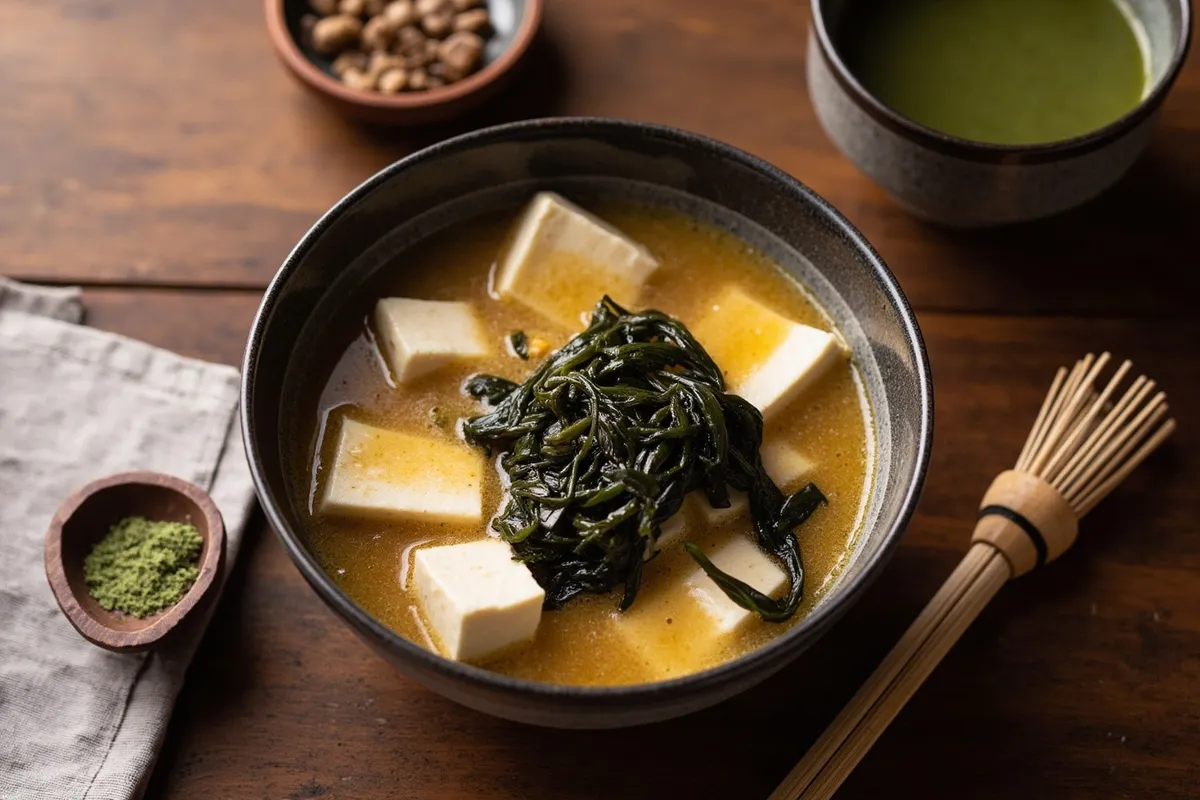
Japanese Superfoods: What the Label Means and How to Judge a Claim
Japanese superfoods is a marketing label with no definition behind it, and Japan eats roughly 10 g of salt a day per person against a dietary reference goal of under 7.5 g for men and 6.5 g for women. Most of the food on my list is cheap and easy to find in an ordinary supermarket: miso, nori, tofu, edamame, kombu, a few mushrooms, a tin of green tea.
The label is the least interesting part. What matters in a Japanese kitchen is seasoning, and a bowl of miso soup can swallow a big share of the day's salt budget, so that is where I start. This is a practical guide: what each food is, what the research actually supports, where it sits on a shop shelf, what a sensible portion looks like, and which items need a doctor's input before they become a habit.
What a Japanese superfood claim really claims
Superfood is a shelf word, so I treat every claim built on it as a question to ask rather than a fact to repeat. Here is the list I shop from, with the kind of evidence behind each claim, because there is a study and there is a trial that showed it works, and the price of a jar of paste should follow the second one.
| Claim you meet in a headline | What the evidence actually is | How I read it |
|---|---|---|
| Miso and natto repair your gut | Cohort studies, lab work on live cultures | Useful fermented food that needs almost no cooking. The microbiome story is plausible but sits at cohort level, and only unpasteurised products carry live cultures. |
| Green tea adds years to your life | Observational cohorts, trials on blood pressure and lipids | Trials cover blood pressure and cholesterol markers, not lifespan. The cardiovascular and cancer links hold up better than the diabetes one. |
| Seaweed is the most nutrient-dense food there is | Composition tables | Drop the superlative. Nori and kombu are mineral-rich and low in calories, and a sheet of nori is still a small quantity of food. |
| Natto thins your blood | Marketing dressed as medicine | Natto carries vitamin K, which matters if you take warfarin. Eat it, keep the amount steady, tell your prescriber. |
| Matcha prevents disease | Trials on tea, none on matcha | Trials use green tea or green tea extract. No matcha-specific health outcome has been tested, so I would not sell matcha as a medicine. |
The foods that keep coming up in my own kitchen are miso, natto, tofu and edamame, nori and other seaweeds, shiitake and maitake, and green tea. Before I add something new to the basket I ask whether people in Japan eat it most days, whether it gives a diet something usually missing, and whether the effect has been shown in people rather than in a lab dish.
The one-line test I run before buying anything unfamiliar:
- Do people in Japan eat it most days?
- Does it supply something most diets lack?
- Is the effect shown in humans, or only in a dish?
- Will I still eat it a month from now?
A Japanese food guide for beginners: how the plate is built
The reference point for eating in Japan is the national Dietary Reference Intakes, issued in five-year editions, with the 2025 one covering fiscal years 2025 to 2029 and adding osteoporosis to the conditions the intake figures relate to. That revision also recalculated the estimated average requirements for water-soluble vitamins, changed the basis for the recommended BMI range and removed the tolerable upper limit for iron.
The shape of a Japanese meal is simpler than any chart: one soup, two small dishes, one bowl of rice. It is usually called ichiju-sansai, and it is built around a staple, usually gohan, with the dishes meant to be shared from the middle of the table. Rice carries the carbohydrate, the two dishes supply vegetables and protein, and the soup is there for warmth and flavour more than for filling you up.
| Part | What it contributes | Household portion | Salt role |
|---|---|---|---|
| Rice | Starch, the base of the meal | About one small bowl | None of its own |
| Soup (miso or dashi) | Warmth, umami, a little protein | One bowl | Carries a big share of the meal's salt |
| Vegetable dish | Most of the fibre | A small side portion | Light unless the dressing is salty |
| Protein dish | Fish, tofu, egg or a little meat | A small side portion | The tare decides |
| Pickles (tsukemono) | Acidity, a little vegetable | A few pieces | Can be very salty |
- Start with rice: one onigiri or a small bowl of cooked rice.
- Add protein: a boiled egg, a handful of edamame or a block of tofu.
- Add one vegetable: a side dish, or a packet of seaweed salad.
- Add a bowl of miso soup if there is one.
- Stop there, and drink water or unsweetened tea rather than something sweet.
Hara hachi bu, stopping at around 80% full, is the popular way to describe portion discipline. I use it as a heuristic rather than a target with a measured effect, because a full bowl of rice and a small bowl are different things.
Soup and pickles carry most of the salt in a home meal, and a bowl of miso with a small plate of tsukemono adds up faster than most people expect. The numbers are all in the sodium section further down, because one table of figures is easier to use than four.
Where to buy, and what it costs per 100 g
Where a product sits depends on the shop. The supermarket international aisle holds the shelf-stable basics: miso paste, nori sheets, dried wakame and kombu, rice vinegar, mirin. An Asian grocery store carries a much wider range. A Canadian supermarket search for nori sheets turned up a single product while the Asian shelf in the same city carries dozens of kinds, so the international aisle is a good start but not the full picture. If a miso is unpasteurised it needs a fridge and sits in the chilled case rather than on the shelf, and the pack says which one it is.
| Product | Where it sits | What decides the price |
|---|---|---|
| Nori sheets (yaki nori) | International aisle; wider choice in Asian stores | Sheet count and net weight per pack |
| Miso paste | International aisle, chilled if unpasteurised | Salt per 100 g, added sugar, pasteurised wording |
| Natto | Chilled case near tofu and fresh fish | Sell-by date; buy one pack, not a bundle |
| Firm tofu | Chilled case | Usually cheaper than silken and better for frying |
| Silken tofu | Chilled case | Sweeter and softer, so check for added sugar |
| Edamame | Frozen aisle, sometimes fresh | Plain for snacking, salted if you plan to use in a bowl |
| Dried kombu | International aisle | Dried sheet or powder; konbu-cha concentrates are a different product |
| Matcha | Tea aisle | Culinary grade for daily use, ceremonial grade costs more per gram |
| Dried wakame | International aisle | Plain dried, or ready-to-eat salted hijiri wakame with much more salt |
The only price I can quote with confidence is a Canadian one: roasted nori sheets were CAD 2.97 a pack, which works out at CAD 10.61 per 100 g (late October 2026). Shops move prices and stock differs, so treat it as a worked example rather than a price list. The habit worth keeping is simple: divide the shelf price by the net weight in grams, multiply by 100, and you have a cost per 100 g you can compare against any other brand. Two minutes of arithmetic, and it stops you paying twice as much for a different-sized pack.
Japanese packs have shown salt equivalent instead of sodium since April 2015, so a label from Japan can be compared directly with a salt target. UK and EU packs show salt; US packs show sodium, and salt is roughly 2.5 times the sodium figure.
A five-minute label check in the shop:
- Allergen line first, especially for soy, wheat and barley.
- Best-before date against use-by date: the first is about quality, the second is about safety.
- Organic, non-GMO and kosher marks on seaweed packs, and the sheet count per pack.
- Salt per 100 g, so you can compare two jars side by side.
Japanese Superfoods Worth the Shelf Space: A Beginner's Shopping Checklist
The shopping half of this guide: which products earn a regular place in a Western basket, how they differ from each other, and how to store them without waste.
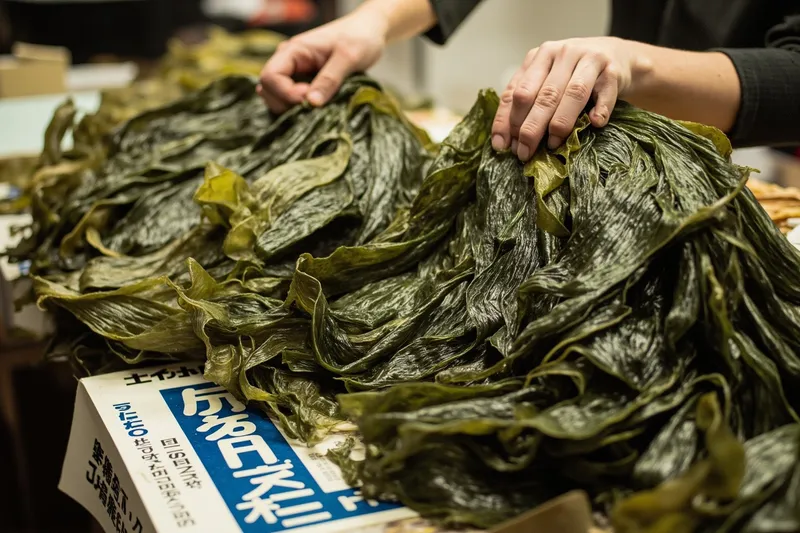
The soy anchor: miso, natto, tofu, edamame
Miso and natto are the fermented soy anchors of washoku, and they add plant protein and umami with almost no cooking at all. Tofu and edamame do the same job without fermentation. The four of them are the main soy foods in Japanese cooking, while soy sauce belongs on the condiment shelf, not the protein list, and shoyu, tamari and mirin differ from each other in ways that matter.
| Type | Flavour and ageing | Typical use | What to check |
|---|---|---|---|
| Shiro miso | White, sweet, lightly aged | Everyday soup, dressings, marinades | Added sugar, salt per 100 g |
| Aka miso | Deep red, long-aged, salty | Soups where you want body | Salt per 100 g; aged miso is saltier than shiro |
| Awase miso | Red and white mixed, medium strength | General cooking | Salt per 100 g |
| Mugi miso | Barley koji, golden, hearty | Soups, marinades | Barley, so it contains gluten |
| Dashi miso | Sweetened paste with added dashi, often bonito-based | Instant soup, or a bowl you season yourself | Added sugar and dashi; bonito is not in every jar |
Four ways to use one jar of shiro miso and get rid of it before it goes past its best: a bowl of miso soup in the morning with a slice of tofu; a dressing of miso, rice vinegar and mirin over cucumber or aubergine; a marinade for chicken or fish; and a sauce brushed onto grilled vegetables or fish in the last minutes of cooking.
A natto starter kit, in three steps:
- Stir one pack with a teaspoon of soy sauce and a dab of wasabi.
- Spoon it over hot rice and scatter shredded yaki nori on top, which is natto gohan.
- For natto tamago, take the pan off the heat, then stir a tablespoon of natto into two beaten eggs.
The stringiness is the same sticky pull you get from bread dough, and there is no way round it in natto itself. You can hide it: fold the beans into a donburi with sliced spring onion, mix them into a warm tofu scramble, or loosen them with a spoon of rice vinegar and use them as a sauce. For raw egg dishes I use pasteurised eggs, and the reason is in the safety section.
Seaweed and mushrooms: nori, wakame, kombu, hijiki, shiitake, maitake
Seaweeds are bought in more shapes than most people expect, and each shape does a different job in the kitchen. Mushrooms do the same for savouriness without any salt at all, which makes them the easiest swap in this whole article.
| Form | Use | Nutrient to note | Prep |
|---|---|---|---|
| Nori, yaki (roasted) or raw | Soup garnish, rice balls, snacks | Iodine, and it is the most convenient source in the diet | Torn or torn and scattered |
| Nori sheets vs shredded | Sheets for rolling, shredded for garnish | Same product, different form | None |
| Wakame, fresh or dried | Salad, miso soup | Iodine, alginate | Dried ones rehydrate in cold water |
| Kombu, sheet or powder | Dashi, kombu-cha | Iodine, glutamates | Sheet steeps, powder is instant |
| Kombu-cha | Drink | Very little of anything | Ready to drink |
| Hijiki (hiziki) | Salad, simmered with beans | Iodine, fibre | Dried, needs soaking and cooking |
| Shiitake, fresh or dried | Soup, stir-fry, grill | Fibre, B vitamins | Dried needs soaking |
| Maitake | Grilling, hot pot, teardrop-shaped | Fibre, B vitamins | None |
Buy small the first time: hijiki, dried shiitake and dried maitake all carry far more flavour per gram than fresh ones, and it is easy to ruin a pot of rice vegetables by adding too much dried mushroom. Fresh shiitake and a fresh oyster mushroom or enoki are the friendly starting point.
Checking iodine without guessing. Every seaweed product differs, and a sheet of nori is not the same quantity as a strip of dried kombu. If you want a number for your own food, look up that exact product in USDA FoodData Central or the Japanese Standard Tables of Food Composition, then check the same entry next time you buy, because harvest and product change the figures.
The fermented pantry: tsukemono, umeboshi, tamari, shoyu, rice vinegar, mirin, sake
These are the small jars that make low-salt cooking possible. They are also the easiest place to ruin a dish, because a salty condiment in a teaspoon looks harmless on the label and lands heavy on the plate.
| Type | What it does | Watch for | Beginner trap |
|---|---|---|---|
| Shoyu (soy sauce) | Salt and colour | Salt per 100 g, wheat | Using it like a gravy |
| Tamari | Salt and colour, richer | Wheat; it is a style, not an allergen-certified product | Assuming it is always wheat-free |
| Rice vinegar | Acid, lifts a dull sauce | Nothing much | Replacing it with cider vinegar and adding sugar |
| Mirin | Sweetness and glaze | Wheat in aji-mirin, added sugar | Using it in place of a light soy |
| Umeboshi (pickled plum) | Salt, sourness, a clean finish | Salt per 100 g | Eating three as a snack |
| Tsukemono | Crunch and acidity | Salt per 100 g | Serving a whole side dish of them |
| Sansho pepper | Citrus heat, no salt | Grinding fresh is stronger | Using it like black pepper |
| Shiso | Fresh, aniseed-ish, very salty when pickled | Fresh leaves are mild, pickled ones are not | Salting a bowl with pickled shiso |
Four weeknight uses for rice vinegar: a quick pickle of sliced daikon and cucumber in the fridge, a dressing for chilled soba, a splash into a dashi-based soup, and a splash into a hot pan to loosen whatever is stuck to it. It is the cheapest way to make a sauce taste finished.
Koji in plain words. Koji mould (Aspergillus oryzae) is the starter in miso, sake, shoyu and mirin. The enzymes it secretes cut protein down into amino acids, and amino acids are what we taste as umami. That is the whole trick: the same savoury hit from a smaller spoon of salt.
Traditional Japanese Healthy Foods: A Day of Eating from Morning to Evening
A working day built from the products above, in household portions and minutes, not in a schedule nobody keeps.
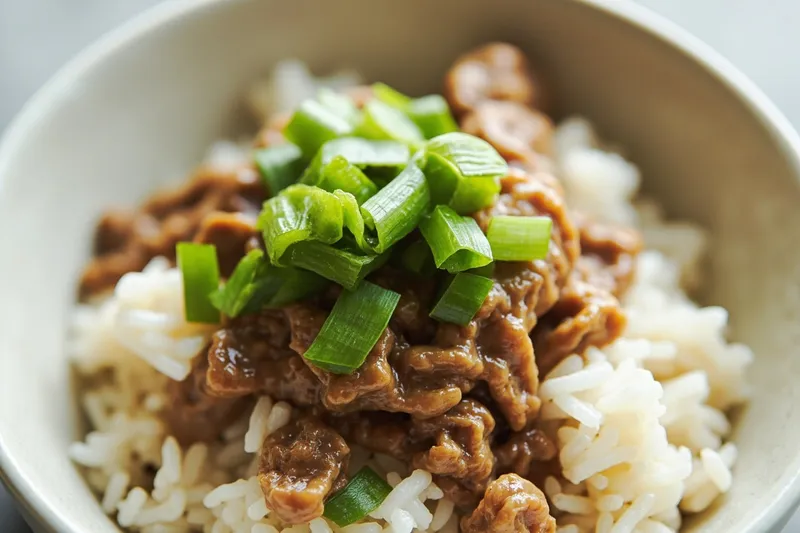
Breakfast in 10 minutes: natto gohan, onigiri, natto tamago
Japanese breakfast is usually rice in some form, and the fastest version is the same as the slow version with ten minutes of assembly saved. None of these needs a frying pan before coffee.
- Natto gohan: a small bowl of rice from the cooker, one pack of natto stirred with soy and wasabi, a sheet of yaki nori torn over the top. Five minutes, and one pot of washing up.
- Two onigiri and a soup: rice shaped with a sheet of nori, plus miso soup that needs three minutes of simmering and one bowl to wash. Salt comes mostly from the nori, so keep the soup light.
- Natto tamago: two eggs stirred off the heat with a tablespoon of natto, on rice or with grilled fish.
Three things that go wrong every time. Nori goes soft and limp long before you have finished eating, so open the sheet last. Rice that sat overnight in a warm pot is dry and hard, which is why I cook a smaller amount and cool it fast. And cold natto is unpleasantly sticky in a way warm natto is not, so give the pack a minute in hot water before opening it.
The night-before rice cooker. Cook the rice, spread it on a tray so it cools quickly, refrigerate it, and reheat single portions in the morning. Left at room temperature, cooked rice is the classic route to food poisoning from Bacillus cereus, which is why the cooling step matters more than the reheating.
Lunch and dinner: ichiju-sansai with a soup that counts
These five combinations are the ones I rotate, and each is built as a soup, two small dishes and a bowl of rice. Times are for a home kitchen with a sharp knife and a hot pan, not for a restaurant.
| Combination | Time | Fibre comes from | Salt comes from |
|---|---|---|---|
| Kombu-wakame dashi, tofu and daikon, rice | 20 min | Daikon, wakame | Miso in the soup |
| Miso soup, grilled mackerel with grated daikon, rice, greens | 20 min | Greens, daikon | Miso and the tare |
| Oden simmer with konnyaku and daikon, hijiki salad, rice | 25 min | Hijiki, daikon | The broth, heavily |
| Miso soup with tofu and wakame, stir-fried gobo and kabocha, rice | 20 min | Gobo, kabocha | Miso, soy in the stir-fry |
| Edamame and shiso salad, clear kombu soup, small bowl of rice, pickles | 10 min | Edamame, shiso | Pickles |
For a three-day cycle I keep one block of firm tofu, a bag of frozen edamame, one bunch of gobo (burdock), a small kabocha, a bag of dried wakame, one jar of shiro miso and one pack of nori sheets. Oden is a street-food dish with a salty broth, and it is an occasional item for me rather than a weekly one.
Three ways to get dashi. A strip of kombu plus a few grams of dried bonito gives the fullest bowl and takes the longest. A dashi packet gives you speed and a weaker, sweeter result. Dashi miso paste gives you a sweet shortcut that is hard to salt later. One bowl of miso soup can carry a large share of the day's salt target, so whichever route you pick, measure the paste rather than spooning it by feel.
Drinks, snacks and small plates: kombu-cha, yuzu, wasabi, ikura
Most of what I drink at home is unsweetened, and that is where the swap from fizzy drinks happens.
- Unsweetened kombu-cha: kombu extract and vinegar, sharp and salty, not sweet. In Japan it is usually sold sweetened, so read the ingredients list and pick up the unsweetened bottle if the shelf has one.
- Yuzu sparkling water: citrus and bubbles, no sugar, no salt.
- Genmaicha: green tea with roasted rice, toasty and lower in caffeine than sencha.
- Hojicha: roasted hojicha, low in caffeine and good in the evening.
- Unsweetened sencha: the everyday green tea, grassy, medium caffeine, cheap by the bag.
Snacks in the same spirit: edamame with a pinch of salt, a wakame salad from the chilled shelf, and ikura as a sushi topping, oily and rich in the omega-3 that a typical British diet is short of. On a shopping trip the label check is sugar per 100 ml and the added-sugar line, because a sweetened kombu-cha concentrate can carry more sugar than a soft drink.
Japanese Foods With Health Benefits: What the Research Supports
Three tiers of evidence turn up here: randomised trials, cohort studies and mechanism. Only the first can tell you what happens when you eat something, and even that depends on what was measured.
Green tea and matcha: catechins, EGCG and caffeine without the hype
Green tea is the most-studied drink in Japan, mostly in its ordinary steamed form. Matcha is ground leaf, so it carries more of the polyphenols per gram, including EGCG, and it is also more concentrated in caffeine. Whether that makes it a better drink for health is a different question from whether green tea is worth drinking.
| Type | Processing | Taste | Caffeine | Use |
|---|---|---|---|---|
| Sencha | Steamed, rolled, dried | Grassy, light | Medium | Everyday tea |
| Genmaicha | Sencha with roasted rice | Toasty, nutty | Medium-low | Everyday tea |
| Hojicha | Roasted leaf | Warm, roasted | Low | Evening tea |
| Culinary matcha | Stone-ground, for cooking | Grassy, less sweet | High | Daily matcha |
| Ceremonial matcha | Shade-grown, finely ground | Sweet, smooth, no bitterness | High | Occasional, and pricier |
The evidence lines up like this. Links between green tea and cardiovascular disease and some cancers are the most consistent. The type 2 diabetes signal is the weakest and rests mostly on observational work. Randomised trials measure blood pressure and LDL cholesterol, not lifespan. And no trial has tested a matcha-specific health outcome, so most matcha claims are borrowed from green tea research, which is not the same thing.
Matcha or sencha? For caffeine without alcohol, either works. If you want a repeatable little ritual, buy culinary grade and use it daily, and keep a tin of ceremonial matcha for the occasions when the taste is the point. The ritual matters more to most people than the polyphenols, and it is cheaper that way round.
Fermented soy and the gut microbiome: miso, natto and live microbes
The word probiotic gets attached to anything fermented, which is why I split the shelf into what is alive, what has been killed off, and what was never alive to begin with.
| Product | Live microbes | What it adds instead | Practical note |
|---|---|---|---|
| Unpasteurised miso | Present, if unpasteurised | Flavour, some protein | Refrigerated, buy small |
| Pasteurised jarred miso | Mostly gone | Flavour, some protein | Shelf-stable, my default |
| Natto | Present, unless heat-treated | Protein, fibre, vitamin K2 | Refrigerate and eat quickly |
| Miso used in hot cooking | Reduced by heat | Flavour | Still worth adding |
| Tofu, edamame | None | Complete plant protein, fibre | The everyday soy option |
The fibre in a Japanese plate does not come from miso or natto. It comes from the vegetables, the seaweed, the mushrooms and any whole grains, with soy adding protein and umami rather than bulk. If you want live cultures from a Japanese cupboard, the pickles help a little; if you want them reliably, live yoghurt, kefir, kimchi or sauerkraut are easier.
What the studies can and cannot show is worth stating plainly. Japanese cohort studies, including a large cohort analysis of fermented soy foods, link fermented soy consumption with lower cardiovascular mortality and lower incidence of cancer. Those are associations in observational data, where people who eat miso also tend to differ in other ways, so nobody has shown that miso causes the difference. No trial has shown a lifespan effect.
Vitamin K2, omega-3 and iodine: what natto, sardines and nori contribute
These three nutrients are where Japanese foods earn their keep in a Western diet, and each comes with a caveat that matters for a minority of readers.
| Nutrient | Food | What is solid | Serving | Caveat |
|---|---|---|---|---|
| Vitamin K2 (menaquinone) | Natto | Direction only: unusually rich source of a form most diets barely touch | One pack | Matters for warfarin users |
| EPA and DHA | Sardines, mackerel | Well established in oily fish generally | One fillet | Keep large oily fish to about twice a week |
| Iodine | Nori, kombu, wakame | Direction only: varies widely by product | A sheet, a small strip of dried kombu | Too much matters for thyroid disease |
| Fucoxanthin, fucoidan, alginate | Wakame, brown seaweed | Lab and animal work; human effects less settled | Small handful | Do not confuse with supplements |
| Soy isoflavones | Tofu, edamame, miso | Consistent with the usual soy research | A block, a handful | Ordinary food amounts differ from supplement doses |
They combine well in one meal, which is convenient: natto over rice with a small fillet of sardines, wakame salad with mackerel, or a tofu scramble with a bowl of miso soup on the side. Nothing exotic, and no separate prep.
Two numbers worth checking yourself. Vitamin K per 100 g of natto and iodine per 100 g of nori are in USDA FoodData Central and in the Japanese Standard Tables of Food Composition. Check how the database lists vitamin K, because K1 and K2 are often separate lines, and anyone on warfarin needs the K2 figure rather than the total.
Fitting Japanese Foods Into a Modern Diet: Portions, Swaps and Sodium
Japanese food is a set of ingredients, not a diet plan. Here is how they fit into an ordinary plate, an ordinary portion and an ordinary salt budget.
Portion size and satiety: gohan, portion size and the plate
The rice portion is the part people get wrong, because a big bowl of white rice feels modest next to a Western plate and behaves differently on its own. My rule is to halve the rice and double the vegetables, which is closer to a Mediterranean plate than most Japanese home plates.
| Portion | What it contributes | How it changes the rest of the day |
|---|---|---|
| Small bowl of cooked rice | Starch, some fibre if brown | Leaves room for a second vegetable and a protein |
| Large bowl of cooked rice | The same, doubled | Often the whole meal on its own |
| One bowl of miso soup | Liquid, umami, a little protein | Takes the edge off hunger, adds salt |
| One pack of natto | Protein, fibre, vitamin K2 | Adds substance to a small bowl of rice |
| A quarter to a third of a firm tofu block | Complete plant protein | Enough to fill the protein gap in a rice meal |
| A small handful of edamame | Protein, fibre | Snack on its own, or a bowl filler |
| A small pinch of dried wakame | Volume, minerals | Almost no calories, plenty of flavour |
Adding protein and vegetables to white rice changes how satisfied you are and how quickly the meal settles, and that is a reasonable expectation rather than a measured outcome for any single food. What I want readers to take away is the mechanism: fibre and protein fill more space per bite than refined starch does.
Plate arithmetic for a calorie deficit without counting calories: keep the rice, drop the fried side dish, add a second vegetable. Japanese home cooking is not automatically light. Tempura, katsu and sweet dressings are ordinary parts of it, and nobody should pretend otherwise. If you want the detail, how a smaller bowl of rice changes the rest of the day goes into it.
Sodium in the sauce bottles: tamari, shoyu, miso and the salt goal
The salt in a Japanese meal is not in the rice or the vegetables. It is in the soup, in the tare and in the things you dip. Getting these three under control does more than any change to the vegetables.
| Item | Where the salt comes from | How to cut it |
|---|---|---|
| Home-cooked miso soup | The miso itself, plus any salt in the dashi | Use less miso and a stronger kombu dashi for depth |
| Instant miso packet | Everything in the packet | Use half a packet and add your own tofu and wakame |
| Instant noodle broth with tamari | Soup base and the seasoning sachet | Use half the sachet, add an egg and greens |
| Sushi roll with soy sauce | The dip | Use a third of the sauce; taste the rice first |
| Seaweed salad | Salt in the dressing | Make your own with rice vinegar and a dash of tamari |
| Yakitori with tare | The tare, which is salty by design | Ask for the tare on the side and use less |
| Restaurant ramen | Broth and the tare | Order a smaller bowl, eat less of the broth |
Four moves that keep the savoury taste and lose a third of the salt: halve the tamari and add rice vinegar with a little grated yuzu or sansho pepper; dilute miso with a weak kombu dashi so you can use more of it; skip the dipping sauce and season the food instead; and read the salt per 100 g on the pack so you can compare two products honestly.
A 30-second self-check. The Japanese reference goal is under 7.5 g of salt a day for men and 6.5 g for women, which sits between the WHO guideline of 5 g and measured intake, since the average in Japan is close to 10 g a day. A screening tool built on the 2015 National Health and Nutrition Survey sorts intake into four bands: under 6.5 g, 6.5 to 7.5 g, 7.5 to 10 g, and 10 g or more. Which band you are in changes what you do next, and it takes one evening of reading labels.
With hypertension in the picture, the Japanese Society of Hypertension sets the goal lower, at under 6 g of salt a day. The 2020 edition of the reference intakes is the one these figures come from, and they are labelled as such here rather than as the current edition.
Lower-carb swaps and Mediterranean comparisons: konnyaku, shirataki, daikon, gobo, kabocha
Japanese cooking and the Mediterranean pattern agree more often than the internet suggests, and both give a low-carb dieter more usable options than most diet books.
| Swap | Texture change | Fibre role | Honest note |
|---|---|---|---|
| Shirataki or konnyaku for wheat noodles | Rubbery, slippery | Almost none | Close to zero digestible carbohydrate, and it has none of the sauce a bowl of noodles usually relies on |
| Daikon for potato in stews | Softer, absorbs broth | Good | Holds its shape better than potato |
| Gobo for other roots | Crunchy, earthier | Good | Needs long cooking to soften |
| Kabocha for sweet potato | Sweeter, drier | Good | Roast it, or it wateries a stew |
| Seaweed for lettuce in wraps | Soft, salty | Some | Adds salt, so use less dressing |
| Oat bran for part of the rice | Looser texture | Adds fibre | Works better in a mixed bowl than in plain rice |
A Japanese low-carb plate looks like miso soup with tofu and wakame, grilled fish, daikon and kabocha, and half a bowl of rice or none. It does not look like a bowl of konjac noodles with three sauces over it, which is how shirataki usually gets sold.
Set the two patterns side by side and the overlap is bigger than the differences: plenty of vegetables, fish often, and a fermented food at every meal, though the Mediterranean version is usually dairy rather than soy. The gaps are the rice portion, the salt in the sauces, and the near absence of raw salads. The randomised-trial evidence behind the Mediterranean pattern is stronger than anything in this article, which is worth a proper comparison.
Risks, Allergies and Safe Habits
Most readers can eat all of this. A smaller group should not start without advice, and the list is short enough to read in a minute.
Soy allergy, gluten in soy sauce, and food safety
| Who | Why it matters | What to do |
|---|---|---|
| Soy allergy | Soy is in miso, natto, tofu, edamame, shoyu, many mirins and some tamaris | Read every label, including sauces and dressings |
| Coeliac disease or gluten intolerance | Shoyu usually contains wheat, tamari usually does not, mirin often does. Most miso is made with rice koji and is gluten-free; barley miso is not | Check the koji type and the wheat line on the pack |
| Histamine sensitivity | Aged miso and some sake can be an issue, though the evidence is thin and tolerance varies | Start small and keep a diary |
| MAOI medication | Aged fermented soy is sometimes listed as a tyramine source, though aged cheese, cured meat and yeast extracts are the better established ones | Ask the prescriber before making it a daily habit |
| Pregnancy or a weakened immune system | Unpasteurised products, and raw eggs in natto tamago | Use pasteurised eggs, and keep unpasteurised miso to occasional use |
| Eating konjac or shirataki products | There have been reports of intestinal obstruction from konjac products, and regulators have issued warnings | Swallow with liquid, never dry, and take it as part of a meal |
Six handling rules I keep to. Refrigerate natto as soon as you get it home and eat it quickly. Never leave cooked rice at room temperature, because that is the classic route to Bacillus cereus poisoning. Cool rice fast, refrigerate it, and reheat it once. Follow the date on the pack rather than your own instinct. Keep opened nori dry and sealed, because it goes stale rather than unsafe. And wash mushrooms and firm tofu before use, which takes seconds and settles a lot of arguments.
Reading a Japanese pack. The allergen line is marked アレルゲン and lists soy, wheat, milk and shrimp depending on the product. Salt is shown as salt equivalent per 100 g. Dates come as a best-before for shelf-stable items such as miso and nori, and as a use-by for fresh ones such as natto and tofu.
Warfarin, vitamin K2, thyroid and iodine excess
Three medical situations change how these foods should be eaten, and in each of them the advice is to keep things steady rather than to stop or start.
| If this applies to you | Why | What to do |
|---|---|---|
| You take warfarin or another blood thinner | Natto and green leafy vegetables carry vitamin K, and natto is rich in K2 | Keep the amount steady rather than starting and stopping, and tell your prescriber |
| You have thyroid disease | Seaweed, especially kombu, can carry a lot of iodine, and the amount varies by product | Ask before making a daily kombu or wakame habit |
| You have high blood pressure | Miso, shoyu and tsukemono add salt quickly | Aim under 6 g of salt a day, the target the Japanese Society of Hypertension sets |
| You have kidney disease | Tea, seaweed and miso bring potassium and fluid | Check with a clinician before a daily seaweed routine |
| You are pregnant | Caffeine adds up across tea, coffee and matcha | Count all of it against the usual pregnancy limit, and ask your midwife for the figure |
| You are considering a natto-kinase supplement | It is not the same as eating natto, and interactions with anticoagulants are neither shown nor ruled out | Ask a doctor before starting one |
Before you make this a habit
- Taking warfarin or any blood thinner: keep natto and seaweed intake steady, and tell your prescriber before changing portions.
- Thyroid disease: ask your doctor before eating kombu or wakame daily, because iodine content varies and supplement doses are not food doses.
- High blood pressure: count the salt in miso, shoyu and pickles against the target rather than cutting them out.
- Pregnancy: use pasteurised eggs for natto tamago, and count caffeine from green tea, matcha and coffee together.
- Konjac and shirataki products: eat them with liquid and as part of a meal, never swallowed dry.
None of this is a diagnosis, and I am not one. I read the papers and cook the food, and where a decision touches medication I hand it to a doctor or pharmacist, which is where the lines in the table above come from.
Storage, shelf life and what to buy small first
Most of the waste in Japanese cooking at home comes from buying too much of something with a strong flavour, not from throwing away plain tofu.
| Item | Buy | Store | How the date is written |
|---|---|---|---|
| Natto | One or two packs | Chilled, use quickly | Use-by |
| Nori | Small until weekly use is clear | Sealed and dry | Best-before |
| Miso paste | One jar, many uses | Chilled after opening, or as the label says | Best-before |
| Dried wakame and kombu | Bulk only if used weekly | Dry, airtight | Best-before |
| Dried shiitake and maitake | Small, the flavour is strong | Dry, airtight | Best-before |
| Fresh tofu | What you will eat this week | Chilled, in water | Use-by |
| Frozen edamame | Bulk is fine | Frozen | Best-before |
Labels on seaweed packs carry organic, non-GMO and kosher marks, and the sheet count per pack, which is the number that actually matters when you compare two bags on a shelf. Two packs of the same product can differ in sheet count and net weight, so the price per 100 g is the only fair comparison.
The first shop, in six items. Buy them in this order, one trip, no plan: firm tofu for the protein, a bag of frozen edamame for the same job in a different shape, dried wakame for the fibre, a jar of shiro miso for the umami, one pack of nori sheets, and a tin of culinary matcha or a bag of sencha for the drink. That covers a week of lunches and most dinners without a single new recipe.
The Best Japanese Foods for Health: A Buying Order and What to Limit
The decision, in the form I would want it in a shop: what to buy first, how often, and what to keep occasional.
Buying order: what to put in the basket first
| Tier | Food | Why it sits here | Portion that makes sense |
|---|---|---|---|
| Weekly | Firm tofu | Cheap protein that keeps a week in the fridge | A quarter to a third of a block |
| Weekly | Edamame | Protein and fibre, and a snack | A small handful |
| Weekly | Shiro miso | Flavour with almost no cooking | A level tablespoon per bowl |
| Weekly | Nori sheets | Minerals and a rice-ball wrapper | A sheet or two |
| Weekly | One fresh mushroom | Savouriness without salt | Whatever the packet says |
| Monthly | Natto | Distinctive, and the texture puts people off | One pack |
| Monthly | Kombu or wakame | Dashi base and salad, and the fibre | A small strip or pinch |
| Monthly | Dried shiitake or maitake | Strong flavour, long shelf life | A few pieces |
| Monthly | Genmaicha, tsukemono | Easy upgrades to plain days | A cup, a few pieces |
| Occasional | Ceremonial matcha, sashimi-grade fish, premium seaweed | Good, and expensive for what they add | When it is the occasion |
The order follows how often each food appears in a Japanese household and how little it costs to use. The top tier rests on composition and habit rather than on trial evidence. The strongest trial evidence in this article belongs to green tea on blood pressure and lipids, and even that covers markers rather than lifespan. The nori row is the only one with a checked price behind it: CAD 10.61 per 100 g in the Canadian example.
What to limit, and a two-week starter plan
- Miso and shoyu portions, since the salt adds up faster than the flavour does.
- Tsukemono and umeboshi, which are a side dish, not a plate of snacks.
- Seaweed in large daily amounts, because iodine varies by product and more is not better.
- Sweetened drinks and matcha lattes, which turn a useful habit into a sugar habit.
- Rice-heavy meals with no vegetable in them.
Two weeks, without changing everything. Days one to three: add a bowl of miso soup and one vegetable dish to a meal you already eat. Days four to seven: swap one lunch a day for rice with a protein and two small dishes. Week two: add two seaweed meals, one natto breakfast and one fish-based meal, then do the four-band salt self-check. It is a habit change, not a diet plan and not a medical programme, and if a week gets skipped nothing breaks.
What I would keep out of a shopping list entirely: anything sold on the strength of the word superfood alone, and any supplement version of a food that is perfectly good in its natural form. Buy the jar, read the label, and eat the food in a portion you can actually keep up.