
Ippodo's matcha shelf runs from ¥800 for a 20 g tin to ¥15,000 for another 20 g, and picking the right end of that ladder matters more than most people expect. Where to buy matcha powder in Tokyo, the answer is two Ippodo counters, and the name is where people slip: the Ippodo Tea Tokyo Midtown shop is not on Ippodo's own shop list, which carries three addresses – Kyoto Main Store with the Kaboku tearoom, Shin-Marunouchi by Tokyo Station, and Tokyo Aoyama with its own tearoom.
There was also a Marunouchi shop that closed on 15 January, and it is not Shin-Marunouchi, though the names sit one kanji apart. Here is the buying guide: which matcha tier to start on, which loose sencha earns its place beside it, and how to brew both at home. Every price here is Ippodo's catalogue price for the product.
What the Tokyo Midtown name resolves to
Check the name before you buy
Ippodo's store locator gives a list of shops and two filters, one by region and one by service. The service filter flags which counters have staff onsite, which have a tearoom, which do take-out, and which run classes. Three shops come up for the whole company, and Tokyo Midtown is not one of them.
| What the locator gives you | What it means for the Midtown name |
|---|---|
| Three shops: Kyoto Main Store with the Kaboku tearoom, Shin-Marunouchi, Tokyo Aoyama | No Tokyo Midtown entry, so the plan changes to Shin-Marunouchi or Aoyama |
| Filters for region and for service | Filter to Tokyo, then to the service you actually want |
| The older Marunouchi shop, closed on 15 January | Not Shin-Marunouchi, though the names sit one kanji apart |
I am not claiming no Midtown counter ever existed. I am saying the two confirmed Tokyo shops are on that list, and the Marunouchi shop that closed on 15 January is neither of them. Filter to Tokyo, filter to the service you want, and read the names out loud before you set off.
The two Tokyo shops you can walk into
Shin-Marunouchi sits in the Tokyo Station area, above the Yamanote, Chuo and Sobu lines; a third-party Tokyo matcha guide puts it two minutes from the gates. The Aoyama store is in Minato, a couple of minutes from Aoyama-itchome on the Ginza, Hanzomon and Oedo lines. Neither is worth driving to, and parking near either costs more than the tea.
The difference between them matters more than the address. Shin-Marunouchi lists staff onsite and take-out, so you buy a tin, get your ratio explained and carry the cup back to the platform. Aoyama adds a tearoom, so you can sit down instead. Station-side means commuter flow at rush hour, so go mid-morning or after five if you want a conversation rather than a handover.
| Shop | Station | Staff onsite | Tearoom | Take-out | What to do there |
|---|---|---|---|---|---|
| Shin-Marunouchi | Tokyo Station area | Yes | No | Yes | Taste two grades, get a brewing ratio, buy a tin to carry |
| Tokyo Aoyama | Aoyama-itchome, Minato | Yes | Yes | Yes | The same, plus a seat where tea is prepared for you |
For a first basket the catalogue numbers are your guide: an entry tin at ¥800 and an 80 g pouch of sencha at ¥1,800 comes to ¥2,600. If you are combining the visit with a food errand around the station, my Tokyo kitchen and grocery errands guide covers those runs.
What a counter visit is actually good for
The useful part of a counter is the comparison, not the tin. You can taste two or three grades side by side and ask which is meant for every morning and which for a special one.
Ippodo describes its staff as tea experts and says the company introduces people to Japanese tea through shops, tea-to-go counters, tearooms and classes. Treat that as the company's own description of the service, then test it: the tasting is worth asking for, and three questions pay off, about ratio and temperature, about which leaf to buy for sencha, and about what the entry blend gives up against the tin above it.
Matcha: from ¥800 to ¥15,000 for 20 g
The ¥800 tin and how the ladder is built
Start at the bottom. Ippodo's cheapest matcha in its own catalogue is Hatsu-mukashi, 20 g for ¥800, and the shelf above it climbs to ¥15,000 for the same 20 g. Yen per gram is a price metric rather than a quality score: Ippodo selects, blends and creates each of its more than 40 tea brands, so the ladder tracks its pricing tiers more than a measured gap in quality.
| Tin | Grams | Price | Yen per gram | Where it sits |
|---|---|---|---|---|
| Hatsu-mukashi | 20 g | ¥800 | ¥40 | Entry blend for daily usucha |
| Ikuyo-no-mukashi | 20 g | ¥1,400 | ¥70 | Everyday house blend |
| Kanei-no-mukashi | 20 g | ¥2,000 | ¥100 | First step up the shelf |
| Tsukikage | 20 g | ¥2,300 | ¥115 | Seasonal autumn tin |
| Sayaka-no-mukashi | 20 g | ¥2,800 | ¥140 | Mid shelf |
| Shōei-no-mukashi | 20 g | ¥4,000 | ¥200 | Upper shelf |
| Unmon-no-mukashi | 20 g | ¥5,000 | ¥250 | Upper shelf |
| Kanza | 20 g | ¥15,000 | ¥750 | Top of the range |
One product does not belong on that ladder. Uji-Shimizu, 400 g for ¥1,200, comes to roughly ¥3 a gram, which looks like a bargain next to ¥40 to ¥750, but it is sweetened matcha powder with added sugar in a bulk pack, made for lattes and mixed drinks.
Reading the grade names without Japanese
Each tin name is three or four characters that tell you nothing on their own. My own reading of them goes roughly like this.
| Name | Reading | Rough literal sense |
|---|---|---|
| 初昔 | Hatsu-mukashi | The oldest days |
| 幾世の昔 | Ikuyo-no-mukashi | Many generations ago |
| 冠の昔 | Kanei-no-mukashi | The crown of long ago |
| さやかの昔 | Sayaka-no-mukashi | Softness, a light breeze |
| 月影 | Tsukikage | Moonlight |
| 金座 | Kanza | The golden seat |
None of those readings are official. They are a way to remember your shelf: the moonlit tin is the seasonal autumn one, the golden seat is the top of the range, and the crown and softness tins sit in the middle.
20 g or 100 g: what a tin costs per cup
The number that settles the choice is cost per cup. A home serving is roughly 1.5 to 2.5 g of powder, so a 20 g tin gives about 8 to 13 cups.
| Tin | Price for 20 g | About yen per cup |
|---|---|---|
| Hatsu-mukashi | ¥800 | ¥60 to ¥100 |
| Ikuyo-no-mukashi | ¥1,400 | ¥105 to ¥175 |
| Tsukikage | ¥2,300 | ¥175 to ¥290 |
| Kanza | ¥15,000 | ¥1,150 to ¥1,875 |
Ippodo also sells 100 g tins of Ikuyo-no-mukashi at ¥7,000 and Sayaka-no-mukashi at ¥14,000, both marked online exclusive. The yen per gram is identical to the small tins, so a bigger tin does not make the tea cheaper; it changes how often you order. Drink matcha most mornings and 100 g turns six small orders into one; drink it once a month and the 20 g tin is the sensible buy. Both are listed in Ippodo's matcha collection.
Loose leaf sencha and the rest of the shelf
Hosen at ¥1,800 for 80 g
Hosen anchors the loose-leaf shelf: 80 g for ¥1,800, about ¥22.5 a gram. That figure is the most useful number here, because it tells you how a day of drinking works out next to matcha.
At 4 g of leaf for a 250 ml pot and two or three infusions per brew, an 80 g pouch gives roughly 40 to 60 cups, or about ¥30 to ¥45 a cup. The cheapest matcha cup runs about ¥60 to ¥100, so if the honest daily cup is sencha, Hosen costs less per cup than even the entry matcha. Loose leaf also keeps far longer than powdered matcha, since nothing has been ground up to lose aroma.
The rest of the sencha shelf
Around Hosen sit three more named senchas: Shōike no o, Kunpuu and Kaboku. Reading the characters roughly, Shōike no o suggests the tail of a clear pond, Kunpuu is something like scented wind, and Kaboku is fine tree. Those senses are mine, not the company's.
| Name | Reading | Rough sense | Style |
|---|---|---|---|
| 芳泉 | Hosen | Fragrant spring | The everyday anchor, ¥1,800 for 80 g |
| 正池の尾 | Shōike no o | Tail of a clear pond | Aromatic, upper shelf |
| 薫風 | Kunpuu | Scented wind | Bright, mid shelf |
| 嘉木 | Kaboku | Fine tree | Fuller, everyday |
Grams and prices for those three sit on Ippodo's sencha collection page. What matters at the counter is the axis you compare on: aroma, body, astringency in the finish. Ask for a taste of two, then buy the one you would happily drink every morning.
Bancha, genmaicha, hojicha, gyokuro: buy by style
The rest of the shelf is easier to pick apart by style than by name.
- Bancha is made from stems and the rougher parts of the leaf, roasted lightly: mild and cheap by the gram.
- Genmaicha is green tea with roasted brown rice in it, which smells nutty and fills the cup out more than plain leaf.
- Hojicha is green tea roasted until it tastes like toast, with almost no astringency; it is the easiest green tea to drink all day.
- Gyokuro is shade-grown leaf, picked young and brewed cool and thick, closer to an umami shot than a cup of tea.
For people who will not sift loose leaf, Ippodo sells one-cup teabags, and the One-Cup Hojicha box holds 22 bags of 2 g for ¥1,800, about ¥82 a cup.
One warning for anyone comparing listings: Ippodo repacks its bancha from 1 November 2026, changing the packaging and the net weight, so grams per tin and yen per gram on older listings stop matching the tin in your hand. The change is set out in Ippodo's bancha packaging notice.
Brewing it at home
Usucha or koicha, and which tin to open first
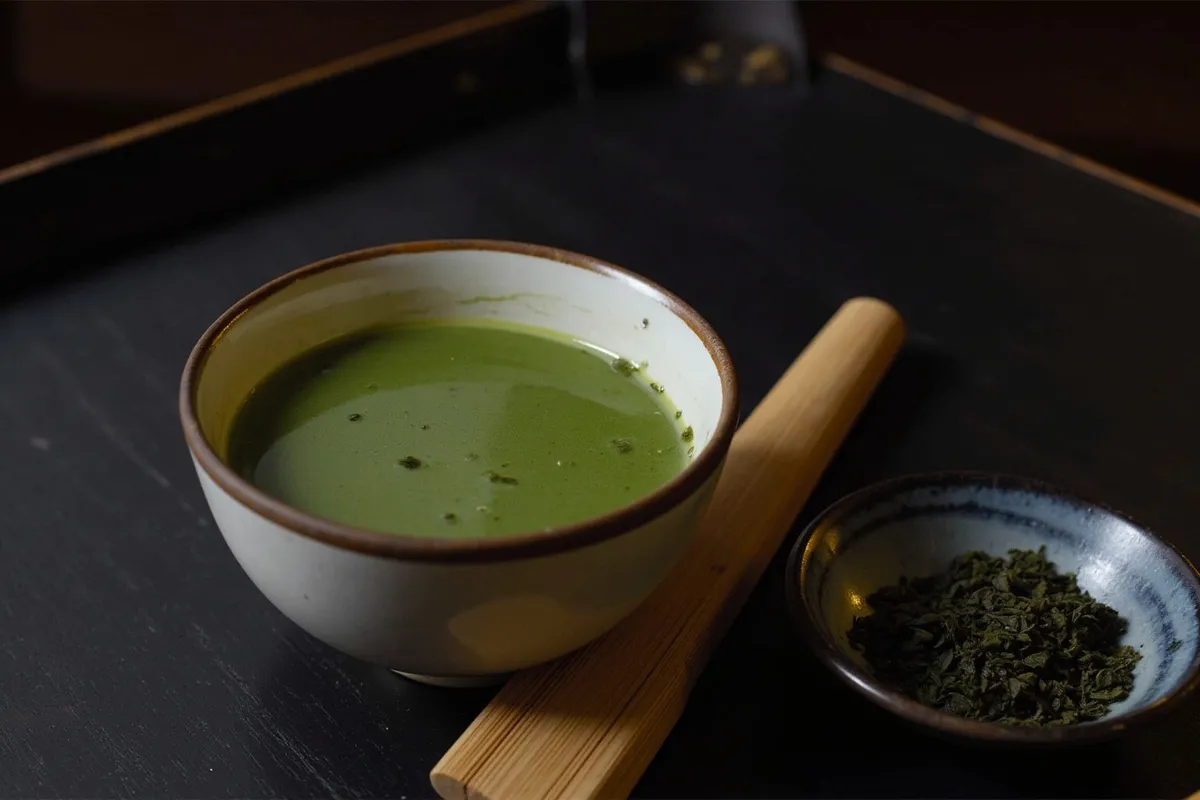
Usucha is thin, whisked with a bamboo chasen until the surface is fine foam. Koicha is thick, close to paint, and is what a formal chanoyu serves in a small bowl. Both come from the same powder with different water and different effort, which is why most home drinkers stay with usucha.
Ippodo's pages do not map grades to styles, so this is my rule of thumb: a lighter house blend such as Hatsu-mukashi for daily usucha, something like Tsukikage or higher for a koicha at the weekend. Uji-Shimizu, the sweetened 400 g pack, has no place in either bowl; it is a drink-mixing powder for lattes.
Brewing matcha: the moves that decide the cup
Water temperature is where most home cups go wrong. Usucha wants roughly 75 to 80 °C, just off a rolling boil, and koicha wants water near 90 °C, because the thick paste is harder to mix. Without a temperature readout, let a full boil sit for a couple of minutes.
The order of moves matters: sift the powder through a small stainless sieve to break up the lumps that arrive in every tin, wet it with a few drops of water and stir it into a smooth paste so no dry powder flies across the counter, then add the rest of the water.
Whisk briskly in a W or an M until the foam is even and no lumps are left. For koicha, knead the thick paste instead. Ippodo publishes its own ratios and timings in the Preparing Tea hub, and those are the numbers to copy.
Brewing sencha: leaves, temperature, seconds
Sencha is brewed cooler and shorter than matcha: about 3 to 4 g of leaf per 250 ml of water at 70 to 80 °C, steeped 30 to 60 seconds and poured. The smell off the dry leaf in the warmed pot is half the point, so let it sit a moment after the water goes in.
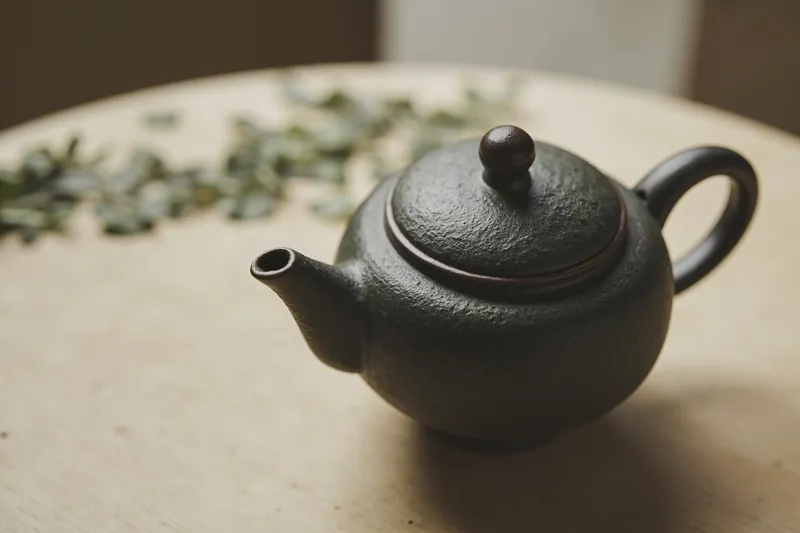
The same leaves usually take a second and a third infusion, each shorter than the last. An 80 g pouch holds far more leaf than most home drinkers get through, which is why the price per cup looks generous. Treat 30 to 60 seconds as the starting line and adjust from there.
Gear, storage and restocking
You need less than a shop would like you to buy.
| Tool | What it does | Care | Can you skip it |
|---|---|---|---|
| Chasen, bamboo whisk | Whisks powder into foam | Rinse without soap, stand upright, dry fully | Yes, if you use a shaker |
| Chashaku, bamboo scoop | Measures the powder | Wash and dry | No, it is the cheapest tool on the list |
| Soji, stainless sieve | Breaks up lumps before whisking | Wash and dry | No |
| Shaker or handheld frother | Beats powder into a cup you can drink on the move | Rinse straight away | Yes, if whisking annoys you |
Storage is where people get it wrong. Keep the tin closed, keep the desiccant inside, and keep it somewhere cool, dark and dry. An opened tin loses aroma within weeks whatever you do, which is why the 100 g online tins make sense if you drink matcha daily and make no sense if you do not. The fridge is optional and I would skip it: condensation and clumping cost more than the small gain in aroma.
Loose sencha is far more forgiving. Sealed and dry, leaf keeps for months while powder does not, so finish the pouch you have before opening another. My Kappabashi kitchenware guide covers where the bamboo and metal tools come from.
Matcha in a normal day
Caffeine per serving and when to drink it
A matcha cup carries more caffeine than a cup of sencha brewed at the same strength, because you drink the whole leaf ground up, and less than a small coffee. The rough range is 30 to 70 mg per matcha serving depending on the leaf and how much powder you use; a 240 ml cup of sencha sits nearer 30 to 40 mg. Ballpark figures, not lab results.
So the consequence is timing rather than fear. A second matcha in the afternoon is where it shows up in your sleep, and a third is where you notice it the next morning; in the evening, cut it to sencha or switch to hojicha, which is roasted and much lower in caffeine.
The part researchers study most in green tea is the catechins, mostly EGCG, and matcha carries more per gram than brewed leaf. My green tea and matcha guide covers what the studies do and do not show.
Swapping a sweetened drink for unsweetened tea
Plain matcha is effectively calorie free, and it is the easiest swap in my kitchen for a sugared drink I used to buy on the way home. A cup at home from the ¥800 tin costs about ¥60 to ¥100, several times less than a café latte, and takes about five minutes including the wash-up.
When the caffeine has to happen at the desk, Ippodo's Matcha To-Go Packets give ten single servings of 2 g for ¥1,800, or ¥180 a cup: more than double the loose powder, still cheaper than a café, and they need a shaker and hot water rather than a bowl. For a latte rather than a bowl, the sweetened Uji-Shimizu pack is the practical base.
What to eat with the cup
Matcha is savoury and green, and it flatters sweet, mild things: a thin usucha after a meal with a wagashi, or a Japanese breakfast of rice, miso and a little fish. Roasted hojicha or bancha goes with something dense and sweet, like a rice cake or a slice of castella.
One caution, treated as a habit rather than a rule: tea polyphenols may reduce how much iron you absorb from a meal, so strong tea with a heavy iron-rich dish is not a great combination. The evidence is unsettled, so I keep the strongest cups away from the heaviest dishes and do not treat tea as a nutrition problem.
Buying in Japan and from Japan
Where to order and what ships where
Two channels exist: Ippodo's global online shop, which ships abroad, and a separate USA & Canada online shop. The global shop is where the ¥800 Hatsu-mukashi and the 100 g online-exclusive tins sit, along with the sencha pouches and the tea ware.
Buying guidance, the FAQ and a California-specific notice live on Ippodo's English support site. For a reader in Britain or elsewhere in Europe, the practical question is whether a 100 g tin is worth shipping before postage eats the saving, and that depends on the shop's own shipping terms. In Japan the two Tokyo counters are the simpler route: you can taste before you commit and a tin carries no shipping cost.
What take-out, a tearoom and classes mean
The locator's service flags are easy once you know them, and they differ between the two Tokyo shops.
| Flag | What it means in practice | Which Tokyo shop lists it |
|---|---|---|
| Ippodo staff onsite | Ippodo people behind the counter | Both |
| Take-out | A cup prepared and carried away | Both |
| Tearoom | Sit-down service with tea prepared for you | Aoyama only |
| Classes and events | Workshops and sessions the filter lists as a category | Check the individual shop listing |
So Aoyama is the only Tokyo counter where sitting down is part of the deal, and Shin-Marunouchi is the one built around the station and the walk back to it. Ippodo says the company introduces people to Japanese tea through shops, tea-to-go counters, tearooms and classes; the filters are how you check what a counter does rather than taking the general description at face value.
Support, FAQs and the bancha pack change
Questions in English go to Ippodo's support site, which holds the buying guide, the FAQ and the shipping notes. The one change worth writing down is the bancha repack: from 1 November 2026 the packaging and the net weight both change, so yen-per-gram comparisons across listings have to be redone against the weight on the tin.
Who should buy Ippodo, and who should skip it
Buy it if…
- You are new to Japanese tea and want one graded shelf instead of guessing between a dozen brands.
- You will drink matcha most days, where the ¥800 tin works out at about ¥60 to ¥100 a cup.
- You want powdered matcha and loose sencha under one brand: ¥800 for 20 g, ¥1,800 for 80 g.
- You are ordering from outside Japan, where the ¥800 line and the 100 g tins are what ship.
If your daily cup is sencha rather than matcha, buy Hosen first and keep the matcha tin for the occasional morning.
Skip it if…
- You want a specific named harvest rather than Ippodo's own house blend.
- You are eyeing the top of the shelf: Kanza at ¥15,000 for 20 g is about ¥750 a gram, or ¥1,150 to ¥1,875 a cup at home.
- You planned the trip around Tokyo Midtown. That counter is not on the shop list, so the day needs a different address.
- You just want a cheap green tea for every day; supermarket sencha beats ¥22.5 a gram.
For matcha cafés in Tokyo, a third-party guide lists Uogashi Meicha, Fukujuen, Nakamura Tokichi, Kyo Hayashiya, Rocky's Matcha and Hatoya as standing matcha spots, with Kyo Hayashiya the one attached to Tokyo Midtown Hibiya rather than to Ippodo. One guide and one list rather than a ranking, but it is where I would start for a finished cup instead of powder.
Five things to sort out before you order:
- Confirm the shop name on Ippodo's store locator: Tokyo Midtown is not listed, and the closed Marunouchi shop is not Shin-Marunouchi.
- Check the day's hours for the counter you plan to use, and note that only Aoyama has a tearoom to sit in.
- Read the net weight on the tin, because the bancha repack changes it from 1 November 2026.
- Read the shop's shipping and cancellation terms before ordering a 100 g tin, and remember matcha has a shelf life once opened.
- If a café latte is what you really want, find a matcha counter near you instead of buying powder you will not finish.