
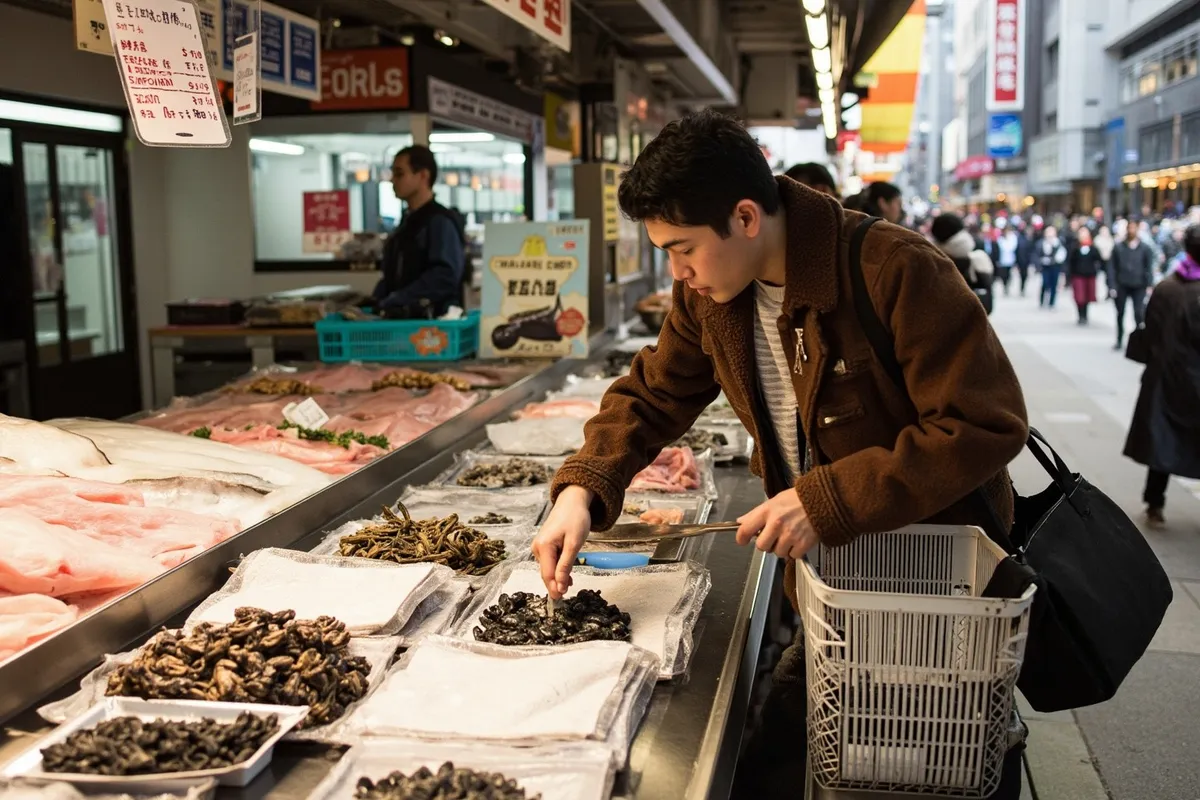
The kitchen tools for Japanese cooking rarely sit in one shop, and in Tokyo they sit in three different kinds of place: a kitchenware street for the missing pots, a working food market for the fish, and a konbini on the corner for the nights you don't want to stand at a stove. I've priced all three in yen, with addresses and closing times, so you can decide before the train which errand earns the trip.
Each stop covers a different part of the same dinner, and each has a hard limit: the market shuts its counters on a ladder from 12:30, only about 30% of the tool shops open on Sundays, and the convenience store has no fresh seafood. The yen figures below are the 2026 picture, and the tax-free rules switch on 1 November 2026, so read the payment section before you spend big. Wholesale yards, auction prices and delivery from abroad are not covered here – this is about retail counters you can walk up to.
Kitchen tools for Japanese cooking: a shortlist from Tokyo's tool street
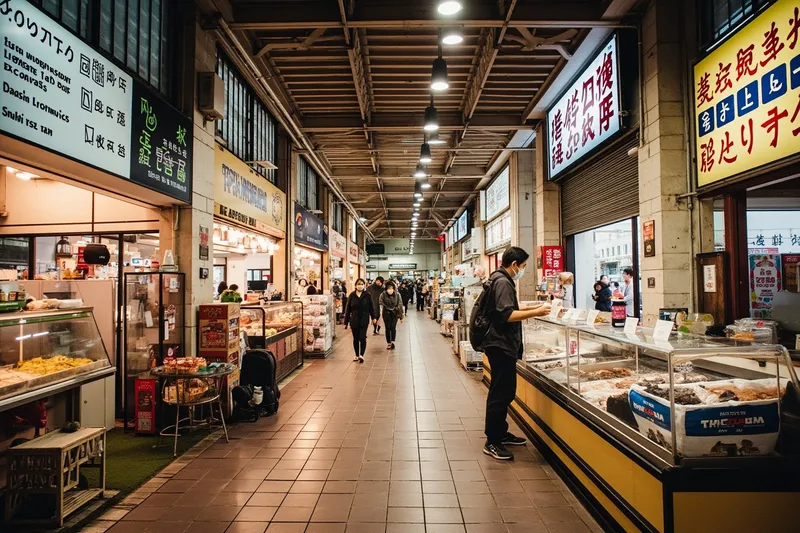
Kappabashi Dougu Street packs more than 170 kitchen shops into 800 metres between Ueno and Asakusa, according to the street association's overview, and Japanese cooking gear here starts around ¥1,500 for a single tool. A donabe, a bamboo steamer, a grater and a slicer are all sold within one walk, which makes the street the efficient answer to a missing-tool problem rather than a place to browse for an afternoon. Two things to plan around: about 30% of shops open on Sundays, and each shop sets its own holidays and hours.
The four tools that change what you can cook
A donabe plus a bamboo steamer covers most of what a home kitchen misses: rice, nabe, steamed fish, steamed aubergine. A makisu only earns its slot if you roll your own sushi or hosomaki, otherwise it is a bamboo mat living in a cupboard. The shamoji, the paddle you mix and serve rice with, is the smallest useful object on the list and the one you will touch every day.
| Tool | What it unlocks | Rough shelf price | What to check in the shop |
|---|---|---|---|
| Donabe, clay or cast iron | Rice, nabe, grilled fish | ¥3,000–15,000 | Weight against your burner; clay suits a gas flame, cast iron wants oven time |
| Hangiri bamboo steamer | Steamed aubergine, steamed fish, dumplings | ¥1,500–3,000 | Whether the lid actually sits on the pot you already own |
| Makisu bamboo rolling mat | Hosomaki, rolled omelette | ¥1,500–2,500 | Little to check – buy the one that feels tight in the hand |
| Shamoji rice paddle | Mixing and serving rice | ¥1,500–2,500 | Wood rather than plastic; it lives in the pot |
The gap between a ¥1,500 tool and a ¥15,000 donabe is the whole decision: the pot you cook in every week is worth the money, and the rest of the drawer fills up on its own over a year of cooking.
Graters, slicers and a four-bottle seasoning shelf
In a small kitchen I would rather own an oroshigane grater and a katsuramuki slicer than a second knife. The grater turns daikon into snow for a bowl of rice and mountain yam you stir into miso; the slicer gives you paper-thin katsudon and cucumber ribbons for a summer side. Both are hand tools, both live in one drawer, and both earn their space in weeks rather than years.
The seasoning shelf is four bottles, not twelve. Kome-shoyu, the koji soy sauce, for noodle broth and marinades. Awase miso for a light miso soup you can make in five minutes. Ak-miso, the red one, for stews and nabe where you want depth. And yuz kosho for cold soba and grilled fish. Goma abura, mirin and cooking sake can wait until there is a dish that needs them; buying them early is how you end up with a cupboard of half-used bottles.
Spend discipline: what to walk out with on the first morning
If you have one morning and one budget, walk out with four things: a donabe, a hangiri, a shamoji and the grater from the section above. Those four cover rice, a steamed dish, a hotpot and grated daikon – the skeleton of most weeknight Japanese dinners. The makisu waits until you actually roll something.
Take a wheeled bag. A donabe, a steamer and a grater are heavier and more awkward than they look in a shop, and the train home is the hard part.
Skip the boxed knife set. One gyuto, roughly ¥8,000–20,000, covers a week of home cooking on its own, and a six-knife box is mostly shelf weight. If you make tamagoyaki often, a rectangular pan (roughly ¥2,500–4,500) doubles as your everyday frying pan and as a home okonomiyaki plate. A clay donabe wants seasoning before the first use and no thermal shock – hot pot into cold water, and the crack you get that way cannot be glued.
Tokyo kitchenware street shopping: getting there, picking a day, paying the bill
Getting there and moving down the street on foot
The street is small enough to walk end to end with a coffee in hand, which is why it works as a single errand. The access guide lists the walk times:
- Tawaramachi Station, Ginza Line – 5 minutes
- Asakusa Station, Tsukuba Express – 5 minutes
- Asakusa Station, Toei Asakusa Line and Tobu Isezaki Line – 13 minutes
- Iriya Station, Hibiya Line – 6 minutes
- Asakusabashi Station, JR Sobu Line – 25 minutes
- Ueno and Uguisudani stations – 15 minutes
Park meters along the street can be prepaid for 60 minutes only, and unpaid or expired time counts as a violation. For a shopping street I would take the train rather than argue with a meter.
Take yen. Payment is decided shop by shop rather than street by street, so one card for the big purchase and cash for everything else is the safe mix. The trains back home take Suica and IC cards, so keep one in the same pocket as your cash.
Which day to go, and the one week it goes quiet
Saturday is the easy day: most shops are open and the street is busy but workable. Sunday is the opposite – about 30% of shops open, as the street association's own answers put it – and each shop sets its own holidays and opening hours on top of that. If Sunday is your only free day, drop the tool errand and spend the day on food.
One more thing to check before a trip: the annual Kappabashi Dougu Matsuri in October closes traffic through the middle of the street on its final day, so a festival morning is slower than it looks and parking turns into a puzzle.
Payment, tax-free and the rules that change in November
On 1 November 2026 Japan moves to a refund-based tax-free shopping system. You pay the tax-inclusive price at the till, and the shop refunds the consumption tax after customs confirms at departure that you are carrying the goods out of the country within 90 days of the purchase. The threshold stays at ¥5,000 excluding tax, the split between general goods and consumables ends, and the special sealed packaging is no longer required. The National Tax Agency guidance on the refund-based system has the details.
One old rule disappeared on 31 March 2025: the separate-shipment treatment was abolished. Under the refund method, signing a shipping contract in the shop and handing the goods over to the carrier on the spot makes the sale an export – a consumption-tax exemption for export goods – and not a tax-free sale, so no refund comes back to you.
The refund can arrive by bank transfer, credit card transfer, app transfer or in cash at the port of departure once customs has confirmed. Two obligations sit with you: the goods have to be the ones you take out, and the purchase cannot be bigger than what you can carry. If customs confirms goods you did not take, the consumption tax is collected. Shops that had not notified the tax authority of a digitised purchase-record procedure by 31 October 2026 lose their permit on that date, so check the tax-free status of the shop before a big purchase. The refund counters on this street are grouped under the name Smart Refund, and the refund only happens through a registered procedure – ask how the money comes back before you pay.
For a ¥10,000 donabe: carry yen for the small shops, keep one card for the big one, and remember that a purchase under ¥5,000 excluding tax does not qualify for a refund at all.
Groceries for Japanese recipes in Tokyo: what the market gives you that a konbini cannot
Tsukiji Outer Market supplies the seafood half of a dinner. A tamagoyaki skewer runs ¥150–300, Kitsuneya's horumon-don is ¥870, and a Taneichi kaisendon sits between ¥2,000 and ¥5,000. It is a working market rather than a hall: one shop opens at 03:00, the counters shut on a ladder from 12:30, and the number on the board at the stall is the price you pay.
Timing the market: from the 03:00 openings to the 14:00 grill shutdown
The best window for a food crawl is 09:00–11:00 on a Tuesday, Thursday or Friday, when waits run 5–15 minutes. Before 09:00 the professional buyers have priority at the counters, and stalls open as early as 03:00 – Marutoyo at 4-9-9 and Kuritomo Shoten are among the earliest – while most trade on until around 20:00. Shiodome and Tsukijishijo stations on the Yurakucho Line are the closest stops.
Then the closing ladder starts, and it decides your morning:
| Counter | Last order |
|---|---|
| Maguroya Kurogin and Magurodon Segawa, tuna | 12:30 |
| Kitsuneya, horumon-don | 13:30 |
| Kouragumi, WAGYU JYUJYU and the croquette counter, grill | 14:00 |
| Most other stalls | around 20:00 |
A kaisendon from Taneichi at 4-9-5 is sold from 06:30 to 16:00, so it survives the whole day; the tuna stops at half past twelve. Arrive after 14:00 and the market becomes a stroll rather than a meal. Two counters cover the awkward hours: Kouragumi Tsukiji 2 at 4-9-4 opens at 08:00 with raw oysters and raw uni next to the grilled crab and eel, and Saito Suisan trades 06:00–17:00 and opens every day of the year. Before you travel, check the market's English pages for the current trading days and the access map – stall hours and closed days move.
A shopping list for one dinner, with the yen attached
A washoku lunch at the market is easy to assemble: rice, one small portion of fish or tofu, a few small vegetable sides – the ichiju-sansai pattern in miniature. Here is what one dinner costs, with the yen attached:
| Item | Where in the market | Price | What it becomes at home |
|---|---|---|---|
| Tamagoyaki skewer | Egg and grill counters | ¥150–300 | A tamagoyaki skewer beside a bowl of rice – the cheapest real meal here |
| Horumon-don | Kitsuneya | ¥870 | Offal stew, served over rice only; the shop shuts at 13:30, so be there before 13:00 |
| Kaisendon | Taneichi, 4-9-5, 06:30–16:00 | ¥2,000–5,000 | A bowl of sashimi over rice, with soup and pickles |
| Uni over rice | Grill stalls | ¥500–1,200 | Sea urchin without the bowl price; the grade decides the cost |
| Uni bowl | Uni-Tora Honten, 34 seats, bookable | ¥6,100–24,500, tax included | The full version, with the top "Kotei" bowl at ¥24,500 |
| Hand-pressed onigiri | Marutoyo, 4-9-9, opens 03:00 | ¥218–310 | Onigiri for the walk home, pressed that morning |
| Snack crawl, five or six bites | Wherever the queue is short | ¥1,200–2,500, or ¥4,000–7,000 with one seafood bowl | Tasting rather than eating; the higher figure buys a full sitting |
Almost every price at the market is on a board at the stall and nowhere else, so the board is your reference on the day. The pantry is the exception, and the exception matters: a pot of kombu dashi and a pack of nori sheets are not market buys, so put them on a supermarket list instead and treat the market as the fish and hot-food stop.
Cash, seating and the route that works when the market is shut
Card acceptance at the market is patchy. Of the 71 shops that state a payment policy, 58 take cards, 7 are cash-only and 3 offer no cash option at all; one of them, Kururi Zushi / GINie CAFE, takes no cash whatsoever. Outside that group the answer changes shop by shop: Kitsuneya and Tsukiji Soratsuki trade cash only, and Tsukiji Miyukido takes cards only on purchases of ¥5,000 or more. A Seven Bank ATM inside Plat Tsukiji accepts foreign cards, so you can top up without leaving the market – I would carry ¥5,000–10,000 per person in ¥1,000 notes plus one card for the sit-down meal.
Eating while you walk is against the market's rules. The sanctioned places are the rest area near Plat Tsukiji, the Uogashi buildings' third-floor food court, which stays open to 19:00, and Tsukiji Side Street at 4-10-17; Side Street is not part of the marked seating, so treat it as a bonus rather than a plan.
On days when the market is closed, Saito Suisan (06:00–17:00, every day of the year) and Sushizanmai Honten (24 hours a day, 365 days, cards accepted) still feed you, and enikaitamochi at 4-7-5 trades 10:00–19:00 with no closed days, takes cards and transport IC, and keeps a gluten-free menu with three gluten-free mochi. One thing to keep straight: Tsukiji Outer Market is the retail street on the site of the old central market, while Toyosu Market across the water is the wholesale one – no price in this guide comes from there.
Shopping for hara hachi bu meals in Tokyo: the konbini run after dark
FamilyMart covers the hours the other two stops do not. Store meals start at ¥138, the range runs from onigiri and bento to oden and nikuman off the hot counter, and nothing needs cooking or washing up. What it does not have is fresh seafood or a pot of fresh dashi, so a konbini meal replaces a dinner rather than supplying one.
What the case holds, and the numbers on the lid
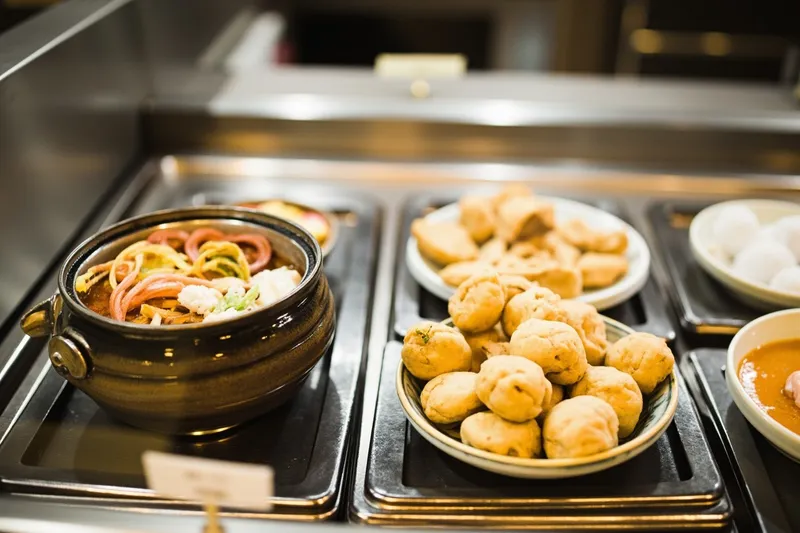
The case is a wall of numbers: kcal per portion on the front of the lid, protein per 100 g on the back, a best-before date under the label. A konbini meal is chosen on a number rather than assembled from ingredients, which is where the hara hachi bu habit is easiest to keep – you look for the lighter box instead of the one that looks better. I go through the labels in more detail in the konbini review.
In the menu list reviewed for FamilyMart, 215 of 286 store meals came in under 500 kcal and the average meal came to 392 kcal. That is one snapshot of one list, not a fixed property of the chain: the range rotates with the seasons and with new products.
A depachika bento – the boxed dinner from a department-store counter – is a different product from a konbini bento: better ingredients, several times the price and a wrapper that expects a proper kitchen. If the budget is tight, the konbini bento does a different job. It is a weeknight meal.
Reading the label and the hot counter
Two lines on the pack do most of the work. The first is the calorie count on the front, which is what you compare when you are trying to eat to about 80% full. The second is the allergen line: Japan's allergen labelling puts egg, milk, wheat and soy on the label, and it is the line to read before a shared dinner rather than after it.
Then the best-before date, hokan kigenbi, printed on the lid – take the pack with the later date, because the morning batches sit longest in the case. And the hot counter: oden and nikuman come off the steaming tray while the counter is staffed, so a bowl of oden at 23:00 is a warmer, wetter meal than a cold sandwich. Arare, the dry rice crackers, are the cheap way to turn any of these into a side dish rather than the whole meal.
When the konbini wins, and when it does not
At 23:00 the market is not an option: by then the tuna counters have been shut for ten and a half hours, Kitsuneya's horumon-don for nine and a half, and the grill counters for nine, and most stalls trade on only until around 20:00. The konbini is where a 23:00 dinner comes from, with Sushizanmai Honten open 24 hours a day, 365 days a year, cards accepted, as the guaranteed fallback.
The line is simple. A konbini bento or an onigiri set replaces a weeknight dinner, and it does it in eight minutes with no washing up. It does not replace a from-scratch ichiju-sansai night – the rice, the fish and the three small dishes still come out of your own kitchen, and no konbini hands you a pot of dashi to build them from. The closest stand-in for a home okonomiyaki dinner is a beef bento, not a griddle pan.
How I compared the three stops
Five criteria, one exclusion rule, and the table they produced
I applied the same five criteria to every stop, and anything that failed them stayed out of the table.
- One walk from a station, finished in 60–90 minutes: 800 metres of street with more than 170 shops and five or six lines within 5–25 minutes for Kappabashi, a compact market that closes on a ladder, a short walk from most neighbourhoods for a konbini.
- It sells ingredients or tools for a dish you will actually cook at home – rice in a donabe, tamagoyaki, steamed aubergine in a hangiri, onigiri at midnight. Decorative ceramics and gift-grade knives were out.
- Retail shelf prices in yen, where the "from" figure is the cheapest relevant item rather than a typical basket.
- Operating reality counts: opening days, closing times and cash-versus-card behaviour decide which errand works on which day.
- No sharpening skills, no grill and no professional technique needed before the tool earns its place.
And one exclusion rule: nothing outside these three published reviews went into the table.
| Object | City | Type | Price from | Best for | Main advantage | Main drawback |
|---|---|---|---|---|---|---|
| Kappabashi Dougu Street | Tokyo | Kitchenware shopping street | ¥1,500 | The missing tools of a flat kitchen: donabe, hangiri, slicer, grater | More than 170 kitchen shops along 800 metres, so one walk closes several tool gaps at once | About 30% of shops open on Sundays and each sets its own hours; easy to come home with 15 tools and use 2 |
| Tsukiji Outer Market | Tokyo | Food market | ¥150 | The seafood half of one dinner: fish, tamagoyaki skewers, hot bowls | ¥150–300 for a tamagoyaki skewer and ¥870 for a horumon-don are real meals, and the price is on the board at the stall | Counters shut in steps from 12:30; card acceptance is uneven, and Kitsuneya and Tsukiji Soratsuki take cash only |
| FamilyMart | Tokyo | Convenience store | ¥138 | The hours the other two stops do not cover: onigiri, bento, oden, nikuman | Nothing to cook and nothing to wash up – the meal is a number on the lid | Narrow range: no fresh seafood and no fresh dashi; store hours differ by location, so check your own shop |
Each row carries its own downside, because that is what turns a list of places into a plan for a day. The table follows the article's order – gear, fresh ingredients, ready meals – while the walk order runs the other way.
Reading the "from" prices honestly
A "from" price is the cheapest relevant item in the shop, not a basket. A ¥150–300 tamagoyaki skewer is not a dinner, and a ¥1,500 tool is not a kitchen. Prices on this street run up fast: a large cast-iron donabe is several times the starting figure, and the market's uni bowls start at ¥6,100 and reach ¥24,500 for the top one.
Everything here is a snapshot. Prices move at seasonal revision points, the board at the stall is the number that counts on the day, and the tax-free rules change on 1 November 2026, which changes what a large purchase costs you at the till rather than on the shelf. My own rule for a shopping trip: the first yen goes to the pot I will use every week, the second to the meal I will eat that night.
What to buy where: picks by cooking plan
The order that works in one day
Do the market first: 09:00–11:00 on a Tuesday, Thursday or Friday, when waits run 5–15 minutes. Then the tool street later in the day, because most shops are open on weekdays and on Saturdays and only about 30% open on Sundays. Then the konbini at the end, on the way home.
If you can do only one stop, spend it on the market between 09:00 and 11:00 on a Tuesday, Thursday or Friday. If you arrive late, aim for 11:00–12:00 rather than 13:00: the tuna counters stop at 12:30 and Kitsuneya's horumon-don at 13:30. Skip the Friday-evening plan – the grill counters close at 14:00 and the stalls wind down around 20:00. And if your only free day is Sunday, do the konbini plus a 24-hour sushi shop such as Sushizanmai Honten, and save the tool street for another trip.
Picks by plan
| Plan | Stop | Figure | Dish |
|---|---|---|---|
| Hara hachi bu lunch | Tsukiji | ¥150–300 skewer, ¥870 horumon-don | Rice, one skewer, one small side |
| Sea urchin without the ¥6,100 bowl | Tsukiji grill stall | ¥500–1,200 | Uni over hot rice, grade depending |
| Weekend ichiju-sansai night | Tool street and a supermarket | Donabe from the street, dashi and nori from the shop | Rice, a fish portion, three small vegetable dishes |
| The first tool set | Tool street | Donabe, hangiri, oroshigane, shamoji | Rice, a steamed dish, a hotpot, grated daikon |
| A 23:00 dinner | Konbini | ¥138 and up | Onigiri set and a hot-counter bowl |
| Sunday in Tokyo | Konbini and Sushizanmai Honten | ¥138 and up | Onigiri, a bento, and a bowl of sushi that never closes |
Short questions, short answers
- When is the market least crowded? Between 09:00 and 11:00 on a Tuesday, Thursday or Friday, when waits run 5–15 minutes.
- What is still open at 23:00? Sushizanmai Honten trades 24 hours a day, 365 days, and takes cards. The market's own counters are a daytime stop: tuna at 12:30, Kitsuneya's horumon-don at 13:30, grill counters at 14:00.
- Do Kappabashi shops open on Sundays? About 30% of them do, and every shop sets its own holidays and opening hours, so check the specific shop.
- Can I pay by card at the market? Unevenly: 58 of the 71 shops that state a payment policy take cards, Kitsuneya and Tsukiji Soratsuki take cash only, and Tsukiji Miyukido takes cards on purchases of ¥5,000 or more.
- What changes for tax-free shoppers on 1 November 2026? You pay the tax-inclusive price at the till and the shop refunds the consumption tax after customs confirms you are taking the goods out within 90 days. The ¥5,000 threshold excluding tax stays, and sealed packaging is no longer needed.
What to check before you go
- Tool and konbini prices shift with size, finish and season – read the shelf tag, and compare two shops before you commit to a donabe.
- Check the market's trading calendar and the hours of the specific stall you want: the closing ladder is fixed, the open days are not.
- Tax-free shopping changes on 1 November 2026 – check the shop's tax-free status and how the refund reaches you before a big purchase.
- FamilyMart hours differ by location; check your own store if you are planning a late pickup.
- Raw fish goes home on ice, in an insulated bag, on the day you bought it.
The decisions to take away: the tool street on a weekday or Saturday for gear, the market between 09:00 and 11:00 for seafood and hot bowls, and the konbini plus Sushizanmai Honten for 23:00. Dashi and nori come from a supermarket. If you get one stop, take the market on a Tuesday morning and spend the yen on the ¥870 horumon-don rather than the ¥24,500 uni bowl – and be there before 13:00, because the shop closes at 13:30.