
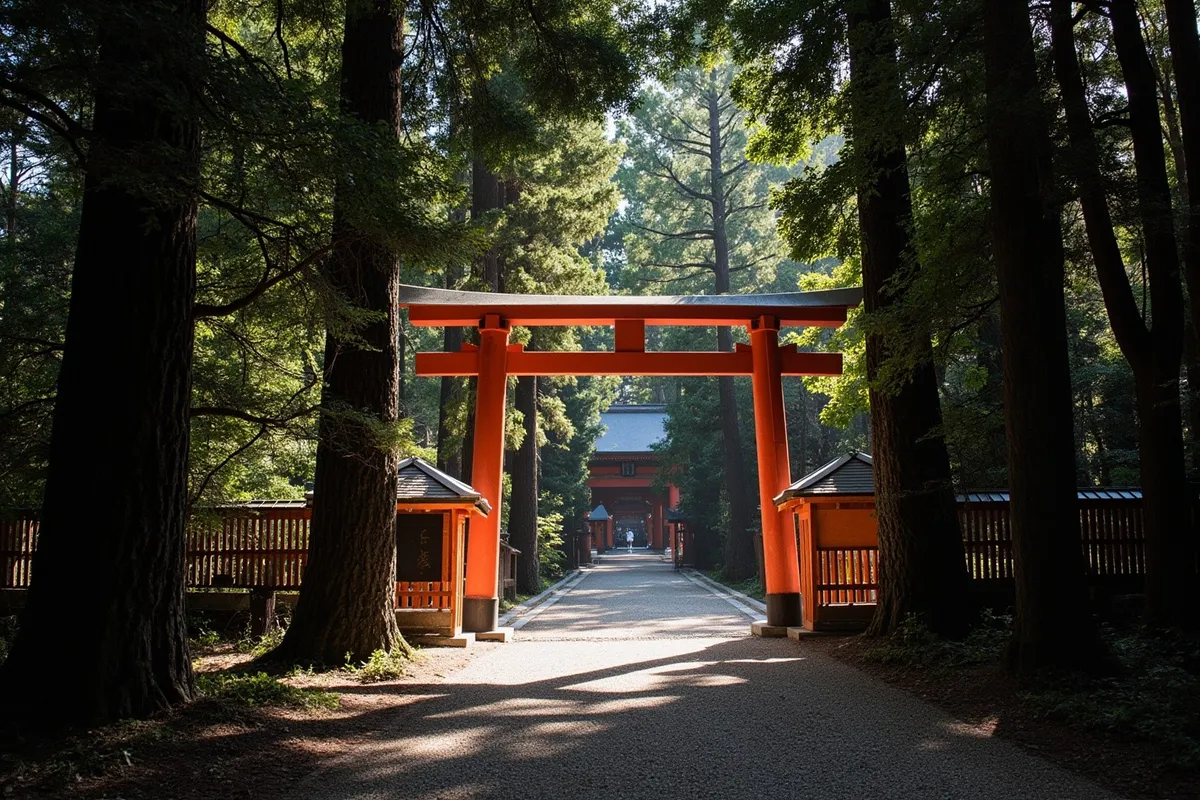
Meiji Jingu shrine visit starts at the forest edge, not at a ticket gate. The grounds, the torii gates and the walking paths cost nothing, and you can walk straight in from Meiji-jingumae Station in a few minutes. Only two things inside the precinct ask for money: the Inner Garden, 500 yen, and the museum, another 500 yen. That makes the shrine an unusually cheap way to get a real block of green into a day that otherwise happens on pavements.
The catch is timing. The inner precinct opens at sunrise and closes at sunset, so the usable window stretches from 9 hours 40 minutes in January to 13 hours 30 minutes in June. If you want the quiet side paths rather than the queue at the main hall, come early, and come again in a different season.
Getting to Meiji Jingu and the hours that move with the sun
From Meiji-jingumae Station to the first torii
The shrine sits at 1-1 Yoyogi Kamizono-cho, Shibuya-ku, Tokyo 151-8557. From Meiji-jingumae Station the walk to the shrine entrance takes a few minutes, and from the entrance it is at least another ten minutes to the main shrine buildings. That ten minutes matters more than it sounds: by the time you reach the hall with the offering boxes, you have already walked a distance that counts as a walk, not a stroll.
Bicycles and motorcycles are not allowed inside the grounds and have to be left in the parking area at the entrance. Wheelchairs are available at the entrance of the shrine grounds, which is useful if someone in your party tires early. Inside, there is a precinct map with numbered spots, and that is the map to keep in your pocket instead of a phone battery.
Take the number 10 spot from the precinct map as your anchor. The Inner Garden, the paid part of the site, is marked there, and it is otherwise easy to lose inside 70 hectares of forest.
Opening hours that change every month
The inner precinct (Naien) is open every day of the year, and because it opens with sunrise and closes with sunset, the hours move month by month. The table below shows four representative months. The other months fall between the January and June windows.
| Month | Inner precinct | Window | What it means for your visit |
|---|---|---|---|
| January | 06:40–16:20 | 9 h 40 min | Shortest window of the year. Come at opening, because late afternoon light goes early. |
| June | 05:00–18:30 | 13 h 30 min | Longest window. A forest walk after work is realistic, and the irises are at their best. |
| July | 05:00–18:20 | 13 h 20 min | Hot. The early morning is the only comfortable slot. |
| December | 06:40–16:00 | 10 h 20 min | Dark by mid-afternoon. Bring a headlamp mindset, not a headlamp. |
Places inside the precinct, such as the Inner Garden and the museum, keep shorter hours than the precinct itself, mainly 09:00 to 16:00. If the museum is the reason you came, arrive after nine and be heading out before four. The outer precinct, the Gaien, and the Kinenkan keep their own hours, separate from the inner precinct's sunrise-to-sunset rule.
What the visit costs
The shrine describes the 500 yen for the Inner Garden as a contribution for the garden's maintenance, and that money is what opens the Gyoen itself. The museum is a separate 500 yen ticket, so doing both in one visit comes to 1,000 yen. The dollar figure moves as the yen rate moves, so treat it as a rough guide.
| Part of the site | Price | What you get |
|---|---|---|
| Grounds, torii gates and forest paths | 0 yen | The whole 70-hectare forest, the approach through the trees, the shrine buildings. No ticket, no barrier. |
| Inner Garden (Gyoen) | 500 yen | South Pond, Kiyomasa's Well, the gazebo, the Kaku-un-tei tea house, and the seasonal irises, azalea and Japanese maples. |
| Meiji Jingu Museum | 500 yen | The exhibition hall, with the illustrated scrolls and the Imperial gifts. |
| Kaku-un-tei tea service | Separate fee | Runs on limited dates only. Not included in the garden contribution, and not part of the museum ticket. |
Bring cash for the garden and the museum. Small stalls inside a shrine precinct often take notes only, and the amount involved is small enough that it is not worth the queue at a card machine. Getting to Harajuku or Shibuya by train is on top of the shrine prices.
The forest walk near Harajuku: 70 hectares of shinrin-yoku
From the entrance to the main shrine buildings
Allow at least ten minutes from the entrance to the main buildings, then add the paid garden on top of that. My own estimate for a loop through the Inner Garden is another 20 to 30 minutes, and a full circuit that comes out on the tree-lined Meiji Jingu Gaien side takes me roughly 45 to 90 minutes depending on how many times I stop to look at trees.
That range is mine, not the shrine's. What the shrine does state is the 70 hectares of forest in the middle of Tokyo, and that on stepping into the precinct you forget the bustle of the city. In practice the walk is a shinrin-yoku kind of outing: damp air, gravel underfoot, the sound of traffic fading within a few hundred metres of the gate.
For step counts, this is a free route with a measurable distance. Pair it with the Yoyogi Park walking route next door and a morning becomes an hour and a half of movement without a single yen.
Quiet paths and the seasonal calendar
The Inner Garden plants for the season: azalea in spring, irises in June, Japanese maples in late autumn. Exact flowering and foliage dates follow the weather. The quietest paths are the ones furthest from the main hall, and the busiest hours are the first days of the year, when Hatsumode, the first shrine visit of the New Year, packs the approach.
| Season | What changes | Busiest stretch | Better window |
|---|---|---|---|
| Late winter | Evergreen, bare maples, shortest daylight | New Year period | Mid-morning on a weekday |
| Spring | Azalea in the Inner Garden | Weekend mornings | Opening time on a weekday |
| June | Irises, longest opening hours | Midday in the garden | Early morning or after 16:00 |
| Late autumn | Japanese maples turning red | Golden-hour weekends | Weekday mornings |
Quiet here means relative. Near the main buildings and during the New Year it is busy and loud, and the shaded side paths away from the torii tunnels are where the silence actually is. The autumn chrysanthemum display and a norito prayer session in November are traditional events around this time of year, and dates vary from year to year.
Shade, heat and the 5 a.m. window in a Tokyo summer
June and July open at 05:00, and that early slot is the answer to the heat. By ten the paths are already warm, and the shade between the cedars holds the dampness in. Expect gravel, exposed roots and uneven edges on parts of the trail, and mosquitoes in the still, leafy sections. Whether wheelchairs can manage the forest paths themselves, and where drinking water and toilets sit along the route, is worth checking at the entrance when you pick one up.
Meiji Jingu inner garden: irises, maples and Kiyomasa's Well
What the garden is and why it is older than the shrine
The Inner Garden predates the shrine. It was once Imperial Property, commissioned by Emperor Meiji partly for Empress Shoken, and the 1920 shrine was built around it. That is why it feels different from the rest of the precinct: a garden with a teahouse and a pond, not a stage set for worship. The 500 yen is what keeps it maintained.
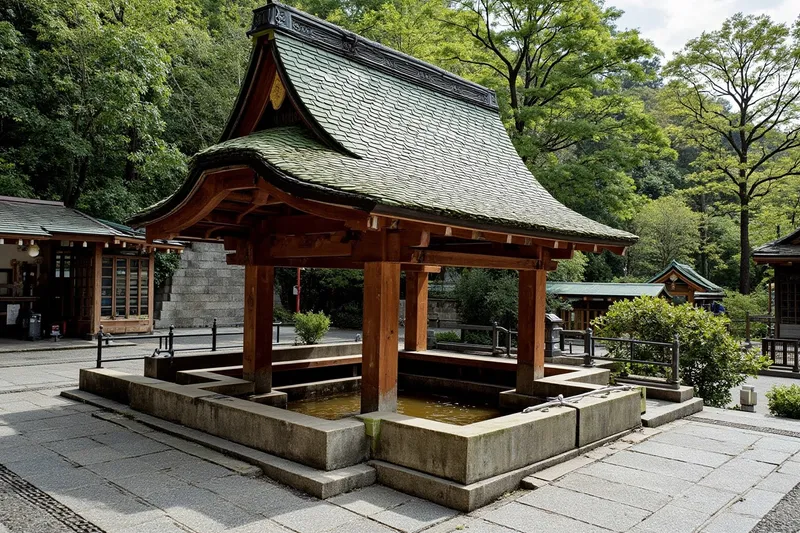
| Inside the garden | What it is |
|---|---|
| Kaku-un-tei tea house | The garden's teahouse, and the place where a traditional tea service is held on selected dates. |
| Kiyomasa's Well | The historic water source associated with the Kiyomasa name; the shrine lists it among the garden's features. |
| South Pond | The pond that gives the garden its shape, with irises in June and maples reflected in late autumn. |
| Gazebo pavilion | A pavilion in the garden, listed among its structures. |
The garden and the museum are two different copper attractions that other guides routinely merge. The Gyoen is a garden with a 500 yen maintenance contribution; the museum is a museum with a 500 yen ticket. If you only have time and budget for one, pick by interest: the garden for quiet and season, the museum for the artefacts.
Yakusō-en, the medicinal herb garden: check before you rely on it
The herb garden is the part I would not promise anyone. The shrine's own English garden page lists the teahouse, Kiyomasa's Well, the South Pond, the gazebo, the irises, the azalea and the maples, and it says nothing about a medicinal collection open to visitors, so I have no season, no hours and no fee for it. Searching the Japanese pages for 薬草園 (yakusō-en) is the way to settle it, and the shrine office answers on 03-3379-5511. Do not build an itinerary around a herb tour without confirming it first.
Kiyomasa's Well, the fountain and the gazebo
Kiyomasa's Well, called Kiyomasa no Takimizu, and a gazebo pavilion are both listed features of the Inner Garden. Whether the spring surfaces as the Kiyomasa Fountain people photograph, and whether the pavilion is the thatched-roof structure many illustrations show, are details I would rather you confirmed on the precinct map than take from me. The scrolls and illustrated material about the well and the shrine's history live in the museum, not in the garden, so the 500 yen there is not wasted if you want the context.
Tea at the Kaku-un-tei: what to confirm before you go
The tea service inside the Inner Garden
The traditional tea service runs on limited dates and carries its own fee, separate from the 500 yen garden contribution. Dates and price shift between seasons, so treat any tea plan as conditional. Check the notice board by the garden entrance or ask the shrine office on 03-3379-5511 before you walk in, and set your expectations on the tea rather than the walk: the garden is worth the money on its own, with or without a cup.
Shrine tea service versus a booked matcha workshop
If your real interest is hands-on matcha, a booked workshop elsewhere in Tokyo gives you the whisk, the bowl and sweets, and you can plan it around your own calendar. The shrine session gives you the historic room and the season, in a fixed schedule you have to fit around. I would book a workshop for the craft and come here for the setting, not the other way round. Cancellation terms differ between booked workshops and the shrine's set dates, so read them before paying either one.
Cash, budget and closing the tea stop
Budget the garden and the museum at 500 yen each, add whatever the tea session charges, and add the train fare. Cash covers all three. For the wider meal, plan outside the precinct: food and drink inside the forest are limited, so lunch fits better around Takeshita Street, Omotesando or near the station.
Omikuji, ema and the goshuin book
Omikuji and ema: what they are
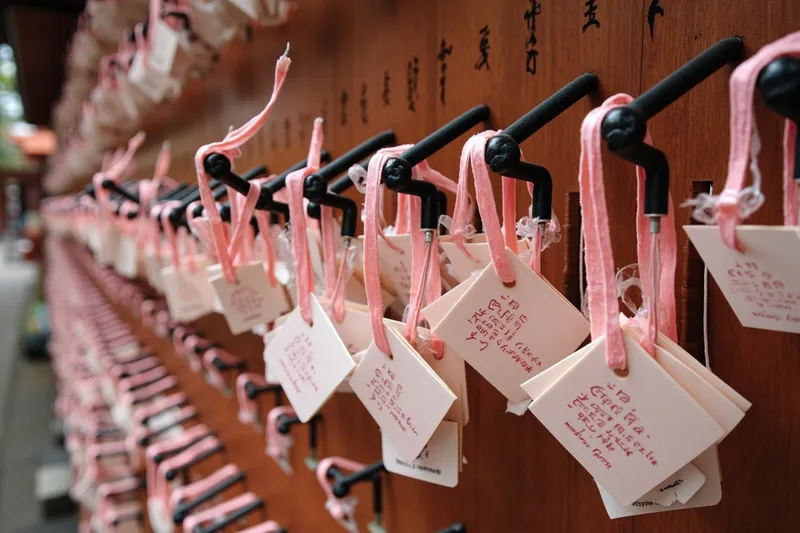
Omikuji are the paper fortunes drawn from a box at the shrine, and the draw works in two stages, a yearly slip and a monthly one. Ema are the small wooden plaques with a picture of the shrine on one side, where you write a wish on the other; they get tied to the dedicated racks, not thrown away. You buy both at the stalls around the grounds and in the shrine office, on the spot, with no online pre-order.
The goshuin seal book
A goshuin is a seal and handwritten inscription you collect from a shrine, and the bound goshuin-cho book is how you keep them together. The shrine sells the books, and the seal is stamped in the shrine's own office, whose working hours may not match the precinct's. The price is on the price tag at the stall, so check it there and carry cash. If you take a photo of the finished page, remember that many shrines treat the stamped paper as a private offering, and photographers are often asked not to shoot it.
Cards, etiquette and a small piece of advice
Cards work in the shops and restaurants around Harajuku, but small payments inside the precinct are the ones to do in cash. Inside the hall, keep your voice down, bow rather than wave, and be careful about where you point the camera: shooting is welcome in the forest and generally restricted around the altar.
Leave bicycles and motorcycles in the parking area at the entrance, take a wheelchair from the entrance if you need one, and keep a few thousand yen in small notes for the garden, the museum and the goshuin.
Meiji Jingu and Harajuku in one trip
Walking times from the main entrance
Walking times below are my own estimates from the main entrance side, near Meiji-jingumae Station, not official distances. The shrine publishes its own station-by-station minutes on the access diagram, so use that if you want a precise figure.
| Landmark | Walk from the entrance | Details |
|---|---|---|
| Meiji-jingumae Station | A few minutes | Closest station, on the JR Yamanote and Chuo-Sobu lines and the Metro Fukutoshin line. |
| Harajuku Station | About 10 minutes | Toei Oedo line, the other side of the precinct. |
| Yoyogi Station | About 15 minutes | JR Yamanote and Chuo-Sobu lines, north side. |
| Yoyogi Park edge | About 15 minutes | Joins the shrine forest at the north-west corner. |
| Harajuku Takeshita Street | About 20 minutes | From the entrance: the walk back out and down the hill. |
| Omotesando | About 25 minutes | Good for a post-walk lunch or coffee. |
| Shibuya Station | About 30 minutes | Longest of the usual set; the scramble is at the far end. |
Add the ten minutes from the entrance to the main shrine buildings on top of any of these, and treat the garden loop as extra walking rather than something you fit into the transfer time.
Getting back, parking and where to eat
Trains are the sensible way out: Meiji-jingumae for the JR Yamanote, Chuo-Sobu and Fukutoshin lines, Harajuku for the Toei Oedo line, with the last services running to around midnight. If you came by car, expect to pay on the street. The coin-operated lots on the Harajuku and Omotesando sides set their own rates on the signboards, they are not reserved in advance, and Takeshita-dori is closed to traffic on Sundays and holidays, which changes where you can leave the car.
Inside the precinct, the only official provision is parking at the entrance for bicycles and motorcycles. For lunch, plan to eat on the way out: there is no food-and-drink stop in the forest to speak of, so treat the café or the shop for the last part of the walk.
Who should walk Meiji Jingu, and who should skip it
What the shrine promises, and what it does not
The shrine's own pitch is 70 hectares of forest in the middle of Tokyo, so that on stepping into the precinct you forget the bustle of the city. That is the claim worth holding on to, and it holds up well on the paths away from the hall. The more romantic descriptions of tranquil forested paths and majestic torii gates come from visitor round-ups rather than from the shrine, so I would treat them as marketing for a place that is genuinely large and busy at the wrong hours.
The recurring complaints make sense once you understand the layout. Crowds at the New Year visit, because Hatsumode draws everyone at once. Heat and mosquitoes in summer, because the precinct opens before dawn and closes after dark, so the middle of the day is the worst part. Gravel and roots underfoot, because it is a forest trail, not a paved park. Few benches and no obvious food inside the grounds, because it is a shrine, not an outing centre. And the sense that 500 yen is a lot for a garden, when what you are paying for is the upkeep of a small former imperial estate rather than a museum collection.
Who it suits, and where to go instead
It suits people who want a long, free walk in green space without booking anything, who arrive in Harajuku anyway and would rather spend two hours in trees than in the shops, and who like being outdoors before the heat. It suits June, for the irises, and late autumn, for the maples, as long as you check the garden's open season first. The walk for weight loss works here simply because it is distance you can add to a normal day, without the shrine asking anything of you beyond shoes that cope with gravel.
Skip it if you want an indoor, all-weather plan, since the paid parts keep hours closer to 09:00–16:00 and shut before the precinct does. Skip it if you need level paving and guaranteed seating, or if you are travelling with someone who cannot manage uneven forest paths. Skip the New Year week if you want quiet.
And if the shrine is not what you were after: Yoyogi Park next door is free and stays open longer, Shinjuku Gyoen is a bigger garden with seasonal hours and its own fee, and Hibiya Park gives you water and lawns without a ticket. For the free walk I would choose the shrine early in the morning, with the Inner Garden only if you are there in its season, and the tea only if you have confirmed the date.
Check before you go:
- Ask the shrine office on 03-3379-5511 whether the Inner Garden is open on your date, and when the museum closes for its weekly break.
- Confirm the Kaku-un-tei tea service dates and its fee before you plan around a cup of tea.
- Look at the price tag for the goshuin book at the stall and carry cash for it.
- Search the shrine's Japanese pages for 薬草園 (yakusō-en) to see whether the medicinal herb garden is open to visitors.
- Check the sun on your walking route: the precinct closes at sunset, and in winter that is before 16:30.