
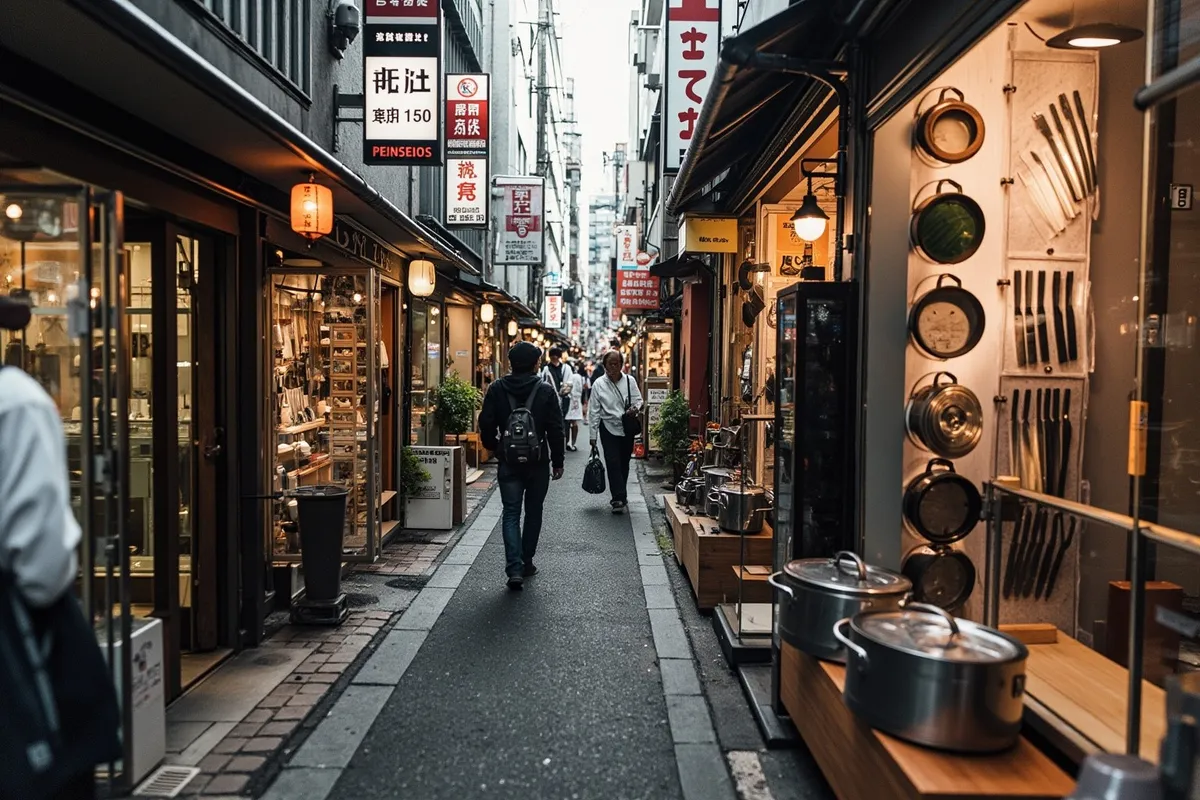
Kappabashi kitchenware shopping is easy to plan and hard to do well: 800 metres of Taito-ku with more than 170 shops selling nothing but kitchen things, from knives and sharpening stones to ramen bowls, donabe pots, tea kettles and plastic sushi. You can finish in two hours if you know what you want, and lose a whole afternoon if you do not.
For a home cook this is one of the few Tokyo streets where the decision happens in your hand: you weigh a santoku against a gyuto, look at an edge on a stone, and buy the bowl that fits your cupboard. Prices are set shop by shop, so I quote them here in yen, as planning bands rather than quotes. And if you already own a good knife, a whetstone and a donabe, the trip is mostly window shopping, which I would say out loud before you buy a flight.
Kappabashi kitchenware shopping: what the street is and how a visit works
What 170 shops on 800 metres actually sell
The street runs 800 metres through Taito City, midway between Ueno and Asakusa, and the association counts more than 170 shops. In its own wording this is Japan's largest shopping street devoted to kitchen implements. The pavement holds cookware and heat sources, including donabe clay pots, kamado charcoal stoves and tetsubin cast iron kettles; knives and the stones to sharpen them; tableware and gift goods such as lacquerware, bento boxes, chopsticks in bamboo and lacquer, furoshiki cloth and noren curtains; tea and café equipment; and counters that sell to restaurants rather than homes.
The odd one out is PVC food samples, the plastic sushi and ramen that look edible and are not. The official street site runs in English, Japanese, Traditional and Simplified Chinese and Korean, and its store search lists every member shop with that shop's own website in a separate column. For a shopper with a maker in mind, that column is the most useful thing on the site.
The map, the layout and how to find a specific shop
Start with the association's own material: a bilingual PDF that plots the member shops along the street, and a second PDF for the parking lots, both free to download. The shop map is quicker than walking the street twice and trying to remember where a knife counter stood.
The layout is simple once you see it. The 800 metres run between the Ueno end and the Asakusa end, so a visit has two halves, and a half-day covers both if you pick your half in advance. Merchants have been gathering in this area since 1912 to sell old tools, hardware and implements that no supermarket stocks, and the range now runs from bakery equipment to signage and shop design.
Opening days, holidays and the busy stretches
The street itself never closes to shoppers. Most shops open on Saturdays and about three in ten also open on Sundays, and that last figure is the one people get wrong: on a Sunday roughly seven in ten counters are shuttered. Each shop then sets its own holidays on top of that, so the one shop you came for can be shut on the day you picked, and opening times differ from counter to counter.
Weekends and the October festival are the busy stretches, when you queue at the good counters and watch the last good stone go. My own rule is plain: if one shop matters more than the rest, go on a weekday and look up that shop's days before you travel.
Getting to Kappabashi Dougu Street: trains, buses and parking meters
Walking times from every nearby station
Every number here comes from the association's access page, and it is the first thing to sort out when you build a morning around the street.
| Station | Line | Walk |
|---|---|---|
| Tawaramachi | Tokyo Metro Ginza Line | 5 min |
| Iriya | Tokyo Metro Hibiya Line | 6 min |
| Asakusa | Toei Asakusa Line | 13 min |
| Asakusa | Tobu Isezaki Line | 13 min |
| Asakusa | Tsukuba Express | 5 min |
| Ueno and Uguisudani | JR Yamanote and Keihin-Tohoku | 15 min |
| Asakusabashi | JR Sobu Line | 25 min |
The three Asakusa figures look contradictory until you notice they are different lines with different exits, so do not average them. The Tsukuba Express exit is the short one at five minutes, and that is the approach I would take. Senso-ji is the neighbouring temple at the Asakusa end, and the temple's own access page is where to plan that hop.
Buses, expressway exits and the parking meters
- Buses from Ueno Station for Aoto Shako-mae or Minami-Senju Station East Exit stop at Kikuyabashi.
- Buses from Uguisudani Station for Kamedo or Asakusa Kotobuki stop at Iriya 2-chome.
- Tokyo Expressway exits: Ueno IC, Iriya IC, Komagata IC, Mukojima IC.
- Parking: paid meters only, payable in advance for 60 minutes of parking. An unpaid or expired meter counts as a parking violation.
The parking rule is the one to read twice. There is no garage on the street, and a meter that runs out is a violation, so a car buys you a ticket instead of a place to leave things. My advice is dull and correct: come by train. The stations are five and six minutes away and the street is 800 metres long.
Questions about the street itself go to the Kappabashi Dougugai Promotion Association, 3-18-2 Matsugaya, Taito-ku, on 03-3844-1225.
Japanese cookware for ramen and soba at home
The ramen and soba starter set
The ramen and soba corner is where the shops can show you the difference. A cheap bowl and a good bowl feel the same in the hand and not the same on the table.
| Item | What it does | What to look for |
|---|---|---|
| Ramen bowl | Holds a full bowl of broth and toppings without tipping | Glazed inside, flat foot, thick rim |
| Soba plate | Drains noodles over your hand | Raised edge for the dashi, wide enough for a rest |
| Oroshi soba cutter | Cuts a rolled sheet into even widths | One blade, a slide that does not catch |
| Takedonburi rice paddle | Lifts rice without scraping the pot | Short handle, flat edge, wood or bamboo |
| Makisu bamboo rolling mat | Rolls sushi or thin noodle sheets | Even slats and a cotton string |
Almost every member shop sells to individuals, and shops that trade in bulk still serve a private buyer. The street also carries bakery equipment and signage, so the range runs wider than the home kitchen core. If you are still building your weeknight cooking, my Simple Japanese Recipes for Beginners is the better place to start, and the tools arrive when a recipe asks for one.
Donabe, kamado, tetsubin and kyusu: the heavy pieces
- Donabe clay pot: nabe stews, rice, and anything you want a slow clay heat for.
- Kamado charcoal stove: a small charcoal fire for outdoor cooking. Kamado means a charcoal stove, and that is the whole point of the name.
- Tetsubin cast iron kettle: heating water for tea, or for pouring over a bowl of noodles.
- Kyusu side-handle teapot: loose-leaf tea. The side handle lets you tip the pot without your hand near the hot water.
Care rules for clay and iron, since these are the pieces people regret. A kamado burns charcoal, so it belongs outdoors or in a properly ventilated space. A donabe should not meet cold water while hot, cast iron and carbon steel want drying and oiling after use, and neither steel nor iron goes in the dishwasher. I would sort the storage space before the shopping, not after.
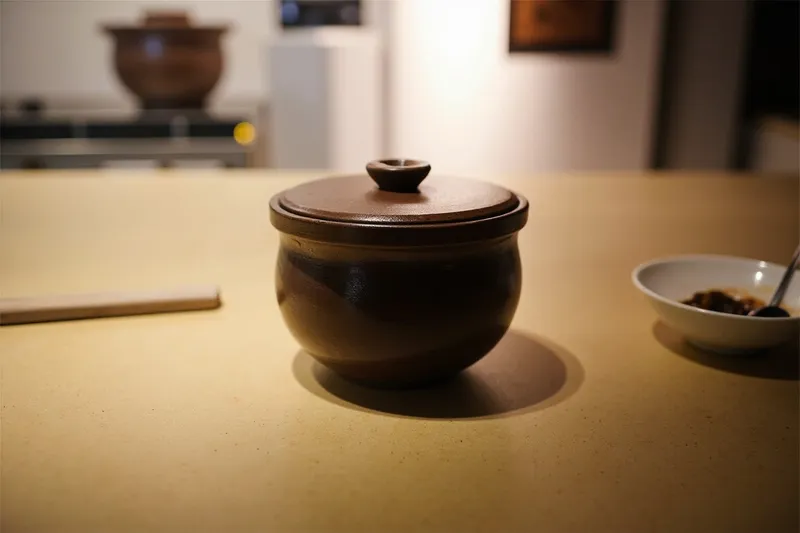
The heavy pieces spread the prices widest, because clay thickness, iron weight and the maker's name all count. I would buy a donabe before a kamado, and a kamado only if you have somewhere outdoors to put it.
Knives by task: gyuto, santoku, yanagiba, deba, nakiri, petty
One knife is the wrong answer if you cook Japanese food at home. The task decides the blade, and the shops sell them side by side, so you can hold a deba and a yanagiba before you choose.
| Task | Knife | What it gives you |
|---|---|---|
| All-round chopping | Santoku | Short edge, easy to sharpen |
| Precise everyday work | Gyuto | Longer blade, more reach on the board |
| Sashimi and rolled fish | Yanagiba | Very long, thin edge for a pull cut |
| Breaking down fish | Deba | Thick spine, no flex |
| Cabbage, herbs, roots | Nakiri | Straight edge, no tip to catch |
| Trimming and peeling | Petty | Narrow blade for small jobs |
Sharpening stones are sold on the same street, which is why the shop map is worth the walk: a knife and the stone that goes with it in one trip. A new blade may also want a touch-up before its first use, so I would budget for both. My own starting pair would be a santoku for the week and a nakiri for vegetables, with the yanagiba only when I cook fish often enough to justify the price.
Kitchen tools for Japanese home cooking: steel, sharpening and after-sales
Blue #2, White #2, VG-10 and hon steel
| Steel | Edge | Upkeep | Suits |
|---|---|---|---|
| VG-10 stainless | Holds well, shrugs off humidity | Least fussy | Busy weeknights |
| Blue #2 | Hard carbon steel, sharp from the box | Wants a stone, rusts if left wet | Cooks who sharpen often |
| White #2 | Hardest, finest edge, less forgiving | Easy to damage the edge | Anyone with a good stone |
| Hon steel | Soft, fast to work | Easiest to fix by hand | Beginners learning to sharpen |
Steel decides how often you touch the stone. Harder steel holds its edge longer but asks more of your stropping, and softer steel is a kinder teacher because it is quick to fix. Over a week of cooking that shows up as small chores: how often you sharpen, whether you dry the blade before the drawer, how careful you are near the sink.
A gyuto in Blue #2, a santoku in VG-10 and a yanagiba in White #2 covers most home kitchens without going near the top of the price list. If you cannot afford all three, buy the steel you will actually sharpen.
Sharpening at home: whetstones and the nagura stone
- Wet the stone and let it sit for a few minutes so it does not wobble when you start.
- Work on the coarse side first, knife held nearly flat, to take the bluntness off.
- Move up the grits, keeping the same angle on each side.
- Finish on the fine side, then strop on leather or folded newspaper to clear the burr.
- Rinse the stone, dry both, and put the knife away dry.
A nagura stone is the fast everyday touch-up, a whetstone is the full regrind. Both are sold here next to the knives, and buying one without the other is possible but, in my view, a waste of money.
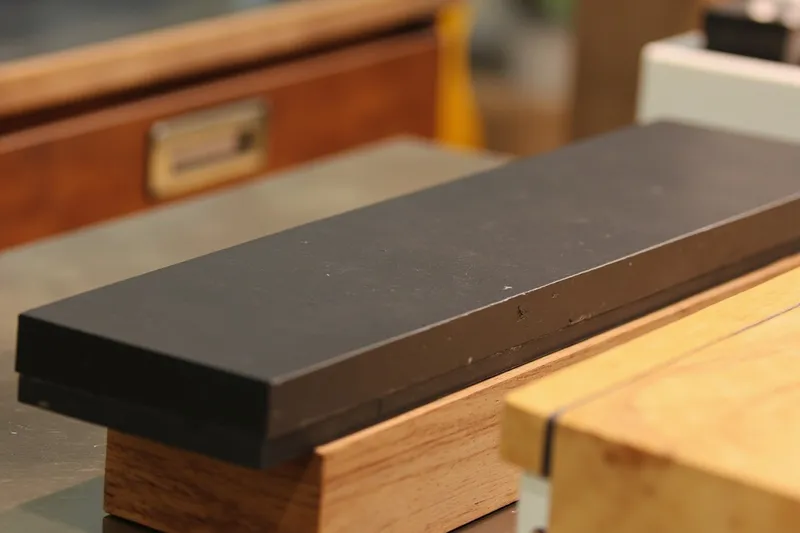
Japanese edges are usually set shallower than German ones, which is why they cut so cleanly and why they punish a heavy hand. Sharpeners argue about the exact angle, so follow what the maker recommends for that blade.
What to ask before you pay
Ask these at the counter, before the money comes out:
- Is the edge sharpened before I take it away?
- Does the sheath or box come with it?
- What does factory resharpening cost, and how long does it take?
- Is there a warranty on the blade?
- Can you engrave a name, and does that cost anything?
- Can I return it if the edge has been sharpened or a name engraved?
The last question matters more than it looks. Sharpening and engraving are usually where Japanese retail stops accepting a return, so an etched name can quietly close the door on changing your mind. Get the resharpening price before you leave rather than on a second visit.
Kappabashi street shops list: the counters worth stopping at
Knife shops and metalwork
Knife shops are the heart of the street and the reason to come. A dedicated knife counter stocks hand-forged blades from named makers, and you can pick them up, feel the weight and look at the finish. Kama-Asa Shoten is one of the names in the store search, and the copperware counter Dougen Saito has its own entry in the shop list. The map PDF tells you where they sit, which beats counting doors from the street entrance.
English service depends on the shop, so if you want to talk steel and geometry, write to the counter before you travel. Learn the Japanese words for knife, whetstone and sheath as well; plenty of signs carry them next to the English.
Tableware, tea and coffee gear
Lacquer bento boxes are the obvious gift buy and the easiest to get wrong. Ask whether a piece is urushi, traditional lacquer, or a printed synthetic, because only the first is worth the care, and urushi hates the dishwasher and wants oiling now and then. Chopsticks come in bamboo and in lacquer, and the difference in the hand is obvious once you hold both.
A kyusu side-handle teapot is for loose-leaf tea rather than bags, and if you have been reading about green tea and matcha, that is the pot for the job. Nambu ironwork teapots are the slow-money option: heavy, rough, built to outlast you. The café end of the street sells espresso gear, milk jugs and tampers for people who have decided home coffee is a thing now, plus onigiri molds for anyone who wants to pack lunch properly.
Restaurant supply and PVC food samples
A restaurant-supply counter sells what a home kitchen does not need: aluminium stockpots, big oden pots, commercial strainers, noren curtains for the doorway and the signage that hangs outside a shop. Some of these counters sell in bulk, so read the price per unit rather than the price per pot, and ask whether they serve a private buyer before you commit.
Then the shop that gets the attention: the original PVC food-sample maker, where the plastic sushi and ramen look edible and are not. It is the easiest thing on the street to buy on impulse and the easiest to gift, and production takes time, so ordering through the shop's own page is the sensible route for a specific piece.
Online, a single shop for the whole street is still being discussed by the Kappabashi Union, while individual shops already sell through their own websites, listed in the store search. If you want to see Tokyo food rather than buy tools, my guide to Tsukiji Outer Market covers the other kind of street.
Prices, seasons, payment and getting tools home
What things cost, and where the numbers come from
Every price on this street is set by an individual shop, so read the table as planning bands, not quotes. I have kept them in yen, because that is what you pay in the shop and a converted number goes stale the moment the rate moves. For the current price of a specific item, the shop's own product page is one click away in the official store search, in the website column next to each shop.
| Item | Yen band | Which counters |
|---|---|---|
| Entry stainless gyuto, VG-10 | 8,000 – 15,000 | Knife shops |
| Blue #2 gyuto, mid tier | 25,000 – 50,000 | Knife shops |
| Forged yanagiba | 60,000 and up | Knife shops |
| Nakiri vegetable knife | 7,500 – 20,000 | Knife shops |
| Petite utility knife | 6,000 – 18,000 | Knife shops |
| Donabe clay pot | 4,000 – 12,000 | Pot and ironware shops |
| Kamado charcoal stove | 7,000 – 30,000 | Pot and stove shops |
| Whetstone, combination | 6,000 – 25,000 | Knife and stone shops |
| Ceramic ramen bowl with lid | 1,500 – 3,500 | Tableware shops |
| Oroshi soba cutter | 2,500 – 6,000 | Kitchen tool shops |
| Kyusu side-handle teapot | 5,000 – 30,000 | Tea and ironware shops |
| Lacquer bento box | 4,000 – 12,000 | Tableware shops |
The bands move with the maker, the steel and the year, so read the price of the exact knife you want on the shop's own list before you travel. The distance between the cheapest entry knife and a properly forged one is exactly what this street is good at showing you, and if the budget is tight I would spend it on the stone rather than on the most expensive blade.
The October festival and the rest of the year
Every early October the street puts on the Kappabashi Dougu Matsuri, an annual week with fixed dates. The most recent edition, the 41st, ran from 6 to 12 October 2026. On the Monday the street closed to vehicles and became a pedestrian zone, with a brass band parading from 11:00 at the Kikuyabashi intersection, a taiko stage with local school groups and a photo contest.
The rest of the year is a normal working street, shop by shop, each with its own holidays. Weekends and the festival are the busy stretches, and my own rule is that a weekday buys you room to pick up a knife and look at it properly.
Tax-free, cash versus card, shipping and knives in your bag
Tax-free shopping is a shop-level decision here, so look for a tax-free notice on the shop's own site or ask at the counter before you buy, and the store search's website column is the first place to look. I would not build a discount into the budget until a shop confirms it.
Cash versus card works the same way: payment methods differ from shop to shop. Carry small bills for the smaller counters, look at the payment options on a shop's site before committing to a five-figure knife, and take cash out at the station before you go.
Getting a knife home is the part worth planning. The binding documents are Japan Customs' prohibited and restricted goods list and your airline's own carry-on and checked baggage rules, and they are not the same thing, so read both before you fly. The safe assumption is that a blade travels in checked baggage and the cabin is not the place to try it. International shipping is decided shop by shop, so look before you buy a heavy iron pot, and if you are carrying more than a bag allows, a coin locker at the station is the practical fallback.
A car adds very little here, for the simple reason that the street has meters and nothing else.
Who should buy on Kappabashi and who should skip it
The street works for
- You are setting up a Japanese kitchen from scratch and want to hold the steel before you pay.
- You want one regional maker in your hands today, such as Nambu ironwork or a blade from a named smith.
- You are buying gifts: a lacquer bento box, a kyusu, or a piece of fake sushi that makes people laugh.
- You want to compare grinds, steels and tableware within one 800 m walk.
Almost all member shops sell to individuals, and shops that normally trade in bulk will serve a private buyer, so nobody waves you out for asking. If you want the food side of the tools, my homemade miso soup method works from a donabe as well as from a saucepan.
The reasons to skip it
- Opening days are set shop by shop, so a trip built around one counter can land on its day off.
- Weekends and the festival compress the street into a queue, and popular items go.
- Almost every price depends on the shop and the steel, so comparing costs time, and a knife bought in a hurry may need a second trip for the stone.
- Payment and shipping terms are uneven across small shops, so ask before you commit to a big piece.
- Parking is meters only, and an unpaid meter counts as a violation.
Tax-free is not a given across the street either, so treat it as something to ask about rather than a discount to count on. And if the maker you want has an online shop that ships to where you live, buying there is the cheaper way to get the same blade.
A realistic shopping plan
Here is how I would spend a morning. Arrive at Tawaramachi on the Ginza Line, work the Ueno half first, then come back the length of the street to the Asakusa end and finish at the knife counters on the way out. The Tsukuba Express exit is the short approach if you are coming from that side, and Asakusa itself is a 13-minute walk on the Toei Asakusa and Tobu Isezaki lines.
A first visit, in my own order: one all-round knife, a santoku or a gyuto; one ramen bowl with a pair of chopsticks; an oroshi cutter if you make soba at home; and one whetstone. Four items, one bag. The heavy pieces come on the second trip, a donabe or a kamado, a tetsubin, a kyusu.
Carry cash in small bills, plan around the holiday of the one shop you actually want, and pack any blade in checked baggage rather than trying the cabin. If nothing on your list is a specialty you cannot get in a general shop, buy online and save the flight.
What to check before your trip
- Look at the listing for the specific shop: opening days and holidays differ, and only about three in ten shops open on Sundays.
- Look at the price on the shop's own product page, because bands move with the maker and the steel.
- Ask whether the shop takes cards and whether it offers tax-free shopping, before you queue.
- Read Japan Customs' restricted goods page and your airline's baggage rules before packing a knife.
- Look for the next edition's dates on the association's news pages, since the festival week changes the street.