
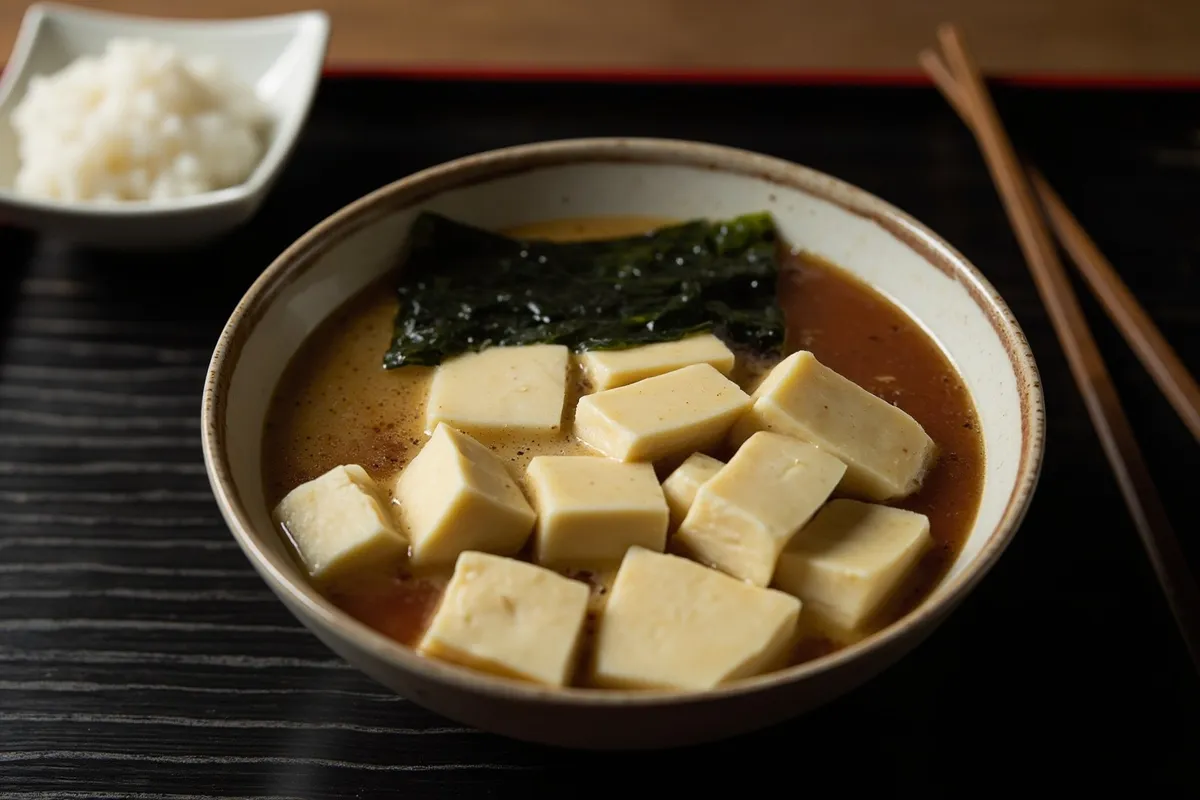
What is the Japanese diet, in practice? A washoku-style pattern: rice at the centre, a soup built on dashi at most meals, a few small vegetable and protein dishes around it, soy and seaweed doing much of the protein work, very little dairy or red meat. It is less a rulebook than a way of putting food on the table, and the rules live in the tray rather than on a list.
What the structure gives you is automatic portioning, a large volume of vegetables, less processed meat, and one base (dashi) that turns leftover vegetables into dinner. The weak spot is salt: adults in Japan still average 9.6 g a day. And Japan's life expectancy is not proof that this diet causes long life, because healthcare, income and social structure sit behind those numbers too.
What the Japanese Diet Looks Like on a Plate
The pattern behind the label: washoku, small plates, variety
Washoku, the formal Japanese style of eating, runs on repeated features rather than a fixed menu. The details are in what washoku actually is; the short version is below.
- Rice (go-han) in a small bowl, the anchor of the meal.
- A soup at most meals, usually miso or shoyu built on dashi.
- Soy and seaweed as the everyday protein base.
- Vegetables in several forms: simmered, stir-fried, raw, pickled.
- Umami doing the work butter does elsewhere, so dishes need little added fat.
Okinawa is the usual proof case: average intake around 1,900 calories a day, and over-65s with the world's highest life expectancy, men around 84 and women close to 90. The table behind it is plant-heavy, with soy foods and sweet potato, and pork kept for occasions. But those 1,900 calories describe a historical diet, today's Okinawan tables carry more pork and dairy, and longevity is no controlled test of food: healthcare, income and moai sit in the same picture. What the Okinawa diet is worth copying is the longer version.
Ichiju sansai: one soup, three dishes
Ichiju-sansai literally means one soup and three dishes. It comes from Heian-period court cuisine and settled into its familiar shape by the Edo period: rice, a soup, one main dish and two vegetable sides, with pickles able to stand as one of them.
| Element | Typical form | Job on the tray |
|---|---|---|
| Rice (go-han) | Steamed short-grain, small bowl | The starch and the anchor |
| Soup | Miso or shoyu with dashi, often vegetables | Volume, umami, a vegetable portion in one bowl |
| Main dish | Grilled or simmered fish, tofu, or a small meat dish | The protein |
| Side dish | Simmered or stir-fried vegetables | Volume and fibre |
| Side dish | Salad, a second vegetable, or pickles | Volume, something sharp against the rice |
It was a format for eating, and that is how it works in my kitchen. Modern trays usually carry fewer dishes. I cook this shape most nights: rice, one soup, one protein, one or two vegetables, and I stop there.
There is no single official "Japanese diet"
Japan has no named national diet the way the Mediterranean has a shorthand. The nearest anchors are the Dietary Reference Intakes for Japanese (2025 edition, in force since April 2025, revised every five years) and Health Japan 21, the framework behind school-lunch and workplace health targets.
| Pattern | Main foods | Where the evidence stands |
|---|---|---|
| Japanese-style (washoku) | Rice, soy, fish, seaweed | No randomised trial of the pattern itself exists |
| Mediterranean | Olive oil, fish, nuts, wholegrains | PREDIMED: a randomised trial with cardiovascular endpoints |
| Low-carb | Meat, fat, little starch or sugar | Trials cover short-term weight and glycaemic outcomes, not long-term hard outcomes |
| WHO healthy diet | Wholegrains, fruit, vegetables, unsaturated fat | Population guidance built on many smaller trials |
One quirk before you compare any numbers: Japan defines obesity as BMI 25 or above, so 24.2% of adults count as obese by the Japanese definition, higher than a BMI 30 cut-off would show. The same country that tops the life-expectancy table tops the salt-intake table too. The comparison withlow-carb eating is in more detail here.
Japanese Diet Rules: Portions, Plates and the 80% Fullness Rule
Hara hachi bu: eating to about 80% full
Hara hachi bu means stopping at roughly 80% full: hara is stomach, hachi bu is eight parts of ten. In practice, serve less than you would happily take, eat slowly enough to notice the first "enough" signal, and put the serving dishes away before the plate is bare.
Frame it as a habit rather than arithmetic. The hara hachi bun me scale people rate fullness with is a self-check, and mindful eating is the gentler cousin that asks you to follow hunger and fullness as they arrive. Hara hachi bu uses a fixed percentage, which makes it the more prescriptive of the two.
| Where it helps | Where I would skip it |
|---|---|
| Slowing the meal down, which cuts what goes in at a sitting | Children, older adults, athletes, anyone recovering from illness |
| Dropping seconds and rich side dishes at the end | Anyone with a history of disordered eating |
| People who eat quickly and sail past the first "enough" signal | Anyone who has already been through a strict diet and knows how it ends |
Direct research on the rule is thin: published studies assessed the whole regional pattern where the practice is common rather than the rule alone, and in the study usually quoted, men who followed it ate more vegetables and fewer grains. Used purely as a weight-loss method, it can also start a cycle of restriction, loss of control and overeating. What eating to 80% full actually does covers the research.
Plate proportions, rice portions and go-shiki go-ho
The traditional tray has no compartments, so any pie chart of a "Japanese plate" is a later addition. The popular version, half vegetables and fruit, a quarter wholegrains and a quarter protein, is the Harvard Healthy Eating Plate: a recent Western teaching tool, not a Japanese rule. It is a decent way to build a plate, but do not credit it to a grandmother's kitchen.
Go-shiki go-ho, the five-colours idea used in Japanese nutrition education, asks you to eat a range of plant colours: red, yellow, green, white and black, with black covering seaweed and mushrooms. It is a teaching prompt rather than a national standard, and no plate of mine passes it in a bad week.
Rice portions get their own ladder in the grains section, so I will not repeat it here. Structure matters more than any single food because of one number: about 70% of the salt in the Japanese diet arrives through ordinary seasonings such as shoyu and miso.
Meal rhythm and the fasting question
Time-restricted eating and intermittent fasting borrow a window rather than a menu, so it is worth knowing what the trials found. ChronoFast put 31 women with overweight or obesity on two-week eight-hour eating windows with identical calories, and there was no clinically meaningful change in insulin sensitivity, blood sugar, blood fats or inflammatory markers. The late window shifted their internal clock by about 40 minutes and changed sleep timing, and the researchers concluded that calorie reduction, not the shortened window, drives the reported metabolic benefits.
The bigger trial, CALERIE, randomised 220 adults without obesity for two years to a 25% calorie restriction or free eating. The intervention group cut about 11.9% of calories; the pace of biological ageing on the DunedinPACE measure slowed by 2–3%, with no significant change on the PhenoAge or GrimAge clocks, and the authors modelled a mortality reduction of 10–15%.
Read that carefully. These were tests of calorie restriction and timing, not of the Japanese pattern, and the traditional format has no fasting window at all: three meals a day, no clock, and a rice-and-egg breakfast rather than a skipped morning. Nothing here argues for adding one.
Japanese Diet Foods: The Core List
Dashi and the soup bowl
Dashi is stock with the meat left out: kombu, dried kelp, for depth, and katsuobushi, dried bonito flakes, for smoke. It is the most useful thing in the pattern, because it turns a pot of water and a strip of kelp into a base you can simmer vegetables in, and it lets you season with miso or shoyu instead of reaching for the salt cellar.
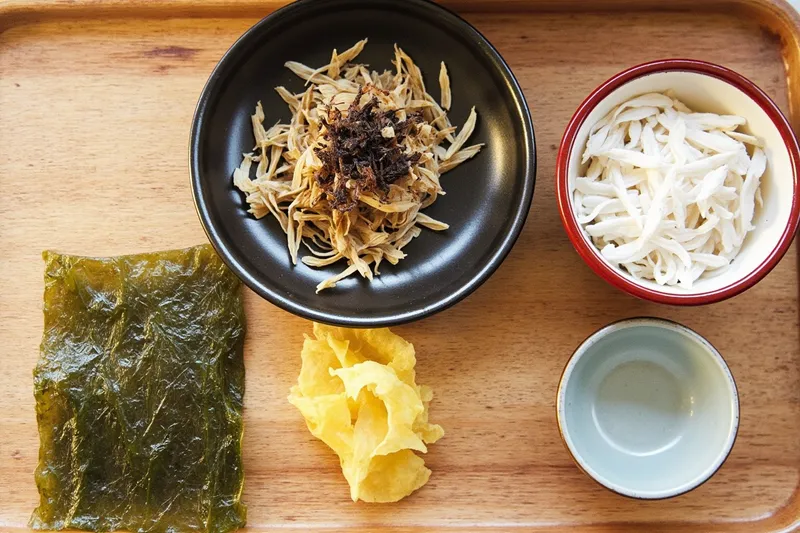
| Type | How it is made | Flavour | Where it works |
|---|---|---|---|
| Kombu dashi | Dried kelp steeped cold overnight or warmed briefly | Clean, sweet, mineral | Soups, simmered dishes, konnyaku, the base for a frozen stock pot |
| Katsuobushi dashi | Bonito flakes into hot water, strained after seconds | Smoky, sharp, fast | Clear soups and finishing noodles |
| Awase dashi | Kombu and bonito together | Round and complete | The everyday house stock |
| Niboroshi dashi | A long, slow simmer, often on a second use of kombu | Deep, less sharp | Cooked rice and long-simmered dishes |
A ten-minute wakame and tofu soup: warm a cup of kombu stock, add rehydrated wakame and cubed silken tofu, and stir through a spoonful of white miso once it is off the boil. Taste first, then add shoyu only if the bowl still tastes flat. Miso and shoyu together is where most of the salt sneaks in.
Judge salt by the label, not by folklore. Every jar of shoyu and miso states the sodium in a tablespoon, so you can work out your own bowl; the grams-of-salt-per-bowl figures repeated online change too much with recipe and serving size to plan around. With roughly 70% of salt arriving through condiments, using less at the table moves the number more than any change of menu.
Soy foods: tofu, natto, edamame
Soy is the everyday protein of the pattern, and Okinawan tables are rich in it: tofu, miso, soy milk. It is also one of the cheapest ways to add protein without meat, which matters when you cook the same six ingredients all week.
| Product | Texture | Job in the kitchen |
|---|---|---|
| Silken tofu | Soft, spoonable | Soups, dips, stirred into eggs |
| Extra-firm tofu | Dense, keeps its shape | Grilling, pan-frying, stir-fries, roasting |
| Natto | Sticky, stringy, fermented whole soy | Breakfast over rice with a raw egg and grated ginger |
| Edamame | Green beans in a pod | A snack with a little salt, or protein on the plate |
| Soy protein | Textured pieces or a drink | Protein without the flavour experiment |
One caution about the fermented side: fermented does not automatically mean a proven probiotic. Strain-specific data on natto and miso is thin, so I treat them as good-tasting, high-protein foods that happen to be fermented, not as a supplement with a health claim attached.
There is one safety note worth keeping: natto is very high in vitamin K, and vitamin K works against warfarin. If that medicine is in your cupboard, ask your prescriber before natto becomes a daily habit.
Seaweed, koji and fermented pantry staples
Seaweed is the underrated half of the pattern. Kombu builds the stock, wakame goes into soups and salads, mekabu is the crunchy seaweed salad, and nori sheets get wrapped around rice or folded into onigiri. It brings iodine and minerals, and a savoury bite without added salt of its own.
| Seaweed | Form | Use |
|---|---|---|
| Nori | Dried sheets | On rice, in onigiri, as a side on the tray |
| Kombu | Dried strips | Stock, simmered vegetables, konnyaku, kelp salad |
| Wakame | Dried or fresh | Soup and salad; the classic seaweed in miso soup |
| Mekabu | Fresh, frilly | Salads with a vinegar dressing |
Japan's iodine intake from edible seaweeds is among the highest in the world, and how much a sheet gives you varies a lot between species and shifts with cooking and processing. So "one sheet of nori equals a fixed dose" is not a safe shortcut, especially with a thyroid condition or in pregnancy. Keep the seaweed varied and moderate instead of loading up on it daily.
Koji is the mould and its enzymes that make miso, shoyu and sake possible, which is why those three taste related. As for furikake, blends differ by brand and many add salt, MSG and sometimes sugar, so read the label before treating it as a free flavour boost.
Vegetables, Grains and Fibre
The vegetable gap: 258.7 g against a 350 g target
Here is the number that surprises people: Japanese adults themselves eat about 258.7 g of vegetables a day (men 268.6 g, women 250.3 g) against a 350 g daily target, roughly 91 g short. The diet with the reputation for vegetables is still short of its own target, so nobody needs to feel behind. The figures come from the Ministry of Health, Labour and Welfare's 2024 National Health and Nutrition Survey.
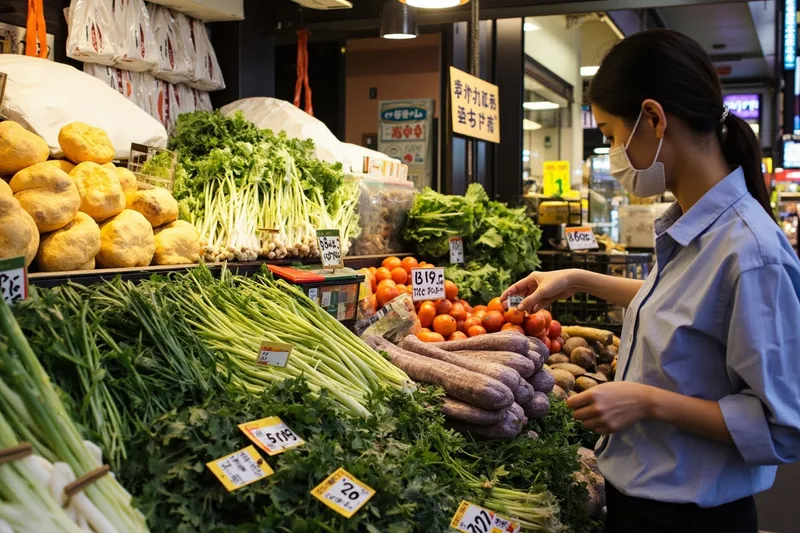
| Vegetable | How it works | What to watch |
|---|---|---|
| Goya (bitter melon) | Stir-fried with egg and a splash of shoyu | Salting and rinsing a slice tames the bitterness; egg and tofu turn it into savoury depth |
| Imo (sweet potato) | Roasted whole | A vegetable and a starch in one, and it keeps for weeks |
| Konnyaku (konjac) | Simmered with vegetables | Bulk for very little energy; check the panel, since water content varies and drained weight is not package weight |
| Napa cabbage and shiitake | Simmered with kombu | Volume for almost nothing, and it stretches a small piece of fish |
| Frozen spinach, peas, edamame | Straight from the freezer | The fastest gap-closer in a busy week |
The catch is that the fastest way to add vegetables is also the fastest way to add salt, and Japan still averages 9.6 g of salt a day. Season with dashi and a measured spoon of shoyu, and keep the pickles to one meal a day rather than two.
Grains, rice and fibre
Rice is the part people overthink. The traditional serving is a small bowl, and the modern mistake is filling it to the brim because the rice is there. My method: weigh one bowl of cooked rice once, write the number on the inside of the pot lid, and after that judge by eye against that bowl. Scooping from the pot rather than serving straight onto the plate quietly shrinks the portion too.
Keep two things apart. A Japanese measuring cup is marked in go, and that volume is uncooked rice: 1 go of dry rice turns into roughly one bowl of cooked rice. The measuring cup and the cooked bowl are not the same amount of food, and swapping them is the classic miscount. The numbers are in rice and portion size.
On fibre: Japan sets a daily fibre target in the 2025 reference intakes, and the WHO sets no fibre figure at all, so the number circulating online is somebody else's rule rather than a standard here. In practice, a bowl of rice mixed with brown rice, a handful of vegetables and a strip of kombu in the stock closes most of the gap without tracking anything.
Salt, Caffeine and the Numbers Worth Watching
Salt: the honest weak spot
Japan eats roughly twice the WHO limit and still tops the longevity tables, which is the uncomfortable part of the story. The WHO recommends under 5 g of salt a day (2,000 mg of sodium) against a global average of about 11 g, and Japan came in at 9.6 g in the 2024 survey (men 10.5 g, women 8.9 g). The WHO's salt reduction guidance sets out where the salt actually comes from.
| Reference | Salt per day | Note |
|---|---|---|
| Japan, 2024 National Health and Nutrition Survey | 9.6 g average; men 10.5 g, women 8.9 g | The most recent national average |
| Japan, Dietary Reference Intakes 2025 | Adult target 0.5 g lower than in the 2020 edition; under 6 g for preventing the severity of hypertension and chronic kidney disease | The hypertension and kidney-disease level is new in 2025 |
| WHO | Under 5 g (2,000 mg sodium) | Global average about 11 g a day |
Five swaps do most of the work, and each one works on the same lever: about 70% of dietary salt in Japan arrives through ordinary seasonings such as shoyu and miso.
- Dilute the miso with dashi and skip the extra shoyu on top.
- Leave the furikake off the rice, or use a lighter blend.
- Choose reduced-sodium shoyu and pour less of it.
- Swap instant ramen broth for dashi with frozen vegetables and an egg.
- Keep pickled sides to one meal a day instead of two.
The heaviest loads are not in the home pattern at all: ramen broth, katsu-curry and restaurant sushi sauces carry a lot of salt on their own.
What works for me is the boring method: read the sodium column on the pack, pour one measured tablespoon, and keep the bottle on the table during the meal but back in the cupboard afterwards. Condiments that live on the table get used out of habit, and condiments that live in the cupboard get counted.
Green tea and matcha
Tea is the drink of the pattern, and caffeine is the part with a number attached. Matcha is finely milled leaf, so a small spoon carries far more than a cup of brewed tea.
| Drink | Caffeine | Note |
|---|---|---|
| Brewed green tea | About 30 mg per 240 ml cup | The everyday baseline |
| Matcha | 38–176 mg for a 2–4 g serving (19–44 mg per gram) | Strength depends on the powder and the blend |
| Sencha, genmaicha | Varies with the leaf and the brewing | Check the pack rather than guessing |
EFSA's view is that single doses up to 200 mg and habitual daily intakes up to 400 mg raise no safety concern for healthy adults, with 200 mg a day as the limit in pregnancy. Those are ceilings, not targets, and if you drink three bowls of sencha and a matcha in the morning you are in ceiling territory by lunchtime.
Why matcha belongs in a diet article at all: it is a ritual drink taken with food, not a fat-loss drink. The ceremony is the point, whisked and drunk slowly, sitting down. The research behind it is in green tea and matcha.
The rest of the nutrition checklist
The reference values below are population figures for healthy adults, not an individual prescription. The Japanese set comes from the Dietary Reference Intakes for Japanese (2025 edition), which took effect in April 2025, comes round every five years, and for the first time adds osteoporosis to the lifestyle-related conditions its energy and nutrient guidelines address. Health Japan 21 is the separate framework behind school-lunch and workplace health targets.
| Target | Figure | Where it comes from | How to hit it |
|---|---|---|---|
| Salt | Japanese average 9.6 g; WHO under 5 g | 2024 national survey; WHO | The five swaps above |
| Vegetables and fruit | At least 400 g a day | WHO healthy diet | Rice, soup and two sides covers it on most days |
| Total fat | Under 30% of energy | WHO healthy diet | Vegetable oil and fish rather than frying in fat |
| Saturated fat | Under 10% of energy | WHO healthy diet | Fewer fatty cuts; this pattern is naturally low here |
| Free sugars | Under 10% of energy | WHO healthy diet | Read the label on sweet sauces and drinks |
| Alcohol | No safe amount for health | WHO | Fewer glasses is better than most habits |
| Vegetables, Japanese target | 350 g a day | Japanese nutrition guidance | Closing the 91 g gap |
Two more lines in the 2025 Japanese reference intakes cover potassium and dietary fibre. Both are reached in the kitchen rather than on paper: sweet potato, beans, seaweed, brown rice mixed into white, and vegetables at every meal. If you have high blood pressure or kidney disease, those two lines are the ones to take to your doctor, because potassium can be the opposite of what you want.
How to Start the Japanese Diet: A Four-Week Plan
Weeks one and two: change breakfast and dinner first
The pattern has three meals and no clock, so there is nothing to fix all at once. I would start with breakfast and dinner, because both are eaten at home and both repeat, and dinner is the simple version: rice, one dashi soup, one protein, one vegetable. That is the smaller modern take on the traditional tray, and it is the part that survives a working week.
Weekday breakfast in ten minutes: cold leftover rice with an egg stirred through and a sheet of nori on top, or an onigiri with natto and hot tea, both built from rice cooked the night before. Not because breakfast is the most important meal of the day, which is a slogan rather than a finding, but because it is the meal most often skipped or replaced with something sweet. The asagohan version is in what a Japanese breakfast actually is.
| Week one | Week two |
|---|---|
| Add one soup to one meal a day | Move to the rice portion ladder in the grains section |
| Put vegetables on the plate at two meals | Try the 80% fullness habit for one week: serve less, eat slowly, stop before full |
| Move the shoyu from the counter to the table, and back to the cupboard when the meal ends | Measure shoyu and miso with a tablespoon instead of pouring |
| Clear one shelf of processed snacks and refill it with fruit, edamame or nori | Cook rice in batches and scoop portions into the fridge |
| Cook one pot of dashi, strain it and freeze it in portions | Replace one takeaway a week with a home tray of rice, soup and two sides |
On weight, set expectations calmly: the CDC advises losing about 0.5–1 kg (1–2 lb) a week, because that pace is the one most likely to hold, and a 5% drop in weight already improves blood pressure, cholesterol and blood sugar. Anything faster in the first fortnight is mostly water, salt and glycogen. The CDC's guidance on losing weight is worth reading before you start.
Weeks three and four: make it the default
Week three is infrastructure. Batch-cook the rice, boil one pot of dashi and freeze it in portions, and prepare vegetables once a day: blanched spinach, sliced cabbage, grated daikon. Then assemble the tray in the traditional shape, rice, soup, protein, two sides. Assembling beats cooking every dish from scratch on a Tuesday evening, and that is the whole trick.
Week four is an audit. Read the sodium column on the shoyu, miso, furikake and any processed item in the cupboard, because seasonings supply roughly 70% of dietary salt. Practise the 80% rule as a cue rather than a target: put the serving dishes away when you are done. And add one more vegetable to each meal to close the 91 g gap.
What not to add in weeks three and four: no fasting window, no rule stricter than 80% full, no new supplements. The trials behind those ideas tested calorie restriction and eating windows rather than this pattern, and a stricter rule can set off the cycle of restriction and overeating.
When a week goes wrong, and it will, go back to the two anchors, a soup-based dinner and vegetables at two meals, instead of starting over. Weigh yourself once a week rather than daily.
Shopping list, prices and one-for-one swaps
The Japanese shelf in a US supermarket is usually in the international aisle, near the soy sauce and miso and above the rice, and most of it keeps for months. The six items I would buy first are below, with2026 shelf prices: the three checked figures come from Trader Joe's, and these pantry prices move during the year, so treat every number as a starting point and look at the shelf before you buy.
| Item | Price | Notes |
|---|---|---|
| White miso paste, 5.3 oz jar | about $2.99 | Shiro (white) is mild and sweet, aka (red) is stronger and saltier |
| Nori komi furikake, 1.95 oz | about $2.99 | Blends differ by brand, and many carry added salt, so read the label |
| Reduced-sodium soy sauce, 17.6 fl oz | about $3.99 | Up from $3.79 earlier in 2026, which is how these prices move |
| Dashi concentrate | check the shelf | Pour-and-go, though a home kombu stock costs less and tastes better |
| Shirataki or konnyaku | check the shelf | Check the drained weight and the nutrition panel |
| Frozen edamame, panko, gochujang | check the shelf | Edamame for snacking, panko for a lighter cutlet, gochujang for a hot sauce that also brings sugar |
The swaps keep the structure and change one thing at a time, which is easier than changing everything at once.
| Instead of | Cook | Why |
|---|---|---|
| An instant ramen packet | Dashi, frozen vegetables, an egg, and dried noodles if you want them | Same format, far less salt, more volume |
| Butter on toast | An onigiri with nori | Carbohydrate with a savoury wrapper and no added fat |
| A fried cutlet in panko | A smaller cutlet with a cabbage slaw | The panko is fine; the size is the problem |
| Bottled teriyaki glaze | Reduced-sodium shoyu with a little mirin | Glaze bottles are where sugar and salt hide |
| A granola bar | Edamame, or natto with rice | Keeps you going past the 80% mark |
The cheapest version of this pattern is rice, dried mushrooms, kombu for stock, frozen vegetables, tofu, edamame and konnyaku, with nori and miso as the flavour layer on top. Everything else can wait. While you are in the aisle, read the panel: most dashi sold in the US is a concentrate, tofu is usually calcium-set, and soy sauce labels distinguish regular from reduced-sodium.
Is the Japanese Diet Worth Adopting?
What holds up and what does not
| Strong enough to act on | Too thin to lean on |
|---|---|
| Vegetable volume as the default, and Japanese adults still miss their own target by about 91 g a day | A court-era tray format sold as a weight-loss plan |
| Soy and fish in place of processed meat | Longevity claims drawn from one region, with healthcare, income and social structure in the same picture |
| Portioned, soup-based plates that fill you on volume rather than on fat | The Okinawa snapshot: that advantage narrowed after the 1990s as the island's diet and economy modernised |
| The seasoning cut, since about 70% of salt comes from condiments, which makes it the most actionable item in the pattern | The 80% fullness rule treated as a rule rather than a habit |
| Modest calorie restriction, which slowed one biological-age clock by 2–3% with no change on the other two and a modelled mortality effect of 10–15%, though that is calorie restriction rather than this diet | "Japanese food is automatically healthy": 24.2% of adults meet Japan's own BMI 25 obesity definition |
Japan's 2025 life expectancy was 81.35 years for men and 87.33 for women, with women holding the world number one for the 41st consecutive year and men ranking seventh, according to the Ministry of Health, Labour and Welfare's 2025 abridged life table.
The asymmetry decides how much of this to borrow. PREDIMED followed 7,447 people at high cardiovascular risk for a mean of five years, and a Mediterranean diet with extra virgin olive oil or nuts cut heart attack, stroke or cardiovascular death by 30% against a low-fat control diet. That is a randomised test with hard endpoints. No randomised test of the Japanese pattern exists, so borrow the structure and judge the claims by what has actually been measured.
Who should adapt it
The pattern travels well into a British or American supermarket, with a few adjustments for the person rather than the kitchen.
| Situation | Adjust like this |
|---|---|
| High blood pressure or chronic kidney disease | Aim at the under-6 g a day salt level in the 2025 reference intakes, and talk to your doctor before changing your potassium intake |
| Pregnancy | Keep seaweed varied rather than large and daily, keep caffeine at or under 200 mg a day, and limit the big predatory fish such as tuna and swordfish |
| Children, older adults, athletes, recovery from illness | Drop the 80% rule, because restriction does harm in these groups |
| A history of disordered eating | Skip the restriction framing altogether and work from your own hunger signals |
| Soy allergy | Miso and shoyu are soy products, so the dashi needs to be kombu-only or bonito-only |
| Warfarin | Natto is very high in vitamin K, which works against the drug, so ask your prescriber before making it a habit |
| Regular alcohol intake | The pattern's advantage shrinks, and WHO says there is no safe amount of alcohol for health |
For a family, the structure transfers and the menu does not have to: rice, a soup, vegetables and a protein the children will actually eat is enough of the pattern to start with.
Final call
Take the structure and leave the folklore. Rice, one soup, a few small sides, vegetables at every meal, soy and seaweed as the protein base, less processed meat, and above all the seasoning cut, because that is where the numbers are worst.
Leave the 80% rule and the fasting windows where they are. Neither has evidence behind it in this context: the studies behind fasting headlines tested calorie restriction and timing windows, and the 80% rule has been studied mostly as part of a whole regional diet rather than on its own.
Two changes have the best ratio of evidence to effort: put the condiments back in the cupboard, and add one vegetable to dinner. Then watch two numbers, salt per day and weight per week rather than per day.
Short answers
The questions I get asked most, answered in a line or two each.
| Question | Answer |
|---|---|
| Do I need a rice cooker? | No. A pot, a bowl and a timer do the same job. The bigger gain is cooking rice in batches and scooping portions into the fridge. |
| Is go-han the only lunch? | No. Onigiri, rice bowls and last night's leftover soup and sides carry the same structure as the evening meal. |
| How do I cut salt in Japanese food? | Cook with dashi and taste before adding shoyu, keep condiments off the table, and read the sodium on miso, shoyu and furikake. Roughly 70% of salt comes from those three. |
| Is konjac a substitute for noodles? | As a bulk ingredient, yes: shirataki and firm konnyaku add very little energy. Check the drained weight and the panel, and do not make them the meal. |
| Does it work without fish? | Yes. Soy, eggs and the rice, soup and vegetable structure carry the pattern. Fish is common in it, not required. |
| How fast should I expect results? | Slowly: about 0.5–1 kg (1–2 lb) a week, and a 5% drop in weight already improves blood pressure, cholesterol and blood sugar. |
If you are starting from nothing, do the week-one column and ignore the rest for a month. The format only sticks once the soup is in the cupboard.