
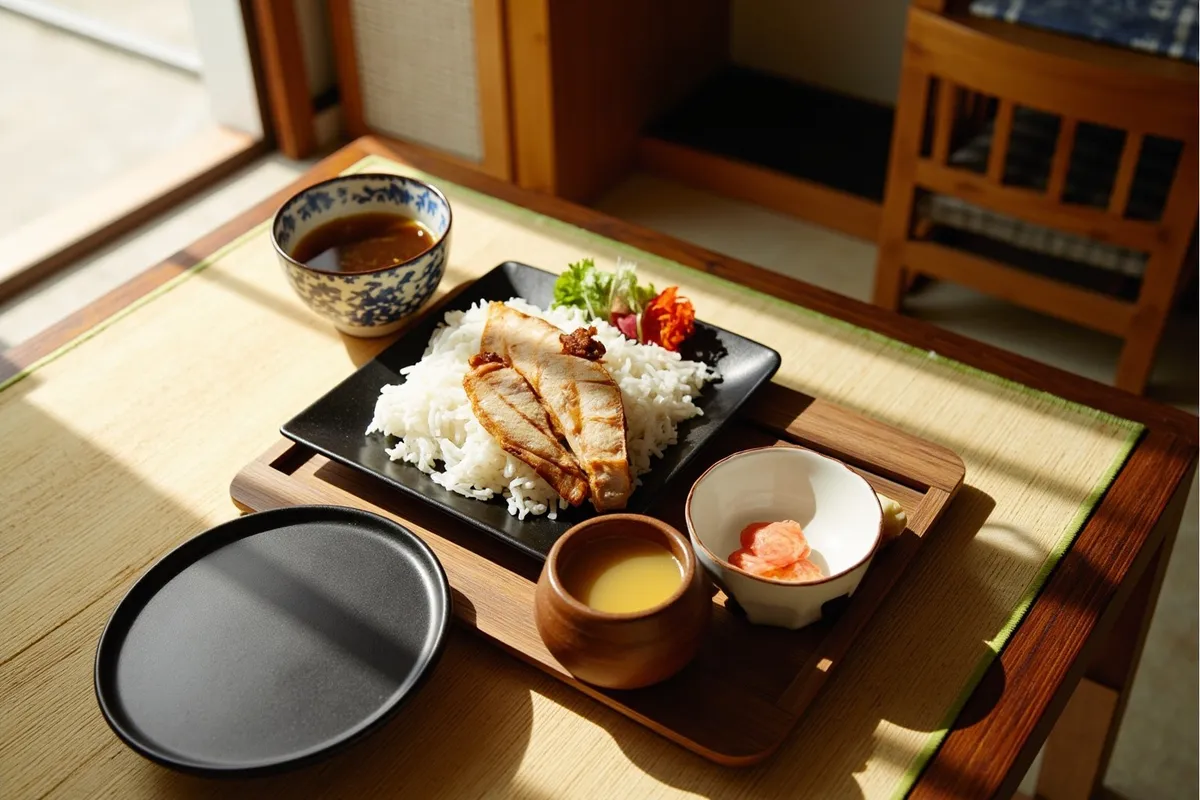
The washoku Japanese diet is one bowl of rice, one bowl of soup and three small dishes. What is worth copying sits in the seasoning spoon rather than in the table setting: Japanese adults eat about 9.6 g of salt a day against a target of under 7.5 g for men, and vegetables come to 258.7 g a day against a goal of 350 g.
In my own kitchen that turned into five or six vegetable dishes a day, one seasoning spoon where I used to reach for two, fish in the main slot and a walk after the two heaviest meals. Everything came from an ordinary supermarket.
Start with the plate itself.
What Is Washoku? Ichiju-Sansai and the Traditional Japanese Diet
Washoku, a food culture UNESCO put on a list
Washoku is the Japanese table as a whole: a set meal built on rice and soup, seasonal shopping, the way dishes are placed and the order they are eaten in. UNESCO inscribed it in 2013, at the 8th session of the Intergovernmental Committee for the Safeguarding of the Intangible Cultural Heritage in Baku, under the title "Washoku: traditional dietary cultures of the Japanese, notably for the celebration of New Year" (UNESCO's listing).
A heritage listing says a culture is worth keeping; it says nothing about your blood pressure. Kikkoman's own account of the pattern credits a one-soup-and-three-dishes plate, with savoury broth and fermented foods, with low fat and Japanese longevity. That is a company describing its own tradition, useful as intent and not as a result.
Ichiju-sansai: one soup and three dishes, and where the bowls go
The standard set is ichiju-sansai, one soup and three dishes, and the layout is fixed. Rice sits on the left in a chawan rice bowl, the soup bowl goes to the right of the rice, the main dish above the soup, the two side dishes above the rice.
| Slot | Position | What usually goes there |
|---|---|---|
| Rice in a chawan | left of the set | plain short-grain rice |
| Soup | right of the rice | miso soup or a clear broth |
| Main dish | above the soup | grilled fish, simmered fish, tofu, egg or meat |
| Side dish, first | above the rice | a simmered or dressed vegetable |
| Side dish, second | above the rice | a vegetable side or a bowl of beans |
Slot contents vary by region and household, and the agriculture ministry's account of the set is where I would point a beginner. Pickles and a bowl of tea join the arrangement in some households, though many serve neither.
One rule catches people out: the set has exactly one soup, so a bowl of ramen or a plate of curry is not ichiju-sansai, however good it is. The layout is borrowable, though. An onigiri, a bento and a donburi follow the same logic, so a pot, a bowl and two small plates will do.
Go-sho: the five tastes behind the menu
Japanese menus are built around go-shū, the five tastes, and a proper meal is meant to hit more than one of them. The classification comes from the classical five-element scheme and is old, but it still decides what gets cooked.
| Taste | Everyday example |
|---|---|
| Sweet | kabocha, simmered sweet potato |
| Sour | sudachi citrus, pickles |
| Salty | soy sauce, plain salt |
| Bitter | burdock, bean sprouts |
| Umami | broth, dried seafood |
The practical reason matters more than the theory. Savoury depth lets a small bowl of soup and a few dressed vegetables feel like a meal without a heavy sauce, and the ferments that supply that depth are also where most of the salt sits.
The Rules of a Washoku Japanese Diet
Hara hachi bu: stopping at about 80 percent full
Hara hachi bu is the habit of leaving a little room: eat until you are roughly 80 percent full, then stop. It is a Confucian-influenced teaching still used in Japan as food etiquette, and it is also the phrase diet writers reach for when they want to sound precise. I use it as a portion cue, because it slows a meal down. You can read more about the claim in what eating to 80% full actually does.
Applying it needs no scale. Serve one helping of rice instead of two, begin with the soup because it takes up room in the stomach, and plate the vegetables before you decide whether you want more.
The evidence is thinner than the phrase. A 2024 analysis of 2,507 part-time high school students in Hyogo Prefecture found that eating until full, combined with eating fast, went together with overweight and obesity. That is an observed pattern rather than a trial, and no study shows that counting to 80 percent on its own causes weight loss.
Order, pace and the shape of a set meal
Small dishes, soup first, rice last, eat slowly, finish what is served and do not top up the rice inside a set meal. That order is not a rule so much as a way of slowing a meal down, and the slow part is what people borrow from it.
None of it is written down anywhere official. Much of what circulates as 'washoku rules' is restaurant folklore with no source, and I would treat it as house custom: useful, but not doctrine.
The practical version is that the small plates are full when the meal ends. With two side dishes and a bowl of soup already served, the rice bowl tends to stay part empty, and nobody misses a second helping of something that was never served.
Shun: eating with the season
Shun, which simply means seasonal ingredients, is a defining feature of washoku menus, and the agriculture ministry describes it as one in its own material on the tradition. The idea is that the year gives you the best version of each crop and the cook should be there when it happens.
| Season | Typical shun items |
|---|---|
| Spring | bamboo shoots, nanban greens |
| Summer | ayu, cucumber |
| Autumn | matsutake mushrooms, ginkgo nuts |
| Winter | daikon, napa cabbage, kabocha, oranges |
In practice shun is the cheapest way to stop a week of meals turning into the same six dinners. Buy what is good now, use it twice, then move on. Seasonality is regional, so the same fish peaks in different months depending on where you are, and what a shop puts out front follows the local calendar.
Inside the Meal: Otsukuri, Yakimono, Nemono and Nakamal
Otsukuri: the poured soup and the broth under it
The soup slot is otsukuri soup, a family of poured soups that includes miso soup. Alongside it, shiramu is a clear soup built on meat or fish, and niran is a lighter, cloudier one. The poured soup carries most of the work in a home kitchen, and most of that work sits in the broth underneath.
That broth is dashi, and it works as seasoning rather than salt: it brings umami, the savoury taste, without adding salt of its own. Kombu, dried kelp, gives the deep base. Katsuobushi, dried bonito flakes, adds a fishier note on top.
| Dashi | Source | Method | Time |
|---|---|---|---|
| Kombu | dried kelp | about 10 g in cold water, never boiled | 30–60 min |
| Katsuobushi | dried bonito flakes | about 10 g into just-boiled water, then strain | 30 s |
| Awase | both | a pinch of flakes added to kombu stock | 1 min |
Freeze what you do not need. Dashi poured into an ice cube tray keeps for weeks and drops straight into a pot of hot water, which beats boiling a new pot every evening.
Yakimono and nemono: the grilled and simmered plate
Two methods carry most of the main and side dishes. Yakimono is the grilled slot: saba mackerel, ayu, or chicken with teriyaki. Nemono is the simmered slot: daikon, napa cabbage, chikin o-nabe, konnyaku, an egg dropped in at the end.
| Dish type | Method | What it does to the salt |
|---|---|---|
| Yakimono | grill or pan | about 1 g of salt or less when cooked from scratch |
| Nemono | simmer | the same, if you season the pot rather than the packet |
| Ready-made simmered goods | straight from the shop | far more than a homemade pot |
Fish and omega-3 come as a pair here: small oily fish such as sardines, mackerel and anchovies carry the omega-3 fats, and they are also the ones worth eating often. Vary the species regardless, and keep large predatory fish such as tuna and swordfish occasional rather than daily, because of mercury.
Nakamal: the small side that finishes the meal
The nakamal is the little plate that comes with the rice, and it is the most underestimated part of the set. The pickles that fill it, tsukemono and sometimes called mujimono, are salted and fermented vegetables; in some households a bowl of tea joins them, though plenty serve neither.
| Option | What it is | Salt in a small portion |
|---|---|---|
| Pickled radish or cucumber | crisp, sour, fermented | roughly 1–2 g |
| Konnyaku | savoury, chewy, almost salt-free | under 1 g |
| Hijiki or wakame | dressed seaweed | under 1 g |
One rule saves you here: pickles fill the nakamal slot, never the soup slot. Pickles next to miso soup is two salt sources where one would do, and when I am watching salt, the pickles are the first thing I cut, not the vegetables.
The Washoku Pantry: Rice, Seaweed, Tofu and Ferments
Gohan and the chawan rice bowl
The staple slot is gohan, plain short-grain rice served in a chawan rice bowl, and the rest of the set is arranged around it. Brown and mixed-grain rice are the modern variation; the traditional plate is white, and the texture difference matters more than the nutrition label. How a smaller bowl of rice supports weight loss is covered separately.
| Portion | Role |
|---|---|
| One bowl, about 100–150 g cooked | the anchor of a set meal |
| Leftover rice, a few spoonfuls | onigiri or ochazuke the next morning |
Leftover rice is not waste. It becomes an onigiri before work or ochazuke at the end of a long shift, so the same grain shows up twice in a day without feeling like two meals. One cooker trick: a little extra water under the lid gives softer grains, and too much turns it to porridge, so add a spoonful at a time.
Seaweed, tofu and the vegetable slots
Seaweed and tofu fill the slots that make a set meal useful rather than decorative. One standard vegetable dish in Japan holds about 70 g of vegetables, which is why official advice lands at five or six vegetable dishes a day, and these two make that many small dishes easy to put together.
| Ingredient | What it is | Where it goes |
|---|---|---|
| Nori | dried sheets of seaweed | one sheet beside the rice |
| Wakame | seaweed, salted or fresh | a dressed side in the nakamal slot |
| Hijiki | dried brown seaweed | a dressed or simmered side |
| Kombu seaweed | kelp, sold fresh or dried | simmered as a vegetable, not only for broth |
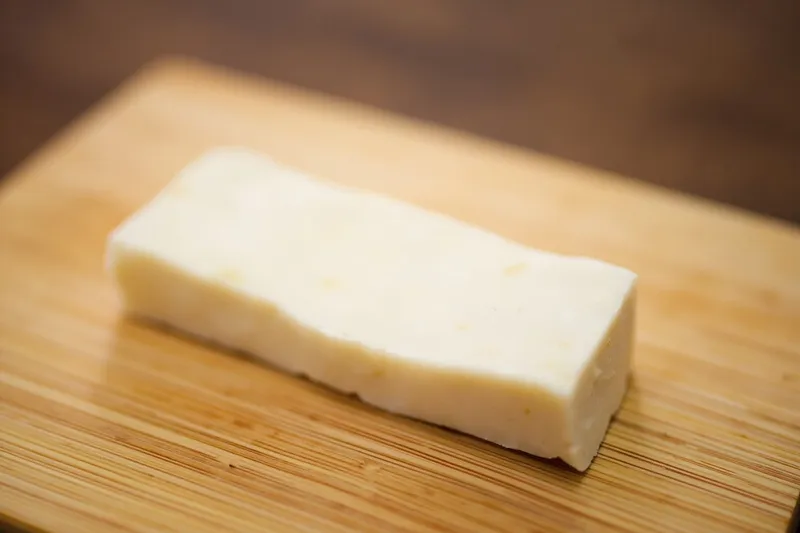
| Tofu | soft or firm soy bean curd | the main slot, or a side |
Two practical notes. Nori and hijiki keep for months in a sealed bag, wakame comes salted or fresh, and fresh tofu should be used within two or three days of opening.
Two cautions I would not skip. Seaweed iodine varies widely and some kelp products exceed a daily upper limit for some people, so if you have thyroid disease or take thyroid medication, read the label or ask your clinician before making kelp a daily habit. Soy isoflavone content varies between tofu types and no firm upper limit has been agreed, which is a reason to keep soy moderate rather than to cut it out.
The ferments that carry the meal
Miso soup is the anchor of the soup slot, and miso paste, soy sauce and shio salt are the three levers a home cook controls all week. Everything else can be plain; these three decide how the day tastes and how much sodium it carries.
| Ferment | How it is used | Salt per household spoon |
|---|---|---|
| Miso paste | 1 tbsp in a bowl of soup | about 1.4 g |
| Soy sauce | 1 tbsp as a dip or dressing | about 2.2 g |
| Shio salt | 1 tsp, or a pinch | about 5.8 g |
| Natto | whole beans stirred into hot rice | none added |
Fermented foods do more than add salt. Natto and pickles bring a depth that lets a small amount of seasoning go further than fresh ingredients would, which is why they fit a plate built on small portions.
Two things to raise with a doctor rather than a blog: natto is high in vitamin K2, which matters if you take warfarin, and soy allergy is real for a small number of people, so if you react to soy, the allergen line on the pack is what to read. Miso, soy sauce and tofu all carry it.
Salt and Sodium on the Washoku Plate
Salt versus sodium, and where Japanese salt comes from
Salt and sodium are one thing read two ways. Salt is about 40 percent sodium by weight and a teaspoon of table salt holds roughly 2,400 mg of sodium, so a label number changes meaning once you convert it. The per-serving figures below come from the agriculture ministry's salt guidance.
| Dish | Salt in one serving |
|---|---|
| Kake udon with broth | about 5.6 g |
| Oden | about 3.8 g |
| Nigiri sushi, without dipping sauce | about 3.7 g |
| A mixed sandwich | about 3.2 g |
| A wiener sauté | about 1.1 g |
Japanese patterns also changed under pressure. Adults ate about 10 g of salt a day in 2019, more than double the WHO limit of under 5 g, and salt density fell from 5.3–6.4 g per 1,000 kcal in 2007 to 4.9–5.6 g in 2019. Salt from soy sauce and miso fell over the same period while salt from soup stock rose, which the researchers link to stronger umami in the broth allowing less to be added. Even so, about 70 percent of salt still arrives through soy sauce and miso in every age group.
The takeaway is counter-intuitive: cut the three spoons, not the vegetable plate.
Targets, surveys and blood pressure
| Reference | Figure |
|---|---|
| Dietary Reference Intakes for Japanese, 2025 edition | men under 7.5 g of salt a day, women under 6.5 g |
| Same, for hypertension under treatment | under 6.0 g a day |
| Japanese Society of Hypertension, 2019 guideline | under 6 g a day |
| WHO | under 5 g a day, under 2,000 mg of sodium (WHO's salt guidance) |
| National Health and Nutrition Survey, 2023 | 9.8 g a day |
| Same survey, 2024 | 9.6 g a day: men 10.5 g, women 8.9 g |
| Global average, 2021 | 4,278 mg of sodium, about 11 g of salt |
The 2025 edition is the version in force through FY2029, and it kept the salt targets of the previous edition unchanged. For scale, average blood pressure in the 2024 survey was 126.4 mmHg, 129.8 for men and 123.8 for women.
These are population averages and population targets, not a dose for your body. The salt and blood pressure link rests on guideline work like the Society of Hypertension's 2019 statement rather than on a single study, and if your blood pressure is high, the number to aim at is the one your doctor gives you.
One shopping tool: the Society's Salt Reduction Committee has certified lower-salt products since 2013, and more than 200 had been certified by 2019.
The Food Balance Guide, Health Japan 21 and the vegetable gap
| Measure | Target | Actual |
|---|---|---|
| Vegetables, Health Japan 21 third term | 350 g a day | 258.7 g in the 2024 survey: men 268.6 g, women 250.3 g |
| Fruit, same target | 200 g a day | depends on the household |
| Cardiovascular disease | 70 g more vegetables a day | projected to reduce the disease burden |
The Food Balance Guide, agreed by the health and agriculture ministries in June 2005, still shows how much of each group to eat in a day: about 40 g of carbohydrate for staples, 6 g of protein for main dishes, 70 g for side dishes, 100 mg of calcium for milk and dairy and 100 g for fruit, on a chart built around 2,200 kcal. People with diabetes or hypertension are told to follow their doctor's advice instead of the chart.
Five or six side dishes of 70 g each is how the 350 g target is met on a real plate, and year-round vegetables such as daikon, carrot, potato and onion make that affordable in every month. Adding 70 g of vegetables a day is projected to reduce the cardiovascular disease burden in Japan, including coronary heart disease and stroke.
The agriculture ministry's Food Education White Paper, the FY2025 edition published in 2026, is the current official review of how the country eats.
What a Washoku Diet Costs: What to Buy
The starter basket and what the shelf prices look like
You do not need a specialist shop to start. Miso, tofu and nori cover the three things an ordinary kitchen does not already have, and each one replaces something you are probably buying now.
| Item | Market | Shelf price | Per 100 g |
|---|---|---|---|
| Firm tofu block | US | $2.47 per 16 oz, $2.97 per 14 oz | about $0.54–$0.75 |
| Shelf-stable Japanese-style tofu | US | $8.90 for 10.9 oz, list $12.00 | about $2.90 |
| Miso, everyday | US | from $4.98 per 300 g | about $1.66 |
| Miso, larger and organic tubs | US | $17.99 per 500 g, $21.99 for an organic 500 g white miso | about $3.60–$4.40 |
| Miso, imported Hatcho | US | $27.75 per 300 g | about $9.25 |
| Nori | US | $3.64–$4.08 per 10 sheets (1 oz), $13.99 per 50 sheets | about $10–$14 |
| White miso | Canada | C$5.97 per 500 g; organic 1 kg C$39.97, was C$49.22 | C$1.19 to about C$4.00 |
Compare the numbers inside a market rather than across currencies. A 300 g tub of ordinary miso runs about $1.66 per 100 g, while an imported 300 g Hatcho is about $9.25, so the expensive tub is not where I would start. My first buy is the cheapest miso on the shelf; if I am still using it a month later, I upgrade.
The basket in practice: miso for the soup slot, tofu for the main slot, nori for the side. Between them they replace instant noodles and stock cubes, a portion of meat, and the crisps you eat in front of the screen.
Reading labels and finding real nutrition data
Salt equals sodium times 2.5, which follows from salt being 40 percent sodium by weight, and a teaspoon of table salt holds about 2,400 mg of sodium. Many labels carry a salt-equivalent line as well as sodium, so two jars of the same product can be compared without doing the sum in your head.
The US shopping list has a different shape: adults there average more than 3,300 mg of sodium a day against a federal recommendation of under 2,300 mg for teens and adults, and the top sources are deli meat sandwiches, soups, pizza, poultry, savoury snacks, mixed pasta dishes, breads and rolls, cheese, mixed meat dishes and vegetables.
For numbers, USDA FoodData Central is free and in the public domain, with foundation foods updated twice a year and branded foods monthly (FoodData Central). Japan's own Standard Tables of Food Composition in Japan are the better reference for Japanese dishes, where the same name can cover very different weights in different books.
At the shelf, stand two similar jars side by side and compare only the salt-equivalent lines. It is the quickest salt win in a supermarket.
First shop: buying washoku staples in Japan
Convenience stores sell the ready-made version of the set: onigiri, cups of miso soup, natto packs and sheets of nori, all under one roof and open late. Supermarkets carry tofu, fresh and dried kombu, hijiki and konnyaku. Department-store food halls in the basement are where the better miso and katsuobushi live, and where a set lunch often arrives as a tray in the set layout, which is the fastest way to see the arrangement with your own eyes. A convenience-store hot bowl is also often the cheapest salt-controlled meal on sale, if you compare the salt-equivalent line.
Three habits pay off. Photograph the salt-equivalent line when choosing between two tubs of miso. Check the expiry date on fresh tofu and fresh wakame rather than on the dried seaweed. Buy shun where it is actually being sold, because seasonality follows the region rather than a national calendar.
Japanese Eating Rules for Weight Loss: What Actually Holds Up
Walking after meals and the protein-vegetable balance
Walking after meals is the habit I copy from a Japanese working day: a short walk after the two heaviest meals. I do not have a figure for how many minutes does what, and the studies on post-meal glucose use their own protocols, so take the habit rather than a number.
The protein and vegetable balance is more interesting. With rice in the staple slot, fish or tofu in the main dish and five or six vegetable dishes on the table, protein arrives without a large portion of meat and the vegetables stay the volume driver. That is the part of the plate with the strongest backing: adding 70 g of vegetables a day is projected to reduce the cardiovascular disease burden in Japan, including coronary heart disease and stroke.
Some numbers for context. Japan counts a BMI of 25 or more as obesity, and the 2024 National Health and Nutrition Survey analysed 13,106 adults aged 20 and over; average BMI was 23.9 for men and 22.3 for women. The Japanese threshold sits below the international definition, which starts at BMI 30, so the same number can carry a different warning depending on which chart you read.
Washoku next to the Okinawa diet, the Mediterranean diet and low-carb
| Pattern | What it puts on the plate | How it differs from washoku |
|---|---|---|
| Okinawa diet | sweet potato, vegetables, soy, little fat | a similar shape with sweet potato instead of rice |
| Mediterranean diet | olive oil, fish, vegetables | shares the fish and vegetable slots, drops the rice-and-soup set |
| Low-carb diet | cuts the staple slot | removes the anchor the rest of the set is built around |
The Okinawan table is usually discussed next to a national life expectancy of 81.35 years for men and 87.33 years for women in 2025. That figure measures a population, not a plate, and I would not hand it to anyone as the result of a diet. The Okinawa diet and what is worth copying goes into the food itself.
Two limits on the whole tradition. Modern washoku tables are not automatically healthy: fried items and thick dressings arrive with plenty of salt and oil, and a restaurant set meal and a home set are different things. And for anyone with kidney disease or on dialysis, a plate this plant-heavy and ferment-heavy needs medical advice on protein and potassium before it becomes a habit.
A washoku week, as I would cook it
What transfers to a British kitchen: one soup and three dishes, five or six vegetable dishes, one seasoning spoon used sparingly, stopping at 80 percent full, a walk after dinner, and fish in the main slot once or twice a week. What does not transfer: the set table itself, seasonal shopping unless the produce is local and good, and salted pickles as a daily habit. A ten-minute weekday breakfast of rice, a little miso soup and one pickled side fits in easily; a Japanese breakfast and why it helps with weight covers the rest.
The one number worth moving is the salt. Roughly 9–10 g a day toward under 7.5 g for men and under 6.5 g for women means dropping a spoon of soy sauce or miso, not the vegetable plate.
- Every weekday dinner: one soup and three dishes, with the rice bowl filled to about half
- Five or six vegetable dishes a day, roughly 70 g each
- Compare salt-equivalent lines when shopping, especially between two miso
- A ten-minute breakfast: rice with a little miso soup and one pickled side
If you change one thing on Monday, change the seasoning spoon.
Five questions readers keep asking
Is washoku a weight-loss diet?
The evidence behind it points to the vegetable volume and to cutting salty seasonings rather than to the set as a named diet. Salt is the number that moves.
Does it include meat or dairy?
The main slot holds fish, tofu, egg or meat, and the fixed part of the set is rice and soup. Dairy is not part of the traditional set, though the structure itself does not forbid it.
Do I need a Japanese kitchen?
One pot, a rice cooker and a grill pan cover a week of it. The arrangement of the bowls matters for how it looks, not for how it cooks.
Can I do it without fish?
Yes: a broth built from kelp alone, tofu in the main slot, and the seasoning moved into the vegetable dishes. Keep the seaweed iodine note in mind if kelp becomes a daily item.
What does a week of this cost?
The starter basket is miso, tofu and nori, and each replaces a packaged item you are already buying. Prices move by market, so compare the per-100 g figure rather than the sticker.
Five things to check before you start shopping:
- The salt-equivalent line on every jar, including miso and soy sauce
- Expiry dates on fresh tofu and fresh wakame
- Seaweed if you have thyroid disease or take thyroid medication
- Natto if you take warfarin
- Your own salt target if a doctor has given you one