

Most readers can start a Japanese-style diet safely without seeing anyone first. You need a doctor before you change meals if you use insulin or an SGLT2 inhibitor, if you have kidney, thyroid or liver disease, if you take warfarin, if you are pregnant or breastfeeding, or if you are losing weight without trying. Everything else is a plate method you can start tonight.
Two words of context. The phrase Japanese diet covers at least three systems: the washoku plate from the shared table, the Okinawa longevity diet, and the low-fat plan from diet books. This article is about the first, because it is the one that survives a working week. And the food on a Western supermarket shelf is not the same food as the food on the table. A block of instant ramen and a bowl of rice with three small dishes are not the same meal.
I cook this way, I keep a food journal, and I read the nutrition research behind hara hachi bu, the Okinawa diet and intermittent fasting, so I can tell which parts have evidence and which are mostly tradition. I am a home cook, not a dietitian, and I treat nobody. I split readers into three groups as I go: Tier A can start on their own, Tier B should see a dietitian or a Certified Diabetes Care and Education Specialist first, and Tier C needs a doctor before changing a meal.
What the Japanese Diet Actually Puts on Your Plate
Here is what the plate looks like in practice. One bowl of rice, one bowl of soup, three small side dishes, all of it placed in the middle of the table and shared. My grandmother's version in Yokohama had grilled fish on one side, a simmered dish on another, something pickled on the third. I have eaten this way in Manchester for years, and it survives a busy week better than most plans I tried before it.
Washoku, Ichijū-Sansai and the Small Bowl of Rice
The structure has a name: ichijū-sansai, meaning rice, soup and three side dishes. The side dishes sit in the middle and everybody reaches in, so a plate is built from a spoonful of each rather than arranged in advance. That is the real difference from a Western set meal, and it is also why the portions work without a scale.
Ichijū-sansai is the part I would copy. The bowl stays smaller than most of us are used to, and it stays small across the meal because you top it up from shared dishes instead of serving yourself. The ADA's Diabetes Plate does the same job with a picture: half the plate vegetables, a quarter protein, a quarter grains. Our guide to [washoku](/washoku/) has the history, [what the Japanese diet actually is](/japanese-diet/) sorts the three systems apart, and the [Okinawa diet](/okinawa-diet/) comes with its own evidence and its own gaps.
The pattern carries no calorie number and makes no promise about weight. Anyone selling it to you as a weight-loss plan with a daily target has added the part that isn't Japanese.
Miso, Natto, Tofu, Kombu and Nori in Everyday Meals
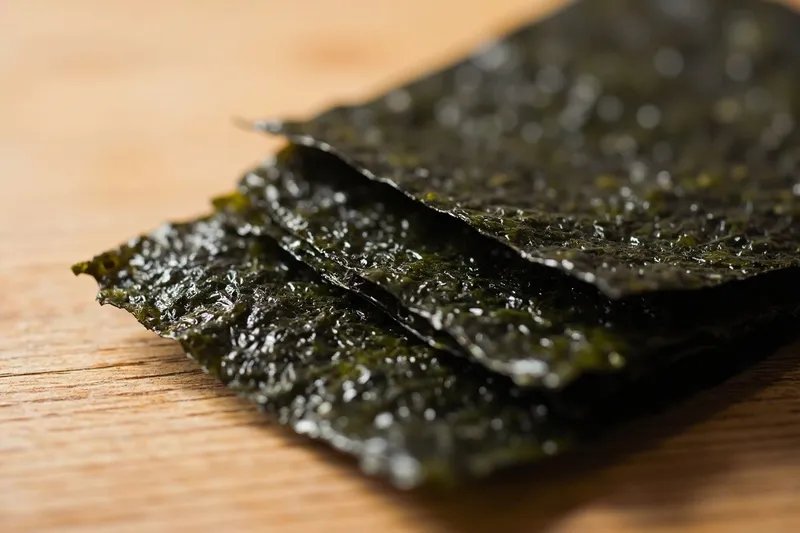
Five staples do most of the work in everyday meals, and each one has a catch. Miso and natto bring flavour and protein and take salt with them, kombu is a stock base rather than a vegetable portion, and nori is easy to overeat because a sheet is thin and salty.
| Staple | What it brings | What to watch |
|---|---|---|
| Miso | Fermented soy, deep flavour, the base of most soups | Salt: a ladle in a pot for four people is more than it looks, and salt-reduced miso exists |
| Natto | Whole fermented soy, high protein, very strong flavour | Vitamin K interacts with warfarin, and the texture puts people off for good |
| Tofu | The easiest swap for meat or fish | Read the label: soft tofu carries less calcium, salted tofu carries added salt |
| Kombu | Stock base, with minerals and a great deal of iodine | A strip in the pot, not a bowl of it. The biggest iodine swing in the diet |
| Nori | Dried seaweed, eaten sheet by sheet | Easy to overdo, another iodine source, and flavoured sheets carry extra sodium |
Two habits from my own kitchen help more than any label rule. I measure the sauce instead of pouring it, and I keep miso in the pot rather than in the bowl. For protein, the reference point for adults is 0.8 g per kg of body weight a day, so tofu and natto get you there without meat.
Hara Hachi Bu and How Much You Eat
Stop at 80% full comes from hara hachi bu, the old Japanese phrase for eating until you are not yet full. It is a piece of cultural advice and popular-health writing, not a tested protocol, and I would not convert it into a calorie target.
What changes in practice: a smaller rice bowl, more pickles and soup, slower eating at a shared table. What doesn't change: the pattern sets no calorie number, so if you need one, that is a dietitian's job rather than a rule of thumb.
The appetite part is real but modest. A smaller bowl fills faster and a bowl of soup at the start takes the edge off. That is all of it. Our [hara hachi bu guide](/hara-hachi-bu/) covers what the phrase does and does not do.
Is the Japanese Diet Safe? What Changes and What Doesn't
Tier A for most readers, with two things worth watching: salt and seaweed. The third thing to watch is the gap between a plate you cook and the packaged Japanese food most people actually buy. The pattern isn't the problem here. The shopping basket is.
Salt, Soy Sauce, Miso and the Seaweed Ceiling
Cooking from scratch can be light on salt. Packaged Japanese food on a Western shelf is built to be salty enough to eat on its own, and that is where most readers get their sodium. UK advice for adults is no more than 6 g of salt a day, roughly 2,400 mg of sodium. I read labels for sodium per 100 g and per serving, and I buy the lower-sodium soy sauce because it exists and it tastes fine.
The other ceiling is seaweed. The NHS advises about one portion a week, because seaweed can carry a lot of iodine and excess iodine causes thyroid trouble, and EFSA puts the adult tolerable upper level at 600 µg of iodine a day. Kombu, wakame and kelp are the concentrated sources, and different species carry very different amounts, so variety matters as much as volume.
| Where the salt sits | What I do about it |
|---|---|
| Shoyu, tamari, Chinese soy sauce | Measure with a teaspoon, and dilute half of it with water and a little mirin |
| Miso, in soup and glazes | Keep it in the pot for four, and use salt-reduced miso when you can find it |
| Bottled tare and teriyaki sauces | Read the sodium per serving; make your own when the recipe is simple |
| Instant ramen and yakisoba blocks | An occasional item rather than a default dinner, since the whole bowl is salty |
| Furikake, sprinkled over rice | A teaspoon, not a spoon, and pick the plain one |
| Pickles and other tsukemono | Smaller portions, and check the label for added sugar as well as salt |
Swaps I actually use: dilute shoyu, salt-reduced miso, dashi made from kombu instead of bottled stock, rinsed canned beans, and sauce measured with the small spoon in the cupboard rather than poured from the bottle.
Ask your doctor about this: if you take a blood-pressure medicine, a diuretic, an ACE inhibitor or an ARB, or an anti-inflammatory such as ibuprofen, do not change your salt intake in the same week you change the medication. Ask for a personal sodium target, because the number that suits your blood pressure and your kidneys is not the general advice.
How the Japanese Plate Lines Up With DASH and Low-Carb Eating
The 2025–2030 Dietary Guidelines for Americans are the current federal guidance, and two of their rules fit this plate well: no amount of added sugars is recommended as part of a healthy diet, one meal should carry no more than 10 g of added sugars, and sugar-sweetened drinks are left out.
Compared with the [DASH eating plan](https://www.nhlbi.nih.gov/education/dash-eating-plan/), which caps sodium at 2,300 mg a day and has a lower-sodium version at 1,500 mg, the Japanese plate has no cap of its own. That is the one row below where the work falls to you.
| Topic | Where it lines up | Where it needs work |
|---|---|---|
| Fish | Fish and soy are the backbone of DASH-style and Mediterranean-style plans too | Keep an eye on mercury if you eat large amounts of large fish daily |
| Vegetables | A vegetable side at every meal, no hunting for servings | Frozen is fine and cheaper than fresh |
| Grains | Brown or mixed rice eaten in a small bowl | White rice in a big bowl is the same food in a bigger shape |
| Sodium | Very little salt if you cook from scratch | Packaged tare sauces, ramen blocks and furikake are the trap |
| Added sugar | Wagashi is small and usually eaten with bean paste; sweetened drinks are not part of the pattern | Supermarket Japanese teas and yogurts are often sweetened |
| Protein share | DASH puts about 18% of calories from protein; this plate often runs a little higher with soy | Worth checking with a renal dietitian if you have kidney disease |
Rice on the plate at every meal also means this sits outside the low-carb and ketogenic categories. Low carbohydrate is generally under 130 g a day, and very low carbohydrate under 50 g. If someone sold you a Japanese keto version, they took liberties; our [Japanese vs low-carb comparison](/japanese-vs-low-carb-diet/) goes through the numbers.
What You Can Change This Week Without Any Appointment
If you are Tier A, with no chronic diagnosis, no medicine that depends on stable carbohydrate or salt intake, no allergy, no pregnancy and no current eating-disorder recovery, the first week is mostly mechanical. A Japanese-style plate suits you without any doctor visit, and you can start tonight.
- Use the smaller rice bowl you own and put it on the table.
- Add fish or tofu twice a week. Tinned sardines and salmon fillets keep this quick and cheap.
- Make sure two of your three meals carry a vegetable.
- Keep sauce in a small dish on the side instead of pouring it over the food.
- Cook one extra dish at the weekend and keep it in the rotation for the week.
None of that needs a clinic. What does need one: insulin or an SGLT2 inhibitor, a sharp cut in calories, kidney, thyroid or liver disease, warfarin, pregnancy, a food allergy, an eating-disorder history, or weight dropping off without you trying. The full profile sits in the last table of this article.
For the practical versions, the [rice and portion size guide](/rice-and-portion-size/) and the [low-sodium Japanese meal plan](/low-sodium-japanese-meal-plan/) are the two pages I would send to a friend.
When to See a Doctor Before You Change Your Meals
Tier C, with a couple of Tier B exceptions in the middle. This section is about the people for whom a plate is not only a matter of taste, because the medicine and the meals have to be changed by someone who can see both.
Consult a GP, Family Doctor or Registered Dietitian Before Changing Meals
Medical clearance before starting a diet is worth the appointment whenever something about your health depends on how much carbohydrate or salt you eat. The visit itself is straightforward. It is a medication review, a lab review, and a decision about what your plate should look like in numbers.
| Ask for | What you should walk away with |
|---|---|
| Medication review | A list of everything you take, and what each medicine does to your blood sugar or blood pressure |
| Lab review | Your HbA1c, eGFR and urine albumin-to-creatinine ratio, and what they mean for your plate |
| Carbohydrate and portion targets | A number per meal, or a plate template you can cook from |
| A sodium target | Your own number, matched to your blood pressure and kidneys |
| An allergy check | Whether anything on the plan needs replacing |
| Medication timing and sick-day rules | What to do on a bad day, and what to do before an operation |
| A follow-up | A date, and the name of the person who reviews it |
How you ask matters more than I expected. "I want to eat differently" gets you a leaflet. "I take empagliflozin, I plan to cut my rice to one small bowl a day, and I want to know whether the dose changes" gets you a real answer. A 15-minute slot should leave you with three things: a carbohydrate number per meal or a plate template, a decision on medication, and a date to come back.
Do this today: put four things in a bag before the appointment. Your medication list with doses, your last HbA1c and eGFR results, a week of morning blood-pressure readings, and one week of food diary. That is enough for a short appointment to be useful rather than vague.
Red Flags That Mean Go Now, Not Before Monday
Some symptoms should stop you reading about diets altogether. Unintentional weight loss means losing weight without changing your diet or exercise, and the NHS says it can be a sign of stress or of something more serious, so see a GP to be on the safe side. If it comes with other symptoms, they suggest contacting a GP as soon as possible, because the earlier the cause is found, the sooner it can be treated.
| What you notice | What it can point to |
|---|---|
| Weight loss you did not ask for | Illness, thyroid problems, uncontrolled diabetes, stress, low intake |
| Dizziness or shakiness before meals | Low blood sugar, a blood pressure change, medication |
| Constant tiredness with loss of appetite | Under-eating, anaemia, thyroid, gut illness |
| Nausea, bloating, new abdominal pain | Gut illness, ulcer, gallbladder, pancreas |
| Palpitations, new swelling, faintness | Heart, thyroid, anaemia, fluid retention |
| More frequent urination, thirstier than usual | Diabetes, medication side effects |
Rapid weight loss also raises the risk of gallstones, which is a good reason to lose weight slowly and a fair question to ask if the plan you have in mind is aggressive.
Check before you start: same day, emergency care for chest pain, severe abdominal pain with vomiting, fainting, confusion, signs of dehydration, or deep rapid breathing. This week, an appointment for unexplained weight loss, palpitations, new swelling, persistent fatigue, unexplained abdominal pain, or loss of appetite with nausea. On an SGLT2 inhibitor the emergency list matters more than usual, because a ketoacidosis emergency can arrive with glucose readings that look normal.
The First Four Weeks: Symptoms That Mean Stop and Call
A smaller plate produces a short, ordinary adjustment. A few symptoms are plain tiredness, and a few are a warning. The difference is whether they settle.
- Dizziness when you stand up: you cut salt or calories fast. Check your blood pressure, and eat before you sit up.
- Shakiness, sweating or a sugar crash before meals: you are on insulin or a sulfonylurea and the carbohydrate moved. Carry fast-acting sugar and tell your prescriber before the next dose change.
- Constant fatigue in the second week: you are eating too little, or iron, thyroid or sleep is the real story. Eat more, and if it doesn't lift, see someone.
- Constipation: less rice, less fibre, not enough water. Fix the vegetables, beans and water before anything else.
Track four things a week while you adjust: weight once in the morning, blood pressure, your energy out of ten, and glucose readings if you have a meter. If the symptoms haven't settled in two weeks, the plan is wrong, not you.
Diabetes, Insulin and SGLT2 Inhibitors: Where Carb Changes Need Sign-Off
Tier C for insulin and SGLT2 inhibitors, Tier B for the rest. With these medicines the plate and the dose have to move together, and only a clinician can set the numbers.
Insulin Dose Adjustment When Carbohydrate Intake Changes
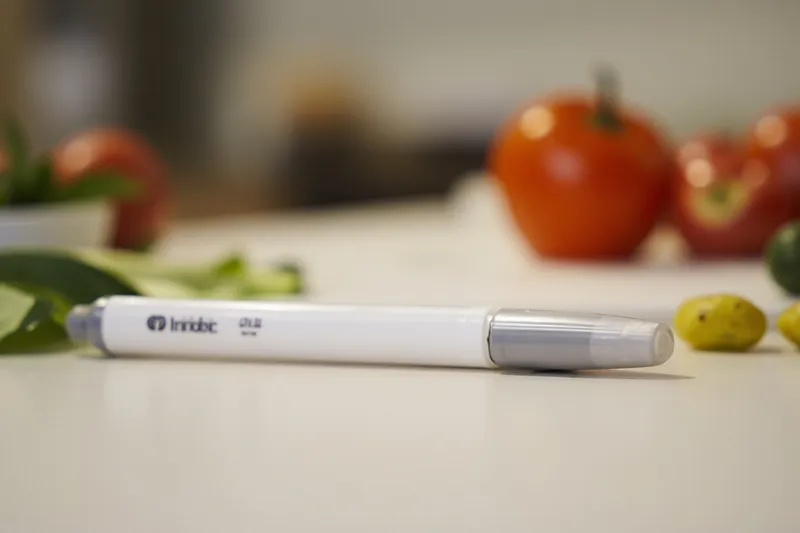
Insulin adjustment means changing the dose, the timing or the type of insulin in response to food, activity and other factors. If your rice bowl shrinks from a large one to a small one, the mealtime insulin has to shrink with it. That is a prescriber's decision based on your readings, not a food-log decision, and a diabetes care plan is built on lifestyle habits, medicines and glucose management together, starting small and working with your health care team.
Four rules I would give anyone starting this.
- Change the bowl and the dose on separate timelines, never in the same week without a written plan.
- Mealtime insulin has to match mealtime carbohydrate, which is why the shape of the plate matters as much as the carbohydrate count.
- Background (basal) insulin changes are a prescriber's call.
- Write down every change for two weeks, so the next adjustment is based on numbers rather than memory.
Do not expect a verdict in two weeks. HbA1c reflects roughly three months of glucose exposure, so the number your clinic uses to judge the plan moves slowly, and glycemic status is usually reassessed about every three months when treatment changes. Type 2 diabetes also progresses over time, so a plan that fitted two years ago may need a look regardless of what you eat.
SGLT2 Inhibitors and Reduced Calorie Intake: The Ketoacidosis Trap
Empagliflozin and dapagliflozin are the SGLT2 inhibitors you are most likely to meet, and their labels carry a warning about ketoacidosis. When FDA reviewed those labels, 73 reported cases of ketoacidosis had risk factors including infection, a low-carbohydrate diet, or an overall reduction of caloric intake. [Medsafe](https://www.medsafe.govt.nz/profs/PUArticles/December2024/Reminder-risk-factors-for-ketoacidosis-with-SGLT-2-inhibitors.html) lists the same two triggers for patients on these drugs: eating less and eating fewer carbohydrates.
| What you do | What is happening | What to do about it |
|---|---|---|
| Cut the rice bowl to a third | Less carbohydrate and fewer calories than your body expects | Tell your prescriber first and get a plan on paper |
| Try 16:8 or 5:2 | Long gaps without food, the same calorie cut underneath | Written instructions for your doses, not a guess |
| Fast before an operation | The label advises stopping the drug several days before surgery | Follow the label and the surgical team |
| Get ill and stop eating | Illness with reduced intake is exactly what the warning describes | Hydration and some carbohydrate matter more than the menu; use sick-day rules |
| Drink heavily on a fast | Alcohol adds to the risk and hides the early signs | Drink only with food, and tell your prescriber |
The same [FDA safety notice](https://www.fda.gov/drugs/drug-safety-and-availability/fda-revises-labels-sglt2-inhibitors-diabetes-include-warnings-about-too-much-acid-blood-and-serious) adds warnings about serious urinary tract infections, genital fungal infections and dehydration, and it tells you to plan to pause the drug for several days before surgery. Those are the complaints people actually get, so raise them with your prescriber rather than waiting.
The reassuring part: a Japanese-style plate is not a ketogenic diet and does not need to become one. The risk comes from sharp cuts and from fasting, not from rice with fish. There are also case reports of euglycemic ketoacidosis in people without type 2 diabetes who were given an SGLT2 inhibitor for heart failure, probably triggered by reduced oral intake.
Check before you start: nausea, vomiting, abdominal pain, deep or rapid breathing and marked tiredness mean urgent care, even if your glucose readings look normal. Euglycemic ketoacidosis happens without the high numbers you would expect, and a doctor who knows you take an SGLT2 inhibitor can act much faster.
Hypoglycemia Risk With Insulin or Sulfonylureas, and Fasting Timing
Some medicines turn a smaller meal into a safety problem. Insulin is the obvious one. Sulfonylureas such as glipizide, gliclazide and glimepiride work by pushing more insulin out of the pancreas, so they can drop your blood sugar when meals get smaller or later than planned. The hypoglycemia risk is the thing to ask about, and it is a question about timing rather than about menus.
Intermittent fasting and medication timing have to be agreed in writing: what happens to your dose on a day you don't eat breakfast at eight? What you carry matters too. Fast-acting carbohydrate, a couple of glucose tablets, a sweet drink if you use one.
- Do not fast on your own if you are on insulin or a sulfonylurea.
- Skip the fast when you cross time zones, when alcohol is in the plan, on a sick day, or on a long drive.
- Skip it if you are under 18, pregnant, or have a current or past diagnosis of an eating disorder.
- During illness, hydration and keeping some carbohydrate in you matter more than the menu; your diabetes service publishes sick-day rules for when to keep taking medicines and when to stop them.
Kidney, Thyroid and Other Conditions That Change the Rules
Tier B and C. The seaweed, soy and natto that look virtuous on a plate become specific numbers for people with kidney disease, thyroid disease or warfarin, and the difference between a healthy staple and a problem is often a lab result.
Chronic Kidney Disease, Protein, and the Labs to Bring
The target for protein in chronic kidney disease comes from the KDIGO 2024 guideline: about 0.8 g per kg of body weight a day in stages G3 to G5, and plant-based protein patterns are acceptable. Higher protein intake is fine for many people and wrong for others, which is why the renal dietitian sets the number rather than the internet.
Ask for three blood test results before you change anything: eGFR for how well your kidneys filter, the urine albumin-to-creatinine ratio for how much protein is leaking through, and HbA1c for how your blood sugar has been running. All three change what a sensible plate looks like.
| Item | What to watch | Swap |
|---|---|---|
| Kombu, wakame, dried seaweed | Very high in potassium and iodine, and brown seaweed accumulates cadmium | A small amount only, and only after checking with the renal dietitian |
| Natto | High potassium, high phosphorus, high protein | A smaller portion, and only if your target allows it |
| Tofu | Moderate potassium, phosphorus depends on how it is set | Firm tofu in smaller portions |
| Edamame | High potassium, high phosphorus, high protein | Half the usual bowl, or green beans instead |
| Spinach and other greens | High potassium and oxalate | Blanch and drain, then use less |
| Banana | High potassium | An apple or a pear |
| Rice | Low potassium, and it is the carbohydrate that matters most | Keep the bowl small and count it |
One label-reading tip matters more here than anywhere: look for "PHOS added" on packaged food. Added phosphate is absorbed far more readily than the phosphorus in plants, so a processed packet can deliver more than a plate of beans does. And notice what this cuisine does to potassium. The biggest offenders are the seaweeds and the soy, not the fish.
Iodine Excess From Kombu, Wakame and Kelp, and Thyroid Medication Timing
Iodine has a narrow window. Too little slows the thyroid, and too much can also push it the wrong way. Kombu, wakame and kelp are the concentrated sources, and the iodine in them varies enormously by species, which is why a weekly portion protects both ends of the range.
Thyroid medication has its own rules. Soya foods such as tofu can interfere with the absorption of levothyroxine, and the NHS advice in the [levothyroxine leaflet](https://www.nhs.uk/medicines/levothyroxine/) is to ask your doctor and keep your soya intake consistent rather than erratic. Calcium and iron have their own spacing rules, so ask your pharmacist for the interval that suits your tablets, and ask for a thyroid function test before and after a large change in seaweed intake.
| Staple | The interaction | What to do |
|---|---|---|
| Kombu, wakame, kelp | Iodine load, which affects thyroid function | About one portion a week, and a thyroid function test after a big change |
| Tofu, soy milk, edamame | Soya can interfere with levothyroxine absorption | Keep soya intake steady, and ask about timing with calcium and iron |
| Natto, miso, dark green vegetables | Vitamin K works against warfarin | Keep the amount steady and tell your clinic in advance, not afterwards |
| Seaweed in general | Brown seaweed accumulates cadmium, and EFSA sets a tolerable intake | Vary the algae rather than eating one kind every day |
Warfarin works the opposite way round. The drug blocks vitamin K, and this table is full of vitamin K foods, from the fermented soybean dishes to dark green vegetables. The medicine answer is not avoidance. Keep the amount steady from week to week, mention the change before your next INR test, and expect it to be checked more often for a while.
Do this today: stability beats perfection. A moderate, steady amount of seaweed every week is far easier to manage than a good month followed by a seaweed binge.
Allergies, Pregnancy, Food Safety and Eating History
Allergens hide in the cupboard more than in the fridge. Soy sauce and tamari contain wheat, soba and udon are wheat noodles, gyoza wrappers are wheat, and dashi and bonito flakes are fish. Soy, gluten and shellfish allergies all need a label check before the sauce goes in the pan. Soy allergy is also far more common in Japan than in most Western countries, which surprises people who have eaten tofu all their lives.
Pregnancy and breastfeeding have their own nutrition requirements: more energy, folate, iron and iodine, and enough of everything else. The plate can deliver all four. The part to watch is fish, where FDA advice is two to three servings a week from its best choices list, salmon, sardines, shrimp, squid, mussels, trout and tilapia, while limiting the large predatory fish such as shark, swordfish, king mackerel, marlin and bigeye tuna. Treat the plan as a conversation with your midwife or obstetric clinician, and use a prenatal dietitian if you want it written down. Our [seaweed and fish guide](/seaweed-fish-omega-3-benefits/) covers the choices.
Food safety has two wrinkles worth knowing. Nobody should eat raw eggs; since December 2020 Japan requires eggs to be pasteurised for anything served raw, and FDA advice is that no one eats raw eggs at all. And cooked rice is the classic one: do not hold it warm and reheat it again later, because of Bacillus cereus. Homemade raw natto carries its own bacteria too, so use a store-bought starter until you know your way around it.
A history of disordered eating or binge eating changes the whole shape of the advice. No calorie targets, no fasting windows, no weekly weigh-ins, and a dietitian-led plan rather than a self-guided one. If you have eaten very little for a long time, refeeding syndrome is a clinical risk and NICE has specific guidance on it in CG32. The same goes for pregnancy, for teenagers and for anyone under 18, who should not be fasting at all.
Getting the Advice: Referrals, Courses and What It Costs
The practical part: who can refer you, what a funded programme actually pays for, and how to find a price before you commit to anything.
Medical Nutrition Therapy Referral and Diabetes Self-Management Education
Public programmes fund clinical services for a diagnosis, not named diets. Medicare in the US covers medical nutrition therapy for diabetes and chronic kidney disease, and diabetes self-management education and support when the course is delivered by a recognised programme. In England, the NHS Type 2 Diabetes Path to Remission is a supervised programme with dietitian support for people who meet its eligibility criteria. The route in both cases is a referral from your GP or clinic.
| Route | Who refers you | What you get |
|---|---|---|
| Registered dietitian, NHS community dietetic service | Your GP | An individual assessment with written targets |
| Medical nutrition therapy, Medicare | A referring provider, then your insurer | Individual therapy for diabetes or chronic kidney disease |
| Diabetes self-management education course | Your doctor, or in some places you | A structured course from an accredited programme |
| Path to Remission, England | Your GP practice | A supervised total diet replacement programme with dietitian support |
| Private or telehealth dietitian | You | You pay, per session or as a package |
Make the referral specific: your diagnoses, your medicines and your goal in one sentence, such as keep rice to one small bowl and add fish or tofu twice a week. A dietitian who knows the goal can work with it, while one who doesn't will start from scratch, which is a slower route to the same plate.
Telehealth Dietitian Sessions, Self-Pay Rates and Insurance Copays
Prices move around, so I would rather point you at where to look than print a number that will be wrong by the time you read this. A clinic's own self-pay price list, your insurer's benefits portal and one phone call give you a real figure in about five minutes, and the figure worth having is the one that covers the whole first visit.
| Type of visit | How the price is usually set | What to ask |
|---|---|---|
| In person, paid yourself | The clinic's own self-pay rate, sometimes on a sliding scale | Is this the full cost of a first session, and does it include follow-up |
| Telehealth, paid yourself | Per session or a package, often cheaper as prepaid blocks | Does the video session include the written plan or only the call |
| Covered by insurance | Your insurer's benefit, either medical or behavioural | Which benefit does nutrition sit under, and what is your copay |
| Fresh blood tests, HbA1c or eGFR | Ordered by the clinic or by your doctor, then billed separately | Who orders them, and are they part of the visit |
Check before you book: the clinic's published self-pay price for an initial session; whether your insurer covers nutrition visits under the medical benefit or a separate behavioural and wellness benefit; whether the clinic bills your insurer directly or hands you a superbill to claim yourself; whether the price is for a package or per session; and whether sliding-scale fees and HSA or FSA payment are available. In the UK, Canada and Australia, published schedules of charges and insurer fee schedules are the reference points rather than a national price.
Who Should Ask a Doctor Before Starting a Japanese Diet?
Tier A: no doctor needed, start with the plate method. Tier B: see a dietitian or a Certified Diabetes Care and Education Specialist first, so your carbohydrate, sodium and protein numbers come from someone who knows your results. Tier C: see a doctor before you change a meal, if you use insulin or an SGLT2 inhibitor, have kidney, thyroid or liver disease, take warfarin, are pregnant or breastfeeding, have a food allergy or an eating-disorder history, or have unexplained weight loss or new symptoms that stay.
Unintentional Weight Loss Over 5% of Body Weight, and Other Warning Signs
Weight loss you did not ask for is the symptom that gets taken seriously fastest, and knowing the thresholds stops you talking yourself out of making the call. The usual definition is a loss of at least 5% of your body weight in the preceding 6 to 12 months, and Mayo Clinic puts it the same way: losing more than 5% of your body weight over that period when you are not trying to lose weight is a reason to see your doctor.
In England, NICE guidance asks clinicians to consider referral on a suspected cancer pathway for adults aged 60 and over with unexplained weight loss of more than 5% of mean weight within six months, followed by an assessment for other symptoms and signs. NHS England's non-specific symptom pathways also cover new unexplained symptoms lasting four weeks or more, or less if the concern is significant: loss of appetite, fatigue, nausea, malaise, bloating and new unexplained abdominal pain with no obvious cause. Wales, Scotland and Northern Ireland run their own schemes.
| Source | Threshold and window | What it means for you |
|---|---|---|
| BMJ Best Practice | At least 5% of usual body weight in 6 to 12 months | The common working definition of unintentional weight loss |
| Mayo Clinic | More than 5% of body weight over 6 to 12 months without trying | A clear reason to see your doctor |
| NICE NG12, England | Aged 60 and over, more than 5% of mean weight within 6 months, unexplained | A clinician considers referral on a suspected cancer pathway |
| NHS England non-specific pathways | New unexplained weight loss, and constitutional symptoms from 4 weeks | Your GP can act on the whole symptom cluster |
Report the cluster in one sentence rather than one symptom at a time: appetite, fatigue, nausea, bloating, abdominal pain and weight. And treat these as thresholds for a clinician, not as a home test. Not reaching 5% does not make a new symptom fine.
Who Needs Clearance, Who Doesn't, and How to Start Anyway
| Your situation | Tier | What to do first |
|---|---|---|
| Healthy adult, no regular medicines | A | Plate method: smaller rice bowl, fish or tofu twice a week, sauce on the side |
| Type 2 diabetes on insulin | B and C | Clearance first, with written carbohydrate numbers and a dose plan |
| Empagliflozin or dapagliflozin, or any sharp calorie cut | C | A prescriber's plan before the first change |
| Chronic kidney disease or albuminuria | B | Renal dietitian, with eGFR, urine albumin-to-creatinine ratio and HbA1c |
| Thyroid disease on levothyroxine, or warfarin | B and C | Medication timing and a steady intake before you change anything |
| Soy, gluten or shellfish allergy, pregnancy or breastfeeding | B and C | Allergen map, plus an obstetric clinician or prenatal dietitian |
| Over 60 with unexplained weight loss, or any eating-disorder history | C | Doctor first, then a dietitian-led plan |
| Shift work or long gaps between meals | A or B | Set your meal times before you set your menu |
No appointment is needed for the starting moves: swap in the smaller rice bowl, put fish or tofu on the menu twice a week, and keep the sauce in a dish on the side. For a Tier A reader that is the entire start, and it costs nothing to try.
My own view, for what it's worth. If you are Tier A, swap tonight's rice bowl and leave the rest alone. If you are Tier B, book the dietitian and bring the four items from the clearance section, because you will leave with numbers you can cook to, which is worth more than another article. If you are Tier C, book the doctor, since in this particular corner the worst outcomes come from the days you suddenly eat much less than usual while the medicine has not changed.