
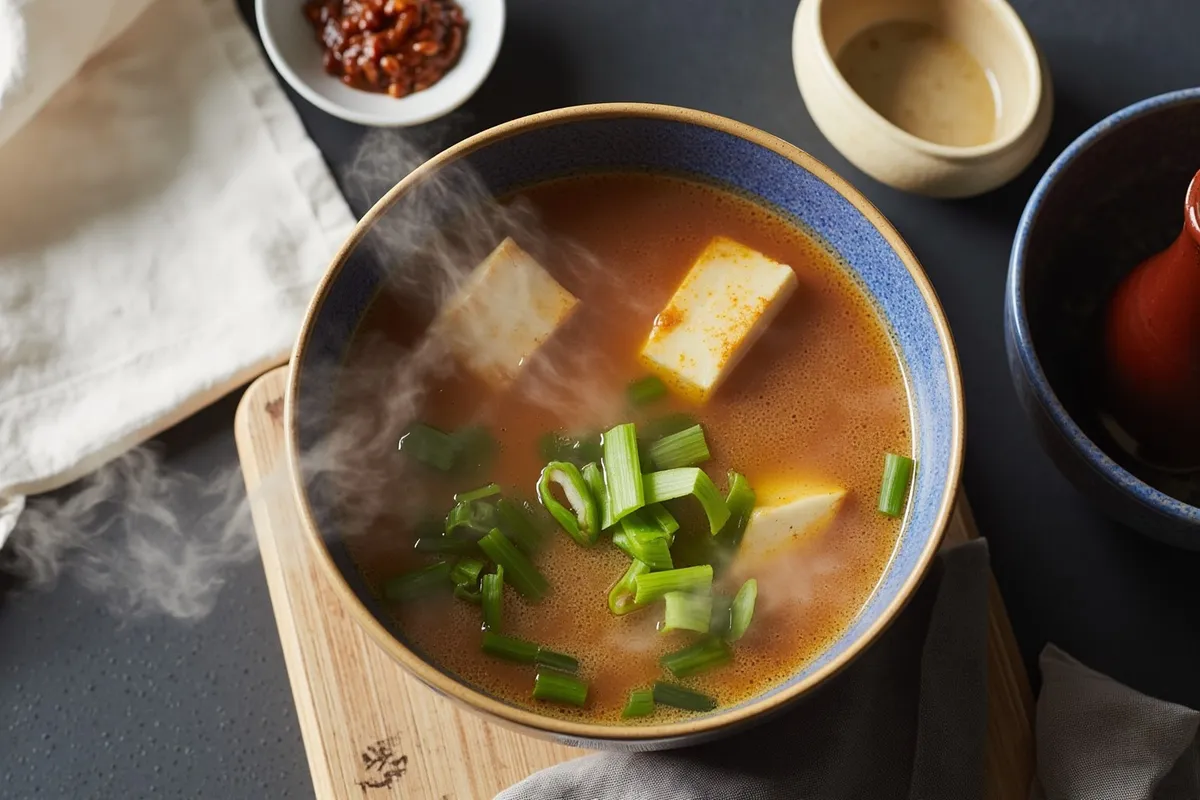
Rice, an egg, a packet of dashi and a jar of miso cover most of what I cook at home, and every one of them sits on an ordinary supermarket shelf. My grandmother in Yokohama cooked the same four things every day, and when that table was gone I rebuilt it in Manchester out of a bag of short-grain rice and a food journal. These are the easy Japanese recipes for beginners that came out of that project: dishes for one person, cooked in a single pan, from ingredients you can carry home in two hands.
Here, easy means something specific: 30 minutes of actual cooking, ten ingredients or fewer, one frying pan with a lid and one small saucepan, no wok and no raw fish. Read the pantry list first, cook a batch of rice, then work through the 20-minute dinners, the soup and vegetables, the Sunday cooking and the shopping notes. The rules about storing rice live in the rice section, because that is the one place they really matter.
Easy Japanese Recipes for Beginners: The Pantry That Carries the Week
The nine-item pantry: what each one does and where it fails
Nine items keep me going for a week of Japanese cooking without a specialist shop: soy sauce, rice vinegar, mirin, miso, a packet of dashi, kombu, dried shiitake or bonito flakes, furikake or gomashio, and sesame seeds. Four of them, the soy sauce, the vinegar, the mirin and the dashi packet, sit in the international aisle of any large supermarket. The rest are small additions to the same basket.
Each one has a job, and each one has a point where it stops working. That last column is the one I read first, because most disappointing bowls of rice I have made at home came down to an ingredient behaving differently than I assumed.
| Item | What it does | What replaces it | Where it breaks | Buy |
|---|---|---|---|---|
| Soy sauce (shoyu) | Salt and umami, the base of nearly every sauce | Tamari if you need it wheat-free | It is not a mild seasoning: one tablespoon carries most of a day's sodium | Once a month |
| Rice vinegar | Acidity in dressings, in fried rice, in marinades | Cider vinegar; wine vinegar is harsher | Wine vinegar is twice as sharp and will bully a dressing | Once a month |
| Mirin (hon mirin) | Sweetness that rounds off a salty sauce | 1 tsp sugar plus 1 tsp rice vinegar | Chinese rice wine is saltier and less sweet, and cooking wine is worse again | Once a month |
| Miso (white or red) | Fermented depth in soup, in sauces, in marinades | Nothing worth the effort; use more kombu | Hard boiling flattens the aroma you paid for | Once a month |
| Kombu, dried shiitake, bonito flakes | Three ways to build dashi yourself | A packet of dashi | Bonito is fish, and kombu alone gives a thinner broth | Once a month |
| Furikake, gomashio, sesame seeds | Seasoning for plain rice and vegetables | Salt, plus toasted sesame | Furikake is often mostly sugar and salt, so a heavy hand turns it sweet | Weekly |
Mirin is the item people leave off, and I would leave it off too for a while. It is sweet and faintly alcoholic, and a teaspoon of sugar with a teaspoon of rice vinegar stands in for it whenever the pan is already busy. Tamari is the version of soy sauce without wheat, but it still carries soy, which is the allergy most people actually have.
What I put on the shelf the first time:
- a bottle each of soy sauce, rice vinegar and mirin
- a small jar of miso, a packet of dashi and a bag of short-grain rice
- a strip of kombu, a small bag of dried shiitake or bonito flakes
- furikake or gomashio, plus sesame seeds for the vegetable dishes
Equipment: what you can skip and what one saucepan covers
The kit list is short because the recipes are built short. One frying pan with a lid, one small saucepan with a lid, a mixing bowl, a spatula, a knife and chopsticks or a fork. That covers every dish in this article, including the one-pan dinners and the batch cooking.
What you can skip without changing the food: a wok, a rice cooker, a bamboo mat, a donburi bowl, a steamer basket and a proper Japanese knife. I own none of those except the chopsticks, and my rice still comes out right.
| If you have | Use instead | What changes in the recipe |
|---|---|---|
| A frying pan with a lid | Any pan and a plate as a lid | Add a minute for the steam to escape before you lift it |
| A small saucepan for rice and soup | The frying pan, used after the noodles are done | Cook the rice first, then wash the pan |
| A mixing bowl | Any bowl, or a pan turned upside down | Nothing changes |
| Long chopsticks | A fork, a wooden spoon, tongs | A fork shapes onigiri, a spoon pours the sauce |
The one-pan logic is simple: the sauce goes into the pan first, the noodles go on top, the lid comes down, and steam finishes the job. A bowl takes the place of a donburi, and cling film over a flat surface does what a bamboo mat does when you are shaping rice. Nothing on the skip list touches the flavour, only the look on the plate.
One trip, in aisle order
I do one shopping trip and walk it in aisle order, because I have watched myself forget the miso three times and then pay for it on the next visit. This list is sized for two portions.
| Once a month | Amount | Where to look | If it is not there |
|---|---|---|---|
| Short-grain rice | 150 g dry | World food aisle | Long-grain rice works but the grains stay separate |
| Soy sauce | 1 bottle | International aisle | Tamari or a light soy from the same aisle |
| Rice vinegar | 1 bottle | International aisle | Cider vinegar; wine vinegar is sharper |
| Mirin | 1 bottle | International aisle | Rice wine plus a teaspoon of sugar |
| Miso | 1 small jar | International aisle | None: use dashi with more soy |
| Dashi packets | 2 | International aisle | A kombu strip and 30 minutes |
| Every week | Amount | Where to look | If it is not there |
|---|---|---|---|
| Eggs | 4 | Dairy aisle | Nothing substitutes |
| Firm tofu | 1 block | Chilled aisle | Silken for soup only |
| Spring onions | 1 bunch | Produce | A leek or a couple of shallots |
| Carrots, daikon or cucumber | 2 to 3 pieces | Produce | A bag of frozen vegetables |
| Mushrooms | 200 g | Produce | Chestnut or button mushrooms, same aisle |
| Frozen edamame | 1 bag | Frozen | Fresh edamame in the warm months |
Grab a pack of soba, udon or yakisoba while you are in the same aisle, and you have everything for the week. When two bottles of the same sauce are in front of you, divide the shelf price by the grams and multiply by 100 to get the price per 100 g, or the price per 100 ml for a bottle. Ten seconds of arithmetic settles the argument. A bigger bottle is not automatically better value if the sauce will sit in the cupboard until next year, and a sale price is temporary, so plan around the usual price.
For the things I buy every week I reach for glass or paper over plastic where the shelf allows it. That is the easiest version of plastic-free shopping I manage, and the soy sauce tastes better for it.
Gohan and Eggs: Rice, Onigiri and Tamagoyaki as the Everyday Base
Short-grain rice without a rice cooker, and the 24-hour rule
Rice is where beginners lose confidence, mostly because nobody tells them how small a bowl is. In Japanese this is gohan, and it sits in the middle of the table rather than beside the food. A standard bowl of cooked short-grain rice is roughly 150 to 200 g, and a 150 g bowl comes to about 195 kcal, or 130 kcal per 100 g, which matches the USDA FoodData Central entry for cooked short-grain rice. The huge bowls sold with takeaway curry are a different serving.
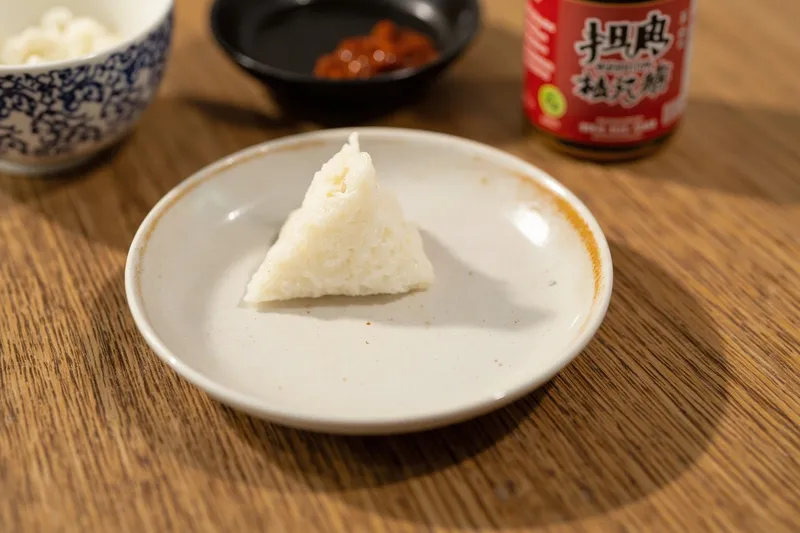
My method needs no rice cooker. Rinse until the water runs almost clear, put the rice in a small saucepan with a tight lid, add the water, bring it to the boil, drop the heat and let it cook. Then the heat goes off, the lid stays on, and you wait ten minutes before you lift it and fluff the rice with a chopstick or a fork.
| Portions | Dry rice | Water | Simmer, lid on | Rest, lid on |
|---|---|---|---|---|
| 1 person | 75 g | 90 ml | 10 min | 10 min |
| 2 people | 150 g | 180 ml | 12 min | 10 min |
| 3 people | 225 g | 270 ml | 12 min | 10 min |
| 4 people | 300 g | 360 ml | 12 min | 10 min |
Rinsing improves the texture. It does not make spoiled rice safe, and it is not a step I would trade for the rules below. If your rice cooker has a keep-warm setting that runs for hours, treat that pot as sitting at room temperature. Cooked rice is a food safety question before it is a texture question.
Cooked rice: cool it within an hour, spread it into small portions, keep it in the fridge for no more than 24 hours, and freeze it within the hour if you will not eat it that day. Reheat it once only, until it is steaming hot all the way through, and eat it straight away. Uncooked rice can carry Bacillus cereus spores that survive cooking, so the longer cooked rice sits at room temperature, the worse it gets. The detail is in the UK Home Food Fact Checker.
Onigiri for the road: three shapes, no mat, no specialist kit
An onigiri is cold rice with a filling and a sheet of nori, and it is the easiest packed lunch I know. Plain nori is thin: a sheet weighs about 2.5 to 3 g and around 10 to 12 kcal, and the dried seaweed itself works out at roughly 300 kcal per 100 g. Seasoned or fried seaweed is a different product with its own number on the label, and it is not what you want wrapped around warm rice.
Three shapes, and no mat needed. Press the rice into a small bowl with your fingertips, wrap a triangle in cling film and turn it out, or use the lid of a tub as a mould. Nori goes around the rice and never the other way round, otherwise it goes soft and tears where the fold is.
| Filling | Preparation | Keeps in the fridge |
|---|---|---|
| Tuna and mayonnaise | Tinned tuna, drained, mixed with a spoon of mayo | 1 day |
| Umeboshi or arare | A salted pickled plum, or a few rice crackers broken in | A few weeks after opening |
| Cucumber and sesame | Grated cucumber, squeezed dry, salted, sesame on top | 1 day |
| Seasoned tofu or chopped egg | Small cubes of tofu with soy, or a hard-boiled egg, chopped | 2 days |
The rule for a packed onigiri is coldness. Rice that sits at room temperature for hours is the risk, not the nori, so keep it in a cool bag with a pack of ice and follow the rice rules above.
Tamagoyaki in a frying pan, rolled by hand
Tamagoyaki is a rolled omelette, and the roll matters more than the seasoning. Aimed at the soft, slightly undercooked texture of washoku breakfasts, it should be pale outside and barely set in the middle. Brown patches mean you started too hot.
Two eggs, one frying pan of 18 to 20 cm, no butter and no oil. Just a wiped pan and a folded piece of kitchen paper for the handle.
| Stage | What you should see | Time |
|---|---|---|
| Beat | Bubbles on top, colour even, no streaks of white | 30 sec |
| First layer | Setting at the edges, still glossy in the middle | 40 sec |
| Turn and roll | A pale yellow sheet, no brown patches | 20 to 30 sec per turn |
| Finish | Visible layers, soft and slightly damp inside | 1 min |
Four mistakes I still see in other people's kitchens:
- starting on high heat, so the first layer browns before it sets
- too much filling, which splits the roll open at the seam
- trying to flip the whole thing like an omelette instead of rolling it in thin layers
- greasing the pan with oil, so the egg slides and the roll loses its shape
The fix: medium-low heat, let each layer set before you move it, roll with a chopstick or a toothpick rather than a spatula, and keep an empty tin can standing next to you so you can drop the roll in and let it settle into a cylinder. The goal is a loose roll with visible layers, not a firm omelette.
Simple Japanese Recipes for a 20-Minute Dinner: Noodles, Egg and Sauce
Yakisoba, soba and udon in the same pan, in 20 minutes with rice already cooked
Twenty minutes works when the rice is already cooked and the sauce is already in the pan. The rule I cook by: sauce first, noodles on top, lid on, and everything finishes together in the same pan. One pan, one pair of chopsticks, no draining and no second pot to wash.
| Noodle | Per pack | Boiling | Sauce per 100 g |
|---|---|---|---|
| Yakisoba with sauce packet | 180 to 200 g | 3 to 4 min | The packet sauce plus a quarter cup of water |
| Soba | 80 to 100 g | 4 min | 1 to 2 tbsp mentsuyu, keep it drier |
| Udon, frozen | 180 to 200 g | 2 to 3 min | 1 to 2 tbsp, loosen with a splash of water |
| Instant ramen | 85 to 100 g | 3 min | The seasoning sachet, and leave the oil sachet alone |
The sauce question is easy once you separate the two kinds of pack. A packet of yakisoba sauce is already seasoned, so it goes in with a little water and the noodles. Plain soba and udon need you to build the sauce: two tablespoons of mentsuyu, or soy sauce with mirin and dashi, for every 100 g of noodles.
Five packets that do the job on a weeknight: yakisoba with its sauce sachet, plain soba, frozen udon, instant ramen used with its own seasoning sachet, and fresh noodles if your supermarket stocks them. All of them work in the same pan with the same method.
If the rice is not cooked yet, the dish still lands inside twenty minutes, because it has no sides to wait for. And when the clock is running, do not fry the noodles in oil until they crisp: the sauce and a lid do the same job in less time.
Oyakodon: egg over rice, one pot
Oyakodon is chicken and egg over rice, and it is what I make when nothing is organised. The name means parent and child, which is the egg sitting on top of the rice.
| Version | What changes | Time |
|---|---|---|
| Egg only | Soft-set egg over plain rice | 2 min |
| Egg and onion | Onion softened in a little oil, then the egg stirred in | 8 min |
| Leftover chicken | Shredded cold chicken, soy and mirin, egg off the heat | 10 min |
| Egg and greens | A handful of spinach or komatsuna dropped in at the end | 5 min |
The order in one pot:
- Cook the rice in the saucepan, then push it to one side of the pan
- Add a splash of oil to the empty side and soften onion and any chicken
- Add soy, mirin and a little water, and let it bubble until it looks like a thin glaze
- Stir the sauce through the rice, then slide a soft egg on top off the heat
The topping ratio decides whether the bowl is soupy or dry: about one egg for every 150 to 200 g of cooked rice. For leftovers, only use rice that was cooled within an hour and kept in the fridge for no more than a day, following the rice rules in the first section. The egg goes on top and is never fried brown, and that is the whole difference between oyakodon and a fried egg on rice.
Mentsuyu and ponzu: two sauces that fix an average dinner
Two bottles solve most of my midweek dinners. Mentsuyu is a ready sweet soy sauce, usually built from soy, mirin and dashi, and it is the fastest route to a bowl of noodles with real flavour. Ponzu is soy, rice vinegar and citrus, sharper and lighter, good over vegetables or a hot pot.
| Sauce | Base | Keeps once opened | Saltiness |
|---|---|---|---|
| Mentsuyu, bought | Soy, mirin, dashi | Months in the fridge | Check the sodium per 100 ml on the label |
| Ponzu, bought | Soy, rice vinegar, citrus | Months in the fridge | Sharp and sour, the citrus softens it |
| Soy sauce | Fermented wheat and soy | Months in the fridge | One tablespoon is around 880 mg of sodium |
| Sauce you make yourself | Soy, mirin, sugar, water | About a week, dated on the bottle | You control the salt, so taste it weekly |
One tablespoon of soy sauce is about 16 g, and it carries roughly 880 mg of sodium, close to 38% of the daily value of 2,300 mg. The FDA has proposed lowering that daily value to 1,500 mg, so if you are counting, treat 2,300 mg as the generous end of the range. The salt-to-sodium arithmetic sits in the label section below.
Rescuing a sauce: if mentsuyu tastes too salty, take it off the heat and add cold water a teaspoon at a time with a splash of rice vinegar until it tastes round. If ponzu is too sweet, add vinegar and a pinch of salt. Both work poured over plain rice as ochazuke, which is the quickest way to finish a half-used bottle.
Gochujang, the red chilli paste that comes from Korea rather than Japan, is worth a try from the same shelf: thin it with vinegar for a dipping sauce, or use it in place of shichimi in a chicken marinade. It is sweet as well as hot, so use half what you think. Awamori, meanwhile, is stronger and drier than mirin, and I keep it for marinades rather than for sauces.
Mirin and cooking alcohol sit at around 13 to 15% alcohol, and that does not boil away completely in a short pan. Never pour them over a naked flame, and never let an alcohol sauce reach a rolling boil. I keep the hob low and add the alcohol last.
Miso Soup and Vegetables: Japanese Recipes Without Specialist Equipment
Dashi three ways: packet, kombu, bonito
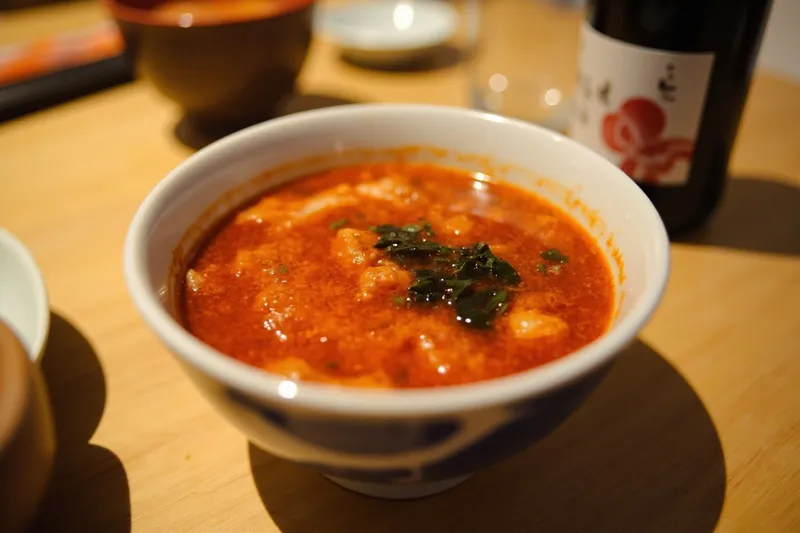
Every miso soup starts with dashi, and dashi is the easiest thing to ruin by trying too hard. There are three routes, and they cost different amounts of your Sunday.
| Type | Time | Strength | Good for |
|---|---|---|---|
| Packet dashi | 2 to 3 min | Medium and clean | The weeknight miso soup |
| Kombu | 30 to 60 min cold steep | Light and delicate | Clear soups and vegetable dishes |
| Dried shiitake | 30 min cold soak | Round and earthy | Vegetarian broth and noodle bowls |
| Kombu plus bonito flakes | 10 min | Full and savoury | When you want it to taste like a restaurant |
The packet version is the seven-minute soup: dashi powder in hot water, then miso stirred in off the heat, then whatever is left in the fridge, tofu or spring onion, added at the very end. Miso does not get boiled. Hard boiling flattens the aroma and wastes the reason you opened the jar.
Kombu is the one to plan ahead. A strip of about 10 g goes into a litre of cold water and sits for 30 to 60 minutes, then you lift the kelp out and the liquid is your broth. Bring it to the edge of a simmer at most, because boiled hard kombu turns bitter and slimy, and it does the same to the broth. The same strip gives a second, weaker steep, and I then drop it into a jug of cold water for a quick broth or for bancha tea.
Bonito flakes are the third route: a small pinch into hot water for ten seconds, then fish the flakes out with a sieve or a spoon. That broth tastes like a restaurant and it is not worth much more than the packet on a weeknight. Vegetarians use kombu or dried shiitake instead, because bonito is fish, and there is more on that in the vegetarian section.
Homemade dashi keeps two days in the fridge and then it goes. If you want a detailed version of the soup itself, my homemade miso soup recipe walks through the same method with the timings written out.
Sunomono, goma-ae and kinpira gohei: turning the vegetable bag
The vegetable bag from the supermarket is the cheapest part of a Japanese meal, and it mostly needs a dressing and ten minutes of your attention. Two dressings cover almost everything. Sunomono is the vinegar-dressed bowl, kinpira gohei is the simmered one, and tsukemono is the pickled one on the side.
| Dressing | Ratio | Substitute |
|---|---|---|
| Vinegar dressing | Rice vinegar and soy sauce 1:1, plus a splash of water and a small spoon of sugar | Leave out the soy and add more vinegar when you are cutting salt |
| Goma-ae dressing | Sesame paste and warm water 1:2, then soy, a little sugar and grated ginger | Toasted sesame seeds with a spoon of soy if there is no paste |
What each vegetable needs:
- daikon: grate, squeeze, salt, and dress at the last minute so it stays crisp
- cucumber: slice thin, salt it, drain for ten minutes, then dress
- shimeji and enoki: trim the base, then sauté or boil for two minutes
- edamame: boil three minutes, salt, and serve as a small dish
- spinach or komatsuna: blanch for thirty seconds, squeeze the water out
In the warm months cucumber and tomato do the work of daikon; in the cold months it is daikon, cabbage and mushrooms. Goma-ae keeps a day in the fridge, and a vinegar dressing keeps two or three. The no-soy version is worth trying if salt is the thing you are cutting back on, and my low-sodium Japanese meal plan goes further down that road.
Firm tofu, silken tofu and natto: three protein swaps
Tofu is the quickest way to add protein without planning ahead. Firm tofu is about 76 kcal and 8 g of protein per 100 g, silken is about 55 kcal and 6 g, and edamame comes in at roughly 121 kcal and 12 g per 100 g. The figures come from the USDA FoodData Central entries for tofu, which is where I look when the tub tells me nothing.
| Product | Texture | How to cook | Where it works here |
|---|---|---|---|
| Firm tofu | Holds its shape | Fry, simmer, grill | Karaage, teriyaki, kinpira gohei, oyakodon |
| Silken tofu | Soft, set with starch | Never fry; simmer or add hot | Miso soup, oyakodon, a soft topping on rice |
| Natto | Sticky fermented soy beans | Eat cold, stirred with soy | A breakfast rather than a cooking project |
| Edamame | Beans in a fuzzy pod | Boil three minutes | A small dish, or a topping for plain rice |
Tofu turns up in five of the dishes here. Two habits: firm tofu pressed for ten minutes under a plate fries better, and silken tofu left in a hot pan turns into soup with a spoon in it. Nori and kombu bring iodine into the week, which most diets miss, and my seaweed and fish article covers how much of that is sensible.
Natto deserves a note because it puts people off for the wrong reason. Buy the smallest pack, eat it cold on the day you opened it, stir through soy sauce, a little grated ginger and a chopped spring onion, and keep it in its own sealed box at the bottom of the fridge. The smell is strong for ten minutes and then it is simply another breakfast.
Raw fish sushi at home is a separate project with its own rules, and I would not start there. The freezing and storage numbers are in the raw fish section below.
Batch Cooking: Four Lunches from One Sunday Session
Kinpira gohei and karaage: one session, four lunches
Sunday is cooking day. Forty minutes of active work gets me four lunches, and the two dishes are kinpira gohei, simmered vegetables in a sweet soy sauce, and karaage, chicken in a light crumb.
| Dish | Active | Passive | Keeps | Reheating |
|---|---|---|---|---|
| Kinpira gohei | 10 min | 25 min simmering | 2 days in my fridge | Fine in a pan or a microwave |
| Karaage | 15 min | 10 min frying | 2 days in my fridge | Hot oven, 10 min; the microwave softens the crumb |
| For 4 portions | Amount |
|---|---|
| Chicken thighs | 600 g |
| Panko breadcrumbs | 150 g |
| Eggs for the batter | 2 |
| Carrot or burdock | 300 g |
| Onion | 1 |
| Soy and mirin for the sauce | 4 tbsp and 3 tbsp, with 1 tbsp sugar |
The schedule runs in parallel. While the karaage sits in the fridge for twenty minutes, the kinpira gohei simmers; when that goes into the pan, the chicken goes into the hot oil; while the chicken fries, the rice for the week goes on the back burner of the same hob.
Two things ruin a batch of karaage. Fry in small batches, because crowded oil cools down and the crumb goes pale and greasy. And store the crumbed chicken in a container that is not sealed tight, or the crust is soft by Tuesday. Panko is lighter and crunchier than ordinary breadcrumbs, and it drinks less oil, so it is the version I buy.
Reheat in a hot oven if you have one, ten minutes at high heat on a rack above the tray, and skip the microwave if you can. The microwave softens the crumb and leaves the meat steaming in its own juice. I keep fried food two days in the fridge and reheat it once, until it is hot all the way through, which is the same rule I use for any leftovers.
Teriyaki, and a week's sauce in one bottle
A sauce you make yourself is worth a bottle in the fridge, because one batch covers a week: a spoon over rice as ochazuke, a marinade, a dressing for vegetables, and a spoonful stirred into ponzu.
| Target | Soy | Mirin | Sugar | Water |
|---|---|---|---|---|
| Teriyaki glaze | 4 tbsp | 4 tbsp | 2 tbsp | 2 tbsp |
| Noodle sauce | 3 tbsp | 3 tbsp | 1 tsp | 200 ml |
| Ochazuke mix | 2 tbsp | 2 tbsp | 1 tbsp | None |
| Quick ponzu | 2 tbsp | None | 1 tsp | 2 tbsp rice vinegar |
The anchor for all four rows is 1 tablespoon, 15 ml. That is the measure you scoop with, so the ratios stay honest without scales.
Mirin is optional in every row of that table, and sugar with a splash of rice vinegar does the same work. Awamori is the stronger, drier alternative, and I keep it for marinades. The back of my mirin bottle carries a marinade printed on it, two tablespoons of soy to two tablespoons of mirin with two chicken thighs for ten minutes before a pan, and I would follow it exactly as written.
Dilute, never boil. If a sauce tastes too strong, take it off the heat and add cold water a teaspoon at a time, stirring between each pour. Boiling concentrates the salt and makes it stick, and mirin and awamori carry a flame risk, so keep the pan off the hob while you adjust it.
Homemade sauce keeps about a week in the fridge, so write the date on the bottle with a marker. Bought mirin and miso keep for months after opening, mirin because of the alcohol and sugar, miso because it is fermented. Miso darkens and loses its edge over time, and mirin simply gets used up. Pour your sauce from a suitsuke or any narrow-spouted bottle so you control the amount.
One rice, one main, one side: the plate for a single person
This is the plate rule from my grandmother's table, and it is a rule of thumb rather than a menu. One bowl of rice, one main, one small salty dish, and the balance does the rest.
| For | Rice | Main | Small salty side |
|---|---|---|---|
| 1 person | 1 bowl, 150 to 200 g | A palm-sized fish, a block of tofu, or two eggs | A spoon of tsukemono or one small vegetable dish |
| 2 people | 2 bowls | Two palm-sized portions | Two small dishes |
| 4 people | 4 bowls | Four portions | Two dishes plus pickles |
What counts as what:
- main: fish, tofu, egg, chicken, a bowl of simmered vegetables
- side: a dressed salad, blanched greens, grilled vegetables
- small salty dish: tsukemono, sunomono, or a little kinpira gohei
It is the same shape as the washoku plate, and it works well with hara hachi bu, since the small dishes fill you before the rice does. Families and regions arrange it differently, so treat this as a balance guide rather than a list of rules.
Shopping Japanese Food at the Supermarket: Labels, Allergens and Substitutes
Reading a Japanese label: salt, sodium and allergens
Japanese packs label salt the British way and Japanese shops in America label sodium the American way, and the two numbers confuse everyone. The rule I keep on the fridge door: UK and EU packs print salt per 100 g, US packs print sodium, and 1 g of salt is about 0.4 g of sodium, which makes 2,300 mg of sodium about 5.75 g of salt. My own reference for the rice portion is in the rice and portion size article.
| Line on the pack | What it tells you | What I do with it |
|---|---|---|
| Salt per 100 g | The salt in 100 g of the product | Multiply by 0.4 for the sodium, or read the per-serving figure |
| Sodium per 100 ml | Sodium in 100 ml of liquid, common on dashi and sauces | Multiply by 2.5 to get salt |
| Percentage of daily value | Your share of the daily allowance | 2,300 mg of sodium is the current daily value, and the FDA has proposed 1,500 mg |
| Sugar per 100 g | How sweet the product is | Furikake is often mostly sugar and salt |
| May contain | Possible cross-contamination | Worth reading if you have a serious allergy |
| What you see | What it means |
|---|---|
| 1 g of salt | About 0.4 g of sodium |
| 2,300 mg of sodium | About 5.75 g of salt, the current daily value |
| 1 tbsp of soy sauce, about 16 g | Around 880 mg of sodium, about 38% of the daily value |
The allergens to watch in this kitchen are soy, sesame, wheat, fish, mustard and peanut. Wheat arrives as koji in the soy sauce, in many dashi packets and in mirin. Fish arrives with bonito flakes, while kombu is kelp rather than fish. Tamari is the gluten-free tamari option, wheat-free but still full of soy, so a soy allergy rules it out as well. On a menu, shio simply means salted rather than sauced.
One warning about soy sauce: a soft, mild taste does not mean a low-sodium product. Read the sodium per 100 ml on the bottle, not the reassuring words on the front label.
Vegetarian, pescatarian, and the raw-fish question
Cooking this list as a vegetarian or pescatarian is mostly a question of which dashi you use, not of changing the technique. The table shows what to swap.
| Dish | The usual version | The swap that keeps the technique |
|---|---|---|
| Miso soup | Dashi with bonito | Kombu or dried shiitake dashi |
| Oyakodon | Chicken and egg | Firm tofu or extra mushrooms in the same simmering sauce |
| Teriyaki | Chicken thighs | Firm tofu or aubergine, pressed and fried first |
| Yakisoba | Packet sauce with bonito | Soba with vegetables and a sauce you make yourself |
| Noodle bowl | Pork or chicken broth | Kombu and shiitake broth |
| Onigiri | Tinned tuna | Umeboshi, cucumber with sesame, or seasoned tofu |
Raw fish is the part I would skip at home, and the reasons are cold rather than romantic. US rules in the FDA Food Code ask for minus 20 °C or below for seven days before fish is served raw, and in the EU and UK the standard is minus 20 °C for at least 24 hours. A home fridge sits around 4 °C, and a home freezer hovers near minus 18 °C, which may never reach the minus 20 °C you need. Anyone who is pregnant, elderly, young or immunocompromised should not eat raw fish at all. Buy it from a shop that has already handled the temperature, or skip it, as the vegetarian swaps above do.
For pescatarians the fish advice is easy: tinned tuna, tinned salmon, and kombu for iodine. That is also where seaweed earns its place, and the amount worth eating is covered in my seaweed and fish article.
Mainstream aisles first: what still needs a specialist shop
Most of what this article needs sits on a normal shelf, in the world food or international aisle. Here is where the gaps are, and what I do instead.
| Item | On a normal shelf? | If it is not there |
|---|---|---|
| Dashi packet | Usually yes | Use kombu, or a quick soy and mirin broth |
| Kombu for dashi | Sometimes | Plain dried kelp from the supermarket works, but check for added salt |
| Dried shiitake | Sometimes | Fresh shiitake from the produce aisle gives a lighter broth |
| Mirin | Usually yes | Rice wine with a teaspoon of sugar |
| Miso | Usually yes | Dashi with more soy and a little sugar |
| Plain nori sheets | Usually yes | Plain roasted seaweed, or leave the nori off |
My rule for a specialist order: if the item needs cold storage, absolute freshness or a specific animal, natto, fresh wasabi, sashimi fish, then it belongs to a specialist shop. Bottles and packets on a shelf do not. Ordering a set for one packet of dashi is money spent for a single meal, so wait until you have the recipe that uses it.
Assortments move week to week, so check the shelf in your own supermarket before you plan a trip. The examples here are from British shops, and the same method works anywhere: price the same basket in your own market, divide by the grams, multiply by 100, and compare the two sizes side by side.
The Order to Cook: What to Make First and What to Leave Alone
The order to cook them in
There is no point cooking all of this in one weekend. The order below is the one that works, because each dish teaches you something the next one uses.
| Day | Dish | From chopping to plate | The night before |
|---|---|---|---|
| 1 | Tamagoyaki over rice | 15 min | Cook a pot of rice, cool it, refrigerate within the hour |
| 2 | Miso soup from a packet, with rice | 8 min | Rice in the fridge |
| 3 | Onigiri for lunch | 15 min | Cook rice, cool and portion it |
| 4 | Yakisoba | 20 min | Rice for the evening, or skip it |
| Day | Dish | From chopping to plate | The night before |
|---|---|---|---|
| 5 | Oyakodon | 20 min | Cook rice and cool it within the hour |
| 6 | Kinpira gohei and karaage, batch cooked | 40 min of work for four lunches | Nothing, this is the Sunday session |
| 7 | Teriyaki from your own bottle of sauce | 25 min | Mix the sauce and date the bottle |
The first two weeks are simpler than that table. Week one: tamagoyaki over rice, packet miso soup, onigiri. Week two: yakisoba, oyakodon, and one batch of kinpira gohei with karaage. If you cook nothing else from this article, cook those, and keep every rice rule in the rice section.
Tonight, if you want a single thing to start with: make tamagoyaki over rice, or put a packet of dashi on with miso and a bowl of rice beside it. Both take less than half an hour, and both teach you the rhythm the rest of the cooking depends on.
What to leave on the shelf, and what to buy when you cook it
Some Japanese cooking gear looks essential and is not. I keep a list of things I do not buy, and a shorter list of things I buy only when a recipe calls for them.
| Item | Why it seems necessary | Verdict in the first month |
|---|---|---|
| Sake | Every recipe seems to need it | Skip it; alcohol cooks off badly in a small pan |
| A home sushi set | Mats, rice vinegar, plastic moulds | Cling film and a tub lid do the same job |
| Special tableware | Donburi bowls and chopsticks | Any bowl, any fork |
| A pressure cooker | Speed | Not needed; the batch cooking uses one saucepan |
| Item | Why it seems necessary | Buy it when |
|---|---|---|
| Natto | It is on every list of Japanese foods | You want a fermented bean breakfast and you are ready for the smell |
| Dried shiitake | It is in every dashi recipe | You cook more than twice a week and want a deeper broth |
| Fresh wasabi | It is what sushi looks like | A sushi night; the green paste is horseradish, and grating the root at home is a project |
| Sashimi fish | Sushi at home | A shop that has already frozen it to the right temperature |
Three things this article leaves out on purpose. Restaurant curry is a roux and a long simmer, a different job. Home sushi with raw fish has temperature rules and a very short shelf life. Tempura needs a second pot of oil and a splatterproof pan, and cleaning it is no fun at all. Leave them for later, and only take them on when you have the equipment and the time.
Questions people ask before they start
What is the easiest Japanese dish for a beginner, and how long does it take?
Miso soup from a dashi packet with rice beside it takes about eight minutes once the rice is cooked. Start there, because it teaches you the dashi, miso and rice rhythm that every other dish in here builds on.
What can I buy in an ordinary supermarket, and what needs a specialist shop?
Soy sauce, rice vinegar, mirin, miso, dashi packets, tofu, nori and noodles are usually on a mainstream shelf. Natto, fresh wasabi and sashimi fish need a specialist order, so buy them when you have the recipe rather than in advance.
How much soy sauce is safe in one dish?
One tablespoon is about 880 mg of sodium, roughly 38% of the 2,300 mg daily value, and two tablespoons in a bowl is most of a day's salt. Cut the soy, add rice vinegar, or dilute a ready mentsuyu with water.
Can I cook rice without a rice cooker and keep it for the next day?
Yes: 75 g of dry short-grain rice to 90 ml of water per bowl, bring it to the boil, then 10 to 12 minutes on low with the lid on and 10 minutes off the heat. Cool it within an hour, keep it in the fridge for no more than 24 hours, and reheat it once only.
Can I cook without mirin, or without Japanese ingredients at all?
Mirin is replaceable with a teaspoon of sugar and a teaspoon of rice vinegar, and none of these dishes need a full pantry. With soy sauce, rice and eggs alone you already have tamagoyaki, oyakodon and fried rice, so cook tonight from what is already in your kitchen.