
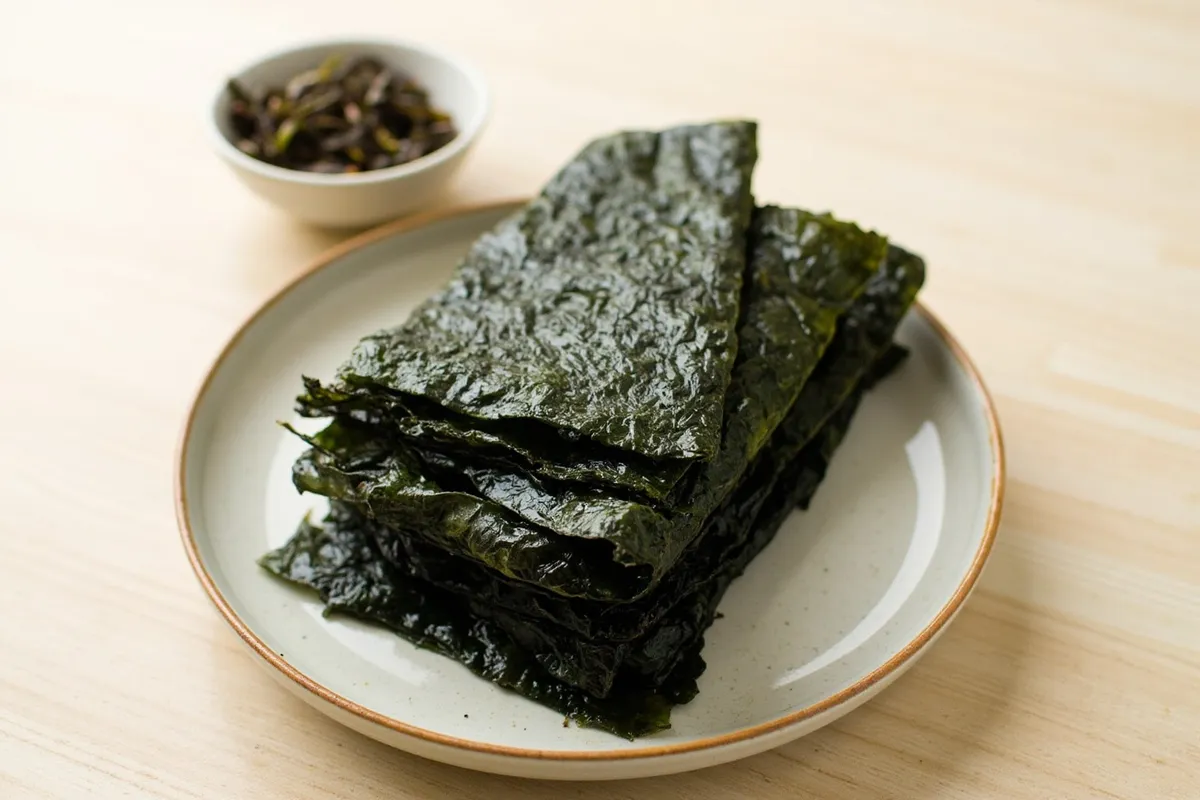
Seaweed benefits come down to a number most people never look at: how much iodine sits in the portion, and how often you eat it. A sheet of nori weighs a few grams, and a strip of kombu is dried kelp carrying up to about 186 times more iodine per gram. Get that wrong in either direction and a Japanese-style week falls apart.
I cook this food in Manchester with a notebook next to the kitchen scale, because I got it wrong first. The numbers here come from the USDA/FDA/ODS-NIH iodine database, Release 4.0, covering 478 foods, from FoodData Central, and from the American Heart Association, EFSA and FDA. One thing to clear up first: the current US dietary guidelines set no weekly fish target. Two servings a week is the American Heart Association's recommendation.
Seaweed benefits: what the evidence actually shows
What nori, kombu and wakame actually provide
Seaweed is a seasoning that happens to come out of the sea: nori sheets for rice, kombu for dashi, wakame for soup and salad. Treat it as a vegetable portion and a sheet of yaki nori, three grams of paper-thin toasted seaweed, will disappoint you.
The shelf names are confusing. Nori is one species in several forms: plain yaki nori is the toasted sheet, aonori is the same nori in flakes, sake nori is a seasoned snack with salt and usually mayonnaise. Wakame is another single species, sold dried, as mekabu (the stem) or as mozuku in brine. Kombu is kelp, and ma-kombu is the thick, wide grade. The first time I bought aonori I was sure it was a different plant; it was my sushi nori in flakes.
- Iodine, the reason people buy seaweed: levels differ about 186-fold between species.
- Vitamin K1, small amounts from kombu, more in natto.
- Fibre, in grams rather than portions.
- No meaningful EPA or DHA, so seaweed does not replace fish.
- Almost no protein, and no usable vitamin B12.
Brown algae such as kombu and wakame take up inorganic arsenic and cadmium from seawater more readily than red algae do. EFSA's cadmium opinion flags seaweed as a food where levels can be high, so keep a daily kombu habit modest and mention it to your doctor.
Nori, kombu and wakame: what the health benefits consist of
The health benefits of nori, kombu and wakame are almost one nutrient and one number: iodine per gram. A 2004 laboratory analysis of commercially sold seaweeds, cited by the US Office of Dietary Supplements, found iodine from 16 mcg per gram in nori up to 2,984 mcg per gram in kelp, roughly a 186-fold spread driven by species, harvest site and processing.
| Product on the shelf | Form | Species | Where the number comes from |
|---|---|---|---|
| Yaki nori, plain | Toasted sheet | Nori | 'Nori, dried' row, Release 4.0 |
| Aonori | Dried flakes | Nori, same species | Same entry; flakes get weighed |
| Sake nori | Seasoned sheet | Nori with salt, sugar, oil | The entry for that product |
| Kombu, ma-kombu | Dried strip | Kelp | 'Kombu, dried' row |
| Wakame | Dried strips | Wakame | 'Wakame, dried' row |
| Mekabu | Stem | Wakame, same species | Read the wakame entry |
| Hijiki, arame | Dried strands | Brown algae | 'Hijiki, dried' row |
Each entry in the USDA/FDA/ODS-NIH iodine database carries the mean, the standard deviation, the range and the number of samples tested, so a product is a spread and not a single number. For nori I take the per-100 g figure from the dried nori entry and multiply by the sheet weight printed on my pack. Without a stated sheet weight the arithmetic is impossible, so I count sheets per pack instead.
Seaweed and omega-3: where the EPA and DHA really come from
Seaweed is not an omega-3 source in any useful sense. The EPA and DHA in edible seaweeds is small and swings between batches, and no FoodData Central entry puts seaweed close to fish per 100 g.
EFSA sets an adequate intake of 250 mg a day of EPA and DHA combined for adults, covering all sources, food and supplements together, so a capsule cannot be added on top of a fish plan without counting both. Where I want omega-3, I get it from small oily fish. Fish or supplement is a question about your whole diet and, if you take medication, for your doctor.
How much iodine do you need from seaweed?
Daily iodine needs and where seaweed fits
You do not need seaweed to meet your iodine requirement. Adults need 150 mcg a day, 220 mcg in pregnancy and 290 mcg while breastfeeding, according to the NIH Office of Dietary Supplements, and that iodine comes from iodised salt, dairy, eggs and fish. Seaweed is an optional concentrated extra, and it is the one food here that can take you from nothing to too much in a spoonful.
Salt is the quiet source. The iodine content of iodised salt is on the pack and differs between brands, so I read the label rather than assuming a pinch means the same everywhere.
Before you decide whether seaweed belongs in your week, answer these:
- How many grams of kombu go into the pot, and on how many days?
- How many sheets of nori a day?
- Any kelp tablets, seaweed powder or drinks?
- Pregnant or breastfeeding?
- Thyroid medication, or a child eating the same food?
Five questions, one minute. If the first two have no answer, the next section is where I start weighing things.
How much kombu and nori is too much?
The adult upper limit is 1,100 mcg of iodine a day from food, drink and supplements together. That figure describes daily intake over time, and a single meal is a separate question: one large strip of kombu is one exposure, the same strip every day is a pattern.
The concentration is why I weigh kombu. At the top of the published range for kelp, less than half a gram of dried seaweed already carries a full day's ceiling. A strip sold for dashi is bigger than that, and a household piece varies from a few grams to well over ten.
Four habits quietly stack iodine:
- Kombu dashi every single day.
- A nori sheet with every meal, three meals a day.
- One kelp supplement: US products hold a median 150 mcg of iodine per daily serving, a range of 25 to 290 mcg, and 25 of 34 list it as potassium iodide.
- Seaweed powder or a drink on top of all that.
Weigh the kombu before it goes in the pot and note the grams on the packet. For a pot of dashi I use a piece in the 3 to 5 g range and let it serve two days. For nori, write the sheet weight from the pack on the box lid. Iodine is water-soluble and part of it leaches into the cooking liquid, so a dashi boiled hard for hours holds less than the strip that made it.
Long-term intake above 1,100 mcg a day can raise the risk of iodine-induced goitre and hypothyroidism in adults who already have enough iodine, and the risk of hyperthyroidism is highest in older people with a multi-nodular goitre. Neither is a reason to fear seaweed. Both are a reason to stop treating the packet as a garnish you can dip into all evening.
Thyroid conditions and groups at higher risk
The American Thyroid Association advises against intakes above 1,100 mcg a day and points to 500 mcg a day for pregnancy and breastfeeding. It names infants, older people, pregnant and breastfeeding women and anyone with existing thyroid disease as more susceptible to harm from excess iodine, and I would treat that as the shortlist for talking to a clinician first.
| Age | Upper limit per day | What it means at the table |
|---|---|---|
| 1 to 3 years | 200 mcg | A kelp tablet is nearly the whole limit |
| 4 to 8 years | 300 mcg | One nori sheet can be a large share |
| 9 to 13 years | 600 mcg | Kombu deserves a measured piece |
| 14 to 18 years | 900 mcg | Most of the adult ceiling |
| 19 years and over | 1,100 mcg | The number to keep in mind |
Those limits come from the same fact sheet as the numbers above. A kelp tablet at the median 150 mcg is a full day's requirement for an adult and close to the whole limit for a three-year-old, which is why I keep supplements off a shared breakfast table.
A separate nutrient and a separate warning: natto and kombu are both high in vitamin K1, and people on warfarin need a steady intake rather than avoidance or a sudden change. Keep the amount consistent and tell your anticoagulation clinic before you change it. See the NIH ODS summary on vitamin K.
Thyroid conditions, including Hashimoto's disease, need advice from the treating doctor. I would swap seaweed for measured portions of fish rather than chase the iodine number, because fish brings omega-3 with it.
Japanese fish for omega-3: sardines, horse mackerel, bonito and Pacific saury
How much EPA and DHA per day, and what counts as a serving
EFSA puts the adequate intake at 250 mg a day of EPA and DHA combined for adults, from all sources, and that is the number I work to. The American Heart Association is what I shop to: two servings of fish a week, particularly fatty ones, with a serving defined as 3 oz cooked, about 85 g, or roughly three-quarters of a cup of flaked fish. US consumer health guidance uses 3.5 oz, about 100 g, the size of a checkbook, and that is the portion size most nutrient databases use.
| Portion | Size | Where it comes from |
|---|---|---|
| AHA serving of fatty fish | 3 oz cooked, about 85 g | American Heart Association |
| Reference portion | 3.5 oz, about 100 g | US consumer health guidance |
| A tin of sardines | Net weight, less after draining | The label on the tin |
For a tin of sardines, the drained weight is smaller than the net weight, and that difference is the oil, which is where the omega-3 sits. FDA's fish advice is about variety and mercury, and the current US guidelines set no weekly fish target either.
Small oily fish in the Japanese diet: sardines, aji, bonito and saury
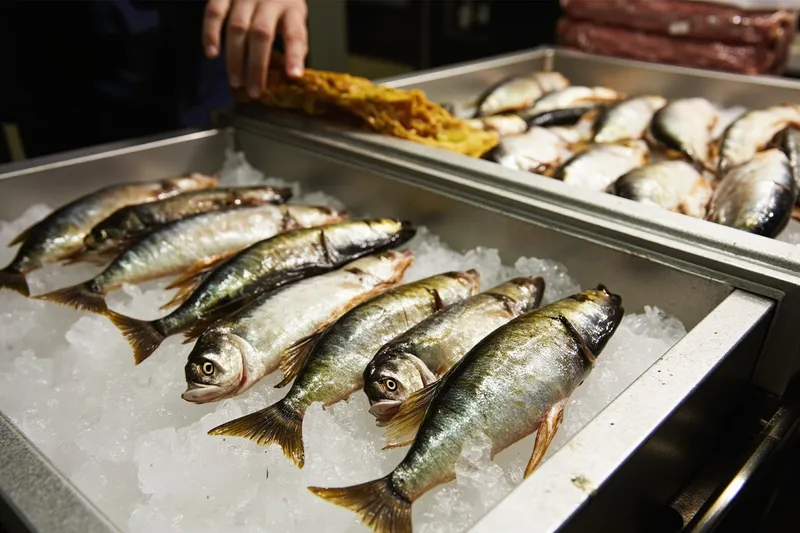
These are the fish I buy. Small, oily, sold whole or in tins, and the best value for omega-3 per gram in the shop. One word needs care: mackerel on a Japanese menu means horse mackerel, aji. King mackerel is a different, larger fish in the Avoid column of the FDA chart, so I do not buy a tin labelled only 'mackerel' without reading the species.
| Fish | Portion | Mercury standing | FoodData Central entry | How I cook it |
|---|---|---|---|---|
| Sardines in olive oil | One tin, drained weight | Best Choices | 'Sardines, Atlantic, canned in oil, drained, dry weight' | From the tin onto toast, with lemon |
| Horse mackerel (aji) | One whole fish | Not on the chart | 'Mackerel, horse, raw' | Grilled whole, salt on the skin |
| Pacific saury (n-sanma) | One whole fish | Not on the chart | 'Fish, saury, raw' | Grilled, or simmered in the dashi |
| Bonito | One fillet | Not on the chart | 'Fish, bonito, raw' | Seared rare in a hot pan |
I leave the EPA and DHA columns out on purpose. Every number belongs to a specific FoodData Central entry, and an entry is a specific sample with a specific preparation, so a number without the entry behind it is decoration.
- Small oily fish two or three times a week, 85 to 100 g cooked.
- Oil rather than water when you buy canned fish.
- Keep the soft edible bones. They are the best part of the tin for calcium.
- Grill or braise rather than deep-fry.
Mercury, tuna and how often to eat fish
FDA's advice is to eat a variety of fish lower in mercury. The chart the agency publishes with EPA sorts species into columns, and for pregnancy and breastfeeding it names its audience: people who are or may become pregnant, people who are breastfeeding, and children aged 1 to 11.
| Tier | Fish | What I do |
|---|---|---|
| Best Choices, named in the chart | Sardines, salmon, canned light tuna | Two servings a week, as the AHA suggests |
| Not on the chart, small and oily | Horse mackerel (aji), Pacific saury, bonito | Two or three times a week, my judgement |
| Good Choices | Albacore tuna and other larger tuna | Occasionally, not every week |
| Avoid | Shark, swordfish, marlin, king mackerel, orange roughy | Rarely, and never for a child |
Canned light tuna and fresh albacore are not the same line on that chart, and the chart also names bluefin tuna among the fatty fish highest in omega-3 while keeping it off the daily list. That is the trade-off in one line.
Two cautions. Mercury and catch advice differ by country, so I would not print a weekly limit for high-mercury species that only applies where I live. And raw fish is its own question: FDA advises that young children, pregnant people, older adults and people with weakened immune systems should not eat raw or undercooked fish.
Heart-healthy Japanese foods: miso, tofu, natto, edamame, soba and green tea
The ichiju-sansai and washoku pattern
Ichiju-sansai means one soup, one protein and three small vegetable dishes, and washoku is the fuller tradition around it. What interests me is that the pattern maps onto the current US dietary guidelines without translation: the 2025-2030 edition puts protein at 1.2 to 1.6 g per kg of body weight a day, vegetables at 3 servings, fruit at 2, whole grains at 2 to 4, names seafood among the healthy fats and protein foods, and asks people to limit highly processed foods.
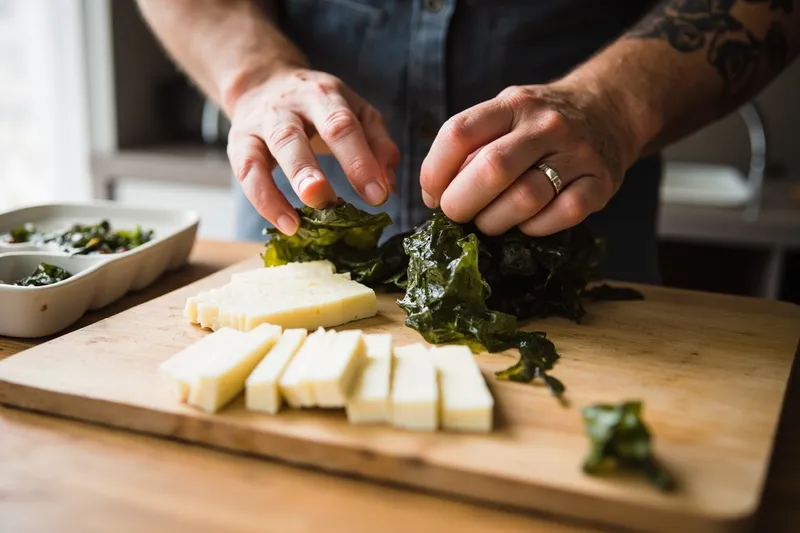
For a 70 kg adult, 1.2 to 1.6 g per kg is 84 to 112 g of protein a day, and one 85 g serving of oily fish covers the lower end on its own. Hara hachi bu, stopping at around 80% full, shows up on the scale rather than the plate, and I have written about eating to 80% full separately.
What I take from the arrangement itself is smaller: a small bowl of rice, one portion of protein, and vegetables in several dishes instead of one large one. There is more on what the Japanese diet is and how to start it.
Miso soup, natto, tofu and edamame
These four do the heavy lifting in a Japanese week, and they are where the salt hides. I keep a lighter miso for weekday soup and a darker one for weekend cooking, because the difference shows on the label and not in the bowl.
| Food | One portion | What it brings | What to check on the pack |
|---|---|---|---|
| Miso soup on kombu dashi | One bowl | Fermented soy, dashi flavour | Sodium per serving; salt in paste and dashi |
| Natto | One pack with rice | Protein, fibre, vitamin K1 | Sodium; steady vitamin K if you take warfarin |
| Firm tofu | Half a block | Protein, calcium if set with calcium sulfate | Sodium per serving |
| Boiled edamame | A good handful | Protein, fibre | Added salt in the bag |
Two sodium sources hide in one bowl of miso: the paste and the dashi underneath. Counting only the paste was my own mistake for months. If you make your own dashi with a weighed kombu piece, you can count that part too, and a low-sodium Japanese meal plan has the swaps in full.
Two more swaps help: tofu pressed a little longer to shed surface brine, edamame boiled without added salt. Natto is one of the richest food sources of vitamin K1, and people on warfarin need a consistent intake rather than avoidance.
Soba, green tea and the staples worth shelf space
Soba is a good swap for white rice if you read the pack. Pure buckwheat soba is a whole grain; most supermarket soba is a buckwheat and wheat blend, and the ingredient list settles it in one line. If the pack says 100% buckwheat, it is buckwheat; if it says soba with wheat, it is noodles with some buckwheat in them.
Green tea is the easiest swap on the list because it replaces something with sugar in it. EFSA's caffeine opinion puts a single dose at up to 200 mg for adults and 400 mg a day, and a cup of green tea sits well under that. There is more on green tea and matcha itself.
Two more staples earn shelf space: dried shiitake as a third flavour base beside kombu and dashi, and miso in place of a bouillon cube, which does most for the salt in a soup. What I would not keep is a stack of instant noodle soups and seasoned seaweed packs, since those sit in the highly processed category.
Seaweed in the shop: formats, pack sizes and label checks
Yaki nori, sake nori, aonori, gomashio and furikake
The seaweed shelf looks like a lot of choice and is really five products. Knowing which one you are holding saves you from buying a snack and thinking you bought a seasoning.
| Format | What it is | What to check on the pack |
|---|---|---|
| Yaki nori, plain | Toasted sheets for rice | Sheet weight in grams, sodium per serving |
| Sake nori | Seasoned sheet with salt, sugar, oil | Sodium and sugar; it is a snack |
| Aonori | Flakes of the same nori | Serving weight, since flakes cannot be counted |
| Gomashio | Toasted nori flakes salted and sweetened | Sodium and sugar per serving |
| Furikake | Dry blend of flakes, sesame, salt | Sodium per serving |
Gomashio and furikake are seasonings used with a pinch. The serving on the pack is what to trust, and a teaspoon of either is not a serving. The spoon on my gomashio tin is smaller than the one in my drawer, which is exactly how extra salt gets in.
Five checks while you hold the pack:
- Species name: nori, kombu, wakame or something else.
- Serving weight in grams.
- Sodium per serving.
- Seaweed only, or seaweed with salt and oil added.
- Added sugar and oil in the seasoned packs.
Reading the iodine and sodium numbers on the pack
The iodine database, Release 4.0 from 2024, holds 478 foods and lists each with the mean, the standard deviation, the range and the number of samples tested. The method matters as much as the number: values come from mass spectrometry, most USDA samples were analysed from 2016 onwards, and the FDA figures come from the Total Diet Study from 2016 as well.
Pack to plate in three steps. Sheet weight in grams times the number of sheets times the mcg per gram from the entry gives you the whole pack. For kombu, weigh the piece that goes in the pot and check its per-100 g value against the 1,100 mcg daily ceiling. If the pack states no weight, do the arithmetic by the pack and divide by what you eat. A range is more useful than a mean, so plan on the lower end.
Two numbers people expect on a pack and will not find there. Omega-3 on fish packaging in the US is voluntary under 21 CFR 101.9, so a sardine tin without EPA and DHA tells you nothing about the fish. Iodine on seaweed is almost never printed at all. For sodium, FDA's advice for adults is to stay under 2,300 mg a day, and miso, furikake and seasoned seaweed all count towards it.
Where to find nori, kombu and wakame, and what to check on the pack
None of this needs a specialist importer. In an ordinary supermarket, kombu, dried wakame, miso and dried shiitake sit in the international aisle. Nori is in the sushi section. Tinned sardines and horse mackerel are with the normal tinned fish, and seasoned seaweed packs and furikake are in the snack and seasoning aisles, which is why they are easy to miss and easy to overbuy.
Pack size decides how far a pack goes, so I do the arithmetic before I open it. Plain yaki nori usually comes as a stack of five sheets, and the gram weight on the box is the number that matters, because it differs between brands. One pack at one sheet a day is a week of nori with no shopping maths at all.
- Every week: nori sheets, kombu, dried wakame, dried shiitake, miso, a tin of sardines.
- Now and then: aonori, gomashio, furikake, hijiki.
Buy the second tier when you have a use for it. A bag of gomashio that sits in the cupboard for a year is not a bargain, it is salt waiting for a reason.
A Japanese-style week: what to buy and what to cook
A one-week shopping list with quantities
This is the basket I buy for one person for a week, and it is deliberately short. The fish total at the end is the one line I can give you exactly.
| Item | Quantity for the week | What to check on the pack |
|---|---|---|
| Yaki nori sheets | 1 pack, 1 sheet a day | Sheet weight in grams |
| Kombu | 1 strip, weighed, two pots of dashi | Species and iodine per 100 g |
| Dried wakame | 1 small bag, a dry pinch per bowl | Dried weight, not rehydrated weight |
| Canned sardines in olive oil | 2 tins | Drained weight, sodium |
| Horse mackerel (aji) | 2 whole fish | Species name on the label |
| Miso | 1 tub | Sodium per serving, lighter type for weekdays |
| Firm tofu | 1 block | Sodium per serving |
| Natto | 1 pack, or 3 if you eat it daily | Sodium; vitamin K if you take warfarin |
| Edamame | 1 bag, frozen is fine | Added salt |
| Soba, 100% buckwheat | 1 pack | The buckwheat line in the ingredients |
Fish total: 4 servings of roughly 85 to 100 g cooked, above the AHA's two a week. On the seaweed side I keep the kombu to one weighed piece across two pots, and one nori sheet a day rather than a side plate.
Swaps when the shop does not have my plan: kombu for nori, horse mackerel for sardines, a lighter miso for a darker one, a measured wakame dashi for the kombu pot. Store everything as the pack says; the only thing that goes wrong is moisture turning the nori soft.
Breakfast, lunch and dinner in ten minutes a day
Weekday breakfast in ten minutes: natto over rice with a sheet of nori beside it and a cup of green tea. On a morning without rice, onsen tamago and the same tea.
Ten-minute lunch: tofu and wakame soba with a measured dashi, or edamame and a small bowl of rice. Watch the wakame, because a dry pinch rehydrates into a bowlful in a couple of minutes, so I weigh it dry from the bag.
Twenty-minute dinner: a horse mackerel salted and grilled, miso soup with the measured dashi, a small plate of vegetables with a little soy, and rice. That is ichiju-sansai with the numbers changed for one person. The soup is the only recipe you need, and a simple miso soup method takes fifteen minutes once you keep the dashi in the fridge.
What to eat weekly, what to weigh and what to skip
The decision table
One table for the decisions, with the number that matters attached to each line.
| Eat weekly | Eat in measured amounts | Limit | Ask a clinician first |
|---|---|---|---|
| Small oily fish twice a week: sardines, aji, saury, about 85 g cooked a serving | Kombu: one weighed piece of 3 to 5 g, used across two pots | Seaweed snacks, gomashio, furikake: seasoning, not a side dish | Pregnancy and breastfeeding: 500 mcg a day ceiling |
| Vegetables in small dishes, three servings a day, with tofu and natto for protein | Nori: one sheet a day, counted by the grams on the pack | Tuna other than canned light, and the Avoid column | Thyroid disease, thyroid medication, goitre |
| Green tea instead of a sweetened drink, and 100% buckwheat soba instead of refined noodles | Seaweed supplements: 150 mcg of iodine in the median tablet, so one is a whole day's requirement | Instant noodle soups and heavily processed Japanese convenience foods | Warfarin, because natto and kombu are high in vitamin K1 and intake needs to be steady |
One rule settles the rest. If you make kombu dashi every day, cut the daily kombu to a weighed piece and keep one sheet of nori instead. If you weigh nothing at all, keep kombu for flavour once a week and let the fish carry the omega-3. I have tried both, and the second lasted longer.
The numbers worth remembering: 150 mcg of iodine a day for an adult, a ceiling of 1,100 mcg, 250 mg of EPA and DHA a day from EFSA, two fish servings a week from the AHA, and 1.2 to 1.6 g of protein per kg of body weight in the current US guidelines.
Quick answers on seaweed, iodine and fish
Do I need seaweed to get enough iodine? No. Adults need 150 mcg a day, and it comes from iodised salt, dairy, eggs and fish. Seaweed is an optional concentrated source, and a large helping can push you past the 1,100 mcg daily ceiling.
How much nori is safe to eat each day? There is no single number that fits every product, because the iodine content of nori differs with preparation and the sheet weight differs by brand. Use the per-100 g value from the dried nori entry in the iodine database, multiply by the sheet weight on your pack, and stay under the 1,100 mcg ceiling.
Is kombu safe if I have Hashimoto's disease? Ask the doctor who treats your thyroid before you change how much kombu you eat. The American Thyroid Association advises against intakes above 1,100 mcg a day, and iodine interacts with thyroid medication.
Which Japanese fish gives the most omega-3 for the money? The oily small ones: sardines, horse mackerel (aji) and Pacific saury. I buy canned sardines in olive oil first, because a tin keeps longer than fresh fish and the drained weight tells me the portion.