
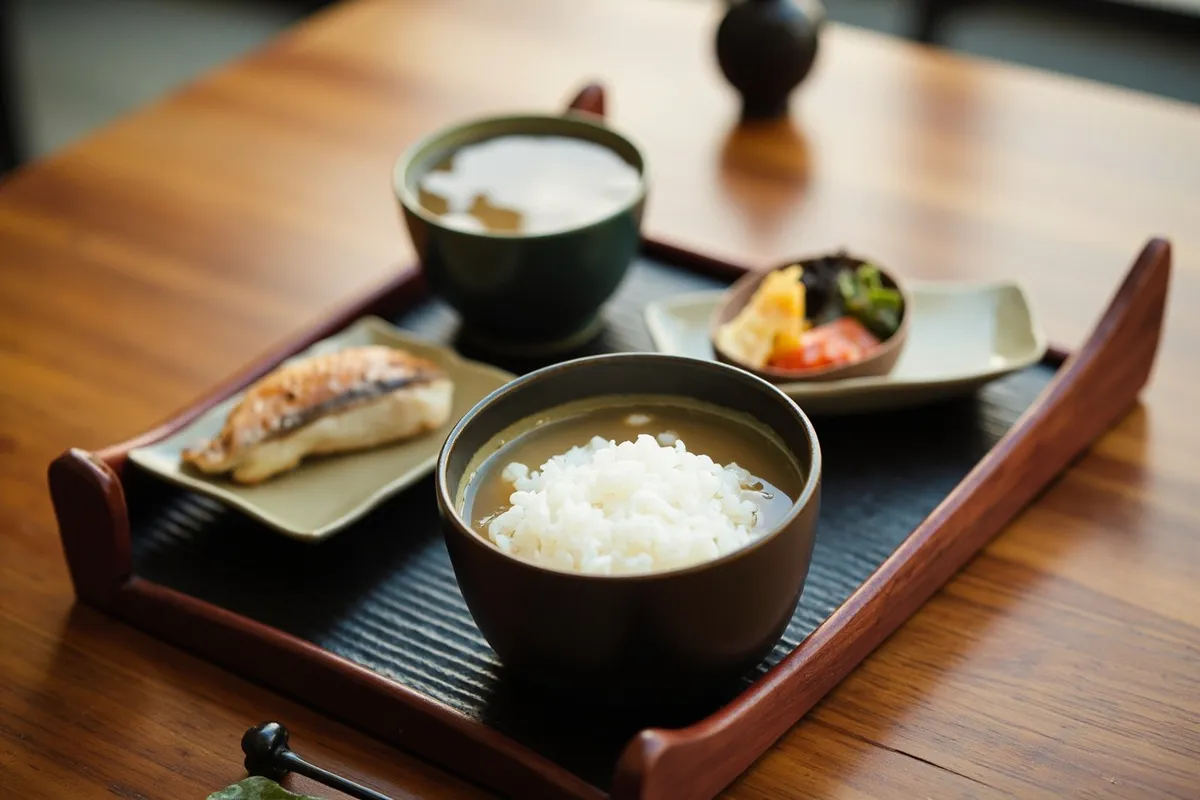
Most Japanese diet vs Mediterranean diet comparisons I found argue about who lives longest and skip the part that decides your shopping list: salt. My own kitchen split started there too: one bowl with shoyu on the table, one with olive oil, and a gap between them far bigger than the longevity headlines suggest.
Here is the side-by-side of Japanese and Mediterranean eating I wanted when I started writing: what each pattern looks like on the plate, what the trials actually tested, where the sodium hides, and which one suits your goal and your budget. Both are eating patterns rather than national cuisines, and none of it is medical advice.
Japanese Diet vs Mediterranean Diet: What Each Pattern Looks Like on the Plate
What 'the Japanese diet' covers, and what it leaves out
The version I grew up with had a bowl of rice in the middle of the table, a small piece of fish or tofu, and three or four vegetable dishes in little bowls, all shared. That arrangement has a name: ichiju-sansai, meaning one soup, one grilled or simmered protein, one vegetable dish, plus rice. Washoku is the wider cooking style around it, built on seasonal ingredients and small portions. The Okinawan version of the same habit, with more sweet potato, pork and seaweed, is what most longevity writing points to.
Two things get left out of that picture. Research on the Japanese pattern usually describes the version people ate in the 1970s, when fat and salt were lower and fish and soy were more common. And the reference values Japan works from get rewritten every five years: the current Dietary Reference Intakes 2025 have been in force since April 2025, run to 2029, and add osteoporosis to the conditions they track.
Tsukemono, the salted pickles served alongside rice, sit at the centre of the pattern in a way that surprises newcomers, and they carry a good share of the salt. Three small pickles with every meal will push the sodium target out of reach however careful the rest of the plate is.
In research, 'the Japanese diet' usually means the older, lower-fat, lower-salt version, so popular claims travel poorly to today's shelves.
| Traditional home plate | Today's Japanese plate |
|---|---|
| Rice, one small bowl (about 150 g cooked) | Rice in bigger bowls, plus noodles and bread |
| Fish, tofu, a little meat | More fried chicken, cutlets, processed meat |
| Three or four small dishes, seasonal | Pickled vegetables, a little salad |
| Shoyu, miso and dashi in small amounts | Shoyu and miso in larger amounts, instant ramen |
| Small fruit, sweets rarely | Bread, cakes and sweet drinks more often |
| Rare, mostly for children | Milk, yogurt and cheese more common |
The Mediterranean pattern as it is actually written down
The Mediterranean pattern is easier to describe because somebody wrote it down as a scorecard. The Mediterranean Diet Pyramid, published by the advocacy group Oldways, is the picture most people recognise: vegetables, fruit and whole grains at the base, olive oil as the main added fat, fish twice a week, nuts and legumes several times a week, dairy and eggs in the middle, sweets and red meat near the top. Treat the pyramid as a poster, because the cohorts behind it define the pattern better than the drawing does.
The alcohol row describes what people in those cohorts drank. WHO is blunt on the health side: there is no safe amount of alcohol. A Mediterranean week works fine without a glass of wine in it, and I would leave it out while you work out how the rest of the pattern feels.
| Group | How often | Rough amount for 2,000 kcal |
|---|---|---|
| Vegetables | Every day | At least 400 g |
| Fruit | Every day | At least 200 g |
| Whole grains | Every day | About three servings |
| Olive oil | Every day | About 4 tablespoons |
| Fish and seafood | Twice a week | One portion oily |
| Legumes and nuts | Several times a week | Nuts about 30 g a day |
| Dairy, eggs, poultry | Daily to weekly | Moderate portions |
| Red meat, sweets | Rarely | Small amounts |
Side by side: salt, fat, fish, grains, dairy, vegetables
The widest gap between the two plates comes from seasoning load and the type of fat. Food quality is similar on both sides: vegetables by the fistful, fish twice a week. Where they part company is the pantry: the Mediterranean plate runs on olive oil, the Japanese plate on shoyu and miso. Japanese reference intakes put fat at 20 to 25 % of energy for adults, while US guidance caps saturated fat at under 10 % of energy. Monounsaturated fat from olive oil is how the Mediterranean side fills that gap.
The second gap is dairy. The Japanese pattern barely includes it, and the 2025 reference intakes added osteoporosis to the conditions they watch, which turns the gap into a practical point for women past menopause. The fix is small: yogurt, calcium-set tofu, or small fish with bones.
| Dimension | Japanese pattern | Mediterranean pattern |
|---|---|---|
| Salt | Shoyu, miso, pickles; about 10 g a day | Little added salt, herbs and olive oil |
| Main fat | Modest, from fish and vegetable oils | Extra-virgin olive oil, about 4 tbsp |
| Fish | Two or three times a week | Twice a week, one oily fish |
| Grains | Rice daily, about 150 g cooked | Whole grains, several servings |
| Vegetables | Three or four small dishes | At least 400 g a day |
| Protein | Tofu, natto, fish, some meat | Legumes, fish, nuts, less meat |
| Dairy | Rare | Daily, moderate portions |
| Sugar | Little added sugar | Fruit daily, sweets rarely |
Which Diet Is Healthier: Mediterranean Diet or Japanese Diet, and What the Evidence Says
Direct comparisons between the two patterns are thin
Look for a trial that put people on the Japanese pattern and the Mediterranean pattern and compared the results, and you will find very little. A 2025 narrative review that sets the two side by side reaches the same conclusion: a detailed direct comparison remains largely unexplored. The work has gone in one direction at a time. The Mediterranean pattern has the randomised trials, the Japanese pattern has the cohort and mortality data.
Menu modelling adds something useful but limited. A Japanese research group built one-week menus from FAO food balance data for the 1975 Japanese diet and the 2010 Italian diet, then compared them nutrient by nutrient. It shows what the two patterns looked like on paper. It cannot tell you what happens to your blood pressure when you swap one for the other, because a menu on paper is not a person changing their habits for a year.
One caution about the sites that score both patterns out of ten: those ratings move with the method behind them and come from a commercial tool. The numbers that decide anything sit in the next two sections.
| Study type | What it compares | What it can answer |
|---|---|---|
| Randomised trial | One pattern against another | Cause and effect; Mediterranean trials dominate |
| Cohort study | Long-term intake and outcomes | Real life, but self-reported habits |
| Menu modelling | Food supply turned into plates | Composition, not health outcomes |
| Narrative review | Published work side by side | Maps the gap, no pooled estimate |
The Mediterranean evidence base
Two Spanish trials carry most of the weight. PREDIMED randomised about 7,400 adults at high cardiovascular risk to a Mediterranean diet supplemented with extra-virgin olive oil or with nuts, against a low-fat diet, and both diet groups had roughly 30 % fewer major cardiovascular events over the following five years. CORDIOPREV followed about 1,000 patients who already had coronary heart disease and imaged their arteries: over seven years, plaque volume grew more slowly in the Mediterranean group.
Here is where the evidence stops. Both trials ran in Spain, among people at high risk, and in both arms most patients were already taking statins. Moving a Spanish cohort result onto a 45-year-old in another country is a step, not a given. Reviews from 2023 to 2025 keep finding clear benefit for primary prevention, while the role in secondary prevention after a heart attack is still described as uncertain.
Adherence is measured with a 14-point self-report questionnaire, the MedDiet adherence score, so the 'Mediterranean diet' in a study is a number on a form rather than a perfect plate. One failure mode is worth knowing: a Mediterranean diet heavy on cheese and cured meat can run high in saturated fat and salt. The pattern earns its reputation with olive oil, nuts, legumes and fish.
The markers that move first, blood pressure and LDL and HDL cholesterol, are covered in the weight-loss section below.
The Japanese evidence base and its pressure points
The Japanese evidence is mostly observational: national diet surveys, blood-pressure cohorts and the mortality data behind the longevity headlines. Fermented soy, meaning miso, natto and the soy in tofu, provides live microbes, which is what the fermented foods and probiotics research is really about, though that does not make miso soup a clinical probiotic treatment.
Sodium is the first pressure point. Japanese adults still eat roughly 10 g of salt a day, well above both the 7.5 g daily target for men in the 2025 reference intakes and the 5 g WHO target. Fish brings its own caveat: two or three servings a week is good, and FDA and EPA advice lists the species with the least mercury for anyone eating fish often.
Then there are two smaller traps. Daily kombu or wakame can push iodine above what the thyroid needs, and the vitamin K2 in natto interferes with warfarin. Long life and health expectancy in the Japanese cohorts also lean on walking and on neighbours, which is worth copying and hard to copy.
- Blood pressure, the practical anchor
- Sodium intake, measured in milligrams
- LDL and HDL cholesterol at the three-month mark
The Salt Problem: Shoyu, Miso and the Mediterranean Baseline
How much sodium is really in a Japanese staple meal
A bowl-and-side-dish meal carries salt in places beginners never count: the shoyu in the dressing, the shoyu in the soup, the miso, the pickles, the fish cake. One tablespoon of shoyu, 16 g, carries close to 900 mg of sodium, roughly 40 % of the 2,300 mg daily cap and about 45 % of the WHO salt target in a single pour.
The packet label beats any estimate, and for items without one USDA FoodData Central lists sodium per serving and per 100 g for miso, natto, nori, tofu and seaweed. The classic mistake is counting soy sauce at the table while the miso in the soup and the salted fish cake quietly supply more.
| Staple | Typical portion | Sodium per portion | Share of 2,300 mg |
|---|---|---|---|
| Shoyu | 1 tbsp (16 g) | about 900 mg | about 40 % |
| Miso | 1 tbsp paste plus a bowl | 600–900 mg | 25–40 % |
| Natto | 1 pack, no tare | 150–300 mg | under 15 % |
| Kamaboko and tsukemono | 2 slices, 3 pickles | 400–700 mg | 20–30 % |
| Instant ramen | 1 sachet seasoning | 1,500–2,000 mg | 65–85 % |
The numbers every reader needs: 7.5 g, 5 g, 2,300 mg
Three numbers get quoted, and they describe the same limit in different units. Multiply salt grams by 2.5 to get sodium milligrams, so 5 g of salt is 2,000 mg of sodium. Japan's reference intakes set a target under 7.5 g of salt a day for men and under 6.5 g for women, dropping to 6 g with high blood pressure. WHO's sodium reduction guidance asks every adult to keep salt under 5 g, and the global average is about 11 g.
None of these is a verdict on your plate. The Japanese figure is a national reference for a population that eats a lot of salt; the WHO figure is a public-health target for everyone. If you eat more than any of them, the gap to close is the distance between what you do now and the lower number.
| Source | Daily limit | Notes |
|---|---|---|
| Japan, Dietary Reference Intakes 2025 | Under 7.5 g salt (men), 6.5 g (women) | 6 g with high blood pressure |
| WHO | Under 5 g salt | 2,000 mg sodium; global average about 11 g |
| US Dietary Guidelines | Under 2,300 mg sodium | 1,500 mg with high blood pressure |
| UK, NHS | Under 6 g salt | Advice for adults |
| Canada | 1,500 mg adequate, 2,300 mg upper limit | DRI reference values |
| Australia | About 2,300 mg sodium | Roughly 6 g of salt |
If you track a single number, keep sodium under 2,000 mg a day. That satisfies the WHO target, the US cap and the UK advice at the same time.
What Japan's own salt-reduction machinery does now
Japan's hypertension society makes salt reduction one of three legs in its 2025 hypertension guidelines, published online in January 2026: teach people to eat less salt, make everyday food lower in salt, and use salt substitutes where they are safe to use. The same body marks the 17th of every month as Salt Reduction Day and publishes characters for the campaign.
There is a shelf tool too. Between April 2024 and March 2025, 107 products from 26 companies were certified under the joint committee's low-salt scheme, with sales of about 55 billion yen and roughly 1,156 tonnes of salt covered. Look for the certification mark on the pack, and expect reduced-salt tofu and low-sodium shoyu to cost more than the standard versions.
Salt substitutes are potassium chloride. They are unsuitable for people with kidney disease and for anyone taking ACE inhibitors, ARBs or potassium-sparing diuretics. The 2025 hypertension guidance sets out who can use them, so ask your pharmacist or doctor about your own medicines before buying a potassium salt.
Japanese vs Mediterranean Diet for Weight Loss: Energy, Markers and Timing
Satiety, portion control and the energy budget
Neither pattern is a low-calorie diet. Both work because the plate is high-volume and low in energy density, with vegetables, a modest starch and protein in the middle. The calorie deficit comes from portion control. The Japanese version of that habit has a name, hara hachi bu, eating to about 80 % full, and it is a household practice in Okinawa rather than a number in Japan's reference intakes. I would treat it as a stop signal.
Before cutting anything, estimate your total daily energy expenditure with a simple activity factor, then take 10 to 15 % off it for a month. The table below is the version I use in my own kitchen, with the arithmetic written out.
| Step | What to do | Example (72 kg, active week) |
|---|---|---|
| Maintenance | Weight (kg) × 26 kcal × factor (1.2–1.6) | 72 × 26 × 1.4 ≈ 2,600 kcal |
| Deficit | Take 10–15 % off for a month | 2,600 − 390 ≈ 2,200 kcal |
| Protein | 1.6 g per kg a day, three meals | 72 × 1.6 ≈ 38 g a meal |
| One swap | Replace one starch portion with konjac | 150 g rice ≈ 195 kcal, konjac ≈ 6 kcal |
For a 95 kg desk worker the same method gives 95 × 26 × 1.2 ≈ 2,950 kcal, and a 15 % cut lands near 2,500 kcal. When rice and noodles start to eat the budget, the fix is portion size and menu choices rather than more discipline: half a bowl, or konjac shirataki in the soup with the broth kept from the packet. With type 2 diabetes or insulin, set that carbohydrate plan with your doctor first; the note on when to ask a doctor covers what to raise.
Protein, fibre, omega-3 and the markers that move
Protein per meal is what keeps both patterns honest: about 1.6 g per kg of body weight a day spread over three meals, which for most adults lands at 30 to 40 g a meal. Tofu and soy isoflavones bring plant oestrogens along with the protein, and the fibre comes from whole grains, legumes, vegetables and seaweed.
Fish intake is where the omega-3 arrives: EPA and DHA from two servings of oily fish a week on the Mediterranean side, and from fish and seaweed on the Japanese side. The markers that move first are the practical ones, meaning blood pressure, LDL and HDL cholesterol, waist circumference as the visible handle on visceral fat, and fasting glucose if insulin sensitivity is your concern. Re-test after eight to twelve weeks.
Two checks before you lean on seaweed or natto every day: the iodine in kombu and wakame, and the vitamin K2 in natto if you take warfarin. And keep konjac shirataki in its place, because close to zero calories makes it a swap for starch rather than a meal.
| Marker | Japanese pattern | Mediterranean pattern | How to check |
|---|---|---|---|
| Blood pressure | Falls as salt comes down | Falls with less salt, more oil | Home cuff, weekly average |
| LDL and HDL cholesterol | Fish and soy help | Oil, nuts and fish help | Lipid panel at 8–12 weeks |
| Waist circumference | Small on portioned rice | Small on pasta and oil | Tape, same day monthly |
| Insulin sensitivity | Rice plus protein per meal | Same structure, more legumes | Fasting glucose, blood test |
| Fibre intake | Low without whole grains | Higher, beans and veg daily | Three-day food diary |
Timing: 16:8 eating, matcha, umami and the walking habit
The Japanese day has a shape: rice with lunch and dinner and very little in between. The Mediterranean cohorts often ate earlier dinners and no second breakfast. Neither shape is a rule, but 16:8 time-restricted eating is the scheduling version some readers borrow from both. The evidence for it is thin and not specific to either pattern. It helps people who snack late at night and adds little once the food itself is under control.
Matcha and green tea fit the same slot. Green tea catechins have a small, measurable effect on LDL cholesterol in trials, and the size of the effect is modest. If caffeine upsets your sleep, keep it to the morning and early afternoon, and leave a gap before iron-rich meals, because tea tannins block iron absorption. I drink matcha with breakfast and stop after lunch.
Umami is the practical lever for eating well on less salt: miso, kombu, dried shiitake and a little bonito do the work a salt shaker would do. The catch is that most of those seasonings still carry sodium, so use them deliberately and stop there.
Walking is the habit that appears in both longevity datasets, and it is the one I would keep if I had to pick a single thing. Step counts in those studies run well above 6,000 a day, and the walking notes on this site cover what that number can and cannot do.
Filling the Basket: A Supermarket Plan for Both Patterns
The Japanese core, item by item
Buying for this pattern is mostly about the seasoning aisle. Check the sodium line per serving and per 100 g, pour half the usual shoyu, buy grilled tofu rather than fried, and use half a sachet of instant ramen seasoning with the broth kept for a second bowl. FoodData Central covers the items with no label at all.
You do not need a Japanese shop. Tofu, miso, nori or any dried seaweed and a pack of natto cover most of the pattern in an ordinary supermarket, and for nori, roasted seaweed sheets work in place of the raw ones.
| Item | What it contributes | How to buy it |
|---|---|---|
| Tofu | Protein, calcium when set with calcium | Grilled, not fried; check sodium |
| Natto | Protein, fibre, vitamin K2 | Check the tare packet in the pack |
| Miso | Fermented soy, deep flavour | Shiro miso is milder, lower in salt |
| Shoyu | Salt, umami | Buy low-sodium; halve the pour |
| Nori | Iodine, minerals | Plain sheets, not fried snacks |
| Kombu and wakame | Iodine, fibre, umami | A pinch, a few times a week |
| Frozen edamame | Protein, fibre | Frozen bags cost less, thaw fast |
| Konjac shirataki | Bulk, near-zero calories | Plain packs, not snack packs |
| Tsukemono | Salt, crunch, appetite | Side dish, small portions |
| Kamaboko | Protein, but salted | Steam first; check the sodium line |
| Instant ramen | Salt, refined carbs | Reduced-salt version, half a sachet |
Ichiju gohan, one bowl of rice, is the anchor of the pattern. In grams: about 150 g cooked in a small bowl, half of a large one. Ask for half rice when you eat out, and see how a smaller rice bowl changes the rest of the meal.
Five ways people get this wrong: salad dressing counted as free, the whole ramen sachet used, rice portions quietly doubling, seaweed bought as fried snacks, and fried tofu bought instead of grilled.
The Mediterranean core, item by item
The Mediterranean basket is less fuss to shop. Olive oil is the one item worth reading carefully: look for a certificate of origin and a harvest date, because extra-virgin labels get faked, and remember the density, around 884 kcal per 100 g, so a tablespoon is near 120 kcal and easy to pour twice.
Fish twice a week, one of them oily. Tinned sardines are the cheapest way in, though check the can, because drained sardines still carry several hundred milligrams of sodium and many tins have a plastic lining. Legumes several times a week and nuts most days do more for you than any single superfood.
| Item | What it contributes | How to buy it |
|---|---|---|
| Extra-virgin olive oil | Main fat, monounsaturated fat | Certificate of origin; pour by spoon |
| Nuts | Protein, fibre, omega-3 | About 30 g a day, jar on the counter |
| Legumes | Protein, fibre | Tinned is fine; rinse the salt |
| Whole grains | Fibre, slow energy | Bread, oats, barley; read the label |
| Vegetables | Volume, fibre, potassium | Aim for 400 g across the day |
| Fruit | Fibre, vitamins | Two or more servings daily |
| Oily fish | EPA and DHA omega-3 | Twice a week: salmon, mackerel |
| Tinned sardines | Cheap omega-3, calcium | Check sodium; pull the label off |
| Olives and pickles | Flavour, and salt | Small portions, they are salty |
- One basket covers both patterns: fish, vegetables, legumes, tofu, edamame and nuts.
Swap list, labels and what it costs
Labels differ by market, and the number to look for differs with them. US packs carry sodium per serving and per 100 g on the Nutrition Facts panel, and the Dietary Guidelines for Americans 2020-2025 cap it at 2,300 mg a day. UK packs carry front-of-pack traffic lights for salt, sugar and saturated fat per 100 g under the NHS Change4life scheme. Canada's food guide offers a snapshot and meal-pattern tools, and Australia's Heart Foundation Healthy Eating Plate splits the plate into half vegetables, a quarter lean protein and a quarter quality carbohydrates.
On cost, the honest answer is that the Mediterranean basket is the pricier one, because olive oil and oily fish are its expensive lines, while the Japanese basket's costs hide in condiments and processed items. Buying olive oil by the litre and tinned sardines by the case pulls that gap down, and frozen edamame with tofu keeps the other basket cheap.
| Item | Lower-salt swap | US | UK | Canada | Australia |
|---|---|---|---|---|---|
| Firm tofu, 350 g | Reduced-salt tofu | US$2.50–4.00 | £1.60–2.80 | CA$4.00–7.00 | A$4.00–8.00 |
| Miso paste, 450 g | Shiro miso, milder | US$4.00–7.00 | £4.00–6.00 | CA$7.00–10.00 | A$8.00–12.00 |
| Nori, 10 sheets | Dried kelp sheet | US$3.00–6.00 | £3.00–5.00 | CA$4.00–7.00 | A$5.00–9.00 |
| Natto, 5 packs | No direct swap | US$3.00–5.00 | £3.00–4.50 | CA$6.00–9.00 | A$6.00–10.00 |
| Olive oil, 500 ml | Buy by the litre | US$8.00–16.00 | £8.00–14.00 | CA$14.00–22.00 | A$13.00–22.00 |
| Tinned sardines | Tinned salmon | US$2.00–4.00 | £1.50–3.00 | CA$2.50–5.00 | A$3.00–6.00 |
| Almonds, 200 g | Walnuts or peanuts | US$5.00–8.00 | £3.00–5.00 | CA$5.00–8.00 | A$6.00–10.00 |
Shelf ranges for 2026, before promotions. Store, brand and region move them, and reduced-salt versions sit above standard ones. Check the label on the day you shop.
| Label line | Where to find it | What number to look for |
|---|---|---|
| Sodium per serving | US Nutrition Facts panel | Compare with 2,300 mg a day |
| Salt per 100 g | UK front traffic light | A red light means high |
| Sodium | Canadian label | 1,500 mg adequate, 2,300 mg upper limit |
| Plate guidance | Australia's Heart Foundation plate | Half vegetables, quarter protein, quarter carbs |
One Week on Each Pattern: Two Ready-Made Menus
A Mediterranean-pattern week
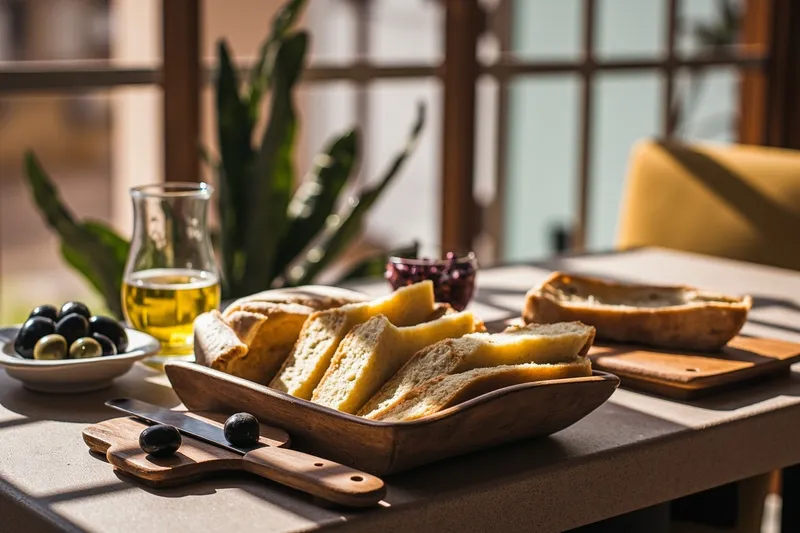
A weekday breakfast takes ten minutes: porridge with milk and walnuts, or bread with tomato, olives and a boiled egg. Lunch is the part worth planning, meaning beans, wholegrain bread, a salad dressed with olive oil and some fruit. Fish goes in at dinner twice in the week. The one change I would make on day one is buying olive oil and beans in the same shop as the usual shopping, so the pattern stops being an idea and starts being a basket.
| Day | Breakfast | Lunch and dinner | What makes it work |
|---|---|---|---|
| Mon | Porridge, milk, walnuts | Bean salad, sardines | Protein at both meals |
| Tue | Bread, tomato, egg | Lentil soup, orange | Legumes twice |
| Wed | Yogurt, fruit | Tuna salad, wholegrain bread | Oily fish once |
| Thu | Oats, banana | Leftover pasta, salad | Cooked on Wednesday |
| Fri | Eggs, toast | Mackerel, potatoes | Second oily fish |
| Sat | Bread, olive oil | Rice, beans, vegetables | Cheap fibre |
| Sun | Yogurt, berries | Salmon, roast vegetables | Flexible day |
A Japanese-pattern week
The Japanese week needs two techniques: half rice, and a miso-and-kombu broth in place of instant ramen. Break the 150 g rice bowl down for lunch and dinner, and add natto, edamame or konjac shirataki for protein and fibre. The salt sits in the soup and the pickles, so the broth gets less miso than the packet suggests.
| Day | Breakfast | Lunch and dinner | Where the salt sits |
|---|---|---|---|
| Mon | Rice, natto, wakame | Grilled fish, greens, rice | Miso, soy on fish |
| Tue | Rice, egg, pickles | Tofu, greens, rice | Soy sauce, pickles |
| Wed | Oats, edamame | Miso soup, chicken, rice | Light miso, kombu broth |
| Thu | Rice, nori | Braised fish, spinach, rice | Braising liquid, most of it |
| Fri | Rice, miso soup | Edamame, tofu, vegetables | Small miso, no shoyu |
| Sat | Rice, fruit | Konjac soup, grilled fish | Lightest salt day |
| Sun | Rice, pickles | Fish, three vegetable dishes | Dressings on the side |
Two or three of these days will sit above the salt target once the dressings and pickles are counted. I rebalance rather than compensate: the lightest day of the week is the one without a second helping of rice, and the heaviest seasoning moves from lunch to dinner when the other meals are plain.
Which Pattern Fits Which Reader
The decision rule, by goal and by constraint
Pick by constraint rather than by cuisine. If your doctor has asked you to bring salt down, the Japanese plate will fight you before it helps, because so much of its flavour comes from shoyu and miso. If you will not cook fish twice a week, the Mediterranean pattern turns into work. A hybrid deserves a mention too: keep the Japanese vegetable volume and the stop-at-80 %-full habit, borrow the Mediterranean fat quality and fish frequency, and watch the sodium that soy-based seasoning brings in quietly.
Bone health is worth naming. The Mediterranean pattern puts dairy in the middle of the pyramid; the Japanese pattern barely includes it. If you are a woman past menopause, or you simply eat little dairy, add yogurt, calcium-set tofu or small fish with bones whichever pattern you follow. Then re-measure: waist circumference once a month, blood pressure weekly, lipids at three months.
| Reader | Pick | One change on day one |
|---|---|---|
| High blood pressure | Mediterranean | Use herbs, not salt, in cooking |
| Type 2 diabetes | Either, portioned | Keep rice at 150 g cooked |
| Insulin resistance | Mediterranean | Legumes at lunch |
| Weight loss | Either | Halve the rice portion |
| Runner, hard training | Japanese | Keep rice around training |
| Cooks Asian food daily | Japanese | Cut the shoyu pour in half |
| No Japanese ingredients | Mediterranean | Beans, sardines, olive oil |
| Will not cook fish twice a week | Neither as written | Oily fish once, eggs often |
| Lactose intolerance | Japanese | Fermented soy instead of milk |
| Tight budget | Japanese | Rice, tofu, frozen edamame |
FAQ: the questions readers ask next
Is one of these diets clearly healthier? No trial has put the two patterns head to head. The Mediterranean pattern carries the randomised evidence from Spanish cohorts at high cardiovascular risk; the Japanese pattern rests on cohort data, national surveys and longevity records. Pick the one whose habits you can keep for months.
Can I follow the Japanese pattern without Japanese ingredients? Yes. Tofu, miso and any dried seaweed cover the core, with rice, eggs and seasonal vegetables for the rest of the plate. The basic rules of the Japanese diet are worth reading alongside it.
What about instant ramen and broth kits? One seasoning sachet carries roughly 1,500 to 2,000 mg of sodium, close to the whole US daily cap of 2,300 mg. Half a sachet and a kombu-based broth keep the bowl in range, and the low-sodium Japanese meal plan has the rest.
Is konjac shirataki a real weight-loss tool? It is close to zero calories, so it works as a swap for starch rather than a food in its own right. A 150 g bowl of rice is about 195 kcal; konjac is roughly 6.
How much rice per meal is too much? About 150 g cooked in a small bowl is the anchor I use, and doubling it adds roughly 195 kcal. Portion size does more work here than any missing ingredient.
Should I follow the 5 g salt target or the 7.5 g one? They describe the same limit in different units: 5 g of salt equals 2,000 mg of sodium. The WHO target is the lowest of the three, and it is the one I would track.
One-page checklist: sodium per 100 g on the label, half the shoyu pour, miso once not twice, rice at 150 g cooked, fish twice a week, vegetables at every meal, legumes twice a week, olive oil by the spoon, walk after two meals, blood pressure monthly.
Both patterns here are eating patterns rather than national cuisines, and nothing in this article is medical advice. The trial evidence for the Mediterranean pattern comes mainly from Spanish cohorts of people at high cardiovascular risk, most of them already taking statins, and the Japanese side rests mostly on cohort data, national surveys and reference intakes that Japan rewrites every five years. Guideline figures and shelf prices here are the versions in force in 2026, and shop prices move with every promotion.