
Looking for a camellia garden in Tachikawa? Mind your search: most English hits are a Kyoto teahouse with a similar name, while the place you want sits in west Tokyo, on the JR Ome Line and the Tama Monorail. What you can book is a hosted one-hour tea ceremony at 歓楓亭 (Kanpotei), the tea house inside the Japanese Garden of Showa Kinen Park. You sit on tatami, a bowl of usucha arrives, and someone shows you how to drink it and how to eat the sweet that comes with it.
Two things to fix before you plan the day. The camellias (椿, tsubaki) flower here in winter and early spring, roughly December to March, and the flowers are one zone of a big public park, so plan on walking. Sessions run on the third Sunday of each month, booking is compulsory, and the search terms that work are 昭和記念公園 and 歓楓亭.
Camellia garden in Tachikawa: what you are really visiting
The park, not the Kyoto teahouse with the same name
Type camellia garden into a search engine in English and a Kyoto teahouse takes the top slot. It is a different trip: another prefecture, another price list, a building that looks nothing like this one. The names sit close enough to feel like the same place, and a booking made for the wrong one cannot be used.
What sits in Tachikawa is Showa Kinen Park, a large municipal park in west Tokyo with the former imperial grounds, a lake with rowboats, a Japanese Garden and a memorial museum. The camellia collection belongs to its flower and nature areas, and the ceremony is at 歓楓亭 inside the Japanese Garden.
| Same-day option | What you get | Booking | Payment |
|---|---|---|---|
| 歓楓亭 hosted ceremony (はじめてのお茶室) | One hour of instruction, usucha and sweets | Advance booking, compulsory | Cash |
| 日本庭園呈茶, the Japanese Garden tea service | Tea in the garden, no teaching | Walk in | Cash only |
| ぎんなん茶屋 tea house and 総合案内所カフェ | Tea or coffee break in the park | Walk in, seating first come | Card or cash |
Start with the programme page for the ceremony and the park's list of food and shops to see which of the three fits your day.
Where the camellia garden and the tea house sit inside the park
The practical anchor is the Nishi-Tachikawa gate, about a two-minute walk from the JR Ome Line station of the same name. From there the Japanese Garden is a further walk, and I would budget 10 to 15 minutes. The park is big enough that distances inside it add up, so bring comfortable shoes.
Also inside the grounds: the lake and its boat landing, the former imperial villa area, the Showa Emperor Museum and the seasonal flower areas. The museum is due to reopen on 28 November 2026 after renovation, and the old combined park-and-museum set ticket has been withdrawn, so gate fee and museum are two separate things now.
Three car parks hold about 2,531 standard spaces at ¥900 a day, and the park is roughly 8 km from the Chuo Expressway Kokubunji-Fuchu interchange. The park's access information and the management centre at 〒190-0014 東京都立川市緑町3173 are where to take anything specific about your group.
When to come: camellia bloom, heat and the busy seasons
Camellia in Tokyo runs roughly December to March, and I would aim for a weekday morning there: flowers, quieter gates, kind light. Blossom season brings the crowds, cherry from late March into early April and tsutsuji through late April and May. Lotus comes up on the lake in July and August, hot enough to make you think about tea indoors.
The collection is a park fixture rather than a walled garden with its own gate, so expect rows of shrubs in a large green setting. Autumn is the busy sightseeing season, and it is busy for the general park rather than for flowers. The ceremony keeps its own rhythm regardless: third Sunday of the month, two slots, and the programme repeats each year.
A Japanese tea ceremony in Tachikawa: the hosted matcha session at Kanpotei
Dates, group size and what the ticket buys
The programme is はじめてのお茶室, a first tea room, and works as a one-hour matcha workshop on the third Sunday of each month in two slots, 11:00 to 12:00 and 13:00 to 14:00. The dates in the current programme:
| Date | Time | Format | Fee | Where to book |
|---|---|---|---|---|
| 15 Nov 2026 | 18:00–19:00 | Night session | On the booking page | AsoView |
| 20 Dec 2026 | 11:00–12:00, 13:00–14:00 | Bon-style 点て | ¥2,000 | Formzu booking form |
| 17 Jan, 21 Feb, 21 Mar 2027 | 11:00–12:00, 13:00–14:00 | Standard sessions | Listed per date | Programme page |
The standard daytime rate is ¥3,700 for adults, high school and above, and ¥3,100 for children, pre-schoolers included. The November session takes 30 people; from December every session is capped at 16, which is 32 seats a month across two slots. Booking is compulsory, so I would fix the date first and the tea second.
What the ¥3,700 buys is the hour itself, with the sweets served during it. Park admission is a separate line at the gate: ¥450 for an adult, free from middle school down, which is the number to remember when you bring children.
Inside the hour: whisk, scoop, bowl, sweet
What the session teaches is standard tea-room practice, and the wording is specific: how to drink usucha, thin tea, and how to eat the nama-gashi, the fresh wagashi sweet that comes with it. Usucha is whisked thin in a bowl, koicha is the thick kneaded version. The programme teaches the thin one.
The kit is small and worth learning the names of: the chasen, a bamboo whisk, the chashaku, a slender scoop for the powder, and the chawan, the tea bowl. My beginner mistake list: drinking before the sweet, wiping the rim of the bowl instead of turning it, treating usucha and koicha as interchangeable, and picking up a sweet with damp fingers. Bring socks too, because the floor is tatami and socks are required, which catches people arriving in sandals.
If you have an allergy, the park asks you to contact them before your visit. The two slots are separate sessions rather than one long event, so turning up half an hour late for the 13:00 slot is not a small thing.
Why the price moves, and why the tea room is a cash place
Three cases to keep in mind: the standard daytime session at ¥3,700 for adults and ¥3,100 for children, the December bon-style session at ¥2,000 per person, and the November night session, whose rate appears only on the AsoView booking page. The December format is different in kind and not only in price; a bon 点て is a lighter seasonal arrangement.
Bring cash for the ceremony. Events at the park are cash only, so a card reader at the café does not help you inside the tea room. Not covered by the fee: park admission, a second bowl of tea, souvenirs, and the separate tea service in the Japanese Garden.
Draw yen near Nishi-Tachikawa station before you walk in. The gate takes cashless payment; the ceremony and the garden tea service want cash.
The tea stops around the garden: matcha, sencha and camellia tea
Camellia tea and the tea service in the Japanese Garden
The park lists its own tea service as 日本庭園呈茶, and you pay cash for it. This is the stop I would actually call calm: tea in the garden, no timetable, nobody watching how you hold the bowl.
Camellia tea, 茶椿 (tsubaki-cha), is a different drink and a common one in Japan. The leaves are roasted, so the cup is nutty and warm rather than grassy and sharp, which puts it in the family of the roasted teas kamicha, hojicha and genmaicha. It also comes as a bagged leaf you can brew at home, and that is the version I would try first. I would not plan around it here; the garden tea service is the reliable cup.
The ceremony teaches, the garden tea service does not. Different things for different days.
Matcha lattes, cafés and the three restaurants
The refreshment map runs longer than you would expect: the tea house ぎんなん茶屋, the café at the general information centre (総合案内所カフェ), and three restaurants, ふれあい広場レストラン FOGLIA Botanica, 渓流広場レストラン and レイクサイドレストハウス. A matcha latte is sweetened and blended; usucha is thin, whisked and unsweetened. On my taste the latte is a good drink but a different product, and if you came for the ceremony the difference is the point. For the latte side done properly, see Nana's Green Tea.
Annual passport holders get a free coffee with a meal over ¥600 at 渓流広場レストラン, or over ¥1,000 at ふれあい広場レストラン. Handy for repeat visits, not worth a ¥4,500 passport for a single morning.
What matcha does to you, and when to drink it
Matcha is powdered leaf, not an infusion, so a bowl gives you more leaf material than a cup of brewed sencha. That is where the catechins come from, and caffeine rides along with them; the L-theanine in tea is what softens the edge. I keep this general rather than numerical, since the figures move with the powder and the source. More detail sits in my guide to green tea and matcha.
Timing matters more than totals. The 11:00 slot lands mid-morning and suits a day with something after it; the 13:00 slot comes after lunch and suits a slow afternoon. If caffeine upsets you, take the later one.
A tea session is a light stop rather than a meal, which fits the hara hachi bu habit of stopping at around 80%: one bowl and one sweet is exactly the stopping point that idea assumes.
Crowds, queues and what the day actually feels like
Camellia season, blossom season and the days the park pushes back
| Season | What fills the park | What it means for a tea day |
|---|---|---|
| Dec to Mar | Camellias; quiet weekdays, busier weekends | Reason to come; boats run weekends and holidays only until the first Sunday in March |
| Late Mar to early Apr | Cherry blossom | Peak crowds, book well ahead |
| Late Apr to May | Tsutsuji | Busy at weekends |
| Jul and Aug | Lotus on the lake, real heat | Early morning or late afternoon |
| Autumn sightseeing season | General park traffic, no camellias | One-day train passes may be suspended |
The park manages its own crowds: one-day passes for the little park train can be suspended even on weekdays in spring, including Golden Week, and through the autumn sightseeing season, and also on event days or for weather. That affects how you get around, not the third-Sunday ceremony schedule.
Coming as a group of 20 or more pays less: ¥290 a head for everyone entering together through one gate, against ¥450 for an adult walking in alone.
Noise, walking and the park's own transport
Inside the park you can walk, cycle, ride the little train or push out a rowboat. Bicycles are ¥600 for three hours for adults and ¥350 for children, with a tandem at ¥1,500. Rowboats cost ¥800 for 60 minutes, pedal boats ¥800 for 30. Lockers run ¥100, ¥200 or ¥300 by size and location. The park train does a single loop for ¥400, a day pass for ¥600.
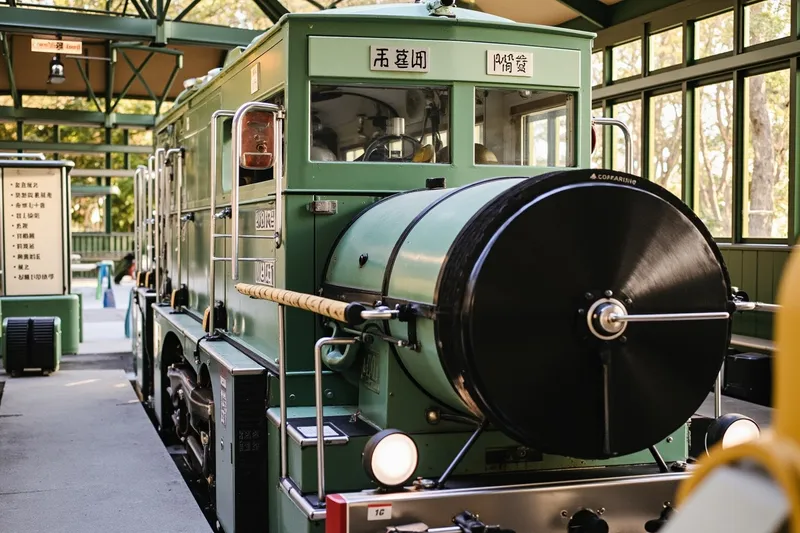
Timing catches people out. The bicycle and boat counters open at 9:30 and shut an hour before the park closes, and boats leave the landing only 30 minutes before closing. A visit that ends around 16:00 leaves you nothing.
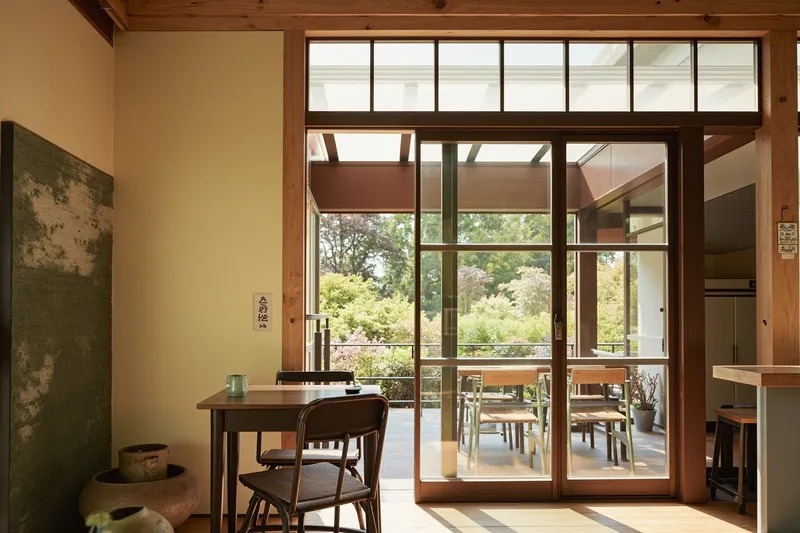
The tea house sits inside the Japanese Garden, so a quiet hour there still comes with the walk to it. I would arrive 20 minutes early for an 11:00 slot and let the park noise happen before the ceremony rather than during it.
What a first-timer should be ready for
Six things follow from the park's own rules, not from anyone's holiday story:
- Booking is compulsory. There is no walk-up seat in the tea room.
- The group shrinks from 30 people in November to 16 per session from December.
- Payment for events and for the Japanese Garden tea service is cash only.
- Socks are required inside the tea house, and the floor is tatami.
- One-day park-train passes get suspended in the peak seasons.
- The tea house is a walk inside a large park from the Nishi-Tachikawa gate.
None of that is a complaint about the place, it is the shape of it. Plan around it and the hour goes well.
Budget: what a day here adds up to
What one day costs, from admission to the ceremony
Here is the arithmetic I would do before booking. Every figure comes from the park's price page.
| Scenario | Cost |
|---|---|
| Park admission, adult | ¥450 |
| Admission + standard session, adult | ¥450 + ¥3,700 = ¥4,150 |
| Admission + standard session, primary-school child | ¥0 + ¥3,100 = ¥3,100 |
| Admission + December session, adult | ¥450 + ¥2,000 = ¥2,450 |
| The above plus parking, standard car | + ¥900 |
| Tama Monorail + park admission, bought together | ¥920 (¥1,340 apart) |
| Two-day park pass | ¥500 |
| Annual passport | ¥4,500, parking at ¥800 |
The child row surprises people: a primary-school child pays nothing at the gate and ¥3,100 for the session. Two adults and one child with parking comes to ¥12,300 for the day.
Optional extras if you stay on: rowboats ¥800 for 60 minutes, pedal boats ¥800 for 30, bicycles ¥600 for three hours plus ¥100 per extra 30 minutes, lockers from ¥100 to ¥300, and dog registration at ¥300 per dog per year for the わんパス card or ¥500 through the パウチケ app. Pets enter free.
Discounts and free entries most visitors miss
Admission is ¥450 for adults, ¥290 for groups of 20 or more entering together through one gate, and ¥210 for anyone 65 and over. Middle-school pupils and younger get in free, and so do holders of a physical, mental-health or developmental disability certificate, including ミライロID, plus one companion.
The two-day pass costs ¥500, ¥350 for groups and ¥250 for the over-65s, and it is not sold when the second day falls on a closed or free-admission day; the park's own wording limits it to national parks. Same-day re-entry is possible with a stamp from the gate staff. The annual passport is ¥4,500 (¥2,100 for the over-65s) and includes free entry to 12 fee-charging national parks, parking at ¥800 and a free coffee with a meal.
Booking, payment and cancellation
Advance booking is compulsory. The November session is sold through AsoView, the December one through a Formzu booking form, and the January, February and March dates are listed on the same programme page. The cap is 30 people in November and 16 per session from December, and the November night session is priced only on the AsoView page. Payment for events is cash only.
Refund and no-show rules live on the booking pages, so read the terms there before you pay. I would rather have that wording in front of me than find out on the morning. Two slots a month is the whole calendar, so decide the month before the day.
Practical notes for coming from outside Japan
Cash, socks, tickets and the things a card will not buy
The park takes cashless payment for admission, parking, shops and most restaurant payments. Events, the park train, boats, lockers, sports-equipment hire, the shop by the restaurant and the Japanese Garden tea service are cash only. For a tea day, one rule is enough: yen for the ceremony and for 呈茶, a card for everything else.
Bring clean socks for the tatami. If you have an allergy, contact the park before your visit. With a dog, register it once, ¥300 per dog per year for the わんパス card or ¥500 through the パウチケ app; pets enter free, with no pledge form or certificate display to deal with.
For anything this article does not answer, the park management centre on 042-528-1751 is the quickest route to a real answer.
Getting there, and the walk from the gate
The one published distance is the Nishi-Tachikawa gate, about a two-minute walk from the JR Ome Line station of the same name. The rest below are my estimates over a big site, so treat them as a plan rather than a promise.
| From the Nishi-Tachikawa gate | Walking time | Note |
|---|---|---|
| JR Ome Line Nishi-Tachikawa station | 2 min (published) | Ome Line trains toward Shinjuku |
| Japanese Garden and 歓楓亭 | 10–15 min (my estimate) | The camellia areas sit beyond this |
| Lake and boat landing | 15–20 min (my estimate) | Rowboats ¥800 for 60 minutes |
| Tama Monorail | 20–25 min (my estimate) | Combo ticket ¥920 against ¥1,340 apart |
| Car parks | 5–10 min (my estimate) | ¥900 a day, about 2,531 spaces |
| Showa Emperor Museum | 15–20 min (my estimate) | Reopens 28 November 2026 |
Two stations, two routes. Tachikawa station on the JR Chuo Line and the Ome Line is the busier hub and the better choice coming from central Tokyo; Nishi-Tachikawa is quieter and puts you at the gate in minutes. Tapping on with an IC card, Suica or PASMO, handles the trains easily, and the park gate takes cashless payment too.
Who should book, and who should skip it
Book it when you want a hosted, small-group introduction
I would book the session if you have never had a bowl of usucha and would rather not read three sources and try alone. If you want a matcha making experience in Tokyo with a bowl in front of you and someone explaining it, this is the one I would pick. It suits families with school-age children too: the child rate is ¥3,100, the floor is tatami instead of a chair, and an hour with a bowl holds a child's attention better than a museum label.
The cheapest confirmed way in is the December session at ¥2,000 per person, though it is a different format, a bon-style 点て. Either way, booking is compulsory, the group is 16 from December, payment is cash and socks are required.
My ordering advice: put the third Sunday of the month in the diary first, then pick a slot. Two slots a month is not much room, and the 18:00 night session in November is the unusual one, so I would look at that first.
Skip it, or book the tea instead of the ceremony
Three sensible ways to spend the same morning, depending on what you want:
| Option | Cost | What it asks of you | What you get |
|---|---|---|---|
| Hosted ceremony at 歓楓亭 | ¥3,700 a head, ¥2,000 in December | Advance booking, cash, one fixed hour | Instruction, a whisked bowl, the sweet |
| 呈茶 in the Japanese Garden | Park admission ¥450 | Cash, no booking, park hours | Tea in the garden, no teaching |
| ぎんなん茶屋 or 総合案内所カフェ | A drink, a few coins | Walk in, seating first come | A break, and no ceremony |
Skip the ceremony if you want the day to stay unstructured, if a fixed hour with 16 other people sounds like a school lesson, or if someone in your group cannot sit on tatami. The ¥2,000 December session leaves room for a long walk and a coffee afterwards.
Keep the shape of the place in mind: a large public park with a hosted hour inside it, and a Kyoto teahouse of the same name that is a different trip altogether. Take the train, walk in through the Nishi-Tachikawa gate, and give yourself the walk.
Five things to settle before you travel
- Compare the session price and the gate ticket for your date: the session fee and the ¥450 adult admission are separate line items, and the December session is priced differently again.
- Check the park's closing time and last entry for your date, especially if you plan the 18:00 night session.
- If you have a food or drink allergy, tell the park before you visit.
- Ask whether the guidance is in Japanese or English, and whether the Japanese Garden and 歓楓亭 are step-free, before you book.
- Ask whether dogs are allowed inside the Japanese Garden and the tea house; dog registration covers park entry only.