
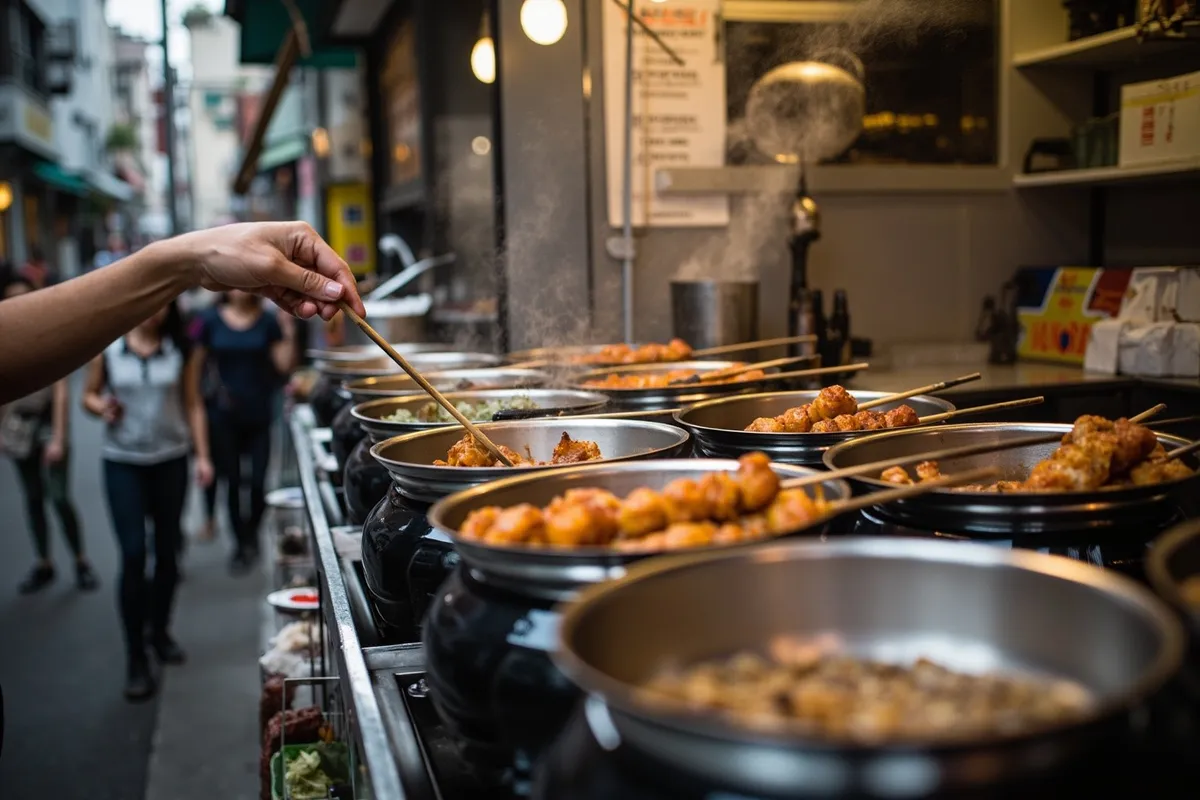
Arigato Travel runs guided walking food tours in Tokyo and five other Japanese destinations, and the arigato travel tokyo food tour people keep asking about is its three-hour Ginza evening route: four stops, four dishes explained in English, and a fixed table waiting at each counter. Published prices start at ¥26,400 per adult. The useful part is not the number of dishes – it is that a guide reads the meal back to you, so a tray of small portions stops looking like a random assortment and starts looking like lunch.
I would pay for the explanation and the reserved tables, not for the novelty of being fed in a city I already know how to eat in. That distinction decides whether the ¥26,400 to ¥33,550 range is worth your yen, and the details below are what I would want to know before booking.
Arigato Travel Tokyo food tours: who runs them and what they cost
A Tokyo-registered agency with a large food programme
Arigato Travel is a land operator and travel agency registered with the Tokyo Metropolitan Government, agency number 2-8620, so it is a licensed operator rather than a group of freelance guides meeting in a car park. The company counts 45+ culinary experiences across Tokyo, Osaka, Kyoto, Hiroshima and the Mt. Fuji area, and its own homepage counter reads 46 walking food tours across 7 culinary destinations. Both numbers come from the operator and they do not reconcile, which is normal for a business that adds tours faster than it rewrites its homepage.
- Registry: travel agency No. 2-8620 with the Tokyo Metropolitan Government
- Languages: all administration staff and tour guides work in English, with Spanish tours in some locations, most of them fully bilingual
- Format: small-group walking tours, plus a private tour option on the cart and bespoke itineraries through the Tailored Travel arm, which handles custom plans, corporate events and team-building trips
- Inclusivity: the operator states its tours are open to guests of any gender, sexual identity, race, religion and nationality
Scale is not really the point here. What matters is that the booking, the guide and the reserved tables come from one company, so when a restaurant cancels, there is someone to call.
The Allstar Food Tour – Evening: three hours on foot
The Allstar Food Tour – Evening is a three-hour guided walk through Ginza and Yurakucho with four food stops, covering regional specialties, hidden local gems and a sweet finish. The route runs for a group of 2 to 10 guests, and the price is ¥28,050 per adult. The operator's FAQ calls the same tour the “All Star Tour”, so search both names if you are hunting for the page.
One thing worth understanding before you pay: the schedule is immovable because it is built around reserved slots at popular eateries outside their peak hours. That is why the start time has a five-minute grace period and nothing more, and it is also why the walk between stops cannot be stretched into a leisurely stroll. Comfortable shoes are a requirement, not a suggestion – the Allstar listing asks for them in plain terms.
What the published lineup costs
Five tours carry standing published prices on the operator's food tours page. There is no seasonal surcharge table – the figures below are the standing prices.
| Tour | Published price | Product type |
|---|---|---|
| Asakusa Twilight Tour | ¥26,400 | Evening walking tour |
| Osaka Shinsekai Street Food Tour | ¥26,400 | Street-food sweep |
| Best of Hiroshima Food Tour | ¥26,950 | City tasting walk |
| Allstar Food Tour – Evening | ¥28,050 | Three-hour Ginza–Yurakucho tasting |
| Gion & Kaiseki Kyoto Tour | ¥33,550 | Kaiseki-style evening |
Read the range carefully: ¥26,400 buys a street-food walk in Osaka, ¥33,550 buys a kaiseki evening in Kyoto. A higher number here means a more elaborate meal in a different city, not a better guide. Every tour sets its own price, so the figure you actually pay comes from that tour's own booking page on tours.arigatojapan.co.jp.
Tokyo food tours in English: where you meet, who you walk with
Meeting point: Seiko House, 4-5-11 Ginza
The meeting point for the Allstar tour is Seiko House, 4-5-11 Ginza, Chuo-ku, Tokyo. You gather in front of the Ginza Wako Building, one minute's walk from Exit A9 of Ginza Station, where the guide waits holding an “Arigato Travel” sign. If you have been to Ginza Station before, that exit faces the Wako department store side, not the underground concourse.
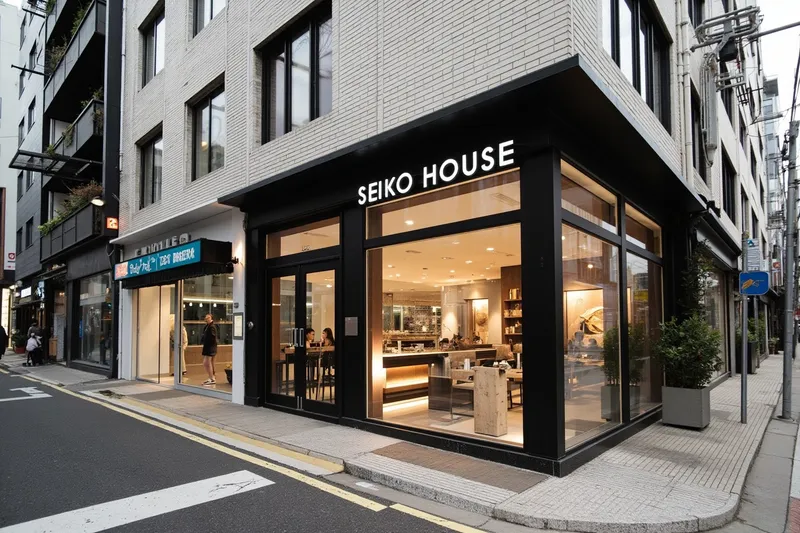
Meeting points are also given as what3words addresses next to the street address, so download the free app before you fly – a what3words code is a map pin, and you use it together with the written address. Arrive early. The walk is the whole point, and the schedule is pinned to tables that are already reserved.
Group size, private tours and solo travellers
The standard Allstar tour takes 2 to 10 guests, which on a narrow Ginza street means a tight group at each counter. Any scheduled tour can be turned into a private run with the private tour option in the cart, and larger or tailored itineraries go through the Tailored Travel arm instead.
Solo travellers are not left out: one guest can be booked, but single bookings run on a separate system, so you need to phone or email rather than push through the normal checkout. The published 2–10 minimum applies to standard booking, and how that minimum interacts with a one-seat request is the part I would clarify in writing first – Bookings@ArigatoJapan.co.jp handles family pricing and group questions.
One guest, one email. The bookings team also handles family pricing, group sizes and special requests, and they answer in English.
What the guide actually explains
A guide working through an everyday meal uses a small vocabulary, and it is worth recognising. Gohan is the rice bowl, and a set built around it with a main and a few side dishes is the ichiju-sansai pattern – one bowl, three or four small plates. Teishoku means a set menu, and washoku is the broader family of Japanese-style cooking. When the guide points at the tray and says hara hachi bu, that is the Okinawa idea of stopping at roughly eight-tenths full, and it shows up as the small side dishes you leave half-finished.
Expect the same idea in a different wrapper at a supermarket counter: a depachika bento against a konbini onigiri. Nothing exotic is required to enjoy this – oyakodon, konjac shiratama, natto, edamame, wakame, umeboshi and sunomono are all things you can buy in any supermarket in Britain, and understanding what they are changes what you order at home.
Reviews on the operator's own homepage single out guides Azzaya, Jacob and Shigeki for their warmth and knowledge, and one guest wrote that the Ginza historical commentary gave them a glimpse of a different Tokyo. That is the value on offer: the dish plus the street you are standing in.
What you eat on the Tokyo routes
The four Allstar stops, from counter to dessert
Three hours in Ginza and Yurakucho with four stops: a hot dish at a counter, a household-style eatery, a casual bowl, and a sweet dessert at the end, drawn from regional specialties and hidden local gems. The guide orders for the group, so you are not handed a menu and asked to decide in the ten seconds before your turn. That is a relief in a neighbourhood where menus are handwritten and priced by set.
Two practicalities. Walking shoes, again – this is a walking tour from start to finish. And the stops can change: restaurant schedules, public holidays, weather and other unforeseen things all force substitutions, and the operator swaps the stop rather than the whole route. Expect a hot counter in the first hour, since the seats at the good places fill fast once the reserved slots start.
Family routes: Asakusa, Harajuku and The Flavors of Japan
For families, the operator recommends four of its own routes: the Asakusa tour, the All Star Tour, the Kawaii Food Tour in Harajuku and The Flavors of Japan. The pace suits small children – walking with seated stops, no standing for an hour – and the money is straightforward, since children aged 0–2 travel free, ages 3–12 pay half the adult price and ages 13 and up pay the full adult rate.
Two Tokyo routes are listed as non-smoking: the Asakusa daytime tour and The Flavors of Japan daytime tour. The Asakusa Twilight Tour is a different animal, and a smoker in the group is worth flagging before you pick a route.
Alcohol on a japanese food and drink tour tokyo route
A japanese food and drink tour tokyo run with Arigato Travel includes a short tasting stop at an izakaya-style place inside the walk rather than an evening of bar-hopping, which keeps it inside the three-hour frame. Shochu and sake both appear at counters, and if you do not drink, the tasting simply becomes a tea or a soft drink without changing the pace of the group.
The legal part matters more than the drinks do: in Japan you must be over 20 to purchase and consume alcohol, so bring ID in case staff check. For a family, that has a practical knock-on – a teenager aged 13 to 19 travels at the adult price but takes no part in the tasting.
Booking a Tokyo food tour: where you pay and how you cancel
Booking channels: the tour subdomain, the brand site and the inbox
To book tokyo food tour slots, use the separate booking domain rather than the corporate site: start at the Tokyo tours page, open the individual tour page, choose the number of tickets, add the private tour option in the cart if you want a private run, and pay with most major credit cards or PayPal. The corporate site is where the tour list, the published prices, the FAQ and the Tailored Travel arm live – the checkout is elsewhere.
Price rules for adults, children and the group minimum
| Item | Allstar Food Tour – Evening |
|---|---|
| Adult | ¥28,050 |
| Child 3–12 | ¥14,025 |
| Child 0–2 | Free |
| Age 13 and over | Full adult price |
| Group size | 2–10 guests |
| Booking age | You must be over 18 to book and confirm a tour |
Sources for these figures are the Allstar listing and the operator's booking FAQ. Every other tour's price is read on its own booking page.
One contradiction worth knowing about for a family with a teenager: the pricing treats 13 and up as adults, while the booking age is over 18. In practice a parent or guardian books and confirms, the teenager pays the adult rate, and the over-20 alcohol rule keeps them out of the tasting.
Cancellation, rescheduling and the fine print
| When you cancel | Fee |
|---|---|
| More than 7 days before the tour date | Free of charge |
| 6 days before | 50% |
| 3 days before or less | 100% |
Rescheduling needs at least one week's notice; private tours flex a little more but still need lead time. Tours start on time with a five-minute grace period, and after that late guests are most probably left behind, because the schedule is built around reserved slots outside peak hours. Between the two published thresholds, sort it out case by case through the bookings inbox.
Quick answers
- Cheapest published tour price? ¥26,400, for the Asakusa Twilight Tour and the Osaka Shinsekai Street Food Tour, both on the operator's food tours page.
- Are children under 2 free? Yes, and ages 3–12 pay half the adult rate.
- Can I cancel inside seven days? A 50% fee applies from 6 days before, and 100% from 3 days before.
- Is there a vegetarian option? Available on most tours, requested in advance.
- Can a solo traveller book? Yes, by phone or email, because single bookings use a separate system.
- What about allergies? All dishes are prepared in the same kitchen, so cross-contact is possible.
What guests say and what the tour structure explains
Where the ratings live
Arigato Travel holds a 5/5 rating on both Tripadvisor and Google with 4,000+ reviews and has hosted over 100,000 guests, according to the operator's testimonials block, which also carries Google Maps reviews marked as recent. One naming detail saves confusion: on Tripadvisor the listing is Arigato Japan Food Tours, and bookings sit on arigatojapan.co.jp, so search that listing name when you want to read longer reviews.
What the reviews praise
The recurring praise, as the operator curates it on its own site, sits on four things: the guide's knowledge of the neighbourhood, including Ginza history that reframed the district for one reviewer; the choice of counters that are not tourist stops; the warmth and knowledge of the guides, with Azzaya, Jacob and Shigeki named; and the tasting stops themselves. The non-touristy angle is also how the operator describes its own lineup.
What the structure predicts people dislike
The published setup tells you the friction points before you arrive. Up to 10 guests on narrow Ginza pavements means you are often standing at a counter waiting for the group to finish the previous dish, even though the table is reserved. The fixed slots mean the schedule cannot absorb a slow meal or a long chat, and the five-minute grace period is real. All dishes come out of one kitchen, so an allergy request cannot be fully met. Stops get swapped after a closure, a public holiday or bad weather, and a substitute is rarely as memorable as the original. And the price is high enough that some people weigh it against a self-guided afternoon – which comes down to whether you want the guide's reading of the meal or just the meal.
Honest limits: allergies, diets, smoking and walking
Allergies: the dishes come out of one kitchen
Allergy-free food cannot be guaranteed here, because all dishes are prepared in the same kitchen and cross-contact is possible. Declare your allergies when you book and again on the day of the tour, and treat Japanese shokuhin labelling as a starting point rather than a safety certificate. Restaurant set meals also run salty – set meals with miso soup and pickles carry more sodium than a home-cooked plate of the same ingredients, which matters if you are watching sodium intake. Carrying your own antihistamine and a translation card is ordinary traveller practice, not something the operator arranges.
Vegetarian and other diets: ask ahead
Vegetarian menu options are available for most tours but not all, and they must be requested in advance. The request is what makes it possible, since counter stops work from a fixed set of dishes rather than a printed menu. This is where a vegetarian diner meets broth: dashi and bonito run through a lot of Japanese food, including side dishes like natto, edamame, wakame, umeboshi and sunomono. A vegan request is harder to place than a vegetarian one, so send it to the bookings inbox and get an answer in writing before you pay.
Non-smoking routes, the walking load and what to carry
Only two Tokyo routes are listed as non-smoking – the Asakusa daytime tour and The Flavors of Japan daytime tour – so if smoke bothers you, say so when you choose. Several tours are wheelchair accessible, but there is a lot of walking, so check the tour page or write ahead about kerbs and steps. There is no Wi-Fi on the tours, so load a transit card and an offline map before the meeting point. Bring photo ID if anyone in the group will drink. Eat a quick konbini breakfast before an afternoon start; shop hours, not hunger, set the pace on this kind of route. In the warm months, bad weather is one of the reasons a stop gets swapped, so pack for the walk rather than for the table.
Who should book, and who should skip it
Good fits
The case for paying a guide is strongest for a first trip, where a set meal in Ginza still reads as an odd arrangement of bowls and you learn that it is a teishoku with ichiju-sansai logic underneath. Families get the most out of it, since the operator's own shortlist for children is the Asakusa tour, the All Star Tour, the Kawaii Food Tour in Harajuku and The Flavors of Japan, with under-2s free. A private run lets a family set its own pace and skip the group size question. And a one-seat booking is legitimate, made by phone or email.
Reasons to skip it
- A tight budget. A self-guided afternoon costs the food plus your own route-finding; a ticket funds the guide's judgment and the reserved counters. The ratio is not something I can put a number on.
- A serious allergy. One shared kitchen rules out any guarantee, and you will not change that with a message.
- A wheelchair and street kerbs. Several routes are accessible, but the walking load and standing at counters are real.
- A market-and-shopping afternoon. This is explained meals on foot, not a browse-and-buy tour.
- Alcohol-heavy nightlife. A tasting stop is a stop, not the evening's programme.
- A schedule that cannot flex. Fixed start, five-minute grace period, walk between Ginza counters.
Which tour, at which price
If you want the closest match to an explained everyday meal, take the Allstar Food Tour – Evening at ¥28,050 per adult (¥14,025 for ages 3–12, free under 2, group of 2–10): three hours across Ginza and Yurakucho with four stops. The Asakusa Twilight Tour at ¥26,400 is the cheapest way in and the easiest family route. The Gion & Kaiseki Kyoto Tour at ¥33,550 shows the top of the published range, but it is a different trip in a different city.
Book on tours.arigatojapan.co.jp with a card or PayPal, email Bookings@ArigatoJapan.co.jp for single seats and family questions, and note that cancellation is free up to seven days before the tour date. What your money actually buys is a table held for you and someone standing there to explain what landed on it – those two things are the tour.
Before you book
- Read the price on the tour's own booking page – each tour sets its own figure, and the site list is a starting point.
- Ask for a vegetarian or vegan menu in advance and get the answer in writing.
- Send allergies when you book and repeat them on the day.
- Book a single seat by email or phone, not through the normal checkout.
- Download the what3words app and save the meeting point: Seiko House, 4-5-11 Ginza, one minute from Exit A9 of Ginza Station.