
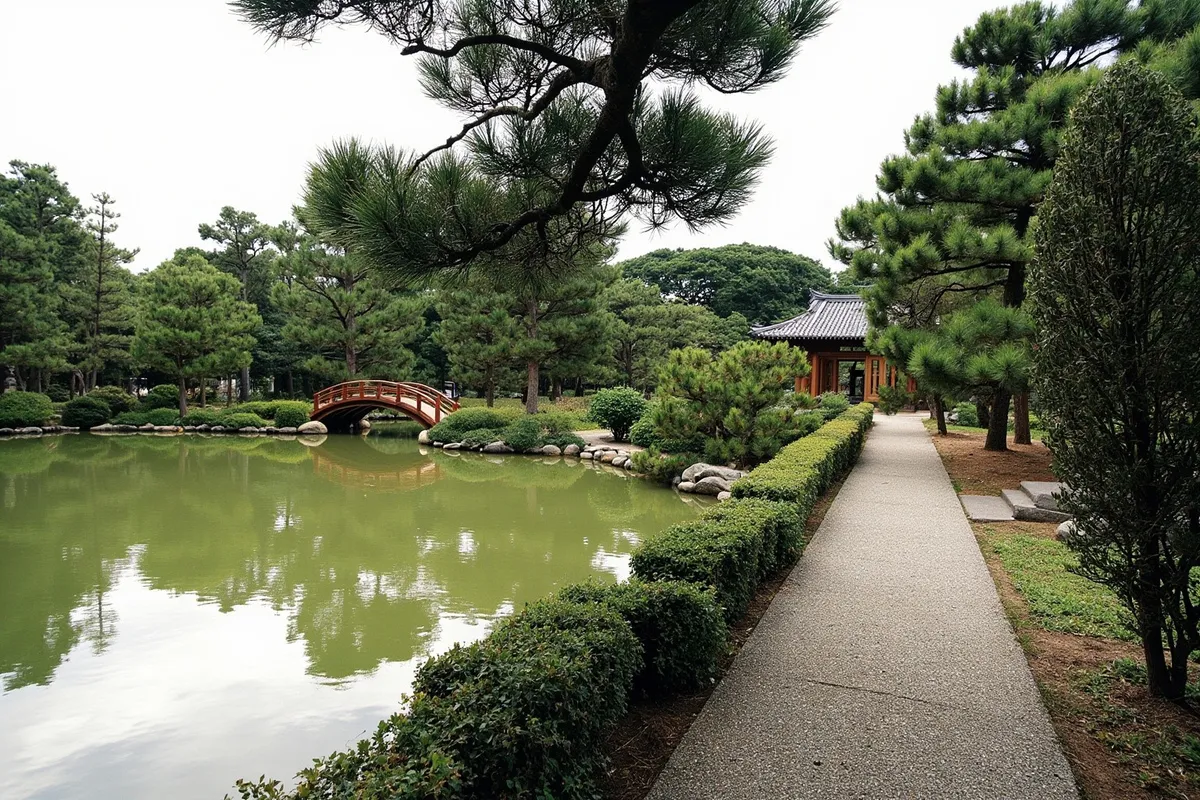
Koishikawa Korakuen Garden in Bunkyo-ku is an Edo-period daimyo garden that sits directly against the concrete of Tokyo Dome City, and you can walk its whole loop in about ninety minutes if you do not linger. Entry is ¥300 for adults and ¥150 for visitors aged 65 and over; the gates run9:00 to 17:00 with last admission at 16:30. Add a stop at the in-garden tea house for matcha and sweets, and the visit turns into a proper two-hour break.
I would come in the morning, walk the hill before the light gets hard, and finish with tea inside the garden rather than at the restaurants around the dome. Here is how the day works, what it costs, and where the ground gets difficult.
Koishikawa Korakuen Garden: what you are walking into
An Edo daimyo garden pressed up against Tokyo Dome City
Koishikawa Korakuen Garden was laid out in 1622 as the Edo residence of the Mito domain, modelled on the Korakuen in Mito. What you walk today is a working daimyo plan – moats, a big pond, an earth hill, a wide lawn – laid out so a lord could look at water from his veranda. Modern stuff goes on top of it: paths of cobblestone, gravel and dirt, stairs where the ground rises, and a mass concrete stadium next door.
The garden is a nationally designated special historic site and special scenic spot, and it sits directly next to Tokyo Dome City. The contrast is the thing that stays with me. You step off a street of arcades and glass, cross one road, and there is 1622 behind a fence, with a roller coaster's noise on the other side of the trees.
Address: 1-6-6 Koraku, Bunkyo-ku, Tokyo 112-0004. Nearest station: JR Iidabashi on the Chuo-Sobu Line, 550 m from the West Gate. Managed by the Tokyo Metropolitan Parks Association.
One warning for anyone planning a garden trip: the Koishikawa Botanical Garden in the same ward is a different, much larger site with a plant collection, and it is the one people mean when they say "garden in Koishikawa". If you want specimens and broad lawns, go there. If you want a compact Edo landscape with a tea house and a pond, stay here.
Opening hours, tickets and how long the garden deserves
The hours are simple: 9:00 to 17:00, last admission 16:30, and the garden closes from 29 December to 1 January. Opening hours can be extended during events, so the November night opening has its own window.
The price does not move with the season. Adults pay ¥300, visitors aged 65 and over ¥150, and elementary school children and younger come in free, as do middle school students who live or study in Tokyo. A holder of a Japanese disability certificate and one accompanying person are admitted free. Two dates are free for everyone: 4 May and 1 October. On those days expect a queue at the counter, because free plus a Tokyo holiday weekend draws a crowd.
| Who | Price | Note |
|---|---|---|
| Adults | ¥300 | Day ticket, all day |
| 65 and over | ¥150 | Lowest individual paid ticket |
| Group of 20+ | ¥240 / ¥120 | Group rate only, not the normal price |
| Elementary school children and younger | Free | |
| Middle school students living or studying in Tokyo | Free | |
| Disability certificate holder + one carer | Free | Japanese certificate |
| Annual pass, this garden only | ¥1,200 / ¥600 | Valid one year from issue, 65+ half price |
| Annual pass, nine metropolitan gardens | ¥4,000 / ¥2,000 | Better if you plan several gardens |
| Grutto Pass | ¥2,500 | Also listed as an admission option |
My arithmetic on the passes: a single visit at ¥300 makes the ¥1,200 Koishikawa-only annual pass a bad deal. The ¥4,000 pass across nine parks only pays off if you are doing Tokyo gardens as a series – Shinjuku Gyo-en and the others on my list of [Tokyo garden walks](/shinjuku-gyo-en-national-garden/). For one afternoon, pay the ticket.
| How long to allow | Time |
|---|---|
| Steady walker, garden only | About 60–90 minutes |
| Visitors with limited mobility | 60–90 minutes |
| Plus the tea house stop | Add 30–45 minutes of your own |
The garden is a paid walk, not a park you wander through for free, so you get very little of the crowd pressure you get in an open city park. That is the trade: ¥300 and a ticket counter, in exchange for a garden where you can hear the water and the leaves.
The route through the garden, in the order that works
On the printed map at the entrance, the plan divides into the inner and outer moat, the main pond, the winding embankment, the earth hill and the broad lawn at the back. Names shift a little between maps, so take the map rather than a screenshot of someone's blog route.
My order is: the hill first, while the light on the water is still soft and the stone is not yet hot; then the pond along the gravel and cobblestone paths; then the long outer edge past the lawn; then the tea house. Entering at one gate and leaving at another works on normal days, and it saves backtracking.
- West Gate and the ticket counter – 5 minutes
- Up to the hill for the view over the pond – 15 minutes
- Along the water, cobblestone underfoot – 20 minutes
- Outer path and the lawn – 15 minutes
- Down to the tea house – 10 minutes
One thing to be clear about: this is not a step-free circuit. The paths are mostly cobblestone, gravel or dirt, with steps at several points and stairs that mostly have no handrail. If a pushchair or a wheelchair is involved, read the accessibility section below before you commit to the loop.
Matcha at the Korakuen tea house: Kotokutei and Biidoro Saryo
What the tea house serves and what a set costs
The tea house inside the garden is Kotokutei, also called the Biidoro Saryo. It serves Japanese green tea, Japanese sweets and light meals including soba. It opens10:00 to 16:00, and the last order is at 15:30.
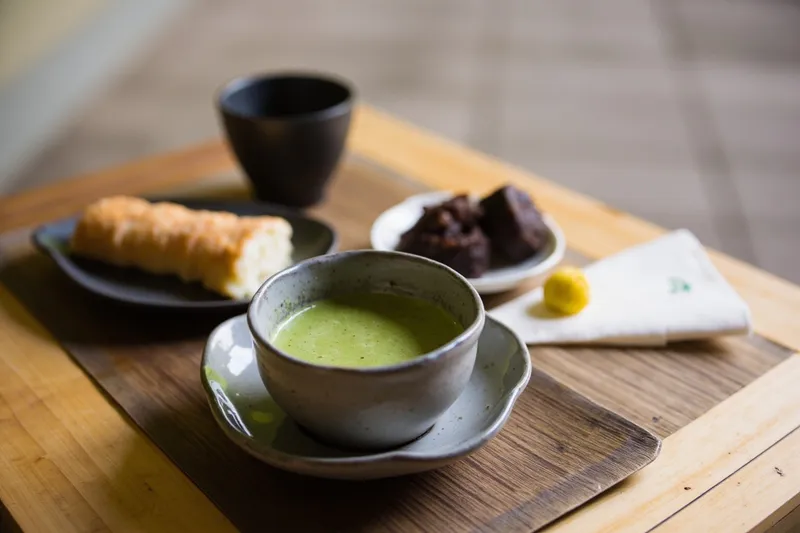
The tea counter stands at the end of the garden rather than at the entrance, so plan it as the finish of the walk, not the start. That is also why the tea house opens an hour after the garden does: the kitchen is set up after the morning rush of visitors has thinned.
| What to order | Price |
|---|---|
| Matcha set with sweets | Read the board at the counter |
| Japanese green tea only | Read the board at the counter |
| Plate of wagashi | Read the board at the counter |
| Soba set | Read the board at the counter |
I would spend the tea money on the matcha set with sweets rather than the soba. The soba is a simple noodle bowl and the sweets are the point of sitting in a garden room. If you are counting calories rather than yen, plain green tea and one wagashi piece is the easy choice.
Ordering a matcha set: the 15:30 cut-off and the two steps at the door
Here is a plain weekday scenario that works. Arrive at the gate at 10:00, walk the loop, and be at the tea house by 11:15. One matcha set and one soba for two people, seated by a window on the garden side. The room is small and the service is unhurried in the good way – you are not chased out – so allow 30 to 45 minutes.
Two practical details. The entrance is a sliding door with two steps and a ramp alongside, which is the difference between a smooth entry and a lift-up-and-shuffle with a pushchair. And the kitchen closes its order book at 15:30, which means a visitor who arrives at 15:00 still has the full menu, while a 15:45 arrival cannot order anything at all – the room stays open until 16:00, but only for people who have already ordered.
There are no vegetarian and no halal meals on the menu, though some items are available without pork. If that matters to you, say so when you order rather than assuming; the counter can point you at what works.
The tea house is a separate operation from the park ticket counters, so do not rely on the payment methods that work at the gate. Carry cash for the tea stop. Four wheelchairs can be borrowed here and at the garden entrance, and there is no pushchair rental on site.
Daytime tea house or the November night opening
Once a year the garden opens in the dark for an autumn illumination event. It runs 13–24 November, 18:00 to 21:00, with last admission at 20:00. The flow is reversed from normal days: you enter at the West Gate and leave at the East Gate. That is worth planning for, because the short walk back to JR Iidabashi is on the other side of the garden. Koishikawa Korakuen-mae on the Tozai Line is the closer station for the exit, and the walk out through the East Gate takes you toward Tokyo Dome and the Oedo line as well.
Night tickets cost ¥1,000 in advance and ¥1,200 on the day. Elementary school children and younger are free, and a disability certificate holder with one caregiver pays ¥500 at the West Gate counter, where you buy the Mirairo Ticket. There is also a combined product with three rides at the Tokyo Dome City Attractions: ¥3,500 in advance, ¥3,700 on the day, the same price for adults and children, sold online through Asoview and KKday. It cannot be refunded after purchase, you exchange the ride ticket at the attractions ticket counter, and you can use the rides any time within their operating hours – garden first or attractions first, whichever suits.
Advance sales for the November event open on 1 October, so buy early if you want the ¥1,000 ticket. Night tickets are sold through Seven Tickets, KKday and Asoview. Note that an ordinary online daytime ticket does not admit you to the nighttime event – it is a separate product. Details on the Tokyo Dome event page.
This is the only price in the garden that changes with the season. The ¥300 day ticket stays the same all year, and it is still the better deal for anyone who is here mainly for the garden itself.
How to get to Koishikawa Korakuen Garden from Iidabashi Station
Iidabashi Station and the 550-metre walk to the West Gate
The nearest station is JR Iidabashi on the Chuo-Sobu Line, 550 m from the West Gate, roughly eight minutes on foot. The same station is served by the Toei Mita and Oedo lines and by the Tokyo Metro Yurakucho Line, so you have plenty of ways in. Coming from the east side of the city, Koishikawa Korakuen-mae on the Tozai Line drops you right by the far end of the garden.
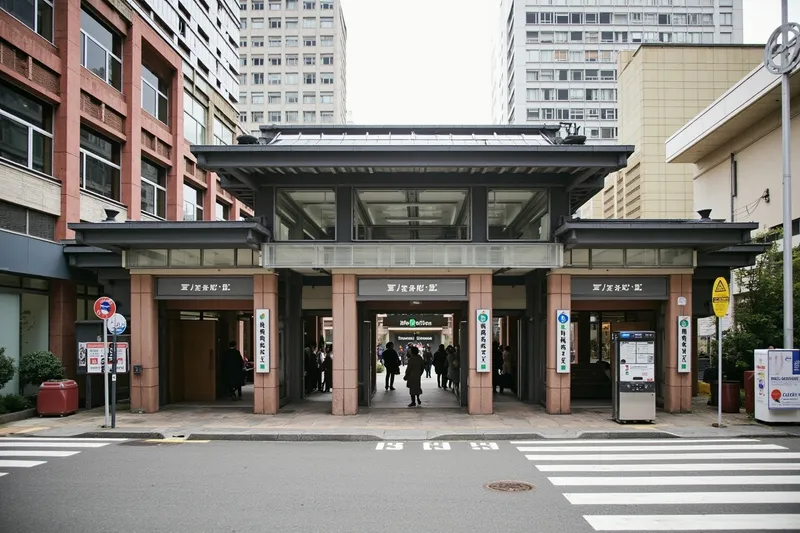
The road in front of the West Gate is busy and the crossing is the fiddly part. Allow a couple of extra minutes for the traffic light, and watch for the turn into the gate – it is easy to walk past. A transit IC card (Suica or PASMO) handles the train; the garden's own counters take IC cards too, which I cover under payments below.
| From the West Gate to | On foot | By train | Changes |
|---|---|---|---|
| Iidabashi Station (JR Chuo-Sobu, Toei Mita/Oedo, Metro Yurakucho) | 8 min | – | – |
| Koishikawa Korakuen-mae (Tozai Line) | 15 min | – | – |
| Shinjuku | – | About 20 min | 0 |
| Ebisu | – | About 15 min | 0 |
| Tokyo Station | – | About 25 min | 1 |
Train times are typical off-peak runs, so treat them as a ballpark rather than a timetable promise. The practical point is that Iidabashi is a hub, not a dead end: five lines converge, which makes pairing the garden with a longer day somewhere else in the city easy. The Toei Mita Line and the Yurakucho Line pages give you the service patterns.
No car access, no parking, no drop-off
There is no parking for visitors. The accessibility survey for the garden records parking for disabled visitors as not available, lists all on-site parking details as not applicable, and notes that no vehicle can drive up to the entrance to drop you off. A taxi gets you to the street and then you walk the last stretch on foot.
For a family with a pushchair, that means the 550 m from Iidabashi on stone, gravel and dirt, plus the two steps at the tea house door and the steps inside the garden. Worth knowing before you set out with a buggy rather than a stroller.
If you need to talk to the garden directly about access arrangements, the phone number is 03-3811-3015. Parking near the dome complex is a separate matter – rates and hours are set by Tokyo Dome City, and the dome's own pages list them.
How to visit Koishikawa Korakuen Garden: a two-hour plan
A timed walk from the gate to the tea house
The clock is easier than it looks. The gate opens at 9:00, the tea house opens at 10:00, the last order is 15:30, last admission to the garden is 16:30, and the gates close at 17:00. That gives you a very wide window, which is why this is a good garden for a slow morning rather than a fast stop.
| Time | Stop | Min | What to look at |
|---|---|---|---|
| 9:00 | West Gate, ticket counter | 10 | Pay, pick up the paper map |
| 9:10 | Hill first | 25 | The view down over the pond |
| 9:35 | Water side | 30 | Inner moat, bridges, the weeping cherry area |
| 10:05 | Outer path and lawn | 20 | Quietest stretch, fewest people |
| 10:30 | Kotokutei tea house | 45 | Matcha set and sweets, seated |
| 11:15 | Back to the West Gate | 15 | Leave by 16:30 at the latest |
If you have eaten lunch around the dome complex already, this works nicely as the after-meal walk: a slow loop, then tea, then a second loop if the tea house does not put you off. The dome's own restaurants sit right next to the garden wall, which makes the pairing easy without planning a route.
On the November event nights the pattern flips – gates at 18:00, and everyone leaves through the East Gate, so the crowd walks toward the dome and the Tozai line rather than back toward the JR side.
Noise, crowds, shade and benches
On a normal weekday the garden is quiet: water, birds, the fan of leaves, and under it all the low hum of Tokyo Dome on the other side of the wall. Match a visit to a big event at the dome and you will hear the crowd through the trees, which is exactly the contradiction this garden is famous for and also the reason people like it.
The queues that actually form are at the West Gate on the November night opening, and at the attractions ticket counter if you bought the combined ride product – you exchange the ride ticket there, and people do queue for that. The daytime queue at the garden's own counter is short, except on the two free-entry days.
Two practical things to sort out before you go. Shade and seating are thin in places, so if you are going in a hot month, pick your rest stops on the operator's park map rather than hoping. And the ground does what soil and gravel do: in dry weather expect dust on the paths, and after heavy rain expect mud on the dirt sections. Closed shoes, not sandals.
Accessibility, toilets and the four loan wheelchairs
The garden is partly accessible, and the partial part matters. A 3° ramp links the West Gate and the ticket booth. There is no elevator and no stairlift, no audio guide and no braille map. The paths are mostly cobblestone, gravel or dirt with steps at several points, and stairs almost without handrails. The Tsukiyama hill and the stone bridges cannot be used by a wheelchair user at all.
Four wheelchairs can be borrowed on site, service dogs are allowed, and no baby buggy is rented. Western-style toilets with handrails are available at three points: the Kantokutei, the large-group rest area, and near the East Gate. Only the Kantokutei toilet has a heated bidet – that one is also where you will want to sit if you have walked a lot.
| Feature | Verdict |
|---|---|
| West Gate ramp to ticket booth | Yes, 3° |
| Elevator or stairlift | No |
| Step-free route around the garden | Partial – hill and bridges excluded |
| Loan wheelchairs | Yes, four of them |
| Pushchair rental | No |
| Toilets with handrails | Yes, three points |
| Heated bidet | Kantokutei only |
| Audio guide / braille map | No |
If you need step-free ground for the whole route, the Koishikawa Botanical Garden in the same ward is the better pick – its paths are the point of that place. The hours and fee are on its own page in the operator's park list, which I would check rather than assume.
What visitors say, and how to read the praise
The praise that keeps repeating
Everyone who writes about this garden writes about the same four things: the planted views, the value of the entry fee, the calm of weekday mornings, and the tea house. Google Maps reviews and Tripadvisor reviews are where the detail sits, and the useful lines are the ones that name something specific – a particular stretch of water, a particular moment in the light – rather than "beautiful garden, must visit".
My own read of what the reviews get right: the fee is low for a protected historic site, and visitors are almost always surprised by that. A ¥300 ticket and a view like this would be a tourist trap at four times the price in Kyoto. The second thing reviews get right is the contrast with the dome next door, which comes up again and again as the best and worst thing about the place.
What reviews cannot tell you is whether the tea is good. Nobody writes a review about one bowl of matcha with a floor price, which means the tea house is judged mostly on the room and the view.
The complaints that repeat, and the design behind them
The complaints that show up repeatedly in the review trail are the same set, and every one of them is a design decision rather than neglect:
- Uneven gravel and steps with no handrail. The Edo layout was built for people walking on soil and stone, and the hill and the stone bridges cannot be made step-free without rebuilding the historic plan.
- Not much shade and not many benches. You are walking an open garden; benches exist but they are spread for viewing, not for sitting for an hour.
- A short queue at the tea house counter at the weekend. The room is small and the kitchen stops taking orders at 15:30.
- Confusing one-way flow on the night event. In November the entry is West Gate and the exit is East Gate, so you leave further from the station you arrived at.
- Dust on dry days, mud on wet ones. Soil and gravel paths do that.
One complaint I cannot check: whether the tea is overpriced. With no menu list to compare against, that is a feeling rather than a fact, and I would not repeat it as one.
Practical notes for international visitors
Paying, buying tickets and reading the ticket desk
The counters are modern about payment. They take transit IC cards (Suica, PASMO), iD, Rakuten Edy and QUICPay; credit cards including Visa, Mastercard, UnionPay, JCB, American Express, Diners Club and Discover; and QR payments: PayPay, Rakuten Pay, d払い, au PAY, Merpay, Alipay, WeChat Pay and Smart Code. In practice, a foreign-issued Visa or Mastercard, or Alipay or WeChat Pay, means you do not need cash at the gate at all.
There is an online daytime ticket, sold in advance, and it is not valid for the nighttime special viewing – separate product, separate price. The annual passes sit at the desk: ¥1,200 for this garden alone, ¥4,000 across the nine metropolitan gardens, both valid for a year from the date of issue. The Grutto Pass at ¥2,500 is also listed as an admission option.
| Where to buy | Price | Cancellation |
|---|---|---|
| Garden counters, West or East Gate | ¥300 adult, ¥15065+ | Not needed, buy on arrival |
| Operator's online daytime ticket | Same categories | Check the ticket page before buying |
| Annual pass at the desk | ¥1,200 / ¥4,000 | One year from issue |
| Night ticket, 13–24 Nov | ¥1,000 advance, ¥1,200 on the day | Seven Tickets, KKday, Asoview |
| Night + 3 dome rides | ¥3,500 advance, ¥3,700 on the day | No refund after purchase, Asoview and KKday only |
The counters themselves sit behind steps, which matters if you are travelling with a lot of luggage or cannot manage a step. The 3° ramp into the West Gate is the accessible approach.
Weather, seasons and what to wear on the paths
A short checklist that covers most of the year:
- Closed shoes for gravel and dirt. Sandals and a pushchair is a bad combination.
- A towel and water in the warm, humid months – there is little shade in the middle of the day.
- A light layer if you come for the November night opening; you are standing around in a damp park after dark.
- Rain plan: the garden is open in light drizzle, but the dirt sections turn to mud after heavy rain, so waterproof shoes matter more than an umbrella.
The hard constraint is the gate. The garden closes at 17:00, so a nighttime visit only happens during the November illumination event. For the rest of the year, treat 16:30 as the real end of your day there.
Is Koishikawa Korakuen Garden worth your time?
Who it suits and who should skip it
Go if you have one spare morning in central Tokyo and want a walk with an ending. Go if you want a matcha break in a garden room rather than a coffee chain. Go with small children, because the paths near the pond are wide enough for a toddler to run and the ticket is free for them. Go if you photograph autumn foliage, or if you are pairing the garden with the dome attractions and the combined night ticket makes sense.
Skip it if you need step-free access along the whole route, because the hill and the bridges are out for wheelchair users and there is no elevator. Skip it if you want a big open park or a botanical collection – that is the Koishikawa Botanical Garden, a different site in the same ward. Skip it if your plan is a three-hour nature outing; the garden is compact and 90 minutes is honest. And skip the night ticket if you only came for the garden: the daytime ¥300 gives you the whole site in daylight.
What a visit costs, and how to decide
| Line | Cost |
|---|---|
| Entry, adult | ¥300 |
| Entry, 65 and over | ¥150 |
| Entry, group of 20+ | ¥240 per adult, ¥120 for 65+ |
| Matcha set with sweets | Read the board at the tea house counter |
| Wagashi plate | Read the board at the tea house counter |
| Soba set | Read the board at the tea house counter |
| Night ticket, 13–24 Nov | ¥1,000 advance / ¥1,200 on the day |
| Night plus three dome rides | ¥3,500 advance / ¥3,700 on the day |
My decision rule: come at 9:00, take the day ticket, walk the hill first, and be at Kotokutei by 11:00 for a matcha set and sweets. That is the whole garden, the tea, and the exit through the West Gate for ¥300 plus whatever the counter charges you for the tea. If you are in Tokyo in the middle of November and want the illuminated garden, add the ¥1,000 advance night ticket and plan to leave from the East Gate.
Before you go: check the current tea house menu and prices at the counter or on the operator's Koishikawa Korakuen menu pages, and check whether daytime visitors can stay on into the evening on the November event dates. Carry some cash for the tea house. If you need step-free ground, read the accessibility notes first.
Questions readers ask
How long should I spend at Koishikawa Korakuen Garden? About 90 minutes for the garden itself, and add 30 to 45 minutes for the tea house stop. Visitors with limited mobility should budget 60 to 90 minutes.
Where can I drink matcha inside the garden? At the Kotokutei tea house, also called the Biidoro Saryo. It opens10:00 to 16:00, the last order is at 15:30, and the entrance has two steps with a ramp alongside.
Is there parking at the garden? No. There is no visitor parking and no vehicle drop-off at the entrance, so a taxi stops on the street and you walk the rest. The phone number for access questions is 03-3811-3015.
Can I pay the entry with a foreign card? Yes. The counters take Visa, Mastercard and other major cards, plus Alipay and WeChat Pay, so you can arrive without yen in hand for the gate.
Does the online daytime ticket cover the November night opening? No. The nighttime illumination event is a separate ticket: ¥1,000 in advance or ¥1,200 on the day, sold through Seven Tickets, KKday and Asoview.